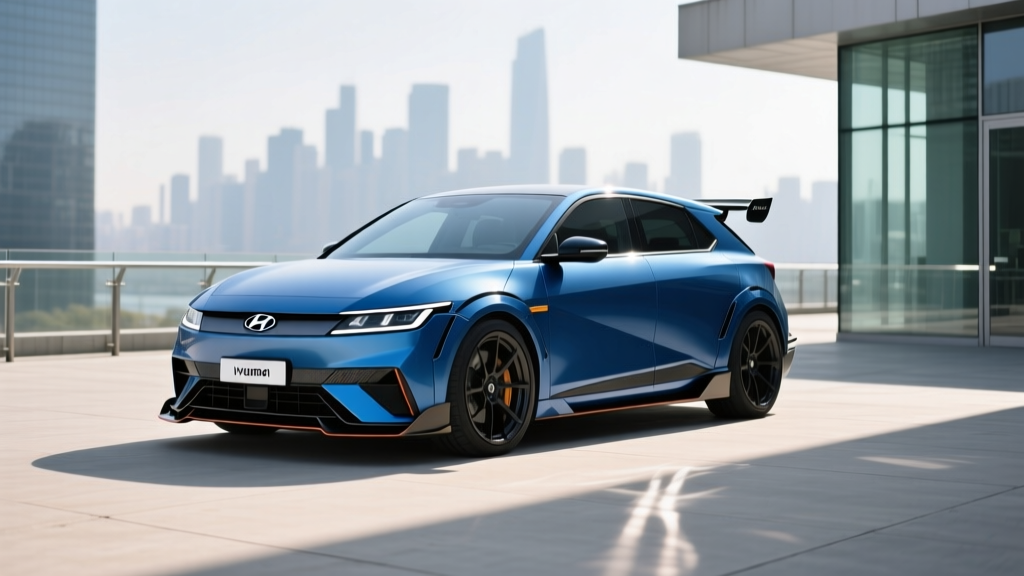
The Hyundai Ioniq 5 has been one of the most compelling electric crossovers since its debut, thanks to its 800-volt architecture, retro-futuristic styling, and practical hatchback layout. For 2026, Hyundai has refined the formula with the addition of the North American Charging Standard (NACS) port as standard equipment, updated software, and the high-performance Ioniq 5 N variant. But beyond the factory sheet metal, a growing aftermarket scene means an Ioniq 5 body kit can transform this EV from a commuter crossover into a head-turning, personalized machine.
This review covers everything you need to know about the 2026 Ioniq 5 lineup — real-world range, charging speeds, pricing after tax credits, cargo space, and whether an aftermarket body kit makes sense for your build.
2026 Hyundai Ioniq 5: Key Specs at a Glance
| Spec | SE/SEL RWD | SEL/Limited AWD | Ioniq 5 N |
|---|---|---|---|
| EPA Range | 303 mi | 260–290 mi | 221 mi |
| Battery (usable) | 77.4 kWh (NMC) | 77.4 kWh (NMC) | 84.0 kWh (NMC) |
| Max DC Fast Charge | 235 kW | 235 kW | 240 kW |
| 10–80% DCFC Time | ~18 min | ~18 min | ~18 min |
| Level 2 Home Charge | 10.9 kW (~37 mi/hr) | 10.9 kW (~37 mi/hr) | 10.9 kW (~37 mi/hr) |
| Horsepower | 168 hp | 320 hp | 641 hp (N Grin Boost) |
| 0–60 mph | 7.0 sec | 4.5 sec | 3.25 sec |
| Drivetrain | RWD single motor | AWD dual motor | AWD dual motor |
| MPGe (combined) | 117 MPGe | 101–110 MPGe | 85 MPGe |
| Efficiency | 29 kWh/100 mi | 31–34 kWh/100 mi | 40 kWh/100 mi |
| Base MSRP | $42,600 | $47,100 | $66,200 |
Real-World Range: What the EPA Number Doesn't Tell You
EPA sticker: 303 miles. Real-world highway (70 mph, moderate climate): expect 250–275 miles. In freezing temperatures (below 32°F) with cabin heat, plan for 210–240 miles on a full charge.
The Ioniq 5's EPA range figures are competitive, but as with every EV, real-world results depend heavily on driving style, speed, and temperature. The RWD SE with its 77.4 kWh NMC (nickel manganese cobalt) battery and standard heat pump is the efficiency champion of the lineup. On a 75-mph highway loop in 65°F weather, independent testers have recorded approximately 260–275 miles before reaching 5% State of Charge.
Cold weather is the equalizer. Hyundai's heat pump helps mitigate cabin-heating energy draw, but lithium-ion chemistry inherently loses efficiency below freezing. Expect a 20–30% range reduction in sustained sub-32°F driving. If you live in the upper Midwest or Northeast and commute more than 60 miles daily in winter, the AWD trims with their lower EPA range (260–290 miles) may feel tight without reliable home charging.
The Ioniq 5 N sacrifices range for performance — 221 miles EPA is the trade-off for 641 hp and track-capable thermal management. If you're considering an Ioniq 5 N body kit for an aggressive stance, know that you'll be visiting chargers more often on road trips.
Charging Speed: The 800V Advantage Still Pays Off
The Ioniq 5's 800-volt electrical architecture remains one of its biggest advantages over competitors like the Volkswagen ID.4 and Toyota bZ4X, which use conventional 400V systems. Here's what charging looks like across all levels:
| Charge Level | Power (kW) | Speed (mi/hr added) | Notes |
|---|---|---|---|
| Level 1 (120V household) | ~1.4 kW | ~5 mi/hr | Emergency/top-up only; full charge takes 55+ hours |
| Level 2 (240V home) | 10.9 kW | ~37 mi/hr | Full 0–100% in ~8.5 hours; ideal for overnight |
| DC Fast Charge (peak) | 235 kW (240 kW on N) | ~750+ mi/hr at peak | 10–80% in ~18 min on a 350 kW charger |
A critical note on DC fast charging: the 235 kW figure is a peak, not a sustained rate. The Ioniq 5's charge curve is aggressive from 10–55% SoC, then tapers progressively. From 80–100%, charging slows dramatically to protect the battery — expect the final 20% to take as long as the 10–80% portion. On road trips, plan stops around the 10–80% window for optimal time efficiency.
For 2026, Hyundai equips all Ioniq 5 models with the NACS (Tesla-style) connector natively, eliminating the need for a CCS-to-NACS adapter at Tesla Superchargers. This is a significant convenience upgrade that expands the Ioniq 5's usable fast-charging network dramatically. According to fueleconomy.gov, the RWD model achieves 117 MPGe combined.
Ioniq 5 Body Kit Options: Aftermarket Styling for 2026
The Ioniq 5's pixel-art design language and flat surfaces make it a natural canvas for aftermarket body kits. Whether you want a subtle lip spoiler or a full widebody treatment, here's what the market offers in 2026:
Front Lip & Splitter Kits
The most popular and affordable entry point. Polyurethane or carbon-fiber front lips from brands like CMST, Vorsteiner, and custom Korean shops add aggression to the Ioniq 5's blunt nose. Expect to pay $400–$1,200 for quality pieces. These are purely cosmetic and add negligible weight.
Side Skirts & Rocker Panels
Side skirts visually lower the car and bridge the gap between front and rear styling. Most Ioniq 5 body kit packages include side skirts that bolt onto existing mounting points. Installation typically requires no drilling on 2024+ facelift models.
Rear Diffuser & Spoiler Kits
A rear diffuser replaces the lower bumper trim and adds visual depth. Combined with a roof spoiler or ducktail trunk spoiler ($200–$800), these complete the "lowered and aggressive" look. Carbon fiber variants command a premium but save weight.
Full Widebody Kits
For the committed builder, widebody kits from Liberty Walk, Pandem, and boutique Korean fabricators add fender flares that accommodate wider wheel/tire setups (up to 265-section rubber on 21-inch wheels). Pricing runs $3,000–$8,000 for the kit alone, plus paint, fitment, and alignment. Widebody kits add 40–80 lbs and can reduce range by 3–5% due to increased frontal area and rolling resistance.
Ioniq 5 N-Specific Aero Kits
Hyundai's N Performance division offers factory-approved aero enhancements for the Ioniq 5 N, including a larger rear wing, front canards, and an extended diffuser. These are wind-tunnel-tested and maintain the vehicle's thermal management airflow. Aftermarket N-body kits are also emerging from Korean tuners like Bisimoto and ARK Performance.
Pricing, Trims & Federal Tax Credit Eligibility
The 2026 Ioniq 5 lineup spans four primary trims. Here's the pricing picture, including how the federal §30D tax credit applies:
| Trim | MSRP | §30D Credit Eligible? | Effective Price* |
|---|---|---|---|
| SE Standard Range (RWD) | $42,600 | Up to $7,500 (subject to sourcing rules) | ~$35,100 |
| SEL (RWD/AWD) | $47,100–$50,600 | Up to $7,500 | ~$39,600–$43,100 |
| Limited (AWD) | $54,700 | Up to $7,500 | ~$47,200 |
| Ioniq 5 N | $66,200 | Up to $7,500 (under $80K SUV cap) | ~$58,700 |
*Effective price assumes full $7,500 §30D credit. Eligibility depends on buyer income, battery component sourcing, and critical mineral requirements per IRS guidelines. The Ioniq 5 is assembled in Ellabell, Georgia (Hyundai's Metaplant America), which helps satisfy domestic assembly requirements, but the $7,500 credit is split into two halves ($3,750 for battery components + $3,750 for critical minerals) — and sourcing requirements tighten annually. Always verify eligibility with a tax professional before purchasing.
Key §30D rules for 2026:
- Income cap: Modified AGI ≤ $150,000 (single) / $300,000 (joint)
- MSRP cap: ≤ $80,000 for SUVs/trucks/vans (the Ioniq 5 qualifies as an SUV)
- Point-of-sale transfer: You can apply the credit as a down-payment reduction at the dealer rather than waiting for tax filing
- Battery sourcing: Increasingly strict critical-mineral and battery-component requirements may reduce the available credit amount depending on the specific build date
Interior Space, Cargo & Daily Practicality
The Ioniq 5's dedicated E-GMP platform gives it a flat floor and a long 118.1-inch wheelbase, translating to generous interior volume:
- Front legroom: 41.7 inches
- Rear legroom: 39.4 inches — competitive with midsize SUVs
- Cargo (behind rear seats): 27.2 cu ft
- Cargo (rear seats folded): 59.3 cu ft
- Front trunk (frunk): 0.85 cu ft (AWD) / 2.0 cu ft (RWD) — enough for a charging cable bag, not much more
The flat floor and sliding center console (on SEL/Limited) make the cabin feel airy. The dual 12.3-inch screens run Hyundai's updated infotainment with native EV route planning that factors in charging stops and battery preconditioning. Wireless Apple CarPlay and Android Auto are standard across all trims.
One drawback: the Ioniq 5 does not have a rear wiper on the hatchback glass, which is a real annoyance in rain and snow. Hyundai added one for the Ioniq 5 N, but standard trims still lack it — an odd omission on a vehicle with a large, flat rear window that collects road spray.
Driver Assistance, Safety & Standout Tech
Standard safety tech across the lineup includes forward collision-avoidance assist, blind-spot monitoring, rear cross-traffic alert, and safe-exit assist. The Ioniq 5 earned a TOP SAFETY PICK+ rating from IIHS and a 5-star overall rating from NHTSA.
Standout tech features include:
- Vehicle-to-Load (V2L): An interior 120V outlet and exterior adapter let the Ioniq 5 power appliances, tools, or even another EV at up to 3.6 kW — useful for camping or emergency backup
- Battery preconditioning: When a DC fast charger is set as your navigation destination, the thermal management system preheats or cools the battery to optimize charge speed on arrival
- Digital side mirrors (Limited): Camera-based mirrors reduce drag and improve visibility in rain, though some drivers find the screen placement takes getting used to
- Remote Smart Parking Assist: The car can park itself in tight spaces while you stand outside using the key fob
Pros, Cons & Who Should Buy the Ioniq 5
Pros
- 800V architecture delivers class-leading 18-min 10–80% DCFC
- NACS port standard for 2026 — native Supercharger access
- Spacious flat-floor cabin with excellent rear legroom
- V2L capability for camping and backup power
- Strong safety ratings (IIHS TSP+, NHTSA 5-star)
- US-built (Georgia) — supports §30D credit eligibility
- Robust aftermarket body kit ecosystem
Cons
- No rear wiper on non-N trims
- Frunk is tiny (0.85–2.0 cu ft) compared to competitors
- AWD range drops to 260 mi on SEL trim
- Ioniq 5 N is thrilling but range-limited (221 mi EPA)
- Body kit mods may void portions of Hyundai warranty
- Insurance premiums 10–15% higher than comparable gas crossovers
Who It Suits Best
- Daily commuters with home Level 2 charging who want a comfortable, tech-forward crossover with 300+ miles of range
- Customization enthusiasts drawn to the Ioniq 5 body kit scene who want an EV that looks as good modified as it drives
- Small families who need rear-seat space and cargo room but don't need three rows
- Road trippers willing to plan 18-minute charging stops every ~250 miles on the highway
Frequently Asked Questions
What is the real-world range of the 2026 Hyundai Ioniq 5?
The RWD SE achieves 303 miles EPA, but expect 250–275 miles in real-world highway driving and 210–240 miles in freezing temperatures. The AWD trims range from 260–290 miles EPA, with proportionally lower real-world results.
How fast does the Ioniq 5 charge at home and on DC fast chargers?
On a Level 2 home charger (240V, 48A), the Ioniq 5 charges at 10.9 kW, adding about 37 miles of range per hour — a full charge takes roughly 8.5 hours. On a 350 kW DC fast charger, it peaks at 235 kW and charges from 10–80% in approximately 18 minutes, though the rate tapers significantly above 80% SoC.
Does the 2026 Ioniq 5 qualify for the federal EV tax credit?
The Ioniq 5 is eligible for up to $7,500 under IRS §30D, subject to buyer income limits ($150K single / $300K joint MAGI), the $80,000 MSRP cap for SUVs, and increasingly strict battery-component and critical-mineral sourcing rules. Because Hyundai assembles the Ioniq 5 in Georgia, it satisfies the North American final assembly requirement. However, the full $7,500 is not guaranteed — verify your specific eligibility per current IRS §30D rules and consult a tax professional.
Will an Ioniq 5 body kit void my warranty?
Hyundai's 5-year/60,000-mile new vehicle warranty and 10-year/100,000-mile battery warranty remain in effect, but any damage or issue that can be directly attributed to an aftermarket modification (e.g., a body kit interfering with thermal management airflow, or widened fenders causing sensor misalignment) may not be covered. Cosmetic bolt-on kits (lips, spoilers) carry minimal risk. Widebody kits requiring cutting or drilling carry higher warranty risk.
Is the Ioniq 5 worth buying over the Tesla Model Y or Ford Mustang Mach-E?
The Ioniq 5 wins on DC fast-charge speed (18 min 10–80% vs. ~25 min for the Mach-E Extended Range) and interior design quality. The Model Y offers more cargo space, a more mature Supercharger network (though the Ioniq 5 now has native NACS access), and lower starting prices on the base RWD trim. The Mach-E appeals to drivers who prefer a more traditional driving feel. If fast charging and distinctive styling (especially with a body kit) are priorities, the Ioniq 5 is the strongest pick in this segment.
What's the battery warranty on the 2026 Ioniq 5?
Hyundai covers the Ioniq 5's high-voltage battery for 10 years or 100,000 miles, whichever comes first. The warranty guarantees the battery will retain at least 70% of its original capacity during that period. The NMC chemistry used in all 2026 Ioniq 5 variants has demonstrated strong long-term durability in fleet data, with most owners reporting less than 5% degradation after 50,000 miles.