Quick Verdict: The Efficiency Champion of the Ioniq 5 Lineup
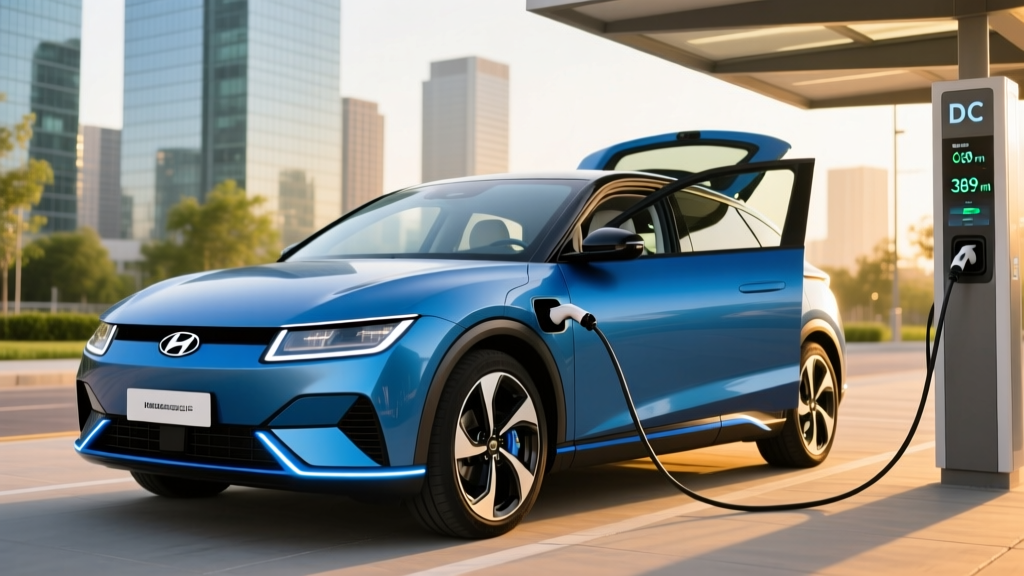
The Hyundai Ioniq 5 Blue trim occupies a specific and valuable niche in the 2026 EV market: it's the range-and-efficiency maximizer within Hyundai's electric crossover lineup. By pairing a lighter single-motor rear-wheel-drive configuration with aerodynamic 19-inch wheels and the updated 84.0 kWh (usable) NMC battery pack, the Blue trim achieves the highest EPA range rating in the Ioniq 5 family. For buyers who prioritize miles per dollar and daily commuting efficiency over dual-motor acceleration or towing, this is the trim to target.
| Spec | 2026 Ioniq 5 Blue (RWD) |
|---|---|
| EPA Range | 361 miles |
| Battery (Usable) | 84.0 kWh, NMC |
| Motor / Drivetrain | Single motor, RWD |
| Horsepower / Torque | 225 hp / 258 lb-ft |
| 0–60 mph | 7.0 sec (est.) |
| Max DC Fast Charge | 240 kW peak |
| 10–80% DC Charge | ~18 min (optimal conditions) |
| Level 2 Home Charge | 10.9 kW (~32 mi/hr) |
| MPGe (Combined) | 132 MPGe |
| Cargo (rear seats up / down) | 27.2 / 59.3 cu ft |
| Base MSRP | $47,400 (incl. destination) |
| Battery Warranty | 8 yr / 100,000 mi |
Real-World Range: What 361 EPA Miles Actually Means
EPA Sticker: 361 miles
Real-World Expectation: 300–330 mi mixed driving; 270–290 mi sustained highway at 75 mph; 240–260 mi highway in sub-30°F weather.
The 361-mile EPA figure is legitimate and achievable in moderate-temperature city and suburban driving where regenerative braking recovers energy frequently. The Ioniq 5 Blue's RWD layout and lack of front-motor parasitic drag give it a measurable edge over the AWD trims, which are rated around 290–310 miles.
On highway road trips at sustained 70–75 mph speeds, expect to see roughly 3.2–3.5 miles per kWh, translating to 270–295 miles of usable range before you'd want to stop and charge at 15–20% SoC. In cold weather (below 30°F), the NMC chemistry loses roughly 20–30% of its effective capacity due to cabin heating demands and reduced battery ion mobility — even with the heat pump Hyundai includes as standard on this trim. Preconditioning the battery while plugged in (using the Hyundai app's scheduled departure feature) mitigates some of this loss.
According to fueleconomy.gov, the combined MPGe rating is 132, with 134 city and 129 highway. These figures translate to roughly 25–27 kWh per 100 miles in mixed real-world driving — competitive with the most efficient crossovers in the segment.
Charging Speed: 240 kW Peak, but Mind the Curve
| Charging Level | Power / Rate | Time / Miles Added |
|---|---|---|
| Level 1 (120V household) | ~1.4 kW | ~4 mi/hr — overnight trickle only |
| Level 2 (240V home) | 10.9 kW | ~32 mi/hr — full charge in ~8 hrs |
| DC Fast (350 kW station) | 240 kW peak | 10–80% in ~18 min (optimal) |
| DC Fast (150 kW station) | ~130 kW sustained avg | 10–80% in ~30 min |
The Ioniq 5's 800-volt E-GMP architecture remains one of its strongest technical advantages. On a 350 kW-capable DC fast charger (like Electrify America's latest stalls), the Blue trim peaks at 240 kW and sustains above 180 kW through roughly 55% SoC before tapering. The 10–80% charge in approximately 18 minutes is real — but only under optimal battery temperature conditions (roughly 75–95°F battery temp).
Here's the critical ownership detail: the charge curve matters more than peak kW. After 80% SoC, charging slows dramatically to protect the NMC cells — from 80–100% can take an additional 25+ minutes. For road trips, plan stops around the 10–80% window and move on rather than waiting for a full charge.
At home on a Level 2 (240V, 48-amp) charger, the onboard 10.9 kW charger replenishes roughly 32 miles of range per hour. A typical overnight session (8–10 hours) easily covers a full battery. If your home electrical panel supports a 60-amp circuit with a hardwired EVSE, you'll maximize this rate. A 40-amp circuit limits you to 9.6 kW (~28 mi/hr).
Performance and Drivetrain: Adequate, Not Thrilling
The single rear-mounted motor produces 225 horsepower and 258 lb-ft of torque, sending the Blue from 0–60 mph in roughly 7.0 seconds. That's adequate for highway merging and confident passing but noticeably less urgent than the dual-motor AWD variants (320 hp, ~5.0 sec 0–60). The instant torque delivery inherent to EVs means the car feels quicker in city driving than the 0–60 number suggests.
RWD gives the Blue a slight handling edge — less unsprung weight up front, more natural steering feel — and the lower curb weight (roughly 4,300 lbs vs. ~4,600 for AWD) pays dividends in efficiency. If you live in a region with mild winters and don't need AWD traction, the RWD Blue is the smarter spec choice.
Pricing, Trims, and Federal Tax Credit Eligibility
| Trim | MSRP (incl. destination) | Est. After §30D Credit* |
|---|---|---|
| Blue (RWD) | $47,400 | $39,900 |
| SEL (RWD/AWD) | $50,900–$53,400 | $43,400–$45,900 |
| Limited (AWD) | $58,200 | $50,700 |
*Assumes full $7,500 §30D credit eligibility. Actual credit varies based on battery sourcing, buyer income, and MSRP caps. See IRS rules below.
The Blue trim starts at $47,400 including destination. That's a competitive entry point for a 361-mile EV crossover, undercutting the Tesla Model Y Long Range and sitting close to the Ford Mustang Mach-E Premium RWD.
Federal Tax Credit (§30D) Eligibility — 2026 Rules:
- MSRP Cap: SUVs/crossovers must be under $80,000 — the Ioniq 5 clears this easily at all trims.
- Buyer Income Cap: Modified AGI must not exceed $150,000 (single), $225,000 (head of household), or $300,000 (joint filers).
- Battery Sourcing: The $7,500 credit splits into $3,750 for critical minerals and $3,750 for battery component assembly — both must meet escalating domestic-content thresholds per IRS guidelines. Hyundai has been working to shift Ioniq 5 battery sourcing through the Georgia Metaplant supply chain, but exact credit amounts can vary by build date and battery batch.
- Point-of-Sale Transfer: As of 2024, buyers can transfer the credit to the dealer at purchase, reducing the upfront price rather than waiting for a tax refund. Confirm eligibility with your dealer and a tax professional.
Interior, Cargo, and Technology
The Ioniq 5's retro-futuristic cabin remains one of the most distinctive in the segment. The dual 12.3-inch displays (instrument cluster and infotainment) run Hyundai's latest ccNC software with wireless Apple CarPlay and Android Auto, over-the-air updates, and a digital key feature.
Space: The 118.5-inch wheelbase (longer than many midsize sedans) creates generous rear legroom at 39.4 inches. Cargo volume is 27.2 cubic feet behind the second row and 59.3 cu ft with seats folded — competitive with the Model Y and notably more usable than the Mach-E's sloping roofline allows.
The Blue trim includes a front trunk (frunk) providing an additional 0.85 cu ft of storage — enough for charging cables and small bags, though not the expansive frunk some competitors offer.
Driver Assistance: Hyundai's Highway Driving Assist 2 (HDA 2) is standard, offering adaptive cruise with stop-and-go, lane centering, and lane-change assist. This is an SAE Level 2 system — the driver must maintain hands-on-wheel awareness and full responsibility. It's competent for highway cruising but is not autonomous driving.
Pros, Cons, and Who Should Buy
Pros
- 361-mile EPA range — best in the Ioniq 5 lineup
- 240 kW DC fast charging with 800V architecture
- Competitive pricing under $48K before incentives
- Spacious cabin with flat floor and strong cargo volume
- V2L (Vehicle-to-Load) capability for powering devices
- 8-year / 100,000-mile battery warranty
Cons
- RWD only — no AWD option on Blue trim
- 7.0-sec 0–60 won't satisfy performance seekers
- Rear wiper absence is a recurring complaint
- Public charging reliability varies by network
- Infotainment learning curve for first-time EV owners
Best for: Daily commuters covering 30–80 miles round-trip who can charge at home, suburban families needing crossover cargo space without the AWD premium, and efficiency-focused buyers who want to maximize miles per dollar.
Not ideal for: Mountainous or heavy-snow regions requiring AWD, frequent long-distance road trippers who'd benefit from the AWD trims' higher sustained power, or buyers prioritizing sub-5-second acceleration.
Competitor Comparison: Blue vs. the Segment
Against the Tesla Model Y Long Range RWD, the Ioniq 5 Blue trades slightly lower range (361 vs. ~330–350 mi for the refreshed Model Y) for faster peak charging (240 kW vs. ~250 kW, though Tesla's Supercharger network reliability remains an advantage). The Ioniq 5 offers a more conventional crossover interior with physical buttons and a more compliant ride.
Against the Ford Mustang Mach-E Premium RWD (~320 mi EPA, ~150 kW DC peak), the Ioniq 5 Blue wins decisively on range and charging speed, though the Mach-E offers a sportier driving feel.
The Kia EV6 Wind RWD shares the E-GMP platform and 800V architecture, offering similar charging speeds but with a lower roofline and slightly less cargo space. The choice is largely aesthetic and ergonomic.
Frequently Asked Questions
What is the real-world range of the Hyundai Ioniq 5 Blue?
Expect 300–330 miles in mixed driving, 270–295 miles on the highway at 70–75 mph, and 240–260 miles in sub-30°F cold weather. The 361-mile EPA figure is achievable in moderate city/suburban conditions.
How fast does the Ioniq 5 Blue charge?
On a 350 kW DC fast charger, it peaks at 240 kW and charges 10–80% in approximately 18 minutes under optimal battery temperature. At home on Level 2 (240V), it charges at 10.9 kW, adding roughly 32 miles per hour.
How much does the Ioniq 5 Blue cost after the federal tax credit?
The $47,400 MSRP could drop to approximately $39,900 if you qualify for the full $7,500 §30D credit. Eligibility depends on your income, the vehicle's battery sourcing compliance, and MSRP caps. Verify with your dealer and tax professional.
Is the Ioniq 5 Blue worth buying over competitors?
It's the efficiency and value pick in its segment. If you prioritize range, fast charging, and interior space over AWD or sporty acceleration, it's one of the strongest options under $50K. The Tesla Model Y remains compelling for Supercharger access; the Mach-E for driving dynamics.
Does the 2026 Ioniq 5 qualify for the federal EV tax credit?
It is expected to qualify for partial or full credit depending on battery sourcing at time of manufacture. Hyundai's Georgia production and evolving supply chain aim to maximize eligibility, but confirm the specific credit amount for your vehicle's build date via the IRS §30D guidelines and your dealer.
What is the battery warranty?
Hyundai covers the high-voltage battery for 8 years or 100,000 miles against defects and capacity loss below 70% State of Health — one of the stronger warranties in the segment.