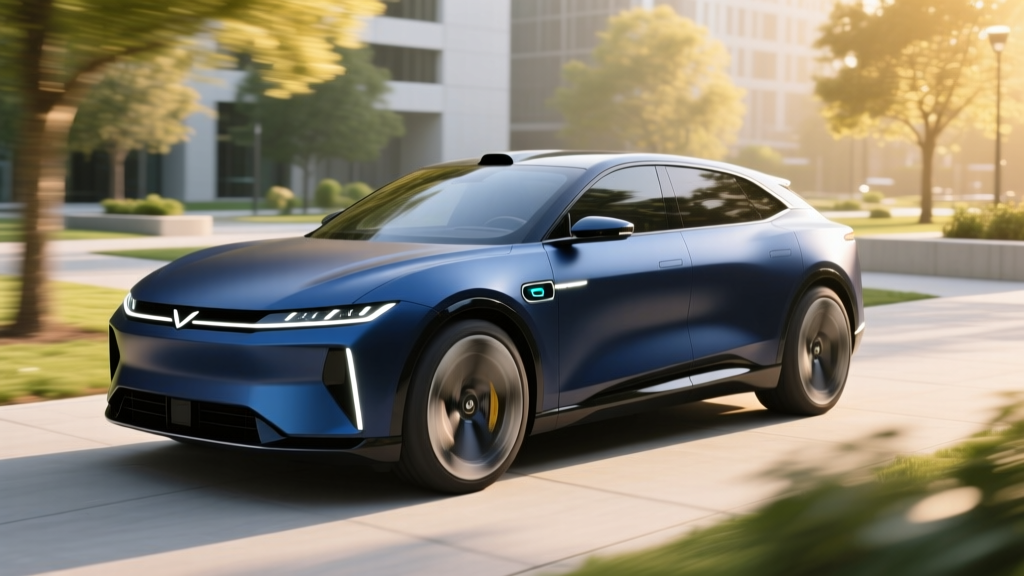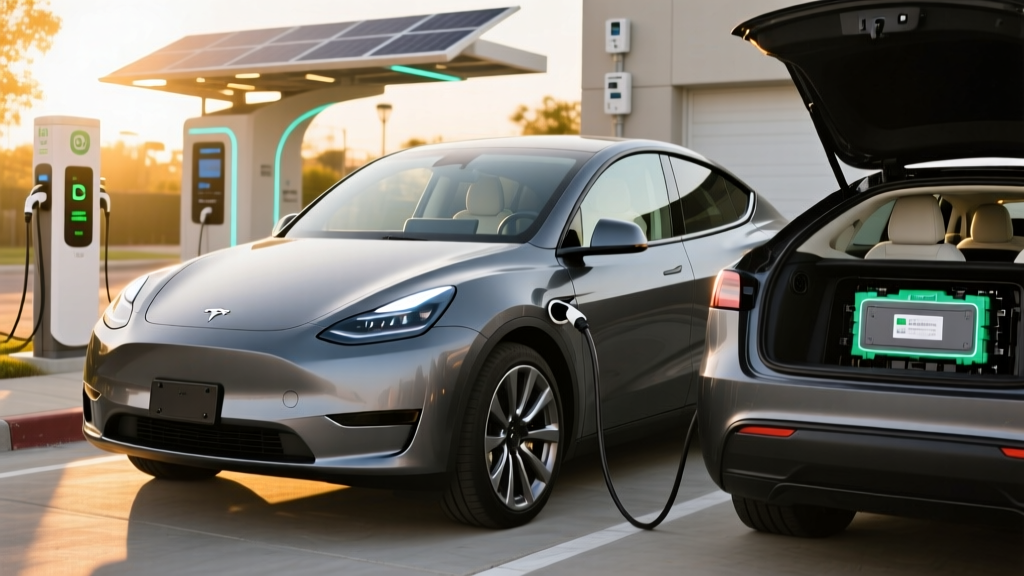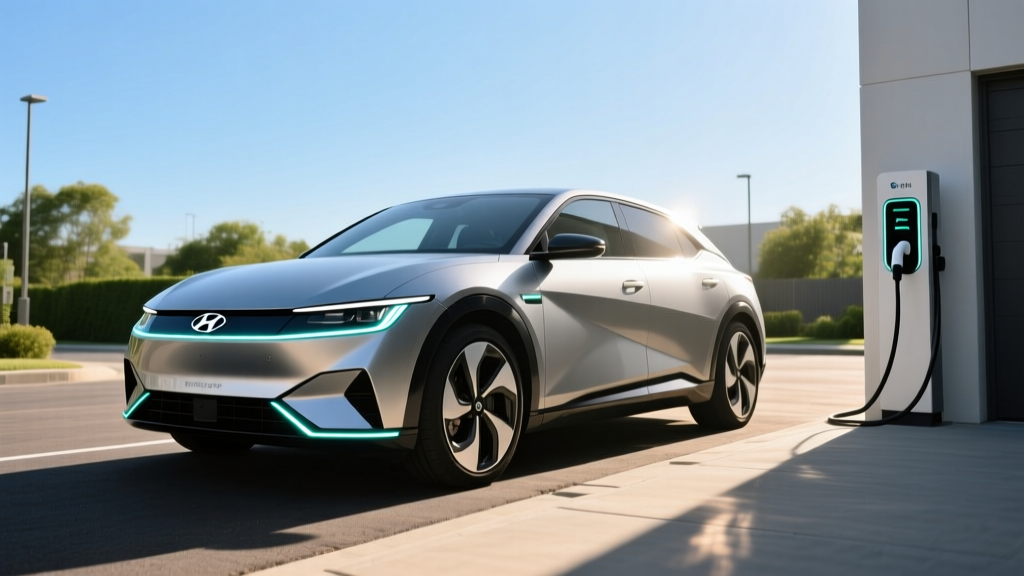
The Hyundai Ioniq 5 AWD occupies a rare sweet spot in the midsize electric crossover segment: it pairs dual-motor traction with an 84 kWh battery, blistering DC fast-charge speeds, and a starting price that undercuts several rivals — all while wrapping it in retro-futuristic styling that still turns heads five years after its debut. For the 2026 model year, Hyundai has refined the formula with incremental software updates, expanded NACS native charging compatibility, and continued eligibility for the full $7,500 federal tax credit under IRS §30D rules.
But spec sheets only tell part of the story. After driving the Ioniq 5 AWD across highway corridors, cold-weather commutes, and repeated DC fast-charge sessions, here's the full picture — including where the real-world numbers diverge from the EPA sticker.
Range, Efficiency, and Real-World Expectations
The 2026 Ioniq 5 AWD carries an EPA-estimated range of 290 miles on the SEL and Limited trims equipped with the 84 kWh (usable) battery pack. The EPA rates it at 110 MPGe combined (113 city / 106 highway), translating to roughly 30 kWh per 100 miles of mixed driving.
EPA sticker: 290 miles. In practice, expect ~250–270 miles on sustained highway driving at 70–75 mph, where aerodynamic drag hits boxy crossovers hardest. In cold weather (below 30°F), plan for 20–30% range reduction, dropping effective range to roughly 200–230 miles without preconditioning. City driving with regenerative braking maximized can push past 290 miles in mild conditions.
The AWD variant sacrifices about 20–30 miles of range compared to the RWD Long Range model (EPA 318 miles) due to the additional front motor, increased weight, and higher rolling resistance from wider tires on Limited trims. If maximum range is your priority and you don't need all-wheel-drive traction, the RWD variant is the efficiency play.
| Spec | Value |
|---|---|
| EPA Range (AWD) | 290 miles |
| Battery (Usable) | 84 kWh, NMC (Nickel Manganese Cobalt) |
| Max DC Fast Charge | 250 kW peak (800V architecture) |
| 10–80% DC Charge Time | ~18 minutes (optimal conditions) |
| Level 2 Home Charge Rate | 10.9 kW (~36 miles/hr) |
| Drivetrain | Dual-motor AWD |
| Horsepower | 320 hp combined |
| 0–60 mph | 4.5 seconds |
| Efficiency | 110 MPGe / 30 kWh/100mi |
| Cargo (rear seats up) | 27.2 cu ft |
| Cargo (rear seats folded) | 59.3 cu ft |
| Frunk | 0.85 cu ft (AWD) |
| Rear Legroom | 39.4 inches |
| Battery Warranty | 10 years / 100,000 miles |
| Base MSRP (SEL AWD) | $49,850 |
Charging Speed: DC Fast, Level 2, and the 800V Advantage
The Ioniq 5's defining technical advantage remains its 800-volt E-GMP architecture, shared with the Kia EV6 and Genesis GV60. This enables peak DC fast-charging rates of 250 kW at compatible 350 kW chargers — placing it among the fastest-charging EVs available at any price point.
| Charge Level | Power | Speed / Time | Typical Use Case |
|---|---|---|---|
| Level 1 (120V) | ~1.4 kW | ~4–5 miles/hr | Emergency / overnight trickle |
| Level 2 (240V, 48A) | 10.9 kW | ~36 miles/hr (full charge ~9 hrs) | Home daily charging |
| DC Fast (350 kW station) | 250 kW peak | 10–80% in ~18 min | Road-trip stops |
| DC Fast (150 kW station) | ~130 kW avg | 10–80% in ~30 min | Common public chargers |
Charging curve reality: The 250 kW peak is achievable between roughly 10–40% state of charge, after which the curve tapers progressively. From 40–60%, expect ~180 kW; from 60–80%, ~120 kW; and above 80%, charging slows dramatically to protect the battery — often below 50 kW. This is why Hyundai quotes 10–80% times rather than 0–100%. For road trips, plan your stops around the 10–80% window for maximum throughput.
For the 2026 model year, the Ioniq 5 comes equipped with a native NACS (Tesla-style) charge port, granting direct access to Tesla Supercharger stations without an adapter. This dramatically expands the reliable fast-charging network available to Ioniq 5 owners, particularly on interstate corridors where Supercharger coverage often outpaces Electrify America and other CCS networks.
Home charging setup: On a 48-amp Level 2 circuit (requiring a 60-amp breaker), the Ioniq 5 pulls 10.9 kW, adding roughly 36 miles of range per hour. A full overnight charge from 10% to 100% takes approximately 9 hours. Budget $500–$1,500 for professional Level 2 home installation depending on your electrical panel's proximity to the garage and whether a panel upgrade is needed.
Performance and Drivetrain
The dual-motor AWD powertrain produces 320 horsepower and 446 lb-ft of torque, delivering a manufacturer-claimed 0–60 mph time of 4.5 seconds. That's brisk enough to merge confidently onto any freeway and overtake without hesitation, though it trails the Kia EV6 GT-Line AWD (3.4 seconds) and Tesla Model Y Performance (3.5 seconds).
Where the Ioniq 5 AWD excels is in everyday drivability. The torque delivery is linear and immediate, the steering is well-weighted, and the ride quality is notably compliant for a crossover on 20-inch wheels (Limited trim). The suspension absorbs highway expansion joints and potholes without transmitting harshness into the cabin — a tangible advantage over the firmer-riding EV6.
The AWD system uses a front induction motor that can disconnect under light-load cruising to reduce drag and improve efficiency. In practice, the car operates as RWD during gentle highway driving, engaging the front motor only under acceleration, low-traction conditions, or when the navigation system anticipates terrain changes.
Towing capacity is rated at 2,300 pounds with the AWD powertrain — sufficient for a small utility trailer or a pair of dirt bikes, but not enough for a loaded camper. If towing is a priority, look to the Ford F-150 Lightning or Rivian R1S instead.
Interior, Cargo, and Technology
The Ioniq 5's cabin remains one of the most spacious and thoughtfully designed in the segment. The flat floor (a benefit of the dedicated E-GMP platform) and long 118.1-inch wheelbase create genuine limousine-like rear legroom at 39.4 inches — more than the Tesla Model Y and comparable to midsize luxury sedans.
Cargo volume stands at 27.2 cubic feet behind the rear seats and 59.3 cubic feet with the 60/40 split rear seats folded. The frunk (front trunk) on AWD models is a shallow 0.85 cubic feet — enough for a charging cable bag but not much more. The RWD model offers a larger 2.1 cu-ft frunk since there's no front motor to package around.
The infotainment system uses a 12.3-inch dual-screen setup (instrument cluster + center touchscreen) running Hyundai's latest software with wireless Apple CarPlay and Android Auto. The center console slides forward and back on a track ("Universal Island"), useful for exiting through the passenger side in tight parking spots. Physical buttons for climate control and volume persist — a practical choice that avoids the touchscreen-only frustration found in some competitors.
Driver assistance: Hyundai's Highway Driving Assist 2 (HDA2) is standard on SEL AWD and above, offering adaptive cruise control with stop-and-go, lane centering, and lane-change assist. This is an SAE Level 2 system — it assists with steering and speed but requires continuous driver attention and hands on or near the wheel. It is not self-driving. HDA2 performs competently on divided highways but can be overly cautious with lane centering and occasionally hesitates during merging scenarios.
Pricing, Trims, and Federal Tax Credit Eligibility
The 2026 Ioniq 5 AWD is offered in three trims:
| Trim | MSRP | Est. After $7,500 Credit | Key Additions |
|---|---|---|---|
| SEL AWD | $49,850 | ~$42,350 | HDA2, heated seats, 10.9 kW onboard charger, NACS port |
| SEL Premium AWD | $53,400 | ~$45,900 | Panoramic sunroof, HUD, premium audio, ventilated front seats |
| Limited AWD | $57,900 | ~$50,400 | 20" wheels, leather, 360° camera, remote parking assist, HDA2 w/ lane change |
Federal tax credit (IRS §30D): As of the 2026 tax year, the Ioniq 5 qualifies for the full $7,500 federal EV tax credit when purchased new, and the credit can be transferred to the dealer at point of sale as an immediate purchase-price reduction. However, eligibility depends on meeting several requirements:
- MSRP cap: Vehicle MSRP must not exceed $80,000 for SUVs/crossovers (all Ioniq 5 trims comply)
- Buyer income cap: Modified AGI must not exceed $150,000 (single), $225,000 (head of household), or $300,000 (joint filing)
- Battery sourcing: Critical minerals and battery components must meet escalating percentage thresholds from qualified trade partners — Hyundai's supply chain currently meets 2026 thresholds
- Final assembly: Vehicle must be assembled in North America (the Ioniq 5 for the U.S. market is built at Hyundai's Ellabell, Georgia plant)
Always verify current eligibility at irs.gov before purchasing, as battery-sourcing rules tighten annually and can affect eligibility mid-year.
Pros, Cons, and How It Compares
- Class-leading DC fast-charge speed (250 kW, 18 min 10–80%)
- Native NACS port — direct Supercharger access
- Spacious, flat-floor cabin with excellent rear legroom
- Compliant ride quality even on 20-inch wheels
- Full $7,500 federal tax credit eligibility
- 10-year/100,000-mile battery warranty
- Physical climate buttons and sliding center console
- Tiny frunk on AWD (0.85 cu ft)
- No front trunk storage for charging cables on AWD
- Highway range falls ~20–40 miles below EPA in real-world testing
- Rear wiper absent (controversial omission for a crossover)
- HDA2 is competent but less confident than GM Super Cruise on mapped highways
- Limited towing capacity (2,300 lbs)
vs. Tesla Model Y Long Range AWD: The Model Y offers slightly more EPA range (~315 miles), access to the Supercharger network (though Ioniq 5 now has native NACS access too), and a more robust software ecosystem. But the Ioniq 5 counters with faster peak charging, a more comfortable ride, a more intuitive interior, and a lower effective price after the tax credit (the Model Y's credit eligibility has fluctuated with sourcing-rule changes).
vs. Kia EV6 GT-Line AWD: The EV6 shares the same E-GMP platform and 800V architecture, so charging speeds are nearly identical. The EV6 is sportier to drive and quicker in GT-Line form, but its rear seat and cargo area are noticeably tighter. Choose the Ioniq 5 for space and comfort; choose the EV6 for handling engagement.
vs. Ford Mustang Mach-E Premium AWD: The Mach-E offers a sportier driving feel and BlueCruise hands-off driving on compatible highways. However, its DC charging speed (~150 kW peak) is significantly slower, and real-world range consistency has been less impressive. The Ioniq 5 charges faster and provides a more spacious cabin.
Who Should Buy the Ioniq 5 AWD?
The Ioniq 5 AWD is the right pick if you need a two-row family crossover for daily commuting and regular road trips, you value ultra-fast DC charging for highway travel, and you live in a climate where all-wheel drive adds genuine winter traction value. It works especially well for buyers who can install Level 2 home charging and who want a vehicle that feels premium without crossing into luxury-badge pricing.
It's not the best choice if you need three rows, if you tow regularly, if your budget tops out below $40,000 (consider the RWD SEL or a used EV), or if you want hands-free highway driving on par with GM's Super Cruise.
Frequently Asked Questions
What is the real-world range of the 2026 Ioniq 5 AWD?
Expect roughly 250–270 miles on highway road trips at 70–75 mph, and 200–230 miles in cold weather below 30°F. City driving with regenerative braking can meet or slightly exceed the 290-mile EPA estimate in mild temperatures.
How fast does the Ioniq 5 AWD charge at home and on the road?
At home on a 240V Level 2 charger, it adds about 36 miles of range per hour (10.9 kW), fully charging overnight in ~9 hours. On a 350 kW DC fast charger, it peaks at 250 kW and charges from 10–80% in approximately 18 minutes under optimal battery temperature conditions.
Does the 2026 Ioniq 5 qualify for the $7,500 federal EV tax credit?
Yes — as of the 2026 tax year, the Ioniq 5 qualifies for the full $7,500 credit, which can be applied as a point-of-sale price reduction at the dealer. Eligibility requires that your income falls below IRS thresholds ($150K single / $300K joint) and that battery-sourcing requirements continue to be met. Verify at irs.gov before purchase.
Is the Ioniq 5 AWD worth buying over the Tesla Model Y?
If you prioritize ride comfort, interior space, faster DC charging, and a more intuitive cabin layout, the Ioniq 5 AWD is the stronger pick. The Model Y wins on software features, slightly longer EPA range, and cargo volume. With native NACS on the 2026 Ioniq 5, the Supercharger-access gap has closed.
What is the Ioniq 5 battery warranty?
Hyundai covers the high-voltage battery for 10 years or 100,000 miles (whichever comes first), with a capacity-retention threshold typically set at 70% of original capacity. The powertrain and basic vehicle warranty is 5 years / 60,000 miles. Source: Hyundai warranty information.
Does the Ioniq 5 AWD have a frunk?
Yes, but it's very small — just 0.85 cubic feet on AWD models due to the front motor. It's enough for a charging cable bag or a small emergency kit, but don't expect meaningful grocery or luggage storage up front.