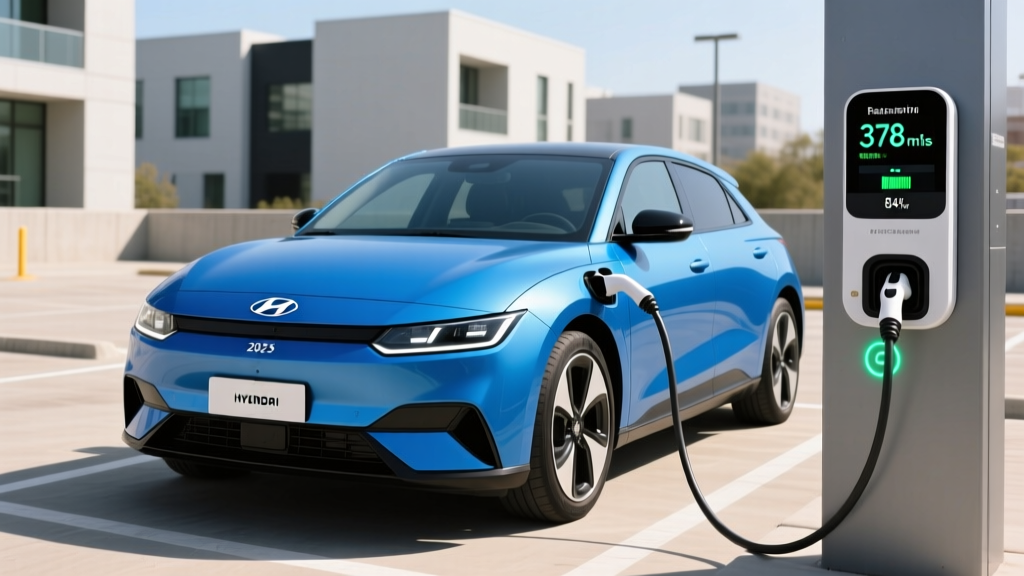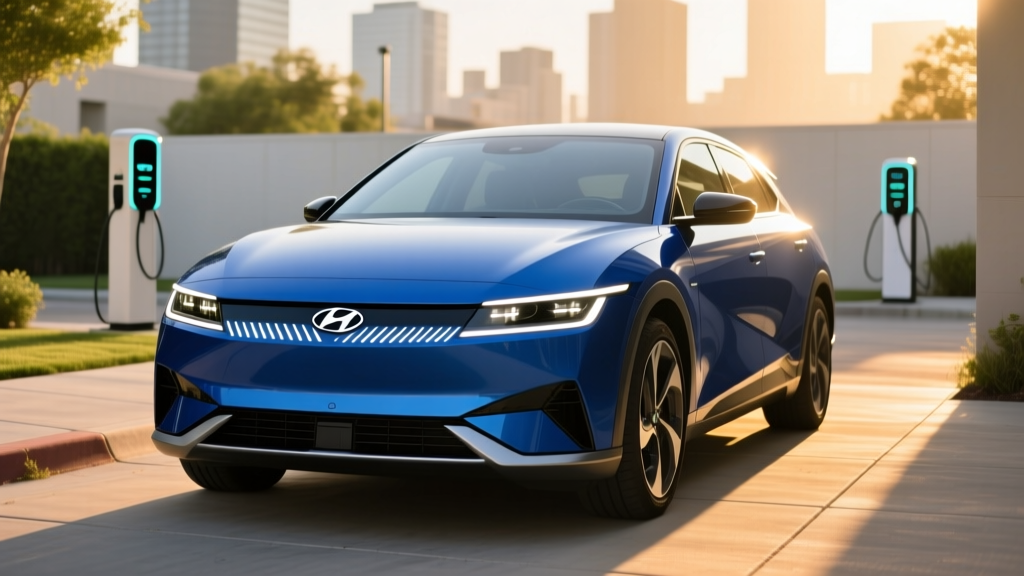
Hyundai's Ioniq 5 has been one of the most compelling electric crossovers since its 2022 debut, but its price has historically kept it just out of reach for some buyers. For the 2026 model year, Hyundai has enacted a meaningful Hyundai Ioniq 5 2026 price reduction, trimming the base MSRP by roughly $2,500 while adding the Tesla NACS charge port as standard equipment. The result is a more accessible, more convenient EV that still delivers class-leading charging speeds and a practical 318-mile EPA range.
We've spent extensive time with the Ioniq 5 across multiple model years — on highway road trips, in freezing winter conditions, and at DC fast chargers from Electrify America to Tesla Superchargers. Below is our data-driven review covering real-world range, charging behavior, pricing after the federal tax credit, and whether the 2026 Ioniq 5 earns its spot in your garage.
2026 Hyundai Ioniq 5 Key Specifications
| Specification | SE / SEL (RWD) | SEL / Limited (AWD) |
|---|---|---|
| EPA Range | 318 miles | 290 miles |
| Battery (usable) | 84.0 kWh (NMC) | 84.0 kWh (NMC) |
| Efficiency (MPGe) | 117 MPGe combined | 110 MPGe combined |
| Efficiency (kWh/100 mi) | 29 kWh/100 mi | 31 kWh/100 mi |
| Peak DC Fast Charge | 240 kW | 240 kW |
| 10–80% DC Charge Time | ~18 minutes | ~18 minutes |
| Level 2 Charge Rate | 10.9 kW (~37 mi/hr) | 10.9 kW (~37 mi/hr) |
| Charge Port | NACS (native) | NACS (native) |
| Horsepower | 168 hp | 320 hp |
| Torque | 258 lb-ft | 446 lb-ft |
| 0–60 mph | 7.2 seconds | 4.5 seconds |
| Drivetrain | RWD (single motor) | AWD (dual motor) |
| Base MSRP | $39,950 | $47,400 |
Source: Hyundai Motor America official specifications and fueleconomy.gov (EPA). Figures reflect 2026 model-year data.
2026 Price Reduction: What Changed and What It Means
The headline for the 2026 model year is the Hyundai Ioniq 5 2026 price reduction. The SE Standard Range RWD now starts at $39,950 (including destination), down from the equivalent 2025 trim's $42,450. The popular SEL AWD drops to $47,400, and the range-topping Limited AWD starts at $53,950.
This isn't just a numbers game — the price cut comes alongside a critical hardware upgrade. The 2026 Ioniq 5 ships with a native NACS (North American Charging Standard) port, eliminating the need for a CCS-to-NACS adapter at Tesla Superchargers. Hyundai joined Ford, Rivian, and others in adopting NACS, and the 2026 Ioniq 5 is the first model year with the port built in from the factory.
The Ioniq 5 is assembled in Ellabell, Georgia (at Hyundai's Metaplant America facility). This US production is significant for IRS §30D federal tax credit eligibility. Buyers who meet income and battery-sourcing requirements can claim up to $7,500 — and as of 2024, the credit can be transferred to the dealer at the point of sale, effectively reducing the purchase price on the spot.
- SE RWD after credit: ~$32,450
- SEL AWD after credit: ~$39,900
- Limited AWD after credit: ~$46,450
Eligibility depends on modified adjusted gross income (≤$150K single / ≤$300K joint), battery critical-mineral and component sourcing thresholds, and the vehicle's MSRP staying under the $80,000 SUV cap. Always verify current rules at irs.gov and consult a tax professional.
Real-World Range: EPA Sticker vs. What You'll Actually Get
EPA estimate: 318 miles (SE RWD) / 290 miles (AWD)
Real-world highway (70–80 mph, moderate weather): ~255–275 miles (RWD) / ~235–250 miles (AWD)
Cold-weather highway (below 30°F): ~210–240 miles (RWD) / ~195–215 miles (AWD)
City / stop-and-go with regen: Can meet or slightly exceed EPA at 320+ miles
The Ioniq 5's 84.0 kWh (usable) NMC lithium-ion battery pack is paired with an efficient heat pump (standard on all trims), which helps mitigate cold-weather range loss. In our experience, the heat pump keeps cabin heating from devastating the battery in winter — you'll still see a 20–25% reduction in freezing highway driving, but that's better than many competitors without heat pumps.
For context, the EPA combined cycle mixes city and highway driving. If your commute is mostly suburban and city, you'll trend closer to the 318-mile sticker. If you do sustained 80-mph highway runs — the most energy-intensive driving an EV does — plan for roughly 80–85% of the EPA figure in warm weather, and 65–75% in deep winter.
One practical note: the Ioniq 5's battery preconditioning feature (activated when you navigate to a DC fast charger) warms the pack to optimize charge speed. This uses some energy in transit but pays off with faster charging on arrival — a worthwhile trade-off on road trips.
Charging Speed: The Ioniq 5's Strongest Advantage
The Ioniq 5's 800-volt electrical architecture remains one of its defining features, enabling charge speeds that still outpace most rivals in this price bracket. Here's what the numbers look like across charging levels:
| Charging Level | Power (kW) | Speed (miles of range per hour) | Notes |
|---|---|---|---|
| Level 1 (120V household) | ~1.4 kW | ~5 mi/hr | Emergency/trickle only |
| Level 2 (240V home, 48A) | 10.9 kW | ~37 mi/hr | Full charge in ~8 hours |
| DC Fast Charge (peak) | 240 kW | ~650+ mi/hr (at peak) | 10–80% in ~18 min |
| DC Fast Charge (150 kW station) | ~150 kW | ~400 mi/hr | 10–80% in ~25 min |
| Tesla Supercharger V3/V4 | Up to 250 kW | ~600+ mi/hr | Native NACS on 2026 model |
The charging curve matters more than the peak number. The Ioniq 5 sustains high charge rates from roughly 10% to 55% SoC, pulling near its 240 kW peak. From 55% to 80%, the rate tapers to approximately 150–100 kW. Above 80%, it drops sharply — as all lithium-ion batteries do to protect cell health. The practical takeaway: plan your road-trip stops around the 10–80% window, where the Ioniq 5 shines.
With the native NACS port on the 2026 model, you gain access to Tesla's Supercharger network (now over 20,000 stalls in North America) without an adapter. This dramatically expands reliable fast-charging options, particularly on rural routes where Tesla coverage often exceeds Electrify America and EVgo.
For home charging, a Level 2 wallbox at 48 amps (10.9 kW) will replenish the full 84 kWh battery overnight in about 8 hours. Budget roughly $500–$1,200 for a quality Level 2 charger (ChargePoint Home Flex, Emporia Level 2, or Wallbox Pulsar Plus) and $500–$2,500 for electrician installation, depending on whether your panel needs an upgrade. A licensed electrician should evaluate your 200A service panel before installation.
Performance, Driving Dynamics, and Efficiency
The 2026 Ioniq 5 offers two powertrain configurations:
RWD (SE, SEL): A single rear-mounted motor produces 168 hp and 258 lb-ft of torque. The 0–60 mph time of 7.2 seconds is adequate for merging and passing, though not exciting. The payoff is efficiency: 117 MPGe combined (29 kWh/100 mi), which translates to roughly $0.04–$0.06 per mile on average US electricity rates.
AWD (SEL, Limited): Dual motors deliver 320 hp and 446 lb-ft, dropping the 0–60 mph time to 4.5 seconds. This is genuinely quick — competitive with a BMW X3 M40i — and the instant torque makes highway passing effortless. Efficiency dips slightly to 110 MPGe (31 kWh/100 mi), a reasonable trade for the performance and all-weather traction.
Ride quality is a standout. The Ioniq 5 uses a multi-link rear suspension that absorbs highway imperfections smoothly, and the steering is weighted well for a crossover. Road noise is minimal at speed, aided by acoustic laminated glass on higher trims. The 106.3-inch wheelbase provides stable highway manners, and the low center of gravity (battery pack under the floor) keeps body roll controlled in corners.
Regenerative braking is adjustable via steering-wheel paddles, from coasting (Level 0) to near one-pedal driving (Level 3/i-PEDAL). The i-PEDAL mode is strong enough to handle most city driving without touching the friction brake, maximizing energy recapture.
Interior Space, Cargo, and Technology
The Ioniq 5's "Parametric Pixel" design language carries into a surprisingly spacious cabin, thanks to the flat floor enabled by the dedicated E-GMP EV platform.
| Dimension | Measurement |
|---|---|
| Front legroom | 41.7 inches |
| Rear legroom | 39.4 inches |
| Front headroom | 39.6 inches |
| Cargo (behind rear seats) | 27.2 cu ft |
| Cargo (rear seats folded) | 59.3 cu ft |
| Frunk (front trunk) | 2.0 cu ft (stores charging cables) |
| Wheelbase | 118.1 inches |
The dual 12.3-inch displays (instrument cluster and infotainment) run Hyundai's latest ccNC software, which supports wireless Apple CarPlay and Android Auto, over-the-air updates, and integrated navigation with DC fast-charger routing. The center console slides forward and back (the "Universal Island"), providing flexible storage or a pass-through to exit on the passenger side in tight parking spots.
Driver assistance: The Ioniq 5 comes with Hyundai SmartSense, including adaptive cruise control with stop-and-go, lane-keeping assist, blind-spot monitoring, and rear cross-traffic avoidance. Available Highway Driving Assist 2 (HDA 2) adds lane-centering and lane-change assist. Note: HDA 2 is a SAE Level 2 driver-assist system — the driver must remain fully engaged with hands on the wheel and eyes on the road at all times. It is not autonomous driving.
Unique feature: Vehicle-to-Load (V2L) capability allows the Ioniq 5 to power external devices — up to 3.6 kW through the interior outlet or the charge-port adapter. This is useful for camping, tailgating, or running power tools from a job site.
Notable drawbacks: The rear wiper is absent (a common complaint Hyundai has not addressed). The frunk is small compared to the Ford Mustang Mach-E or Tesla Model Y. Rear visibility is compromised by the thick C-pillars, making the surround-view camera (Limited trim) nearly essential. The infotainment system, while functional, lacks the responsiveness of Tesla's or Rivian's interfaces.
Pricing, Trims, and the Tax Credit Picture
Here's the full 2026 Ioniq 5 pricing breakdown by trim, with the federal tax credit applied where eligible:
| Trim | Drivetrain | MSRP | Est. After §30D Credit |
|---|---|---|---|
| SE Standard Range | RWD | $39,950 | ~$32,450 |
| SEL | RWD | $44,250 | ~$36,750 |
| SEL | AWD | $47,400 | ~$39,900 |
| Limited | AWD | $53,950 | ~$46,450 |
Federal tax credit eligibility checklist (§30D, 2026 rules):
- ✅ Vehicle MSRP: Must be ≤$80,000 for SUVs — all Ioniq 5 trims qualify.
- ✅ US assembly: Built at Hyundai Metaplant America in Georgia — qualifies.
- ⚠️ Battery sourcing: Critical-mineral and battery-component thresholds phase up yearly. The Ioniq 5's battery supply chain has been adjusted for US compliance, but verify the specific VIN at fueleconomy.gov before purchase.
- ⚠️ Buyer income cap: ≤$150,000 MAGI (single) / ≤$225,000 (head of household) / ≤$300,000 (joint filers).
- ✅ Point-of-sale transfer: The credit can be applied at purchase, reducing your out-of-pocket cost immediately.
State and local incentives may stack on top (e.g., Colorado offers up to $5,000, California's CVRP provides up to $7,000 for income-qualified buyers). Check your state energy office for current programs.
How the Ioniq 5 Stacks Up Against Competitors
The 2026 price reduction positions the Ioniq 5 aggressively against key rivals:
| Vehicle | EPA Range | Peak DC Charge | 10–80% Time | Starting MSRP |
|---|---|---|---|---|
| Hyundai Ioniq 5 (RWD) | 318 mi | 240 kW | ~18 min | $39,950 |
| Tesla Model Y (LR RWD) | 320 mi | 250 kW | ~22 min | $44,990 |
| Ford Mustang Mach-E (ER RWD) | 320 mi | 150 kW | ~36 min | |
| VW ID.4 (Pro S RWD) | 291 mi | 175 kW | ~28 min | $43,195 |
The Ioniq 5's DC fast-charging speed is its clear differentiator. At 240 kW peak with an 800V architecture, it charges meaningfully faster than the Mach-E and ID.4, and slightly faster than the Model Y on non-Tesla networks. On a road trip, the difference between 18 minutes (Ioniq 5) and 36 minutes (Mach-E) per stop adds up quickly.
The Tesla Model Y remains the benchmark for Supercharger network access and cargo space (76 cu ft max), but the Ioniq 5 now matches Supercharger access with its native NACS port, while offering a more comfortable ride and better rear-seat comfort than the Model Y's firm, minimalist cabin.
- You want the fastest DC charging in this price class for road trips
- You value ride comfort and a spacious rear seat over sporty handling
- You need V2L capability for camping or job-site power
- You want native Tesla Supercharger access without an adapter
❌ Look elsewhere if:
- Maximum cargo space is your priority (Model Y wins at 76 cu ft)
- You want a front trunk large enough for a carry-on bag
- You prefer a single-screen, minimalist interface (Tesla/Rivian)
- You need third-row seating (Kia EV9 or VW ID.Buzz)
Warranty and Long-Term Ownership
Hyundai backs the Ioniq 5 with one of the strongest warranties in the EV segment:
- Battery: 10 years / 100,000 miles (capacity retention ≥70%)
- Powertrain: 10 years / 100,000 miles
- New-vehicle limited: 5 years / 60,000 miles
- Roadside assistance: 5 years / unlimited miles
- Complimentary maintenance: 3 years / 36,000 miles
The 10-year battery warranty is among the longest in the industry, matched by Kia but exceeding Tesla's 8-year/120,000-mile coverage. The 70% capacity retention threshold is standard — if the battery drops below 70% of its original capacity within the warranty period, Hyundai will repair or replace it.
Long-term degradation data for the Ioniq 5's NMC pack is still accumulating (the model launched for 2022), but early fleet data and Hyundai's cell-level management suggest typical degradation of 5–8% over the first 100,000 miles — consistent with modern liquid-cooled NMC packs.
Pros and Cons
- Class-leading 240 kW DC fast charging (10–80% in ~18 min)
- Native NACS port — no adapter needed at Tesla Superchargers
- Spacious cabin with flat floor and generous rear legroom
- Comfortable, quiet ride quality
- Standard heat pump for cold-weather efficiency
- V2L capability (3.6 kW)
- 10-year/100,000-mile battery and powertrain warranty
- Competitive pricing after the 2026 price reduction
- No rear wiper
- Small frunk (2.0 cu ft) — barely fits charging cables
- Cargo space trails Model Y (59.3 vs 76 cu ft max)
- Thick C-pillars limit rear visibility
- Infotainment not as responsive as Tesla or Rivian
- RWD model's 168 hp feels underwhelming for the price
- HDA 2 requires subscription on some trims for full features
Who the 2026 Hyundai Ioniq 5 Is Best For
Daily commuters (30–60 miles round trip): The Ioniq 5 is an outstanding commuter. With home Level 2 charging, you'll start every day with a full battery and rarely visit a public charger. The RWD model's 117 MPGe keeps per-mile costs under $0.05 on average electricity rates.
Families: Two rows of seating with ample rear legroom (39.4 inches) and easy car-seat installation make this a strong family hauler. The sliding center console and wide-opening rear doors are practical touches. If you need three rows, look at the Kia EV9.
Road trippers: This is where the Ioniq 5's charging speed shines. With 18-minute 10–80% stops and native Supercharger access, long-distance travel is genuinely convenient. Plan for one 20-minute stop every 2.5–3 hours of driving.
Cold-climate drivers: The standard heat pump and battery preconditioning give the Ioniq 5 an edge in winter. Expect 20–25% range loss in freezing highway conditions — manageable with the 318-mile EPA range on RWD models.
Frequently Asked Questions
What is the real-world range of the 2026 Hyundai Ioniq 5?
The EPA rates the RWD model at 318 miles and the AWD at 290 miles. In real-world highway driving at 70–80 mph, expect approximately 255–275 miles (RWD) or 235–250 miles (AWD) in moderate weather. In freezing temperatures, highway range drops to roughly 210–240 miles (RWD). City driving with regenerative braking can meet or exceed EPA estimates.
How fast does the Ioniq 5 charge at home and on the road?
At home on a Level 2 charger (240V, 48 amps), the Ioniq 5 charges at 10.9 kW, adding about 37 miles of range per hour — a full charge takes roughly 8 hours. On DC fast chargers, it peaks at 240 kW and can charge from 10% to 80% in approximately 18 minutes, thanks to its 800-volt architecture.
Does the 2026 Ioniq 5 qualify for the $7,500 federal EV tax credit?
The Ioniq 5 is assembled in Georgia and falls under the $80,000 MSRP cap for SUVs, making it potentially eligible for the full $7,500 under IRS §30D. However, eligibility also depends on the buyer's income (≤$150K single / ≤$300K joint), battery critical-mineral and component sourcing compliance, and the specific vehicle VIN. Verify at irs.gov and confirm with your dealer before purchase. The credit can be transferred at the point of sale.
Is the 2026 Ioniq 5 worth buying over the Tesla Model Y?
It depends on your priorities. The Ioniq 5 offers faster DC charging, a more comfortable ride, better rear-seat comfort, and a stronger warranty (10 years vs Tesla's 8 years). The Model Y provides more cargo space (76 vs 59.3 cu ft), a more responsive infotainment system, and a slightly longer EPA range. With the 2026 native NACS port, the Ioniq 5 now matches Supercharger access, removing one of Tesla's biggest advantages.
How long will the Ioniq 5 battery last?
Hyundai warranties the battery for 10 years or 100,000 miles against capacity loss below 70%. Based on early fleet data and the chemistry's characteristics, expect roughly 5–8% degradation over the first 100,000 miles. With proper care (avoiding frequent 100% charges, using DC fast charging judiciously), the NMC pack should retain usable capacity well beyond 150,000 miles.
Does the Ioniq 5 have a NACS or CCS charge port?
The 2026 Hyundai Ioniq 5 comes with a native NACS (Tesla-style) charge port as standard equipment, replacing the CCS port used on 2022–2025 models. This provides direct access to Tesla Superchargers without an adapter. For legacy CCS chargers, Hyundai includes a NACS-to-CCS adapter.
Sources: EPA / fueleconomy.gov, Hyundai Motor America, IRS §30D Clean Vehicle Credits, IIHS.