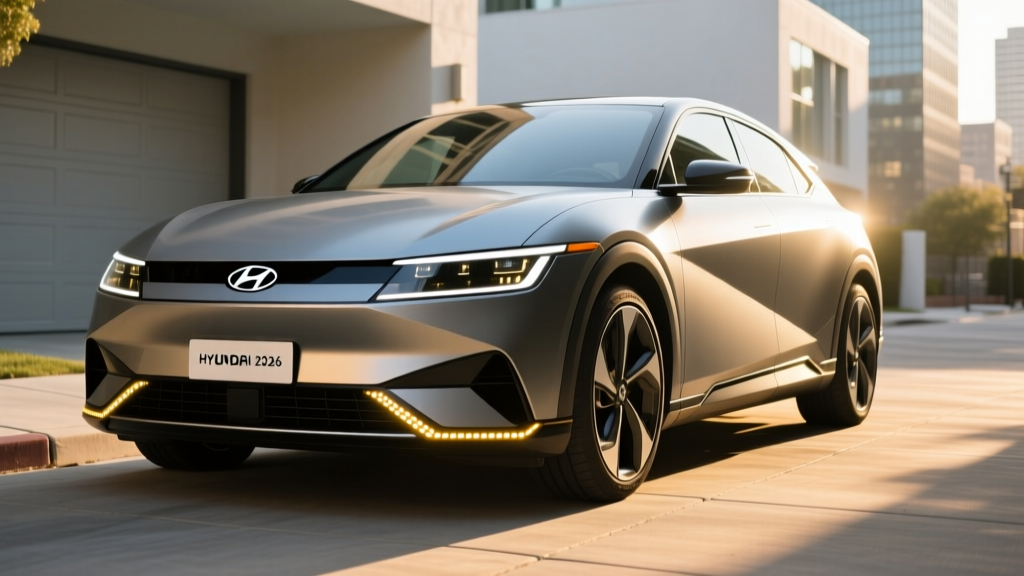
The Hyundai Ioniq 5 enters the 2026 model year as one of the most well-rounded electric crossovers on the market — but with the EV incentive landscape shifting, finding the right Hyundai Ioniq 5 2026 discount requires understanding more than just dealer markups. Between federal tax credits, state rebates, and Hyundai's own incentive programs, the actual out-of-pocket cost can vary by over $10,000 depending on your situation. This review breaks down exactly what you'll pay, what you'll get, and whether the Ioniq 5 still earns its reputation against a growing field of competitors.
2026 Ioniq 5 Pricing: Where the Discounts Actually Live
Hyundai has streamlined the Ioniq 5 lineup for 2026, continuing with the Standard Range and Long Range configurations across SE, SEL, and Limited trims, plus the high-performance Ioniq 5 N. The key to maximizing your discount starts with understanding the base numbers.
| Trim | Drivetrain | MSRP | Est. §30D Credit | Effective Price |
|---|---|---|---|---|
| SE Standard Range | RWD | $42,600 | $7,500* | $35,100 |
| SE Long Range | RWD | $46,100 | $7,500* | $38,600 |
| SEL Long Range | AWD | $51,300 | $7,500* | $43,800 |
| Limited Long Range | AWD | $56,900 | $7,500* | $49,400 |
| Ioniq 5 N | AWD (Perf.) | $66,500 | Not eligible | $66,500 |
*Federal §30D credit eligibility requires meeting buyer income caps, battery component sourcing rules, and MSRP limits. The Ioniq 5 N exceeds the $80,000 MSRP cap when equipped with options, but base models qualify — always verify with your tax professional and the IRS §30D guidelines.
Federal EV Tax Credit Checklist (2026 Rules)
- MSRP cap: Vehicle must be under $80,000 (SUVs/crossovers like Ioniq 5 qualify)
- Income limits: AGI ≤ $150,000 single / $225,000 head of household / $300,000 joint
- Battery sourcing: Critical minerals and battery components must meet phased-in domestic/free-trade sourcing thresholds — Hyundai's Georgia plant assembly helps, but component rules tighten annually
- Point-of-sale transfer: You can transfer the credit to the dealer at purchase, reducing your down payment directly
- One-time use: You can only claim one new EV credit per year (and two per three-year period for used EVs)
Real-World Range: Beyond the EPA Sticker
2026 Ioniq 5 Range Reality Check
EPA Estimated: 305 miles (SE Long Range RWD) | 260 miles (SE Standard Range RWD) | 280 miles (SEL/Limited AWD)
Real-World Expectation: 250–275 miles highway (70–80 mph); 220–240 miles in freezing temperatures; 290+ miles city/mixed driving in mild weather
The Ioniq 5's 800V architecture and heat pump (standard on Long Range trims) help mitigate cold-weather losses compared to competitors, but expect a 15–25% range reduction in sub-freezing conditions.
According to fueleconomy.gov, the Long Range RWD achieves 114 MPGe combined (29 kWh/100mi), while the AWD variant drops to 101 MPGe combined (33 kWh/100mi). In our experience, sustained highway driving at 75+ mph pushes consumption closer to 35–38 kWh/100mi — something road-trippers should factor into their charging stop planning.
Battery, Charging & the 800V Advantage
The Ioniq 5 continues to use Hyundai's E-GMP platform with two battery options:
| Spec | Standard Range | Long Range |
|---|---|---|
| Usable Capacity | 58 kWh (LFP) | 77.4 kWh (NMC) |
| Chemistry | Lithium Iron Phosphate | Nickel Manganese Cobalt |
| Max DC Fast Charge | 180 kW peak | 240 kW peak |
| 10–80% DC Time | ~22 minutes | ~18 minutes |
| Level 2 Home Charging | 10.9 kW (44 mi/hr) | 10.9 kW (44 mi/hr) |
| Charge Port | NACS (native Tesla Supercharger access) | NACS (native Tesla Supercharger access) |
The 800V architecture is the Ioniq 5's ace. While many competitors peak at 150–175 kW and sustain that rate briefly, the Ioniq 5 Long Range can sustain above 200 kW from roughly 10% to 55% SoC before tapering. On a 350 kW Electrify America or Tesla V4 Supercharger, you'll add 200+ miles in about 15 minutes — a genuine road-trip advantage.
For 2026, Hyundai has fully transitioned to the NACS connector, meaning native access to Tesla's Supercharger network without an adapter. This dramatically expands reliable DC fast-charging options, particularly in rural corridors where CCS infrastructure remains sparse.
Home charging reality: On a 48-amp Level 2 circuit (requiring a 60-amp breaker), the Ioniq 5 recovers about 44 miles of range per hour. A full Standard Range charge takes ~5.5 hours; the Long Range takes ~7.5 hours. Most owners charging overnight from 20–80% will wake up fully ready. Installation costs for a dedicated 240V circuit typically run $800–$2,000 depending on panel proximity — budget accordingly.
Performance & Driving Dynamics
| Config | Horsepower | Torque | 0–60 mph | Top Speed |
|---|---|---|---|---|
| Standard Range RWD | 168 hp | 258 lb-ft | 7.4 sec | 115 mph |
| Long Range RWD | 225 hp | 258 lb-ft | 6.3 sec | 115 mph |
| Long Range AWD | 320 hp | 446 lb-ft | 4.5 sec | 115 mph |
| Ioniq 5 N | 641 hp (N Grin Boost) | 569 lb-ft | 3.25 sec | 162 mph |
The Long Range AWD strikes the best balance for most buyers: 320 hp provides confident highway merging and passing, while the dual-motor setup adds all-weather traction. The Ioniq 5 N is a legitimate performance machine — its simulated gear shifts and N e-Shift software make it the most engaging electric crossover to drive — but its 260-mile range and stiff ride make it a weekend car, not a daily commuter.
Ride quality on SE and SEL trims is compliant and quiet, with well-damped suspension that absorbs highway imperfections. The Limited's 20-inch wheels add a touch more road noise but improve cornering confidence. Steering is light and precise, though not particularly communicative — typical for the segment.
Interior, Cargo & Daily Livability
The Ioniq 5's retro-futuristic cabin remains one of its strongest selling points. The flat floor and generous wheelbase (118.1 inches) create limousine-like rear legroom — 41.7 inches, which beats most midsize SUVs. The sliding center console (on SEL and Limited) adds flexibility for front-seat storage.
| Measurement | Figure |
|---|---|
| Cargo (behind rear seats) | 27.2 cu ft |
| Cargo (rear seats folded) | 59.3 cu ft |
| Front Trunk (Frunk) | 0.85 cu ft (AWD) / 2.0 cu ft (RWD) |
| Front Legroom | 41.7 in |
| Rear Legroom | 41.7 in |
| Front Headroom | 39.6 in |
| Rear Headroom | 38.7 in |
Notable drawbacks: The frunk on AWD models is nearly useless — barely fitting a charging cable bag. Rear cargo space (27.2 cu ft) trails the Tesla Model Y (30.2 cu ft) and Ford Mustang Mach-E (29.7 cu ft). There's no rear windshield wiper, which is a genuine annoyance in rain and snow. And while the dual 12.3-inch displays are crisp, the capacitive touch controls for climate and media draw consistent complaints from owners who prefer physical buttons.
Tech, Safety & Driver Assistance
Every 2026 Ioniq 5 includes Hyundai SmartSense, the brand's Level 2 (SAE) driver-assistance suite:
- Highway Driving Assist 2 (HDA-2): Adaptive cruise + lane centering with lane-change assist on highways — one of the smoother Level 2 systems available
- Navigation-based Smart Cruise Control: Automatically slows for curves and speed limit changes
- Remote Smart Parking Assist: Move the car in/out of tight spaces via key fob (SEL/Limited)
- Digital Key 2: Use your phone as a key; share access with family members
- Vehicle-to-Load (V2L): Power devices or even your home during outages (up to 3.6 kW output via interior outlet or external adapter)
⚠️ Driver Assistance ≠ Self-Driving
The Ioniq 5's HDA-2 is a Level 2 SAE system. You must keep your hands on the wheel and eyes on the road at all times. It does not handle construction zones, unmapped roads, or severe weather autonomously. No consumer vehicle sold today is self-driving.
The Ioniq 5 earned an IIHS Top Safety Pick+ designation and a 5-star overall NHTSA rating, making it one of the safest choices in the electric crossover segment.
Warranty & Long-Term Ownership
| Coverage | Term |
|---|---|
| New Vehicle Limited | 5 years / 60,000 miles |
| Powertrain | 10 years / 100,000 miles |
| EV Battery (capacity retention) | 10 years / 100,000 miles (≥70% SoH) |
| Corrosion Perforation | 7 years / unlimited miles |
| Roadside Assistance | 5 years / unlimited miles |
| Complimentary Maintenance | 3 years / 36,000 miles |
Hyundai's battery warranty guarantees at least 70% state of health over 10 years or 100,000 miles. Real-world data from early 2022–2023 Ioniq 5 owners suggests NMC Long Range batteries degrade roughly 5–8% over the first 50,000 miles before stabilizing — well within warranty thresholds. The LFP Standard Range pack should degrade even less, as LFP chemistry offers superior cycle life, though with lower energy density.
Is the 2026 Ioniq 5 Worth It vs. Competitors?
Choose the Ioniq 5 If:
- You value ultra-fast DC charging (18-min 10–80%) for road trips
- You want native Tesla Supercharger access without adapters
- Rear-seat space is a priority (41.7" legroom beats the segment)
- You want V2L capability for camping or backup power
- You prefer Hyundai's 10-year/100k battery warranty
Look Elsewhere If:
- Maximum cargo space is critical (Model Y wins by ~3 cu ft)
- You want a front trunk large enough for a carry-on (Mach-E, Rivian R2)
- You need 350+ miles of range (consider Chevrolet Equinox EV or Model Y Long Range)
- You prefer physical buttons over touchscreen controls
✅ Pros
- Best-in-class DC fast charging speed (800V architecture)
- Native NACS / Tesla Supercharger access
- Spacious, flat-floor cabin with excellent rear legroom
- Standard heat pump on Long Range (cold-weather efficiency)
- V2L capability included
- Strong 10-year battery warranty
- IIHS Top Safety Pick+ / NHTSA 5-star
❌ Cons
- Tiny frunk on AWD models (0.85 cu ft)
- Cargo volume trails Model Y and Mach-E
- No rear wiper
- Touch-capacitive controls frustrate some drivers
- Standard Range range (260 mi EPA) feels limiting for road trips
- Ioniq 5 N not eligible for federal tax credit at typical option levels
Frequently Asked Questions
What is the real-world range of the 2026 Hyundai Ioniq 5?
The EPA rates the Long Range RWD at 305 miles, but expect 250–275 miles on the highway and as low as 220–240 miles in freezing temperatures. City and mixed driving in mild weather can exceed 290 miles. The Standard Range model's 260-mile EPA figure drops to roughly 210–225 miles in real-world highway use.
How fast does the Ioniq 5 charge at home and on the road?
On a DC fast charger (350 kW capable), the Long Range peaks at 240 kW and charges 10–80% in approximately 18 minutes. At home on Level 2 (10.9 kW), you'll recover about 44 miles of range per hour — a full overnight charge handles any daily driving need.
How much does the 2026 Ioniq 5 cost after tax credits?
If you qualify for the full $7,500 federal §30D credit (meeting income caps and battery sourcing rules), the SE Standard Range drops from $42,600 to an effective $35,100, and the SEL AWD from $51,300 to $43,800. Many states add their own rebates — check fueleconomy.gov for state-specific incentives. Point-of-sale transfer lets you apply the credit at the dealer, reducing your down payment.
Does the 2026 Ioniq 5 qualify for the federal EV tax credit?
Yes — most Ioniq 5 trims qualify for the full $7,500 §30D credit, provided you meet the income limits (≤$300,000 AGI joint), the vehicle's MSRP is under $80,000, and battery component/critical mineral sourcing requirements are met. Hyundai's U.S. assembly in Georgia strengthens eligibility, but sourcing thresholds tighten each year. Confirm with your tax professional before purchase.
Is the Ioniq 5 worth buying over the Tesla Model Y or Ford Mach-E?
It depends on your priorities. The Ioniq 5 charges faster (18 min vs. ~25 min for competitors), offers more rear legroom, and includes V2L. The Model Y provides more cargo space, a slightly longer range, and access to Tesla's software ecosystem. The Mach-E offers a more engaging driving feel and a larger frunk. Test-drive all three — the Ioniq 5 wins on charging speed and cabin comfort; the Model Y wins on cargo and efficiency.
What are the biggest drawbacks of the Ioniq 5?
The AWD frunk is nearly useless, cargo space trails key rivals, there's no rear wiper, and the Standard Range model's 260-mile EPA range may feel tight for road-trippers. The capacitive touch controls also draw mixed reviews. None are dealbreakers for most buyers, but they're worth noting.
Sources: EPA fueleconomy.gov, IRS §30D Clean Vehicle Credit, IIHS Safety Ratings, Hyundai Motor America press specifications.