Quick Verdict: The 2022 Ioniq 5 Holds Up in 2026
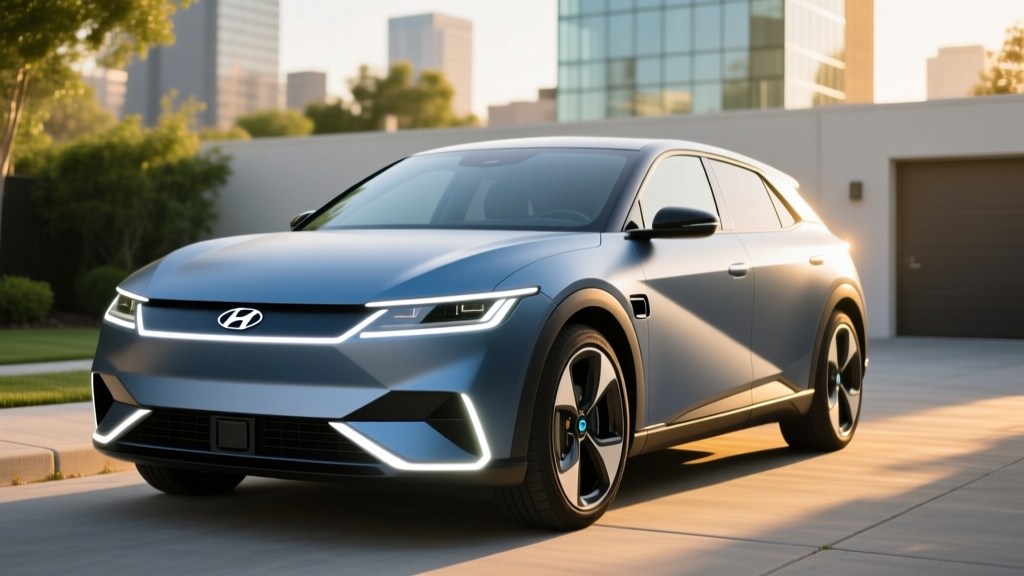
Three model years after its US debut, the 2022 Hyundai Ioniq 5 remains one of the most compelling used EVs on the market. Built on Hyundai's E-GMP platform with an 800-volt architecture, it delivers charging speeds that still rival 2026 newcomers. With EPA range up to 303 miles in the Long Range RWD configuration, a spacious flat-floor cabin, and Vehicle-to-Load (V2L) capability, the first-model-year Ioniq 5 is a smart buy for shoppers who understand its trade-offs — namely, modest cold-weather range loss and a rear wiper that was conspicuously absent until the 2023 refresh.
If you're evaluating a used 2022 Ioniq 5 in 2026, this review covers every spec that matters: real-world range expectations, charging curves, battery chemistry, total cost of ownership, and federal tax credit eligibility under the used-vehicle provision.
Range & Efficiency: EPA Sticker vs. Reality
The 2022 Ioniq 5 came in two battery configurations. The Standard Range RWD paired a 58 kWh battery with a single rear motor, while the Long Range (RWD or AWD) used a 77.4 kWh pack. Most US buyers opted for the Long Range, and that's the configuration we focus on here.
Long Range RWD: EPA 303 miles → Expect 250–275 miles highway (70–75 mph); 210–240 miles in sub-30°F weather.
Long Range AWD: EPA 256 miles → Expect 210–230 miles highway; 175–200 miles in cold weather.
Standard Range RWD: EPA 220 miles → Expect 180–200 miles highway; 150–170 miles in cold weather.
Note: Cold-weather losses of 20–30% are typical for NMC chemistry without aggressive preconditioning. The Ioniq 5's heat pump (standard on Long Range trims) mitigates some cabin-heating drain but does not fully eliminate range drop in freezing temps.
| Trim | Drivetrain | EPA Range | MPGe (Combined) | kWh/100 mi |
|---|---|---|---|---|
| SE Standard Range | RWD | 220 mi | 110 | 30 |
| SE / SEL / Limited Long Range | RWD | 303 mi | 114 | 29 |
| SE / SEL / Limited Long Range | AWD | 256 mi | 110 | 30 |
Source: EPA Fuel Economy
The Ioniq 5 Long Range RWD's 29 kWh/100 mi is competitive with the 2022 Tesla Model Y Long Range (~28 kWh/100 mi) and significantly more efficient than the 2022 Ford Mustang Mach-E Extended Range AWD (~34 kWh/100 mi). In mixed suburban driving at moderate speeds, hitting the EPA sticker is achievable — but sustained highway speeds above 70 mph will push consumption to 33–36 kWh/100 mi.
Battery & Charging: 800V Architecture Still Shines
The 2022 Ioniq 5's standout technical feature is its 800-volt E-GMP platform, shared with the Kia EV6 and Genesis GV60. This allows DC fast charging at up to 235 kW peak — a figure that was class-leading in 2022 and remains strong in 2026.
Battery Specs
- Long Range: 77.4 kWh usable capacity, NMC (nickel-manganese-cobalt) chemistry
- Standard Range: 58 kWh usable capacity, NMC chemistry
- Thermal management: Active liquid cooling/heating with heat pump (Long Range)
- Warranty: 10 years / 100,000 miles (battery); 5 years / 60,000 miles (new-vehicle limited)
| Charging Level | Power (kW) | 10–80% Time | Miles Added per Hour |
|---|---|---|---|
| Level 1 (120V household) | ~1.4 kW | N/A (days) | ~3–4 mi/hr |
| Level 2 (240V, 48A) | 10.9 kW | ~7 hr 20 min (full) | ~36 mi/hr |
| DC Fast Charge (350 kW station) | 235 kW peak | ~18 minutes | N/A |
| DC Fast Charge (150 kW station) | ~130 kW avg | ~25–28 minutes | N/A |
Charging curve reality check: The 235 kW peak only holds between roughly 10% and 45% state of charge. After 50%, the curve tapers progressively — expect ~150 kW through 65%, then ~80 kW past 80%. If you're charging to 100% on a road trip, budget 35–40 minutes total. For daily use, the onboard 10.9 kW Level 2 charger adds enough range overnight for all but the longest commutes.
Connector note: The 2022 Ioniq 5 uses the CCS1 connector. As of 2026, Hyundai has transitioned newer models to NACS (Tesla's standard), but CCS1 remains widely supported at Electrify America, EVgo, and ChargePoint DC fast-charger networks. Hyundai offers a NACS adapter for older CCS-equipped models — check with your dealer for availability and pricing.
Performance & Drivetrain
| Spec | Standard Range RWD | Long Range RWD | Long Range AWD |
|---|---|---|---|
| Horsepower | 168 hp | 225 hp | 320 hp |
| Torque | 258 lb-ft | 258 lb-ft | 446 lb-ft |
| 0–60 mph | ~7.0 sec | ~7.0 sec | ~5.0 sec |
| Top Speed | 115 mph | 115 mph | 115 mph |
| Towing Capacity | Not rated | Not rated (US) | Not rated (US) |
The AWD dual-motor variant's 5.0-second 0–60 time is genuinely quick for a family crossover. The RWD models are adequate for merging and passing but won't win any stoplight sprints. Regenerative braking offers four levels (0–3) adjustable via steering-wheel paddles, with Level 3 enabling near one-pedal driving in city traffic. An i-PEDAL mode brings the car to a complete stop without brake-pedal input.
Interior, Cargo & Technology
The Ioniq 5's cabin design leans retro-futuristic — pixelated LED accents, a flat floor thanks to the dedicated EV skateboard, and a sliding center console ("Universal Island") that can move back 140 mm to create a walk-through between front seats.
Dimensions & Space
- Passenger volume: 106.5 cu ft
- Cargo (behind rear seats): 27.2 cu ft
- Cargo (rear seats folded): 59.3 cu ft
- Front headroom: 39.8 in
- Rear legroom: 39.4 in — generous for a midsize crossover
- Frunk: 0.85 cu ft (RWD) / 0.42 cu ft (AWD) — small, fits a charging cable bag
Tech & Driver Assistance
- Infotainment: Dual 12.3-inch displays (instrument cluster + touchscreen), wireless Apple CarPlay/Android Auto (on SE/SEL; Limited requires wired)
- Hyundai SmartSense (standard): Forward collision-avoidance assist, blind-spot collision-avoidance, rear cross-traffic collision-avoidance, lane-keeping assist, highway driving assist (HDA), adaptive cruise control with stop-and-go
- Available: Highway Driving Assist 2 (HDA2) with lane-change assist on SEL/Limited, remote smart parking assist, 360-degree camera
- V2L (Vehicle-to-Load): Interior 120V outlet (Limited) + exterior V2L adapter — can power devices up to 3.6 kW (camping appliances, laptops, or emergency home backup)
Highway Driving Assist and HDA2 are SAE Level 2 driver-assistance systems. The driver must keep hands on the wheel (or demonstrate attentiveness) and eyes on the road at all times. These systems do not navigate autonomously, handle construction zones, or replace driver judgment.
Notable Drawbacks (2022 Model Year)
- No rear wiper: The 2022 Ioniq 5 lacks a rear windshield wiper. In rain and road spray, visibility suffers. Hyundai added one for the 2023 model year.
- Infotainment quirks: Touch-sensitive climate controls (on Limited) are hard to use while driving. Physical knobs would be preferable.
- No frunk on AWD (practically): The front trunk is tiny — useful for cables, not groceries.
- No OTA navigation updates: Unlike Tesla or Rivian, the 2022 Ioniq 5 does not receive over-the-air map updates. Dealer visits may be needed.
Pricing, Tax Credits & Used Market Value
When new, the 2022 Ioniq 5 started at $43,650 (SE Standard Range) and climbed to $52,200 (Limited AWD, including destination). By 2026, used examples typically list between $24,000 and $38,000 depending on mileage, condition, and trim.
| Trim | Drivetrain | Original MSRP | Est. Used Price (2026) |
|---|---|---|---|
| SE Standard Range | RWD | $43,650 | $24,000–$27,000 |
| SE Long Range | RWD | $47,100 | $27,000–$31,000 |
| SEL Long Range | RWD / AWD | $49,500–$53,400 | $29,000–$34,000 |
| Limited Long Range | RWD / AWD | $52,200–$56,100 | $33,000–$38,000 |
Federal Tax Credit for Used EVs (IRS §25E)
As a used vehicle purchased in 2026, the 2022 Ioniq 5 may qualify for the previously owned clean vehicle credit under IRS §25E — up to $4,000 (or 30% of the sale price, whichever is less). Key eligibility requirements:
- Sale price cap: $25,000 or less
- Buyer income limits: AGI ≤ $75,000 (single), $112,500 (head of household), $150,000 (joint)
- Vehicle age: Must be at least 2 model years old (2022 qualifies in 2026)
- Dealer requirement: Must be purchased from a licensed dealer
- Transfer at point of sale: Credit can be applied as an immediate price reduction
Note: The §30D new-vehicle credit (up to $7,500) does not apply to used purchases. Tax rules change — verify current eligibility at IRS.gov and consult a tax professional before purchasing.
Pros, Cons & Who Should Buy
Pros
- 800V architecture: 10–80% in ~18 min at 350 kW stations
- Spacious flat-floor cabin with 39.4" rear legroom
- V2L capability for camping/emergency power
- Strong standard safety suite (SmartSense)
- 10-year/100,000-mile battery warranty (transferable to second owner for remaining term)
- Comfortable ride quality; compliant over rough pavement
Cons
- No rear wiper (2022 only — added in 2023)
- CCS1 connector as NACS becomes dominant (adapter needed for Superchargers)
- AWD range drops to 256 mi EPA; cold weather compounds this
- Small frunk; limited front storage
- Infotainment touch-climate controls frustrate while driving
- US towing not rated (European models tow up to 1,650 lbs)
Best Suited For
- Suburban commuters who can charge at home and drive 30–60 miles daily
- Tech-forward families who value rear-seat space and V2L for camping
- Budget-conscious EV buyers targeting a used vehicle under $25K to maximize the §25E credit
Less Ideal For
- Cold-climate drivers who regularly face sub-20°F temperatures (AWD range shrinks to ~180 mi real-world)
- Frequent road-trippers in CCS charging deserts (rural Southwest, parts of the Mountain West)
- Towing buyers — this vehicle is not rated for US towing
Frequently Asked Questions
What is the real-world range of the 2022 Hyundai Ioniq 5?
In moderate temperatures with mixed city/highway driving, the Long Range RWD delivers roughly 260–280 miles. Sustained highway driving at 75 mph drops that to 250–270 miles. In freezing conditions (below 30°F), expect 210–240 miles due to battery resistance and cabin heating demand. The AWD variant loses about 15–20% from its 256-mile EPA figure in similar conditions.
How fast does the 2022 Ioniq 5 charge?
On a 350 kW DC fast charger with battery preconditioning, the Long Range model peaks at 235 kW and charges from 10% to 80% in approximately 18 minutes. On a typical 150 kW charger, expect 25–28 minutes for the same range. At home on a 48-amp Level 2 charger (10.9 kW), a full charge takes about 7 hours and 20 minutes — easily accomplished overnight.
Does the 2022 Ioniq 5 qualify for a federal EV tax credit in 2026?
As a used vehicle, it may qualify for up to $4,000 under the IRS §25E previously owned clean vehicle credit — but only if the sale price is $25,000 or less and the buyer's adjusted gross income falls within the caps ($75K single / $150K joint). The credit can be transferred to the dealer at point of sale for an immediate price reduction. Confirm eligibility at IRS.gov before committing.
Is the 2022 Ioniq 5 worth buying vs. the Tesla Model Y or Ford Mach-E?
The 2022 Ioniq 5 offers faster peak DC charging (235 kW vs. ~250 kW for Model Y but on a less reliable CCS network), more rear legroom, and V2L — features neither competitor matches directly. The Model Y wins on Supercharger network reliability and cargo volume (76 cu ft vs. 59.3). The Mach-E offers sportier handling but lower efficiency and slower DC charging (~115 kW peak on 2022 models). For used buyers prioritizing charging speed and cabin comfort, the Ioniq 5 is a strong pick.
How long will the 2022 Ioniq 5 battery last?
Hyundai warranties the battery for 10 years / 100,000 miles against degradation below 70% of original capacity. Industry data on NMC batteries with active thermal management suggests 80–85% capacity retention at 100,000 miles under normal use. Avoid frequent DC fast charging above 80% SoC and routine 100% charges to maximize longevity. Replacement cost for the 77.4 kWh pack, if ever needed out of warranty, is estimated at $12,000–$18,000 based on current Hyundai parts pricing.
Can the 2022 Ioniq 5 use Tesla Superchargers?
Not natively — the 2022 Ioniq 5 has a CCS1 port. Hyundai has announced NACS adapter programs for existing CCS-equipped vehicles; check with your dealer for adapter availability and compatibility with Tesla's Supercharger network. As of 2026, most Electrify America and EVgo stations remain CCS-compatible.