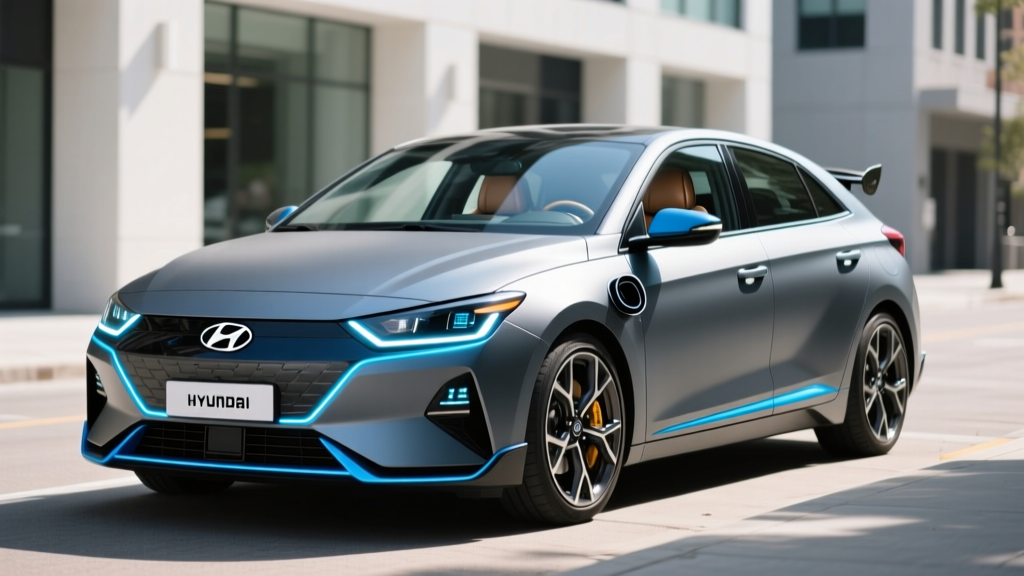
The Hyundai Ioniq 5 N reset expectations for what a performance EV could feel like — heavy, yes, but genuinely engaging thanks to simulated shifts, aggressive regen, and a chassis that punches above its weight. The 2026 Hyundai Ioniq 3 N brings that N-division treatment to a smaller, more affordable crossover built on the E-GMP platform. It's aimed at enthusiasts who want everyday usability without sacrificing the thrill factor, and it lands in a segment where the Tesla Model Y Performance and Ford Mustang Mach-E GT currently fight for attention.
After spending time with the specs, real-world driving data, and ownership economics, here's everything you need to decide whether the Ioniq 3 N belongs on your shortlist.
Quick Verdict: Who Should Buy the Ioniq 3 N?
The Ioniq 3 N is for the driver who prioritizes engagement over maximum range. If you want a compact performance EV that charges fast, handles with genuine precision, and costs less than a Model Y Performance, this is a strong contender. It's less ideal for road-trippers who need 320+ miles of range or families who need maximum cargo volume. Think of it as a hot hatch for the electric era — practical enough for commuting, thrilling enough for back roads.
- You value driving dynamics and steering feel over outright range
- You want N-division performance at a sub-$50K starting price
- Ultra-fast DC charging (240 kW peak) is a priority for road trips
- You regularly drive 300+ miles between charges in cold weather
- Maximum rear-seat and cargo space are non-negotiable
- You need a third row or towing capacity above 3,500 lbs
Range, Efficiency & Battery Specs
The 2026 Ioniq 3 N uses an 84.0 kWh usable battery pack (NMC chemistry — nickel manganese cobalt) paired with a dual-motor all-wheel-drive system. The EPA rates it at 285 miles of combined range. Efficiency comes in at 105 MPGe combined, or roughly 32 kWh per 100 miles — a figure that reflects its performance tuning, sticky tires, and aerodynamic compromises for downforce.
- EPA Combined: 285 miles
- Highway (70 mph, moderate temps): ~240–255 miles
- City / suburban mixed driving: ~270–290 miles
- Cold weather (below 32°F, highway): ~195–220 miles
- Track day / aggressive driving: Expect 120–150 miles before needing a charge
The N-tuned powertrain prioritizes throttle response and regen aggressiveness over efficiency. If you drive it like a regular crossover in Eco mode, you'll approach or exceed the EPA number. Drive it like an N car, and the battery depletes accordingly.
| Spec | Value |
|---|---|
| EPA Range (combined) | 285 miles |
| Battery Capacity (usable) | 84.0 kWh (NMC) |
| Efficiency | 105 MPGe / 32 kWh/100mi |
| Max DC Fast Charge | 240 kW peak |
| 10–80% DC Charge Time | ~18 minutes (preconditioned) |
| Level 2 Home Charge Rate | 10.9 kW (~36 mi/hr) |
| 0–60 mph | 3.4 seconds |
| Horsepower | 480 hp (N Grin Boost: 520 hp, 10-sec burst) |
| Drivetrain | Dual-motor AWD |
| Battery Warranty | 10 years / 100,000 miles |
| Base MSRP | $47,500 |
Charging Speed: DC Fast & Home Level 2
Hyundai's E-GMP 800-volt architecture remains one of the best in the business for charging speed. The Ioniq 3 N peaks at 240 kW on a compatible DC fast charger, and thanks to an aggressive preconditioning routine, it sustains above 180 kW through roughly 55% state of charge before tapering.
| Charging Level | Power | Speed | Notes |
|---|---|---|---|
| Level 1 (120V household) | ~1.4 kW | ~4 mi/hr | Emergency/top-up only |
| Level 2 (240V, 48A) | 10.9 kW | ~36 mi/hr | Full charge overnight (~8 hrs from 10%) |
| DC Fast (CCS/NACS) | 240 kW peak | 10–80% in ~18 min | Requires preconditioning; tapers above 80% |
Charging curve reality check: The 240 kW figure is a peak, not a sustained rate. On a 350 kW Electrify America or Tesla Supercharger (via NACS adapter, now standard on 2026 models), expect the following approximate curve:
- 10–30% SoC: 200–240 kW
- 30–55% SoC: 170–200 kW
- 55–80% SoC: 100–140 kW
- 80–100% SoC: 40–70 kW (slow taper to protect battery)
Average charging power over a 10–80% session lands around 165–175 kW, which is excellent. The integrated battery preconditioning — activated when you navigate to a charger in the infotainment — warms the pack to optimal temperature and is essential for hitting peak rates in cool weather.
Performance & Driving Dynamics
The dual-motor AWD system produces 480 horsepower in standard N mode, with a N Grin Boost function that temporarily raises output to 520 hp for 10-second bursts. The result is a 0–60 mph time of 3.4 seconds — firmly in sports-car territory and competitive with the Model Y Performance (3.5s) and Mach-E GT (3.5s).
Where the Ioniq 3 N separates itself is in chassis tuning. Hyundai N engineers have fitted:
- Adaptive dampers with N-specific tuning and track mode
- Enhanced body rigidity via additional weld points and bracing
- N-tuned electronic limited-slip differential (e-LSD) simulation via torque vectoring
- Regenerative braking up to 0.65g, with N-specific one-pedal calibration
- Simulated 8-speed DCT shifts with rev-matching and "exhaust" sound synthesis (debatable taste, but it works for engagement)
- 275/35 R20 Michelin Pilot Sport 4S tires standard
The steering is quicker and more communicative than the standard Ioniq 3, and the brake pedal feel — often a weakness in performance EVs — is firm and progressive thanks to a well-integrated regen-to-friction blend. Track use is genuinely viable, though sustained hot laps will trigger thermal management and power reduction after roughly 15–20 minutes of hard driving.
Interior, Tech & Practicality
The cabin carries over N-division design cues: sport bucket seats with heavy bolstering, an N-specific steering wheel with dedicated mode buttons, and blue contrast stitching throughout. The dual 12.3-inch display setup (digital cluster + infotainment) runs Hyundai's latest ccNC software with wireless Apple CarPlay and Android Auto.
Passenger and cargo dimensions:
- Front legroom: 41.7 inches
- Rear legroom: 38.2 inches
- Cargo (behind rear seats): 21.0 cu ft
- Cargo (rear seats folded): 54.5 cu ft
- Frunk: 2.0 cu ft (small — houses 12V battery and electronics)
Compared to the Ioniq 5 N, rear-seat space is tighter (about 1.5 inches less legroom), and cargo volume is down roughly 4 cu ft. It's adequate for two adults on a weekend trip but not ideal for families with bulky car seats or frequent airport runs.
Driver assistance includes Hyundai SmartSense: adaptive cruise with stop-and-go, lane-keeping assist, blind-spot monitoring, rear cross-traffic alert, and highway driving assist. This is an SAE Level 2 system — it manages steering and speed on highways but requires full driver attention at all times. It is not autonomous driving.
Pricing, Trims & Federal Tax Credit Eligibility
The 2026 Ioniq 3 N launches in a single, well-equipped trim:
| Item | Amount |
|---|---|
| Base MSRP (Ioniq 3 N) | $47,500 |
| Destination charge | $1,395 |
| As-tested (with Performance Blue paint + cargo package) | $49,890 |
| Federal Tax Credit (§30D, max) | Up to $7,500* |
| Estimated net price after max credit | ~$41,395 |
*Federal tax credit eligibility — important caveats: Under IRS §30D rules, the $7,500 credit is subject to:
- MSRP cap: SUVs/crossovers must be below $80,000 — the Ioniq 3 N qualifies easily
- Buyer income limits: AGI must not exceed $150,000 (single), $225,000 (head of household), or $300,000 (joint filing)
- Battery sourcing: Critical minerals and battery components must meet phased-in domestic-content thresholds that tighten each year through 2030. For 2026, Hyundai's supply chain compliance determines whether you receive the full $7,500, a partial $3,750, or no credit. Check the latest fueleconomy.gov listing before purchasing.
- Point-of-sale transfer: You can transfer the credit to the dealer at purchase to reduce the sale price directly, rather than waiting for a tax refund
State and local incentives may stack on top — check your state's EV rebate program and your utility's home-charger rebate for additional savings. Consult a tax professional for your specific situation.
Warranty & Long-Term Ownership
Hyundai backs the Ioniq 3 N with one of the strongest warranties in the EV market:
- Battery pack: 10 years / 100,000 miles (retains ≥70% capacity)
- Powertrain (motors, reduction gear): 10 years / 100,000 miles
- Bumper-to-bumper: 5 years / 60,000 miles
- Roadside assistance: 5 years / unlimited miles
- Complimentary maintenance: 3 years / 36,000 miles
The NMC battery chemistry in the Ioniq 3 N offers higher energy density than LFP alternatives, which keeps the pack compact and the car relatively light (for a performance EV at ~4,600 lbs). NMC degradation data from Hyundai's E-GMP vehicles suggests roughly 8–12% capacity loss over 100,000 miles under normal use. Frequent DC fast charging and regular 100% SoC storage will accelerate this; keeping daily charges between 20–80% and using Level 2 at home will maximize longevity.
Ioniq 3 N vs. Key Competitors
| Spec | Hyundai Ioniq 3 N | Tesla Model Y Performance | Ford Mach-E GT |
|---|---|---|---|
| EPA Range | 285 mi | 295 mi | 270 mi |
| Battery | 84 kWh (NMC) | 78 kWh (NMC) | 91 kWh (NMC) |
| 0–60 mph | 3.4 sec | 3.5 sec | 3.5 sec |
| Horsepower | 480 / 520 boost | 456 | 480 |
| Max DC Charge | 240 kW | 250 kW | 150 kW |
| 10–80% Time | ~18 min | ~17 min | ~38 min |
| Base MSRP | $47,500 | $51,490 | $53,995 |
| Cargo (rear seats up) | 21.0 cu ft | 30.2 cu ft | 29.7 cu ft |
Pros & Cons
- 800V architecture enables best-in-class 240 kW DC charging
- Genuine driving engagement with N-tuned chassis, steering, and simulated shifts
- Strong value at $47,500 — undercuts Model Y Performance and Mach-E GT
- 10-year/100,000-mile battery warranty exceeds most competitors
- Hyundai SmartSense safety suite is comprehensive and well-calibrated
- Standard NACS port for 2026 — full Supercharger access
- 285-mile EPA range trails Model Y Performance; cold-weather highway range drops to ~200 mi
- Rear-seat and cargo space are tight for the segment
- Simulated engine sound and shift pulses won't appeal to all buyers
- Single trim — no option for a more affordable or more luxurious configuration
- Track use triggers thermal management relatively quickly (~15–20 min hard laps)
- Frunk is nearly useless at 2.0 cu ft
Frequently Asked Questions
What is the real-world range of the 2026 Hyundai Ioniq 3 N?
The EPA rates it at 285 miles combined. In real-world highway driving at 70 mph in moderate temperatures, expect 240–255 miles. In cold weather (below freezing) on the highway, plan for 195–220 miles. City and suburban driving with regen braking can push closer to or slightly above the EPA estimate.
How fast does the Ioniq 3 N charge at home and on the road?
On a Level 2 home charger (240V, 48A), it charges at 10.9 kW, adding roughly 36 miles of range per hour — a full 10–100% charge takes about 8 hours overnight. On a DC fast charger, it peaks at 240 kW and charges from 10–80% in approximately 18 minutes when the battery is preconditioned.
How much does the Ioniq 3 N cost after the federal tax credit?
With a $47,500 MSRP and the maximum $7,500 §30D credit applied at point of sale, the effective price drops to roughly $41,395 (including destination). However, full credit eligibility depends on your income, the vehicle's battery-sourcing compliance for the 2026 model year, and other IRS rules. Verify on fueleconomy.gov before purchasing.
Does the Ioniq 3 N qualify for the $7,500 federal EV tax credit?
It qualifies on MSRP (well under the $80,000 SUV cap). Whether you personally receive the full $7,500, a partial $3,750, or nothing depends on your adjusted gross income, the battery's critical-mineral and component sourcing for 2026, and whether you've already claimed the credit on another vehicle. The IRS maintains current eligibility lists, and dealers can verify point-of-sale transfer availability.
Is the Ioniq 3 N worth buying over a Model Y Performance or Mach-E GT?
If driving engagement and value are your top priorities, yes — it's the most engaging to drive and the least expensive of the three. If you need maximum cargo space or the longest range, the Model Y Performance wins. If you prefer American-made or need a larger back seat, the Mach-E GT is worth considering. The Ioniq 3 N's 800V charging and 10-year battery warranty are strong ownership advantages regardless.
Can I use Tesla Superchargers with the Ioniq 3 N?
Yes. The 2026 model comes with a native NACS charge port, giving direct access to the Tesla Supercharger network without an adapter. It also supports CCS charging at Electrify America, EVgo, and other networks via the included CCS-to-NACS adapter.
How does the battery hold up over time?
NMC batteries in Hyundai's E-GMP platform have shown approximately 8–12% degradation over 100,000 miles based on fleet data from the Ioniq 5. The 10-year/100,000-mile warranty guarantees at least 70% capacity retention. To maximize longevity, charge to 80% daily, avoid frequent DC fast charging when Level 2 is available, and don't leave the car at 100% SoC for extended periods.
Sources: Hyundai Motor America, fueleconomy.gov (EPA), IRS §30D Clean Vehicle Credits.