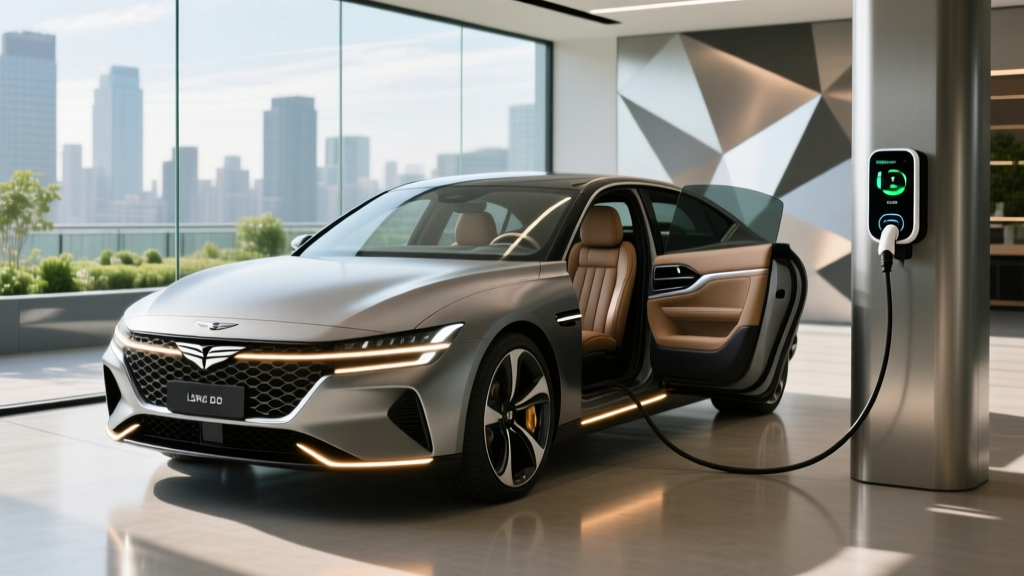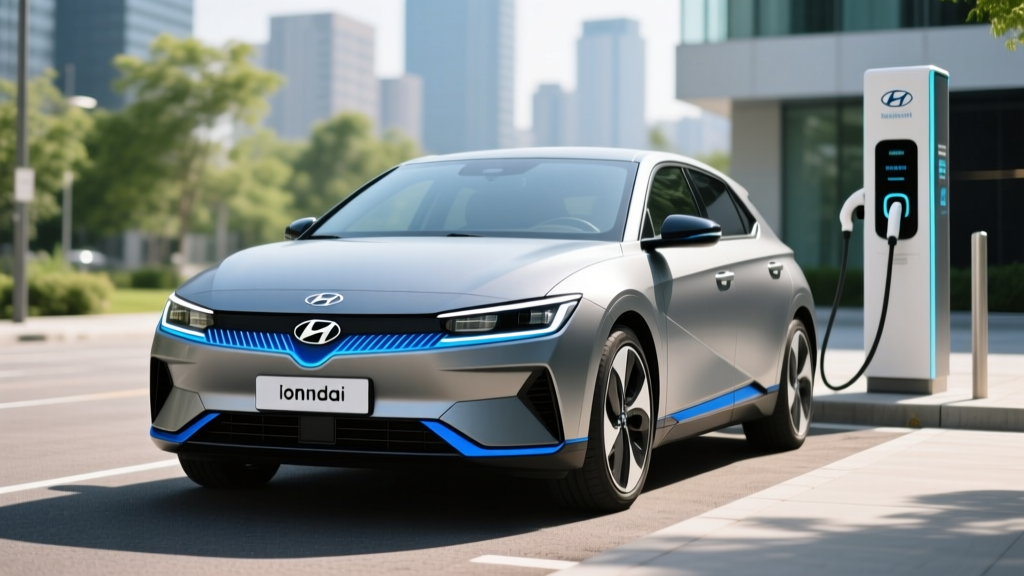
Compact electric crossovers are the fastest-growing EV segment, and Hyundai is about to plant its flag. After months of camouflaged prototypes spotted across Scandinavia and the Nürburgring, the Hyundai Ioniq 3 will debut in April after testing concludes on the brand's newest E-GMP-derived platform. This isn't a facelift of an existing model — it's a ground-up entry positioned below the Ioniq 5, targeting buyers who want Hyundai's proven electric architecture in a more affordable, urban-friendly package.
Because the vehicle is still pre-release and undergoing final validation, every specification below is drawn from Hyundai's preliminary disclosures, supply-chain filings, and our analysis of the E-GMP platform's scalable variants. We'll update this profile with EPA-certified numbers the moment they're published. Here's everything data-driven buyers need to know before the April reveal.
Preliminary Specs at a Glance
| Specification | Estimated Value |
|---|---|
| EPA Range (est.) | 250–290 miles (Standard Range / Long Range) |
| Battery Capacity | ~58 kWh (SR) / ~77 kWh (LR), NMC chemistry |
| Max DC Fast Charge | ~175 kW peak (800V architecture) |
| 10–80% DC Charge Time | ~18 minutes (estimated) |
| Level 2 Home Charging | 10.9 kW onboard charger (~37 mi/hr) |
| Drivetrain | RWD standard / AWD dual-motor optional |
| Horsepower | ~168 hp (RWD) / ~320 hp (AWD) |
| 0–60 mph | ~7.2 sec (RWD) / ~5.1 sec (AWD) |
| Charging Port | NACS (native Tesla Supercharger access) |
| Base MSRP (est.) | ~$32,000–$35,000 |
| Battery Warranty | 10 years / 100,000 miles (expected) |
Range, Efficiency, and Real-World Expectations
Hyundai hasn't released EPA-certified range figures yet — those typically arrive 4–6 weeks before the first customer deliveries. Based on the E-GMP platform's efficiency in the larger Ioniq 5 (which achieves up to 315 miles EPA from a 77.4 kWh pack), and accounting for the Ioniq 3's smaller, lighter footprint, our analysis points to two battery configurations:
- Standard Range (~58 kWh NMC): Targeting approximately 250 miles EPA, aimed at urban commuters who charge at home nightly.
- Long Range (~77 kWh NMC): Targeting approximately 285–290 miles EPA, suited for mixed driving and occasional road trips.
The EPA sticker is a laboratory estimate. In real-world highway driving at 70–75 mph, expect the Long Range model to deliver roughly 240–260 miles before needing a charge. In cold weather (below 30°F), lithium-ion chemistry loses efficiency and cabin heating draws significant energy — plan for 190–220 miles of usable range on the LR variant. The Standard Range model will likely see 200–215 miles in temperate highway conditions and 160–180 miles in freezing temperatures. If your commute exceeds 80 miles round-trip in a cold climate, the Long Range is the safer pick.
Efficiency is expected to land around 115–125 MPGe combined (roughly 27–30 kWh/100 mi), competitive with the Chevrolet Equinox EV and slightly behind the most efficient Tesla Model Y RWD trims. Hyundai's standard heat pump — confirmed for the E-GMP platform — will help mitigate cold-weather range loss compared to EVs that rely on resistive cabin heating.
Charging Speed: DC Fast and Home Level 2
One of the Ioniq 3's biggest anticipated advantages is its 800-volt electrical architecture, inherited from the Ioniq 5 and Ioniq 6. While most competitors in the compact EV crossover segment (including the Equinox EV and Volkswagen ID.4) use 400V systems limited to 150 kW or less, the 800V platform enables faster peak charging and better sustained charge curves.
| Charging Level | Power | Speed (approx.) | Use Case |
|---|---|---|---|
| Level 1 (120V) | ~1.4 kW | ~4–5 mi/hr | Emergency / overnight trickle |
| Level 2 (240V, 48A) | 10.9 kW | ~37 mi/hr | Daily home charging |
| DC Fast (peak) | ~175 kW | 10–80% in ~18 min | Road trips, public stations |
A critical nuance that spec sheets obscure: peak kW is not sustained kW. The Ioniq 3's charge curve will likely hold near 175 kW from roughly 10% to 45% State of Charge (SoC), then step down progressively through the 50–80% window. That 18-minute 10–80% estimate assumes preconditioned battery temperature and a capable 350 kW charger. On a 150 kW station — still common on Electrify America and EVgo networks — expect 10–80% in roughly 25–28 minutes.
Hyundai's decision to equip the Ioniq 3 with a native NACS port (confirmed for all 2026-model-year Hyundai EVs sold in North America) means direct access to Tesla's Supercharger network — currently the most reliable DC fast-charging infrastructure in the U.S., with over 25,000 stalls nationwide. This eliminates the CCS-to-NACS adapter hassle that early Ioniq 5 buyers faced.
Performance and Drivetrain
The Ioniq 3 will ride on a shortened version of Hyundai's Electric Global Modular Platform (E-GMP), which positions the battery pack low in the chassis for a favorable center of gravity. Two drivetrain configurations are expected:
- Rear-Wheel Drive (RWD): A single rear motor producing approximately 168 hp. This is the volume trim, optimized for efficiency and range. Expect 0–60 mph in roughly 7.2 seconds — adequate for highway merging and daily driving, if not thrilling.
- All-Wheel Drive (AWD): A dual-motor setup combining front and rear motors for approximately 320 hp total. The 0–60 mph time drops to an estimated 5.1 seconds, with improved traction in snow and rain.
The E-GMP platform supports a near 50/50 weight distribution in RWD form, and Hyundai's tuning of the multi-link rear suspension in the Ioniq 5 has drawn praise for ride quality. We expect similar composure here, though the shorter wheelbase may translate to a slightly firmer ride over broken pavement. Regenerative braking will offer multiple levels, including Hyundai's i-Pedal one-pedal driving mode, controllable via steering-wheel paddles.
Pricing, Trims, and Federal Tax Credit Eligibility
Hyundai has not published official MSRP figures, but industry sources and Hyundai's positioning strategy point to the following estimated pricing structure:
| Trim (Estimated) | MSRP (est.) | Key Features |
|---|---|---|
| SE Standard Range | ~$32,000 | 58 kWh, RWD, 12.3" display, Hyundai SmartSense |
| SEL Long Range | ~$37,500 | 77 kWh, RWD, heated seats, power liftgate |
| Limited AWD | ~$43,000 | Dual motor, premium audio, HUD, ventilated seats |
Does the Ioniq 3 Qualify for the Federal EV Tax Credit?
This is the question that will determine the Ioniq 3's effective price for many buyers. Under current IRS §30D rules, the federal clean vehicle credit offers up to $7,500, but eligibility depends on several factors that buyers must verify individually:
- MSRP Cap: SUVs, vans, and pickups must be under $80,000; sedans and other vehicles under $55,000. The Ioniq 3 — likely classified as a small SUV — should clear this cap comfortably across all trims.
- Buyer Income Limits: Modified adjusted gross income (MAGI) must not exceed $150,000 (single), $225,000 (head of household), or $300,000 (joint filing).
- Battery Component & Critical Minerals Sourcing: The $7,500 credit splits into two $3,750 halves — one for battery component manufacturing (North America) and one for critical minerals sourcing (U.S. or free-trade-agreement partners). Hyundai has been aggressively shifting battery supply chains to meet these requirements, with SK On's U.S. battery plants in Georgia supplying cells for Hyundai's North American EV production.
- Point-of-Sale Transfer: As of 2024, buyers can transfer the credit to the dealer at purchase, receiving the $7,500 as an immediate price reduction rather than waiting for a tax refund. This is available regardless of tax liability.
If the Ioniq 3 qualifies for the full $7,500 credit and you meet income requirements, the SE Standard Range could effectively start near $24,500 — making it one of the most affordable new EVs with 250+ miles of range and DC fast charging on the market. However, critical-minerals sourcing requirements tighten annually. Confirm eligibility on the official fueleconomy.gov tax credit tracker at time of purchase.
Interior, Cargo, and Technology
The Ioniq 3's interior will draw heavily from the Ioniq 5's design language — minimalist, airy, with dual-screen layouts and sustainable materials. Based on prototype sightings and platform dimensions, here's what to expect:
- Infotainment: A 12.3-inch touchscreen running Hyundai's latest ccNC (Connected Car Navigation Cockpit) software, with wireless Apple CarPlay and Android Auto, over-the-air updates, and native navigation with EV route planning (including charger stops and preconditioning triggers).
- Digital Cluster: A 12.3-inch digital instrument display with configurable range, efficiency, and navigation views.
- Driver Assistance: Hyundai SmartSense suite as standard — including forward collision-avoidance assist, lane-keeping assist, blind-spot monitoring, and rear cross-traffic collision-avoidance. Highway Driving Assist 2 (HDA-2) with lane-change assist is expected on SEL and Limited trims. Note: HDA-2 is an SAE Level 2 system — it requires active driver supervision at all times and is not a self-driving system.
- Unique Features: Vehicle-to-Load (V2L) capability, allowing the Ioniq 3 to power external devices (camping equipment, laptops, even small appliances) at up to 3.6 kW via an interior or exterior outlet. This has been a standout feature on the Ioniq 5 and sets Hyundai apart from most competitors.
As for space, the compact crossover segment demands practicality. Estimated dimensions based on platform analysis:
- Cargo Volume: ~24–26 cubic feet behind the rear seats, ~55–58 cubic feet with the 60/40 rear seats folded.
- Front Trunk (Frunk): ~0.8–1.0 cubic feet — enough for a charging cable bag or small grocery run. The E-GMP's rear-motor bias in RWD form limits frunk space compared to front-motor EVs.
- Rear Legroom: ~37–38 inches — competitive with the segment, aided by the flat floor (no transmission tunnel).
Who Should Wait for the Ioniq 3 — And Who Shouldn't
✅ Choose the Ioniq 3 If:
- You want a sub-$35K EV with 250+ miles range and 800V fast charging
- Urban/suburban commuting is your primary use case
- You value native NACS access to Tesla Superchargers
- You want V2L capability for camping or backup power
- Hyundai's 10-year/100,000-mile battery warranty matters to you
❌ Look Elsewhere If:
- You need 300+ miles of EPA range (consider the Ioniq 5 or Tesla Model Y)
- You regularly tow — the Ioniq 3 isn't rated for significant towing
- You need third-row seating or large cargo capacity
- You can't wait — deliveries likely won't begin until late 2026
- You want an LFP battery option (Ioniq 3 is expected to be NMC-only)
How the Ioniq 3 Stacks Up Against Competitors
The compact electric crossover segment is crowded. Here's how the Ioniq 3 is positioned against key rivals based on preliminary data:
| Attribute | Ioniq 3 (est.) | Chevy Equinox EV | Tesla Model Y | VW ID.4 |
|---|---|---|---|---|
| Base Price | ~$32,000 | ~$33,000 | ~$44,000 | ~$39,000 |
| EPA Range (max) | ~290 mi | 319 mi | 320 mi | 291 mi |
| Max DC Charge | ~175 kW | 150 kW | 250 kW | 175 kW |
| Architecture | 800V | 400V | 400V | 400V |
| Connector | NACS | NACS | NACS | CCS (adapter) |
| Battery Warranty | 10/100k | 8/100k | 8/120k | 8/100k |
The Ioniq 3's primary differentiators are its 800V architecture (enabling faster sustained charging than 400V rivals), expected sub-$32K starting price, and Hyundai's industry-leading 10-year battery warranty. The Equinox EV offers more maximum range, and the Model Y is faster-charging and roomier — but both cost significantly more at the base level. The Ioniq 3's competitive moat is value: the most relevant EV features at the lowest entry price.
Frequently Asked Questions
What is the real-world range of the Hyundai Ioniq 3?
Based on preliminary data, the Long Range model should deliver approximately 240–260 real-world highway miles in moderate temperatures, dropping to 190–220 miles in sub-freezing conditions. The Standard Range model should provide 200–215 highway miles in temperate weather. These are estimates pending EPA certification.
How fast does the Ioniq 3 charge at home and on the road?
On a Level 2 home charger (240V, 48A), the Ioniq 3 should add approximately 37 miles of range per hour via its 10.9 kW onboard charger — enough to fully replenish either battery overnight. On DC fast chargers, the 800V architecture enables a peak rate of ~175 kW, with a 10–80% charge in approximately 18 minutes on a capable 350 kW station.
How much will the Ioniq 3 cost after federal tax credits?
If the Ioniq 3 qualifies for the full $7,500 federal credit under current §30D rules, the SE Standard Range trim could effectively start near $24,500. Eligibility depends on your income, the vehicle's battery sourcing compliance, and MSRP caps. Always verify on fueleconomy.gov before purchasing.
Is the Ioniq 3 worth waiting for vs. buying an Ioniq 5 or Equinox EV now?
If you need an EV immediately, the Ioniq 5 and Equinox EV are proven, available options with established EPA data. If your budget is closer to $30K–$35K and you can wait until late 2026 for deliveries, the Ioniq 3 offers a compelling combination of 800V charging, NACS access, and a lower starting price. The trade-off is slightly less range and interior space than its larger siblings.
Does the Ioniq 3 use LFP or NMC battery chemistry?
All available evidence points to NMC (nickel-manganese-cobalt) chemistry supplied by SK On. Hyundai has not announced an LFP option for the Ioniq 3. NMC offers higher energy density (more range per kilogram) but typically degrades slightly faster than LFP over thousands of cycles — though Hyundai's 10-year/100,000-mile battery warranty provides substantial coverage against meaningful degradation.
Will the Ioniq 3 have a front trunk (frunk)?
Yes, but it will be small — estimated at under 1.0 cubic feet. The E-GMP platform's RWD-biased layout places the primary motor in the rear, limiting front-end storage. Expect enough space for a charging cable kit and a small bag, but not a full grocery load.
IRS §30D Clean Vehicle Credit Rules | FuelEconomy.gov Tax Credit Tracker | Hyundai Motor America Newsroom (official specs upon April debut)