What the Hyundai Ioniq 3 Concept Car Signals for Hyundai's EV Lineup
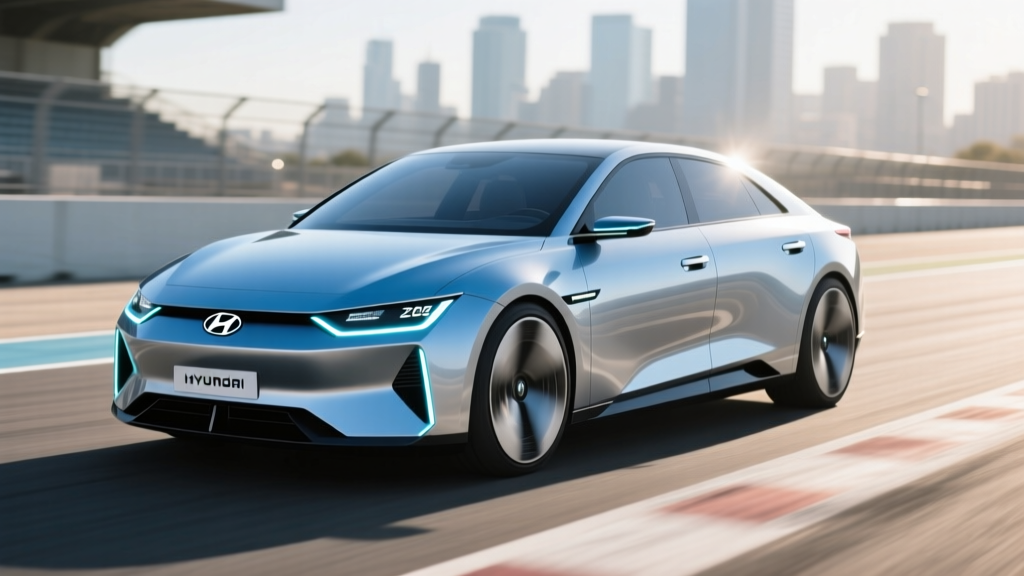
The Hyundai Ioniq 3 concept car is the latest design study from Hyundai's Ioniq sub-brand, previewing a compact-to-midsize electric sedan (or fastback crossover) expected to slot between the Ioniq 5 crossover and the Ioniq 6 sedan in both size and price. As of early 2026, Hyundai has shown the concept at international auto events but has not yet opened orders or published final production specifications. Everything below reflects Hyundai's stated platform architecture (E-GMP and its next-gen evolution), credible industry reporting, and reasonable estimates based on the Ioniq 5 N Line and Ioniq 6 production models. Treat all figures as preliminary until Hyundai publishes a U.S. spec sheet.
Estimated Range, Battery, and Efficiency
Hyundai's Ioniq family has consistently delivered strong efficiency thanks to slippery aerodynamics (the Ioniq 6 posts a 0.21 Cd) and an 800-volt electrical architecture. The Ioniq 3 concept is expected to use a next-generation E-GMP platform with a choice of two battery packs.
| Attribute | Standard Range (est.) | Long Range (est.) |
|---|---|---|
| Battery capacity (usable) | ~63 kWh | ~84 kWh |
| Chemistry | NMC (likely) | NMC (likely) |
| EPA-estimated range | ~260 mi | ~320 mi |
| Efficiency (est.) | ~120 MPGe / 28 kWh/100mi | ~125 MPGe / 27 kWh/100mi |
| Drivetrain | RWD single motor | RWD or AWD dual motor |
| Horsepower | ~168 hp | ~225 hp (RWD) / ~320 hp (AWD) |
| 0–60 mph (est.) | ~7.5 sec | ~6.5 sec (RWD) / ~4.8 sec (AWD) |
Charging: 800-Volt Architecture and NACS Adoption
Hyundai was an early adopter of 800V DC fast charging with the Ioniq 5, and the production Ioniq 3 is expected to retain this architecture. Crucially, Hyundai has committed to the North American Charging Standard (NACS) port for its U.S. EVs starting with 2025–2026 model-year vehicles, meaning the Ioniq 3 should ship with a native NACS port and full Tesla Supercharger network access — no adapter required.
| Level | Power | Rate / Time | Notes |
|---|---|---|---|
| Level 1 (120V) | ~1.4 kW | ~4–5 mi/hr | Emergency / overnight trickle |
| Level 2 (240V, 48A) | ~11.5 kW | ~35–40 mi/hr; full charge in ~8–9 hr (LR) | Home / workplace |
| DC Fast Charge (peak) | ~240 kW (LR est.) | 10–80% in ~18 min | Requires 350 kW-class station; battery preconditioning active |
Understanding the charge curve: The "10–80% in ~18 minutes" figure reflects the peak portion of the charge curve. Above 80% state of charge (SoC), the battery management system tapers power dramatically to protect cell longevity — expect 80–100% to add another 15–20 minutes. For road trips, plan stops around the 10–80% window to minimize time at the charger. Also note that peak 240 kW requires a CCS/NACS station capable of 350 kW and a properly preconditioned battery (the Ioniq 3's nav-based preconditioning should warm the pack when a DC fast-charger is set as the destination).
Design, Interior Space, and Tech
The Ioniq 3 concept car leans into Hyundai's "Art of Steel" design language with a fastback silhouette that bridges the Ioniq 5's retro-modern hatchback shape and the Ioniq 6's streamlined sedan. Based on the concept's proportions and the E-GMP platform's flat floor, here is what we expect for production dimensions:
- Seating: 5 passengers, with generous rear legroom (~38–40 inches est.) thanks to the long wheelbase and flat floor.
- Cargo volume: ~22–25 cu ft behind the rear seats, with a front trunk (frunk) adding ~2–3 cu ft for charging cables and small bags.
- Infotainment: Dual 12.3-inch displays (instrument cluster + center touchscreen), wireless Apple CarPlay/Android Auto, over-the-air (OTA) updates, and Hyundai's latest Bluelink connected services.
- Driver assistance: Highway Driving Assist 2 (HDA 2) with lane-centering, adaptive cruise, and automated lane changes — an SAE Level 2 system that requires full driver engagement, not a self-driving system.
- Unique features: Vehicle-to-load (V2L) capability (powering laptops, camping gear, or a home circuit during outages), digital side mirrors (market-dependent), and a panoramic glass roof.
Pricing, Trims, and Federal Tax Credit Outlook
Hyundai has not published U.S. MSRP for the production Ioniq 3. Based on its positioning between the Ioniq 5 (starting ~$42,500 in 2026) and Ioniq 6 (starting ~$38,000), a reasonable estimate for the 2027-model-year Ioniq 3 is $35,000–$42,000 base MSRP depending on battery size and trim. Fully loaded AWD Limited trims could approach $48,000–$50,000.
| Trim (est.) | Base MSRP | After Potential §30D Credit | Credit Eligibility |
|---|---|---|---|
| SE Standard Range | ~$35,000 | ~$27,500 (if full $7,500) | Subject to sourcing + income rules |
| SEL Long Range | ~$40,000 | ~$32,500 (if full $7,500) | Subject to sourcing + income rules |
| Limited AWD | ~$48,000 | ~$40,500 (if full $7,500) | Below $55,000 sedan cap |
Federal tax credit rules (IRS §30D, 2026): The up-to-$7,500 credit is not automatic. Eligibility depends on:
- MSRP caps: ≤$55,000 for sedans; ≤$80,000 for SUVs/pickups/vans. The Ioniq 3's classification (sedan vs. SUV) will determine which cap applies.
- Buyer income caps: Modified AGI ≤$150,000 single / ≤$300,000 married filing jointly.
- Battery sourcing: A percentage of critical minerals and battery components must be sourced from the U.S. or FTA partners; these thresholds increase yearly. Non-compliant vehicles receive $0 or a partial credit.
- Point-of-sale transfer: Buyers can transfer the credit to the dealer at purchase for an immediate price reduction, but must still meet income/sourcing requirements and reconcile on their tax return.
Because Hyundai manufactures many Ioniq vehicles in Georgia (at the Hyundai Motor Group Metaplant America), the Ioniq 3 is a strong candidate for domestic assembly — but final battery-sourcing compliance will determine the actual credit amount. Consult the IRS §30D guidance and a tax professional before relying on the credit in your purchase math.
Warranty and Ownership Costs
Hyundai's EV warranty is among the best in the industry, and the production Ioniq 3 should carry the same coverage:
- Battery: 10 years / 100,000 miles (capacity retention threshold typically ~70%)
- Powertrain: 10 years / 100,000 miles
- New-vehicle limited: 5 years / 60,000 miles
- Complimentary maintenance: 3 years / 36,000 miles
Long-term battery degradation on Hyundai's E-GMP platform has tracked well: independent data from fleet operators and owner communities shows ~5–8% capacity loss over the first 100,000 miles for NMC packs with proper thermal management and avoidance of frequent 100% SoC holds. For the daily commuter charging to 80% at home, the pack should comfortably outlast the warranty period.
How the Ioniq 3 Stacks Up Against Key Competitors
The Ioniq 3 will enter a crowded compact/midsize EV segment. Its likely rivals include the Tesla Model 3, BMW i4, Polestar 2, and the upcoming next-generation Chevrolet Bolt EV. Hyundai's differentiators are 800V fast charging, NACS Supercharger access, a 10-year battery warranty, and a more conventional (and often more comfortable) interior than Tesla's minimalist cabin.
Pros, Cons, and Who Should Buy the Ioniq 3
- 800V architecture enabling ~18-min 10–80% DC fast charging
- Native NACS port with Tesla Supercharger access
- 10-year / 100,000-mile battery and powertrain warranty
- Strong efficiency (~125 MPGe est.) and 300+ mi range on Long Range
- V2L capability for camping, tools, and backup power
- U.S. assembly likely (Georgia plant)
- Not yet available — production timing uncertain (late 2026 / early 2027)
- Tax-credit eligibility depends on battery-sourcing rules at launch
- AWD performance trims may push MSRP near $50k
- Fastback roofline may limit rear headroom vs. Ioniq 5
- Not a towing-focused vehicle (est. ~1,500–2,000 lb max)
- Choose the Ioniq 3 if: You want a stylish, efficient electric sedan/fastback with class-leading charging speed, a long warranty, and Supercharger access — and you can wait for 2027 availability.
- Choose the Tesla Model 3 if: You need a car today, value the most mature Supercharger network, and prefer a minimalist interface.
- Choose the Ioniq 5 if: You want more cargo space, easier rear-seat access, and current availability with proven specs.
- Choose a PHEV (e.g., Hyundai Tucson PHEV) if: You lack reliable home charging or frequently drive in charging-desert corridors.
Hyundai Ioniq 3 Concept Car FAQ
What is the real-world range of the Hyundai Ioniq 3?
Estimated EPA range is ~260 mi (Standard Range) and ~320 mi (Long Range). Real-world highway driving at 70–75 mph typically yields ~260–280 mi for the Long Range; cold weather (below freezing) can reduce that to ~220–240 mi.
How fast does the Ioniq 3 charge at home and on the road?
On a 350 kW-class DC fast charger, the Long Range model is expected to peak near 240 kW and charge 10–80% in approximately 18 minutes. On a home Level 2 charger (240V, 48A, ~11.5 kW), a full charge takes roughly 8–9 hours for the Long Range pack.
How much does the Ioniq 3 cost after tax credits?
Estimated base MSRP is $35,000–$42,000. If the vehicle qualifies for the full $7,500 federal §30D credit (subject to MSRP caps, buyer income limits, and battery-sourcing rules), the effective price could drop to ~$27,500–$34,500. Always verify eligibility on irs.gov before purchasing.
Does the Hyundai Ioniq 3 qualify for the federal EV tax credit?
Likely yes, but the exact amount depends on final battery-sourcing compliance and whether the vehicle is classified as a sedan ($55k MSRP cap) or SUV ($80k cap). Buyer income must also be ≤$150k single / ≤$300k joint. Hyundai's Georgia assembly improves domestic-content odds.
Is the Hyundai Ioniq 3 concept car available to buy now?
No. As of 2026, the Ioniq 3 remains a concept/preview vehicle. Production is expected for the 2027 model year, with U.S. deliveries likely in late 2026 or early 2027.
What are the biggest pros and cons of the Ioniq 3?
Pros: 800V fast charging, native NACS/Supercharger access, 10-year battery warranty, strong efficiency, V2L capability. Cons: Not yet available, tax-credit amount uncertain at launch, fastback roofline may limit rear headroom, not a heavy-tow vehicle.
How does the Ioniq 3 compare to the Tesla Model 3?
The Ioniq 3 is expected to match or exceed Model 3 on charging speed (800V advantage on non-Tesla DC chargers), offer a longer warranty (10 yr vs. 8 yr), and provide a more traditional interior. Tesla leads on charging-network maturity (though Hyundai's NACS adoption closes that gap) and historical efficiency numbers.
Will the Ioniq 3 have a NACS charging port?
Yes — Hyundai has committed to the NACS connector for U.S.-market EVs starting in the 2025–2026 timeframe. The production Ioniq 3 should ship with a native NACS port and direct Tesla Supercharger compatibility.
Sources: Hyundai Motor America Newsroom, IRS §30D Clean Vehicle Credits, fueleconomy.gov (EPA data for comparable Ioniq 5/6 models used for estimation). All specs are preliminary estimates based on the Hyundai Ioniq 3 concept car and may change at production launch.