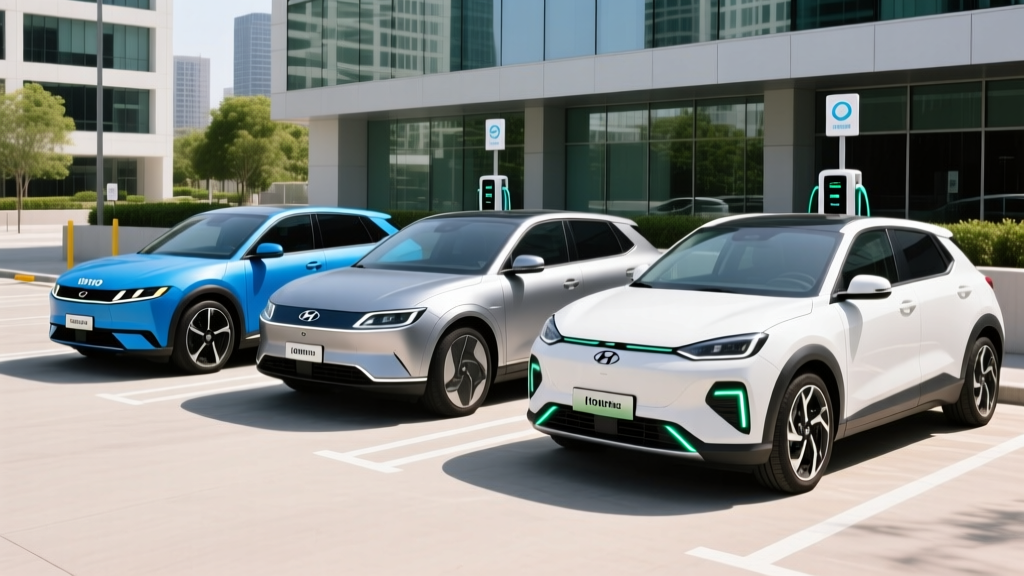
Which Hyundai EV is right for you? The Ioniq 5 is the best all-around pick with up to 318 miles of EPA range, 800V ultra-fast charging (10–80% in ~18 min), and crossover practicality starting at $42,950. The Ioniq 6 sedan offers the longest range at 361 miles and better highway efficiency for $39,950+. The Kona Electric is the budget entry at $32,975 with 261 miles — ideal for city commuting and buyers who don't need DC fast charging above 100 kW. All three qualify for partial or full §30D federal tax credits depending on trim, battery sourcing, and buyer income.
Hyundai's 2026 EV Lineup at a Glance
Hyundai fields three battery-electric vehicles in the US market for 2026, spanning a $32,975–$53,000+ price range and covering subcompact crossover, midsize crossover, and aerodynamic sedan segments. Each targets a different buyer profile, and the differences in charging architecture, battery chemistry, and real-world efficiency matter far more than the spec sheet alone suggests.
| Spec | Kona Electric | Ioniq 6 | Ioniq 5 |
|---|---|---|---|
| Base MSRP | $32,975 | $39,950 | $42,950 |
| EPA Range (max) | 261 mi | 361 mi | 318 mi |
| Battery Capacity | 65 kWh (NMC) | 77.4 kWh (NMC) | 84 kWh (NMC) |
| Max DC Fast Charge | ~100 kW | ~240 kW | ~240 kW |
| 10–80% DCFC Time | ~43 min | ~18 min | ~18 min |
| Level 2 (240V) Rate | ~10.5 kW | ~10.9 kW | ~10.9 kW |
| Horsepower (RWD) | 201 hp | 225 hp | 225 hp |
| 0–60 mph | ~7.4 sec | ~6.5 sec | ~7.2 sec |
| Combined MPGe | 112 MPGe | 140 MPGe | 114 MPGe |
| Drivetrain Options | FWD only | RWD / AWD | RWD / AWD |
| Battery Warranty | 10 yr / 100,000 mi | 10 yr / 100,000 mi | 10 yr / 100,000 mi |
Sources: EPA fueleconomy.gov, Hyundai Newsroom. Real-world range will vary — see section below.
Real-World Range vs. EPA Stickers
EPA range is a ceiling, not a guarantee. Here's what to actually expect:
- Ioniq 6 SE Long Range (EPA 361 mi): Expect ~300–320 mi on mixed highway driving at 70 mph; ~250–270 mi in freezing temperatures with cabin heat.
- Ioniq 5 Limited AWD (EPA 290 mi): Expect ~245–260 mi highway; ~200–220 mi in cold weather.
- Kona Electric SEL (EPA 261 mi): Expect ~225–240 mi mixed; ~180–200 mi cold weather.
The Ioniq 6's exceptional efficiency comes from its 0.21 drag coefficient — it's one of the most aerodynamic production sedans sold. At highway speeds, aero drag dominates energy consumption, which is why the Ioniq 6 outperforms the boxier Ioniq 5 despite a smaller battery. If your commute is mostly highway miles, the Ioniq 6 delivers more usable range per kWh.
The Ioniq 5's larger 84 kWh battery (up from 77.4 kWh in earlier model years) compensates for its crossover profile. AWD trims sacrifice roughly 25–30 miles of EPA range compared to RWD equivalents. Cold-weather losses of 20–30% are physics, not a Hyundai-specific problem — the heat pump (standard on Ioniq 5/6) mitigates this somewhat by scavenging waste heat rather than relying solely on resistive cabin heating.
Charging Speed: The 800V Advantage
Hyundai's E-GMP platform (Ioniq 5 and Ioniq 6) uses an 800V electrical architecture, which allows DC fast charging at up to ~240 kW at compatible 350 kW chargers. This translates to a 10–80% charge in approximately 18 minutes — among the fastest in the mainstream EV market.
But the peak kW number requires context:
- Peak ≠ sustained. The Ioniq 5/6 hits ~240 kW only between roughly 10–40% State of Charge (SoC). The charge curve tapers significantly above 60%, dropping to ~100 kW by 70% and ~50 kW above 85%. This is normal lithium-ion battery protection behavior.
- Charger availability matters. You'll only see 240 kW at Electrify America 350 kW stalls or Tesla Supercharger V4 stalls with the NACS adapter (now included on 2025+ Hyundai EVs). Most public chargers are 50–150 kW.
- Preconditioning is essential. Navigate to a fast charger using the built-in route planner, and the Ioniq 5/6 will warm the battery to optimal temperature. Without preconditioning, especially in cold weather, peak charge rates can drop by 30–50%.
| Charging Level | Power | Miles Added/Hour | Typical Use |
|---|---|---|---|
| Level 1 (120V) | ~1.4 kW | ~4–5 mi/hr | Overnight trickle (Kona Electric only practical) |
| Level 2 (240V, 48A) | ~10.9 kW | ~35–42 mi/hr | Home daily charging — full charge in 6–8 hours |
| DC Fast (150 kW) | ~100–150 kW | ~200–350 mi/hr (peak) | Road trips; Ioniq 5/6: 10–80% in ~25 min |
| DC Fast (350 kW) | ~240 kW peak | ~500+ mi/hr (peak) | Ioniq 5/6: 10–80% in ~18 min |
Kona Electric caveat: The Kona Electric uses a 400V architecture with a ~100 kW DC fast-charge peak. It's adequate for road trips with planning, but 10–80% takes roughly 43 minutes — more than double the Ioniq siblings. If you road-trip more than a few times a year, this matters.
Hyundai EV vs. Gas and Hybrid: Cost Breakdown
The purchase price of an EV is higher, but total cost of ownership tells a different story — especially when the §30D federal tax credit applies. Here's a five-year comparison for a driver covering 12,000 miles/year:
| Cost Factor (5 Years) | Ioniq 5 SEL RWD | Tucson Hybrid SEL | Tucson Gas SEL |
|---|---|---|---|
| MSRP (approx.) | $45,500 | $34,750 | $31,500 |
| Federal Tax Credit (§30D) | Up to –$7,500* | $0 | $0 |
| Effective Purchase Price | $38,000 | $34,750 | $31,500 |
| Fuel / Electricity (5 yr) | $3,200 (home L2) | $6,800 (38 MPG) | $9,000 (28 MPG) |
| Maintenance (5 yr) | ~$1,200 | ~$3,000 | ~$3,500 |
| Insurance (avg. 5 yr) | ~$9,500 | ~$7,800 | ~$7,500 |
| 5-Year Total | ~$51,900 | ~$52,350 | ~$51,500 |
*§30D credit eligibility depends on buyer income caps ($150K single / $300K joint), MSRP caps ($55K for SUVs, $50K for sedans), and battery critical-mineral sourcing requirements. Verify current rules at IRS.gov. Point-of-sale transfer is available through participating dealers.
Key takeaways from this comparison:
- Electricity savings are massive: At a national average of $0.16/kWh and the Ioniq 5's efficiency of ~29 kWh/100 mi, home charging costs roughly $0.046/mile vs. $0.15/mile for gas at $3.50/gallon and 28 MPG combined.
- Maintenance is 60% lower: No oil changes, no transmission fluid, no spark plugs, no muffler. Brake pads last 80,000+ miles thanks to regenerative braking.
- Insurance is 15–25% higher: EVs cost more to insure due to repair complexity and battery replacement costs. Get quotes before buying.
- The tax credit is the equalizer: With the full $7,500, the Ioniq 5's effective price drops close to the Tucson Hybrid. Without it, the EV carries a ~$3,000–6,500 premium.
Federal Tax Credit Eligibility for Hyundai EVs
§30D Clean Vehicle Credit Requirements (2026):
- Buyer income cap: ≤$150,000 single / ≤$225,000 head of household / ≤$300,000 joint (modified AGI)
- MSRP cap: ≤$55,000 for SUVs (Ioniq 5, Kona Electric) / ≤$50,000 for sedans (Ioniq 6)
- Battery sourcing: Must meet critical minerals and battery component requirements (phased thresholds increase annually)
- Assembly: Ioniq 5 is assembled at Hyundai's Metaplant in Georgia (US-built since 2024). Ioniq 6 is imported from South Korea — verify current credit status at IRS.gov or with your dealer
- Point-of-sale transfer: You can transfer the credit to the dealer at purchase for an immediate price reduction rather than claiming it on your tax return
Important nuance: The Ioniq 6 sedan's $50,000 MSRP cap means higher trims (Limited AWD at ~$52,000+) may exceed the cap and lose eligibility. The Ioniq 5, classified as an SUV, has the higher $55,000 cap, which most trims fit within. Always confirm with your dealer and consult a tax professional — credit rules are subject to change.
Common Misconceptions About Hyundai EVs
| Myth | Fact |
|---|---|
| "The battery will need replacing in 5 years" | Hyundai warranties the battery for 10 years/100,000 miles with a 70% capacity retention guarantee. Industry data shows NMC batteries typically lose 10–15% capacity over 150,000 miles. |
| "Hyundais can't use Tesla Superchargers" | 2025+ Hyundai EVs come with the NACS port natively and have full access to Tesla's Supercharger network. 2022–2024 models can use a Hyundai-provided NACS adapter. |
| "You can't drive an EV in cold weather" | Range drops 20–30% in freezing temps — real, but manageable. The Ioniq 5's heat pump and battery preconditioning minimize the loss. A 318-mile Ioniq 5 still delivers ~220+ miles in sub-30°F weather. |
| "EVs are worse for the environment because of battery mining" | Lifecycle analyses consistently show EVs produce 50–70% fewer emissions over their lifetime than gas cars, even on coal-heavy grids. The grid is getting cleaner every year; a gas car never does. |
| "Home charging requires a panel upgrade" | Most homes with a 200-amp panel can add a 48-amp Level 2 charger on a 60-amp circuit without an upgrade. A licensed electrician can confirm for ~$150–300 inspection fee. Panel upgrades (to 200A) cost $1,500–3,000 if needed. |
Home Charging Setup and Costs
Home Level 2 charging is where EV ownership becomes effortless — plug in at night, wake up to a full battery every morning. Here's what it actually costs:
| Item | Cost Range |
|---|---|
| Level 2 Charger (Emporia, ChargePoint, Wallbox) | $350–$700 |
| Electrician labor (run 240V/60A circuit to garage) | $600–$2,000 |
| Permit & inspection | $100–$300 |
| Panel upgrade (if needed — ~20% of homes) | $1,500–$3,000 |
| Typical total (no panel upgrade) | $1,050–$3,000 |
The Ioniq 5 and Ioniq 6 accept up to 10.9 kW on Level 2, meaning a full charge from empty takes roughly 7–8 hours. In practice, you'll rarely charge from 0% — most daily top-ups from 40–80% take 3–4 hours, easily handled overnight.
Apartment/condo dwellers: If you can't install home charging, rely on workplace charging, public Level 2 (ChargePoint, EVgo), or DC fast chargers. The Ioniq 5/6's 18-minute fast-charge capability makes this viable, but it adds $0.10–0.15/mile in cost compared to home charging and requires 2–3 weekly stops. Factor this into your decision honestly.
Decision Framework: Which Hyundai EV Should You Buy?
Choose the Ioniq 5 if:
- You want the most practical all-around EV — cargo space (27.2 cu ft rear seats up), available AWD, and V2L (vehicle-to-load) power for camping or outages
- You road-trip regularly and need the fastest charging (18-min 10–80%)
- You want crossover ride height and easier ingress/egress
- Budget: $42,950–$53,000+ depending on trim
Choose the Ioniq 6 if:
- Maximum range is your priority — 361 miles EPA is the longest of any mainstream sedan under $50K
- Your commute is highway-heavy (aero efficiency dominates at 70+ mph)
- You prefer a sedan's driving dynamics and don't need crossover cargo height
- Budget: $39,950–$52,000+ (watch the $50K MSRP cap for tax credit on sedans)
Choose the Kona Electric if:
- You're budget-conscious and want the lowest entry price at $32,975
- Your driving is mostly city/suburban under 50 miles/day
- You have reliable home Level 2 charging and rarely road-trip
- You don't need AWD or ultra-fast DC charging
- Budget: $32,975–$41,000
Consider a Tucson PHEV instead if:
- You can't charge at home and public charging access is poor in your area
- You regularly drive 300+ miles in rural areas with sparse charger coverage
- The PHEV gives you 33 miles of electric-only range for daily commuting plus a gas engine for longer trips — best of both worlds
What First-Time Hyundai EV Buyers Must Know
1. The NACS transition is complete. Hyundai adopted the Tesla NACS connector for 2025+ models. This gives you access to 20,000+ Tesla Superchargers in addition to Electrify America, EVgo, and ChargePoint networks. For 2022–2024 CCS-equipped models, Hyundai provides an adapter.
2. One-pedal driving changes your habits. Hyundai's i-Pedal mode (max regen) allows near-complete one-pedal driving. Expect a week of adjustment, then you'll rarely touch the brake pedal in city driving. Regen braking also extends brake pad life to 100,000+ miles.
3. Software updates are real. Hyundai pushes over-the-air (OTA) updates that can improve range estimation, add features, and adjust charge curves. Keep your Bluelink subscription active (free for the initial term) to receive them.
4. Test-charge before you buy. Visit a DC fast charger near your home or commute route during your test drive. Confirm the charger works, see the actual charge speed, and understand the experience before committing.
5. Insurance quotes first. EV insurance premiums run 15–25% higher than equivalent gas vehicles. Get a quote from your insurer before signing — the savings on fuel and maintenance can be partially offset.
Frequently Asked Questions
How long will a Hyundai EV battery last?
Hyundai warranties the high-voltage battery for 10 years or 100,000 miles, guaranteeing at least 70% capacity retention. Real-world degradation data from the EV community shows Hyundai-Kia E-GMP batteries losing roughly 8–12% capacity over the first 100,000 miles. With proper care (avoiding frequent 100% charges, minimizing DC fast charging in extreme heat), these batteries should deliver 200,000+ miles of usable service.
Is the Hyundai Ioniq 5 better than the Tesla Model Y?
They're closely matched. The Ioniq 5 charges faster (18 vs. ~25 min 10–80%), has a more comfortable ride, and offers V2L. The Model Y has slightly more range (320 mi Long Range), a more mature software ecosystem, and access to Tesla's service network. The Ioniq 5 starts ~$5,000 less. Your choice should hinge on which charging ecosystem and UI you prefer.
Can I install a Level 2 charger myself?
No. A 240V/60A circuit requires a licensed electrician. DIY electrical work at this amperage poses fire and code-compliance risks, and most jurisdictions require a permit and inspection. Budget $600–$2,000 for professional installation.
Does the Hyundai Kona Electric qualify for the $7,500 tax credit?
Potentially — it depends on the current battery sourcing requirements under §30D, your income, and the MSRP cap ($55,000 for SUVs, which all Kona Electric trims clear). Hyundai's US assembly and sourcing have been evolving. Check the latest eligibility at fueleconomy.gov or with your dealer at time of purchase.
What happens if I run out of charge on the road?
Hyundai's Bluelink system includes roadside assistance that can provide a tow to the nearest charger (typically free during the new-vehicle warranty period). In practice, the Ioniq 5/6's 300+ mile range and 18-minute fast charging make this scenario rare with basic trip planning using apps like PlugShare or A Better Routeplanner.