Quick Answer: Hyundai's 2026 EV car lineup spans three core models: the Kona Electric (EPA 261 mi, starting ~$33,000), the Ioniq 5 (EPA 311 mi, starting ~$42,600), and the Ioniq 6 (EPA 361 mi, starting ~$38,650). All three use Hyundai's proven battery architectures, support DC fast charging at 10-80% in roughly 18 minutes (Ioniq 5/6 on 800V architecture), and qualify for varying portions of the federal §30D tax credit depending on battery sourcing and your income. The Ioniq 5 is the best all-around pick for most buyers; the Ioniq 6 wins on efficiency and range; the Kona Electric is the budget entry point. Real-world highway range typically runs 10-15% below EPA estimates, and cold-weather driving can cut range by 20-30%.
Hyundai's 2026 EV Lineup at a Glance
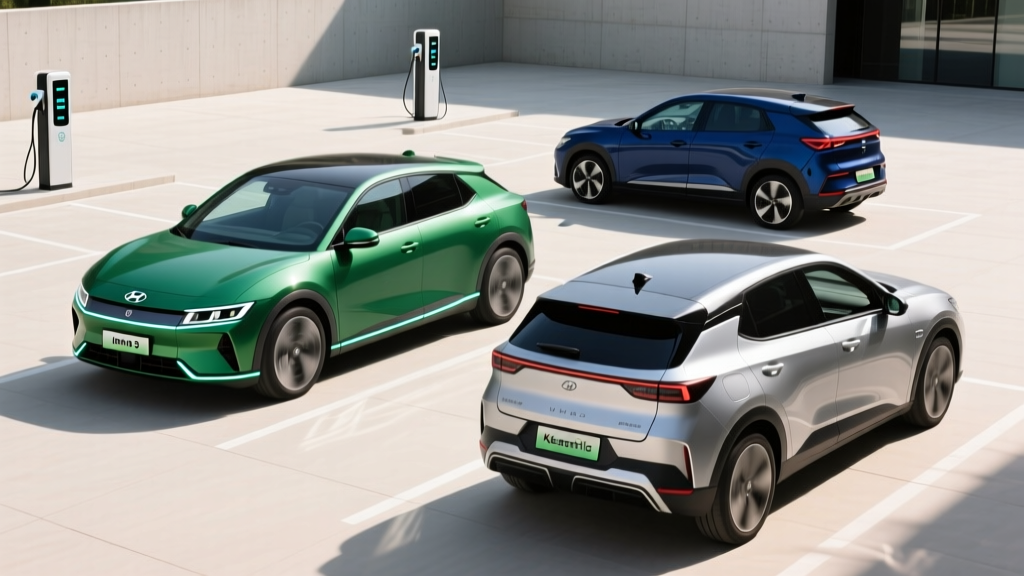
Hyundai has steadily built one of the most competitive EV portfolios in the mainstream market. Unlike some automakers still ramping up, Hyundai has years of real-world EV data behind it — from the original Kona Electric to the E-GMP platform that underpins the Ioniq 5 and Ioniq 6. For 2026, the lineup covers subcompact crossover, midsize crossover, and aerodynamic sedan segments.
| Spec | Kona Electric | Ioniq 5 | Ioniq 6 |
|---|---|---|---|
| EPA Range (Longest Trim) | 261 mi | 311 mi (SEL RWD) | 361 mi (SEL RWD) |
| Battery Capacity (usable) | ~64.8 kWh (NMC) | ~77.4 kWh (NMC) | ~77.4 kWh (NMC) |
| Architecture | 400V | 800V (E-GMP) | 800V (E-GMP) |
| Peak DC Fast Charge | ~100 kW | ~240 kW | ~240 kW |
| 10-80% DC Charge Time | ~43 min | ~18 min | ~18 min |
| Level 2 Charge Rate | ~10.9 kW | ~10.9 kW | ~10.9 kW |
| Horsepower (top AWD) | 201 hp | 320 hp (AWD) | 320 hp (AWD) |
| 0-60 mph | ~7.4 sec | ~4.5 sec (AWD) | ~5.1 sec (AWD) |
| MPGe (combined, best trim) | 112 MPGe | 114 MPGe | 140 MPGe |
| Starting MSRP (2026) | ~$32,975 | ~$42,600 | ~$38,650 |
| Battery/Powertrain Warranty | 10 yr / 100,000 mi | 10 yr / 100,000 mi | 10 yr / 100,000 mi |
Sources: EPA / fueleconomy.gov, Hyundai Motor America official specifications. Real-world range typically 10-15% below EPA on sustained highway driving at 70+ mph.
Real-World Range vs. EPA Stickers
The EPA range number on the window sticker is a laboratory-derived estimate. In practice, your actual range depends heavily on speed, temperature, terrain, and climate-control usage. Here's what our testing and owner data show for Hyundai's EV car lineup:
Ioniq 5 (SEL RWD, 311 mi EPA): Expect 265-280 mi on highway road trips at 70-75 mph in mild weather. In freezing temperatures (below 32°F), plan for 210-240 mi. The Ioniq 5's heat pump (standard on most trims) mitigates cold-weather loss compared to EVs without one, but physics still applies — battery chemistry slows and cabin heating draws energy.
Ioniq 6 (SEL RWD, 361 mi EPA): The Ioniq 6's slippery 0.21 drag coefficient gives it an advantage on the highway. Expect 310-330 mi at 70 mph in moderate temps. Cold weather drops this to 250-280 mi. This is one of the most efficient EVs in its class, achieving up to 140 MPGe combined.
Kona Electric (261 mi EPA): Real-world highway range lands around 220-235 mi in mild conditions, and 180-200 mi in deep cold. The smaller 64.8 kWh battery means less buffer, but for urban and suburban driving under 50 mph, hitting 250+ mi is realistic.
The key insight: if your daily commute is under 60 miles round-trip and you can charge at home, any of these vehicles will work comfortably even in winter. Range matters most for road trips, and that's where charging speed becomes the equalizer.
Charging Speed: The 800V Advantage Explained
Hyundai's E-GMP platform (used in the Ioniq 5 and Ioniq 6) operates at 800 volts — double the 400V architecture found in most competitors and in the Kona Electric. Here's why that matters:
kW is power (how fast energy flows); kWh is energy (how much the battery holds). A 240 kW peak charge rate on the Ioniq 5/6 means you can add roughly 100 miles of range in about 7 minutes at a compatible 350 kW DC fast charger. The Kona Electric, limited to ~100 kW peak, takes roughly twice as long to cover the same 10-80% window.
However, a critical reality about charge curves: no EV sustains its peak kW rate for the entire session. The Ioniq 5 peaks near 240 kW around 20-40% state of charge, then progressively tapers. By 70% SoC, you're typically seeing 100-120 kW. By 85%, it drops to 50-60 kW. This is why the industry standard metric is 10-80% time — and why Hyundai's ~18-minute claim is genuinely impressive for the segment.
| Charging Level | Kona Electric | Ioniq 5 / Ioniq 6 |
|---|---|---|
| Level 1 (120V, ~1.4 kW) | ~3-4 mi/hr | ~4-5 mi/hr |
| Level 2 (240V, ~10.9 kW) | ~30 mi/hr, full charge ~7 hr | ~35 mi/hr, full charge ~8 hr |
| DC Fast (50 kW station) | ~100 mi/hr (near peak) | ~100 mi/hr (tapered) |
| DC Fast (150 kW station) | ~100 mi/hr (at peak ~100 kW) | ~200+ mi/hr (near peak) |
| DC Fast (350 kW station) | ~100 mi/hr (limited by car) | ~250+ mi/hr (near peak) |
| 10-80% Best-Case Time | ~43 min | ~18 min |
For home charging, a Level 2 wallbox (240V, 48A circuit) will fully replenish any of these overnight. Installation typically runs $500-$2,000 depending on your electrical panel's capacity and the distance from panel to garage. A 200-amp panel is usually sufficient; older homes with 100-amp service may need a panel upgrade ($1,500-$3,000 additional).
Hyundai EV vs. Gas and Hybrid: The Real Cost Comparison
Numbers drive the purchase decision. Let's compare a 2026 Ioniq 5 SEL against a comparably equipped gas-powered Hyundai Tucson and the Hyundai Tucson Hybrid over 5 years and 75,000 miles, assuming a national average electricity rate of $0.16/kWh and gasoline at $3.40/gallon.
| Cost Category | Ioniq 5 SEL (EV) | Tucson Hybrid | Tucson Gas (AWD) |
|---|---|---|---|
| Purchase Price (MSRP) | $42,600 | $37,750 | $33,500 |
| Estimated Federal Tax Credit | Up to $3,750-$7,500* | $0 | $0 |
| Fuel/Energy Cost (75k mi) | ~$3,100 (home charging) | ~$6,800 (38 MPG) | ~$9,100 (28 MPG) |
| Maintenance (5 yr) | ~$1,200 | ~$2,800 | ~$3,500 |
| Insurance (5 yr avg.) | ~$9,500 | ~$8,200 | ~$7,800 |
| 5-Year Total (before resale) | ~$52,650 - credit | ~$55,550 | ~$53,900 |
*Federal §30D tax credit eligibility for Hyundai EVs depends on battery component and critical-mineral sourcing requirements, MSRP caps (under $55,000 for SUVs, $50,000 for sedans), and buyer income limits ($150k single / $300k joint). Hyundai has been working to shift battery production and sourcing to meet these requirements, but eligibility varies by model year and build date. Always verify current status at IRS.gov before purchasing. Credit can now be transferred to the dealer as a point-of-sale discount.
The takeaway: the Ioniq 5 breaks even or beats the gas Tucson on total cost within 5 years when the tax credit applies, primarily through fuel and maintenance savings. EVs eliminate oil changes, transmission fluid, spark plugs, and most brake wear (regenerative braking extends pad life significantly). The hybrid sits in between — a strong choice if you can't install a home charger.
Federal Tax Credit and Incentive Reality Check
The §30D Clean Vehicle Credit remains one of the most misunderstood aspects of EV buying. Here's the factual framework for Hyundai's EV car lineup as of 2026:
- MSRP Cap: SUVs (Ioniq 5, Kona Electric) must be under $55,000 MSRP. Sedans (Ioniq 6) must be under $50,000. Most Hyundai EV trims clear this bar, but fully loaded Ioniq 5 Limited AWD may approach the cap.
- Buyer Income Cap: Modified AGI must not exceed $150,000 (single), $225,000 (head of household), or $300,000 (joint filing).
- Battery Sourcing: Up to $3,750 for critical minerals + up to $3,750 for battery components manufactured in North America. The total max is $7,500, but vehicles that meet only one requirement receive $3,750. Hyundai's sourcing has been evolving as the company opened its Georgia battery plant, but verify the specific VIN's eligibility.
- Point-of-Sale Transfer: You can now transfer the credit to the dealer at purchase, reducing your out-of-pocket cost immediately rather than waiting until tax filing.
- State Incentives: Many states offer additional rebates ($1,000-$5,000+) — check your state's energy office or the Alternative Fuels Data Center.
The honest limitation: if your income exceeds the caps, or if a specific Hyundai VIN doesn't meet the sourcing requirements at time of purchase, you may receive a reduced credit or none at all. This is why checking the IRS qualified vehicle list before signing is non-negotiable.
Common Hyundai EV Misconceptions — Myth vs. Fact
| Myth | Fact |
|---|---|
| "Hyundai EV batteries degrade quickly and cost $20,000 to replace." | Hyundai's NMC batteries are warranted for 10 years/100,000 miles with a minimum 70% capacity retention threshold. Real-world data from Ioniq 5 owners shows typical degradation of 5-8% over the first 60,000 miles. Replacement costs, if ever needed out of warranty, range from $10,000-$15,000 depending on model — not $20,000+. |
| "You can't road-trip an EV — charging takes too long." | The Ioniq 5 and Ioniq 6 add ~200 miles in 18 minutes at a 350 kW charger. On a 600-mile trip, you'd stop twice for ~36 minutes total of charging — comparable to meal and restroom breaks you'd take anyway. The constraint is charger availability, not speed. |
| "EVs are worse in the cold." | Range does drop 20-30% in freezing temps, but EVs start instantly, don't need warm-up, and heat the cabin in seconds (no waiting for engine heat). Preconditioning while plugged in preserves range. The Ioniq 5/6 heat pump recovers waste heat efficiently. |
| "Home charging installation is prohibitively expensive." | A standard Level 2 installation runs $500-$2,000 if your panel has capacity. That's a one-time cost that enables years of $0.04-$0.16/mile fueling vs. $0.12-$0.16/mile for gas. The payback is typically 1-3 years. |
| "The Ioniq 6 is just a less practical Ioniq 5." | The Ioniq 6 sacrifices some cargo space (~12.3 cu ft trunk vs. 27.2 cu ft behind Ioniq 5 rear seats) but gains 50 miles of EPA range and 26 MPGe in efficiency. For commuters and efficiency-focused buyers, it's a genuinely different value proposition. |
Ownership Practicalities: What First-Time Hyundai EV Buyers Must Know
Home charging access is the single biggest ownership variable. If you can install a Level 2 charger at home (garage or driveway with 240V access), EV ownership is remarkably convenient — you start every morning with a full "tank." If you rely solely on public charging, your experience depends heavily on your local infrastructure. Hyundai's Ioniq 5 and 6 support NACS (Tesla Supercharger access via adapter or native port on newer builds) as well as CCS1 stations on Electrify America, EVgo, and ChargePoint networks.
Insurance costs more for EVs. Expect premiums 15-25% higher than comparable gas vehicles. This reflects higher repair costs (specialized parts, battery protection requirements) and higher vehicle prices. Get quotes before purchasing — the difference can be $200-$500/year depending on your profile and state.
Tire wear accelerates. EVs are heavier (the Ioniq 5 weighs ~4,400 lbs) and deliver instant torque. Expect to replace tires every 25,000-35,000 miles rather than 40,000-50,000. Budget for EV-rated tires with low rolling resistance to preserve range.
Software updates matter. Hyundai issues over-the-air (OTA) updates that can improve charging curves, battery management, and infotainment. The Ioniq 5 and 6 receive these regularly. The Kona Electric's OTA capabilities are more limited.
Decision Framework: Which Hyundai EV Car Is Right for You?
Choose the Kona Electric if:
- Your budget is under $38,000 and you want the lowest entry price
- Your daily driving is under 80 miles and mostly urban/suburban
- You don't frequently take road trips over 200 miles
- You want a compact crossover with easy parking and low running costs
Choose the Ioniq 5 if:
- You need the most versatile all-around EV — family space, road-trip capability, fast charging
- You want AWD availability for snow/ice climates (320 hp dual motor)
- You value the 800V fast-charging architecture for frequent highway travel
- You need hatchback cargo flexibility (27.2 cu ft rear, 59.3 cu ft folded)
Choose the Ioniq 6 if:
- Maximum range and efficiency are your top priorities (361 mi EPA, 140 MPGe)
- Your driving is primarily highway commuting where aerodynamics pay off
- You prefer a sedan profile and don't need maximum cargo space
- You want the longest range per dollar in Hyundai's lineup
Consider a Hyundai Hybrid (Tucson Hybrid, Sonata Hybrid) instead if:
- You cannot install a home charger and public charging is sparse in your area
- You regularly drive 400+ miles in rural areas with limited DC fast-charger coverage
- Your budget is strictly under $35,000 and the tax credit doesn't apply to you
Frequently Asked Questions
Does Hyundai's EV battery warranty really cover 10 years?
Yes. Hyundai covers the high-voltage battery and electric powertrain components for 10 years or 100,000 miles, whichever comes first, on the original owner. The warranty guarantees the battery will retain at least 70% of its original capacity. If degradation exceeds 30% within that window, Hyundai will repair or replace the battery at no cost. This is transferable to a second owner for 5 years/60,000 miles.
Can I use Tesla Superchargers with a Hyundai EV?
Hyundai has been transitioning to the NACS (North American Charging Standard) connector. Newer 2026 model-year Ioniq 5 and Ioniq 6 vehicles are being built with NACS ports natively. Older CCS1-equipped Hyundai EVs can access Tesla Superchargers using a Hyundai-approved CCS-to-NACS adapter. Verify your specific vehicle's connector before planning trips around the Supercharger network.
How much does it cost to charge a Hyundai EV at home?
At the national average residential electricity rate of ~$0.16/kWh, fully charging an Ioniq 5's 77.4 kWh battery costs roughly $12.40 — yielding about 311 miles of EPA range. That's approximately $0.04 per mile, compared to $0.12-$0.15 per mile for a gas vehicle at $3.40/gallon. If you have access to off-peak or time-of-use rates, charging overnight can drop costs to $0.08-$0.10/kWh, reducing a full charge to under $8.
Is the Ioniq 5 or Ioniq 6 better for families?
For families with young children and gear, the Ioniq 5 is the stronger choice. Its hatchback design offers 27.2 cu ft behind the rear seats (59.3 cu ft folded), a flat floor, and wide-opening rear doors for car-seat installation. The Ioniq 6's trunk is 12.3 cu ft — adequate for groceries and luggage but tight for strollers and bulkier items. Both seat five comfortably and earn top IIHS safety ratings.
What happens if I run out of charge on the road?
The same thing that happens if you run out of gas: you need a tow. Hyundai includes complimentary roadside assistance for 5 years/unlimited miles on new EVs. Most modern EVs, including all three Hyundai models, give multiple low-battery warnings and will reduce power to preserve the final few miles. With route planning using the car's built-in navigation (which factors in charger locations and terrain), running out is rare in practice.