Quick Answer: Is a Hyundai Electric Vehicle Right for You?
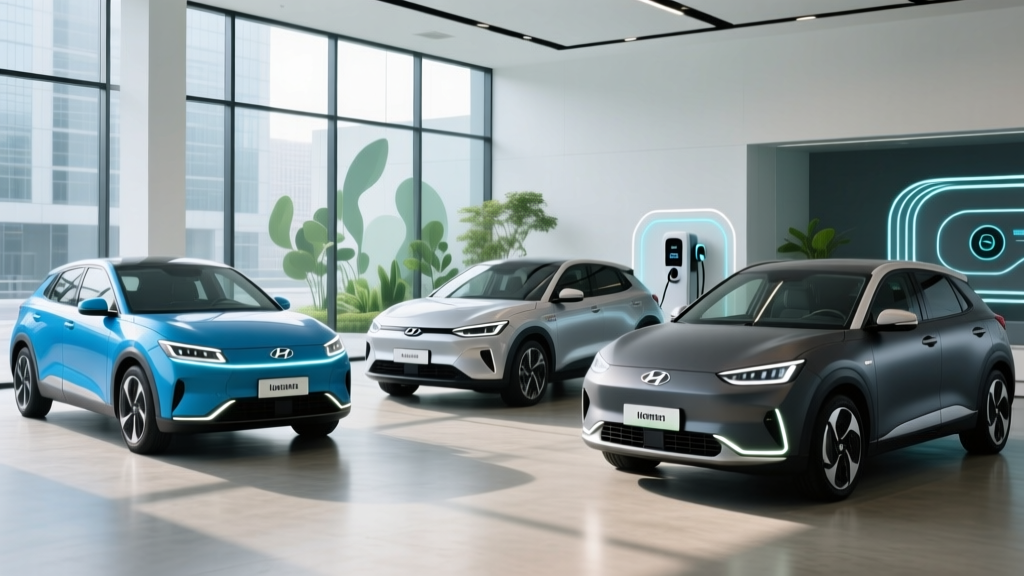
Hyundai's 2026 electric lineup spans three core models: the Ioniq 5 (midsize crossover, EPA 318 miles, from ~$42,500), the Ioniq 6 (aerodynamic sedan, EPA 361 miles, from ~$38,650), and the Kona Electric (subcompact crossover, EPA 261 miles, from ~$32,975). All three use Hyundai's proven E-GMP or dedicated EV platforms with 800V-class DC fast charging on the Ioniq models (10–80% in roughly 18 minutes at peak 240–350 kW chargers). Most 2026 Hyundai EVs qualify for the IRS §30D federal tax credit (up to $7,500, now available as a point-of-sale rebate), though eligibility depends on your income, the vehicle's MSRP cap, and battery-sourcing rules that shift annually. If you need the longest range and lowest price, the Ioniq 6 SEL is the value pick. If you need cargo space and family utility, the Ioniq 5 wins. If your budget is tight and your commute is short, the Kona Electric is the most accessible entry point.
The 2026 Hyundai Electric Lineup at a Glance
Hyundai has committed heavily to electrification, and the 2026 model year reflects a mature, differentiated lineup. Below is the spec-by-spec breakdown you need to compare these vehicles on the metrics that matter most to real ownership: range, charging speed, price, and practicality.
| Spec | 2026 Kona Electric | 2026 Ioniq 6 SEL | 2026 Ioniq 5 (RWD Long Range) |
|---|---|---|---|
| EPA Range | 261 mi | 361 mi | 318 mi |
| Real-World Range (highway/cold) | ~200–225 mi | ~280–310 mi | ~250–275 mi |
| Battery (usable, chemistry) | 65 kWh, NMC | 77.4 kWh, NMC | 77.4 kWh, NMC |
| Peak DC Fast Charge | ~100 kW | ~240 kW (800V) | ~240 kW (800V) |
| 10–80% DC Fast Charge | ~43 min | ~18 min | ~18 min |
| Level 2 Charge Rate | 10.9 kW | 10.9 kW | 10.9 kW |
| MPGe (combined) | 129 MPGe | 140 MPGe | 117 MPGe |
| 0–60 mph | ~7.8 sec | ~6.2 sec | ~7.0 sec |
| Horsepower | 201 hp | 225 hp (RWD) | 225 hp (RWD) |
| Cargo (rear seats up) | 25.5 cu ft | 12.3 cu ft | 27.2 cu ft |
| Base MSRP | $32,975 | $38,650 | $42,500 |
| Battery/Powertrain Warranty | 10 yr / 100,000 mi | 10 yr / 100,000 mi | 10 yr / 100,000 mi |
Real-World Range Reality Check
EPA range numbers are tested under controlled conditions. In real-world driving — sustained highway speeds of 70–80 mph, cold weather below 40°F, or mountainous terrain — expect to lose 15–30% of rated range. The Ioniq 6's 361-mile EPA rating is outstanding on paper, but a winter road trip at highway speeds may yield closer to 270–290 miles before you need to stop. The Ioniq 5, with its boxier shape, loses slightly more at highway speeds. Plan charging stops conservatively and use the vehicle's built-in route planner to precondition the battery before DC fast charging.
Hyundai Electric vs. Gas: The Real Cost Comparison
The sticker price of a Hyundai EV is higher than a comparable gas-powered Hyundai Tucson or Sonata, but total cost of ownership over five years often favors the electric option — especially when you factor in the federal tax credit, fuel savings, and reduced maintenance. Here's a concrete breakdown using the Ioniq 5 SEL ($42,500 MSRP) versus a similarly equipped gas Tucson SEL (~$31,500 MSRP).
| Cost Factor (5 Years / 75,000 mi) | Ioniq 5 SEL (EV) | Tucson SEL (Gas AWD) |
|---|---|---|
| Purchase Price (after $7,500 credit) | $35,000 | $31,500 |
| Fuel / Electricity | $3,200 (home charging avg) | $8,100 (27 MPG avg, $3.50/gal) |
| Maintenance | $1,200 | $3,500 |
| Insurance (avg) | $7,800 | $6,500 |
| Estimated Depreciation | $14,000 | $12,500 |
| 5-Year Total Cost | $61,200 | $62,100 |
The EV pulls ahead primarily on fuel and maintenance. Home Level 2 charging at an average U.S. electricity rate of $0.16/kWh costs roughly $0.043 per mile in the Ioniq 5 (which averages about 27 kWh/100 mi). The Tucson at 27 MPG combined and $3.50/gallon costs about $0.13 per mile. That's a $4,900 fuel savings over five years. Maintenance savings come from eliminating oil changes, spark plugs, transmission fluid, and the reduced brake wear from regenerative braking.
The caveats: EV insurance premiums run 15–25% higher on average, and EV depreciation has been steeper than gas vehicles in recent years — though Hyundai's strong 10-year battery warranty helps stabilize resale value. If you rely exclusively on public DC fast charging (which costs $0.30–$0.50/kWh at networks like Electrify America), your fuel cost advantage shrinks significantly, potentially to break-even with gas.
Charging at Home vs. Public: What You Actually Need
Hyundai electric ownership is fundamentally different depending on whether you can charge at home. This is the single biggest variable in EV satisfaction.
Home Level 2 Charging (The Ideal Setup)
All three 2026 Hyundai EVs accept 10.9 kW on Level 2 (240V). At that rate, the Ioniq 5's 77.4 kWh battery charges from empty to full in roughly 7.5 hours — easily overnight. A Level 2 home charger (like a ChargePoint Home Flex or Hyundai's own OEM unit) costs $500–$700 for the equipment. Professional installation by a licensed electrician typically runs $500–$2,000 depending on your panel capacity, run length, and whether a 200-amp service upgrade is needed (older homes may require this, adding $1,500–$3,000). Total first-year home charging setup: $1,000–$4,500.
Public DC Fast Charging (Road Trips & Apartment Dwellers)
The Ioniq 5 and Ioniq 6 use Hyundai's 800V E-GMP architecture, which is a genuine competitive advantage. On a 350 kW charger, both vehicles can peak at ~240 kW and sustain high charge rates through the 10–80% window in about 18 minutes. That's meaningfully faster than most competitors at similar price points (the Tesla Model Y on V3 Superchargers takes roughly 25–30 minutes for the same window). The Kona Electric, on a conventional 400V architecture, peaks around 100 kW and takes about 43 minutes for 10–80% — adequate for road trips but noticeably slower.
Important charge-curve reality: Peak kW is not sustained kW. The Ioniq 5 will hit 240 kW briefly between 10–30% State of Charge, then taper to ~180 kW through 50%, and drop sharply above 80%. This is why manufacturers quote 10–80% times — the last 20% can take as long as the first 80%. Always precondition your battery via the navigation system's charging-stop planner before arriving at a DC fast charger; a cold battery may charge at half its peak rate.
If You Can't Charge at Home
Apartment and condo dwellers without dedicated parking face a real challenge. Public DC fast charging at $0.35–$0.50/kWh raises your per-mile cost to $0.09–$0.13 — approaching gas-car territory. Before buying, map your daily routine against fueleconomy.gov range data and identify reliable chargers near your home or workplace. If you can't secure consistent overnight charging, a Hyundai hybrid (like the Tucson Hybrid at 38 MPG combined) may be a more practical choice.
Federal Tax Credit & Incentive Eligibility for Hyundai EVs
The IRS §30D Clean Vehicle Credit offers up to $7,500 for qualifying new EVs, and as of 2026, buyers can transfer this credit to the dealer as a point-of-sale discount — meaning you don't need to wait until tax season to benefit. However, eligibility is not automatic. Here's the checklist:
- Buyer income cap: Modified AGI must not exceed $150,000 (single), $225,000 (head of household), or $300,000 (joint filers).
- MSRP cap: Vans/SUVs/pickups must be under $80,000 MSRP; sedans and other vehicles under $55,000 MSRP.
- Battery sourcing: A percentage of critical minerals and battery components must be sourced from the U.S. or free-trade-agreement countries — thresholds increase each year. Hyundai has shifted significant battery production to its Metaplant in Georgia, improving eligibility for U.S.-built models.
- Final assembly: Vehicle must undergo final assembly in North America. The Ioniq 5 and Ioniq 6 sold in the U.S. for 2026 are assembled at Hyundai's Ellabell, Georgia plant, qualifying them for the credit.
- One credit per buyer: You can only claim one new clean vehicle credit per year.
Consult a tax professional to confirm your specific eligibility — rules around battery sourcing shift annually, and the IRS maintains a list of qualifying vehicles. Some states also offer additional rebates (e.g., California, Colorado, New York), but amounts and eligibility vary by jurisdiction. Check your state's energy or DMV website for current programs.
Common Hyundai EV Misconceptions — Fact-Checked
| Myth | Fact |
|---|---|
| "EV batteries need replacing every 5–8 years." | Hyundai warranties its EV batteries for 10 years / 100,000 miles with a capacity-retention threshold (typically 70% of original capacity). Real-world degradation data from high-mileage Hyundai EVs shows roughly 10–15% capacity loss after 100,000 miles. Replacement is rare and covered if it falls below the warranty threshold within the period. |
| "You can't drive an EV in cold weather." | You can, but range drops 15–30% in sub-freezing temperatures due to battery chemistry and cabin heating demands. The Ioniq 5 and Ioniq 6 offer a heat pump (standard on most trims), which recovers waste heat from the drivetrain to warm the cabin — significantly reducing cold-weather range loss compared to resistive heating. Plan for ~270 miles from the Ioniq 6 on a 25°F winter highway trip, not 361. |
| "Charging an EV takes hours." | On a home Level 2 charger, yes — roughly 7–8 hours from empty. But you charge overnight while sleeping, so it's not lost time. On a DC fast charger, the Ioniq 5/6 adds ~200 miles of range in 18 minutes. The Kona Electric is slower at ~43 minutes for 10–80%. |
| "EVs are worse for the environment because of battery mining." | EVs produce zero tailpipe emissions, but upstream emissions from electricity generation and battery manufacturing are real. However, lifecycle analyses from the Union of Concerned Scientists and the ICCT consistently show that even on coal-heavy grids, EVs produce fewer lifetime emissions than comparable gas cars — and the grid is getting cleaner every year. |
| "Hyundai EVs can't use Tesla Superchargers." | Beginning with the 2025 model year, Hyundai adopted the NACS (North American Charging Standard) port on new U.S. vehicles. 2026 Ioniq 5, Ioniq 6, and Kona Electric models built for the U.S. market come with NACS ports natively, granting access to Tesla's Supercharger network — over 25,000 stalls nationwide — without an adapter. |
Decision Framework: Which Hyundai Electric Should You Buy?
Choose the Kona Electric if:
- Your budget is under $35,000 (before incentives)
- Your daily commute is under 60 miles round-trip
- You want the lowest entry price into the Hyundai EV ecosystem
- You don't frequently take road trips over 200 miles
Choose the Ioniq 6 if:
- Maximum range is your top priority (361 miles EPA is class-leading)
- You primarily drive highway miles (the aerodynamic sedan shape excels here)
- You want the lowest cost-per-mile-of-range in the lineup
- Cargo space is not a primary concern (12.3 cu ft trunk is modest)
Choose the Ioniq 5 if:
- You need family-friendly cargo space (27.2 cu ft, plus a front trunk/frunk)
- You want the versatility of a crossover with fast 800V charging
- You value V2L (Vehicle-to-Load) capability to power devices or appliances from your car
- You're willing to pay a $4,000–$5,000 premium over the Ioniq 6 for utility
Consider a Hyundai Hybrid Instead if:
- You cannot install a home charger and lack reliable workplace charging
- You live in an area with sparse public charging infrastructure
- Your budget is under $30,000 and you need maximum flexibility
- The Tucson Hybrid (38 MPG combined, ~$33,000) or Sonata Hybrid (44 MPG combined, ~$30,250) may better suit your situation
First-Time Hyundai EV Buyer Checklist
- Assess your charging access. Can you install a 240V Level 2 outlet at home? If yes, get a quote from a licensed electrician. If no, identify public chargers within 5 miles of your home or workplace and test them before buying.
- Calculate your real range needs. Take your longest regular drive (not your once-a-year road trip) and add a 30% buffer for cold weather and aging. If that number is under 200 miles, the Kona Electric works. If it's 250+, target the Ioniq 5 or Ioniq 6.
- Verify tax credit eligibility. Check the IRS §30D page and confirm the specific VIN qualifies before signing paperwork. The dealer should provide a seller report confirming eligibility.
- Test the DC fast charging. Ask the dealer to take you to a public fast charger during the test drive. Experience the charge curve, the app interface, and the plug-and-charge functionality firsthand.
- Get an insurance quote before purchasing. EV insurance premiums can be 15–25% higher than gas equivalents. Get a binding quote from your insurer to budget accurately.
- Understand the warranty. Hyundai covers the battery and powertrain for 10 years / 100,000 miles (original owner). This is among the best in the industry and a significant ownership advantage.
Frequently Asked Questions
What is the real-world range of the 2026 Hyundai Ioniq 5?
The EPA rates the Ioniq 5 RWD Long Range at 318 miles. In real-world highway driving at 70–75 mph in moderate temperatures, expect 260–280 miles. In cold weather (below 32°F), plan for 230–260 miles. The heat pump helps, but battery chemistry and cabin heating still reduce range in winter.
How long does it take to charge a Hyundai EV at home?
On a Level 2 (240V, 48-amp) home charger delivering 10.9 kW, the Ioniq 5 and Ioniq 6 (77.4 kWh battery) charge from 0–100% in approximately 7.5 hours. The Kona Electric (65 kWh) takes about 6 hours. Most owners charge from 20–80% overnight, which takes roughly 4–5 hours.
Do 2026 Hyundai EVs use NACS or CCS charging ports?
U.S.-spec 2026 Hyundai EVs are equipped with the NACS (Tesla-style) charging port natively. This means direct access to Tesla Superchargers without an adapter. Hyundai also includes a CCS adapter in some markets, but NACS is now the standard connector for new Hyundai EVs sold in North America.
Is the Hyundai EV battery warranty really 10 years?
Yes. Hyundai provides a 10-year / 100,000-mile warranty on the high-voltage battery and EV powertrain components for the original owner. If the battery degrades below a specified capacity threshold (typically 70%) within that period, Hyundai will repair or replace it. This warranty is transferable to a second owner for 10 years / 100,000 miles from the original purchase date, though the coverage terms may differ — check your warranty booklet.
How much does it cost to replace a Hyundai EV battery out of warranty?
Out-of-warranty high-voltage battery replacement for the Ioniq 5 or Ioniq 6 currently ranges from $12,000 to $18,000 including parts and labor, depending on the specific pack. The Kona Electric pack is smaller and somewhat less expensive. However, catastrophic battery failure outside the warranty period is extremely rare based on current field data — most batteries outlast the vehicle itself.
Can I tow with a Hyundai electric vehicle?
The Ioniq 5 is rated to tow up to 2,300 pounds (with trailer brakes), which covers a small utility trailer or a pair of dirt bikes. The Ioniq 6 is not rated for towing. The Kona Electric is also not rated for towing. If you need serious towing capacity, look at the Hyundai Ioniq 5 with AWD or consider a larger EV platform.