The Short Answer
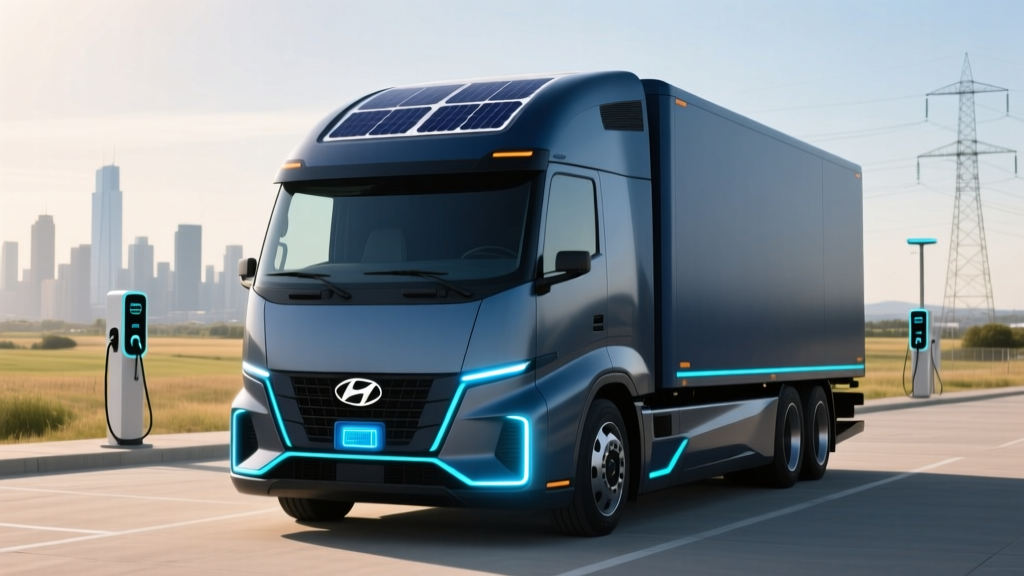
As of early 2026, Hyundai has not yet released a production electric pickup truck for the U.S. market. The automaker has confirmed a truck is in development, likely riding on the eM platform shared with the Ioniq lineup, but official EPA range, pricing, battery specs, and a firm on-sale date remain unannounced. If you need an electric truck today, your options are the Rivian R1T, Ford F-150 Lightning, Chevrolet Silverado EV, and Tesla Cybertruck. Hyundai's entry is expected to target the midsize segment, potentially undercutting rivals on price while leveraging the brand's 800-volt E-GMP architecture for fast charging.
What Hyundai Has Confirmed About Its Electric Truck
Hyundai has signaled its intent to enter the electric pickup segment multiple times since 2022. The company's product roadmap references a "pickup" built on the modular eM skateboard platform — the next-generation architecture designed specifically for EVs, distinct from the E-GMP platform underpinning the Ioniq 5 and Ioniq 6. The eM platform promises greater flexibility in wheelbase and body configuration, which is essential for a truck bed.
What we know with reasonable confidence based on Hyundai's public statements and patent filings:
- Segment target: Midsize pickup, competing more directly with the Rivian R1T and potentially the Ford Maverick hybrid than the full-size F-150 Lightning or Silverado EV.
- Platform: eM dedicated EV architecture with 800-volt capability, enabling DC fast charging at rates comparable to the Ioniq 5 N (which peaks around 240 kW).
- Battery options: Likely NMC chemistry for higher energy density given truck packaging constraints, with a potential LFP option for a lower-priced trim.
- Production location: Hyundai's Metaplant America in Ellabell, Georgia, which began production in 2025 and builds the Ioniq 5. Domestic production is significant for federal tax credit eligibility.
Any specific numbers for range, battery capacity, horsepower, or MSRP circulating on forums are preliminary estimates, not manufacturer-confirmed specs. We'll update this guide when Hyundai publishes official data.
Expected Specs: Educated Estimates Based on Hyundai's EV Lineup
While we wait for official figures, we can build an informed estimate using Hyundai's existing EV portfolio and the competitive landscape. The table below represents our analyst projections — treat these as directional, not final.
| Specification | Estimated Range | Basis for Estimate |
|---|---|---|
| Battery Capacity (usable) | 84–105 kWh | Ioniq 5 uses 84 kWh; truck will need more for payload/towing demands |
| EPA Range | 280–340 miles | Midsize EV truck range cluster; Rivian R1T Dual-Motor Max is ~352 mi, Ford Lightning Extended is ~320 mi |
| Peak DC Fast Charge | 200–250 kW | 800V architecture; Ioniq 5 peaks at ~240 kW |
| 10–80% Charge Time | ~18–22 minutes | Consistent with Hyundai's 800V charging curve performance |
| Horsepower | 320–580 hp | Dual-motor AWD expected; Ioniq 5 AWD makes 320 hp, Ioniq 5 N makes 640 hp |
| 0–60 mph | 4.5–6.5 seconds | Dependent on motor configuration and curb weight |
| Towing Capacity | 5,000–7,500 lbs | Midsize class norms; Rivian R1T rated at 11,000 lbs but is heavier/larger |
| Base MSRP (estimated) | $42,000–$52,000 | Hyundai typically undercuts competitors; F-150 Lightning starts ~$55K, R1T ~$70K |
A critical real-world caveat: trucks suffer more range degradation than sedans or crossovers under load. Expect to lose 25–40% of EPA-rated range when towing near max capacity, and roughly 15–20% loss in sustained highway driving at 75+ mph. Cold weather (below 32°F) typically reduces range by 20–30% in EVs without a heat pump, though Hyundai's E-GMP vehicles include standard heat pumps, which should mitigate this.
How a Hyundai Electric Truck Would Compare to Current Options
Until Hyundai releases official specs, the most useful exercise is mapping where the truck would land against confirmed competitors. Here's how the current U.S. electric truck market looks:
| Vehicle | EPA Range | Battery (kWh) | Peak DC kW | 0–60 (sec) | Base MSRP |
|---|---|---|---|---|---|
| Ford F-150 Lightning (Std Range) | 240 mi | 98 (usable ~93) | 120 kW | ~6.0 | ~$55,090 |
| Ford F-150 Lightning (Ext Range) | 320 mi | 131 (usable ~124) | 150 kW | ~5.5 | ~$69,090 |
| Rivian R1T Dual-Motor Max | 352 mi | 149 (usable ~140) | 200+ kW | ~4.5 | ~$79,900 |
| Chevrolet Silverado EV 4WT | ~440 mi (est.) | 200+ | 350 kW | ~4.5 | ~$60,000 (fleet-oriented) |
| Tesla Cybertruck AWD | 340 mi | ~123 (usable) | 250 kW | 4.1 | ~$79,990 |
| Hyundai Electric Truck (est.) | 280–340 mi | 84–105 | 200–250 kW | 4.5–6.5 | $42,000–$52,000 |
Sources: fueleconomy.gov, manufacturer specifications. Hyundai figures are analyst estimates pending official release.
The Hyundai's potential pricing advantage is the standout. A midsize electric truck starting in the low $40,000s — before incentives — would fill a gap no current competitor addresses. The Ford Maverick hybrid starts around $28,000 but offers only ~40 miles of electric range in its PHEV variant. A fully electric Hyundai truck at a sub-$50K price point would directly target buyers who want zero tailpipe emissions without paying Rivian or Tesla premiums.
Federal Tax Credit and Total Cost of Ownership
If Hyundai builds the truck at Metaplant America in Georgia, it should qualify as a domestically assembled vehicle — a critical requirement under current IRS §30D rules. However, the full $7,500 federal tax credit depends on battery component and critical mineral sourcing requirements that shift annually.
§30D Federal Tax Credit Requirements (2026)
- MSRP cap: Trucks/vans/SUVs must be priced at or below $80,000 MSRP.
- Buyer income cap: AGI ≤ $300,000 (joint), $225,000 (head of household), $150,000 (single).
- Assembly: Final assembly must occur in North America.
- Battery sourcing: Increasingly strict critical mineral and battery component requirements phase in through 2029; partial credit ($3,750) available if only one threshold is met.
- Point-of-sale transfer: Eligible buyers can transfer the credit to the dealer for an immediate price reduction at purchase.
| Cost Factor | Hyundai Electric Truck (est.) | Comparable Gas Midsize Truck (e.g., Toyota Tacoma) |
|---|---|---|
| Base MSRP | $42,000–$52,000 | $35,000–$45,000 |
| Federal Tax Credit | Up to $7,500 (if eligible) | $0 |
| Effective Starting Price | ~$34,500–$44,500 | $35,000–$45,000 |
| Fuel/Energy Cost (15,000 mi/yr) | ~$550–$800 (home L2 charging at $0.14/kWh) | ~$1,800–$2,200 (22 MPG avg at $3.30/gal) |
| Annual Maintenance | ~$200–$400 (no oil changes, fewer moving parts) | ~$600–$900 (oil, filters, transmission fluid) |
| Insurance (annual avg) | ~$1,800–$2,400 (EVs typically 15–25% higher) | ~$1,400–$1,900 |
| 5-Year Fuel/Energy Total | ~$2,750–$4,000 | ~$9,000–$11,000 |
| Battery Warranty | 10 years / 100,000 miles (Hyundai standard) | N/A |
The math favors the electric truck if you can charge at home. Over five years and 75,000 miles, the energy savings alone (~$5,000–$7,000) largely offset the higher purchase price and insurance premiums. The breakeven point typically arrives between years 3 and 4 for home chargers using residential electricity rates. If you rely exclusively on public DC fast charging at $0.35–$0.50/kWh, the cost advantage narrows significantly — and may disappear entirely depending on your local utility rates.
Real-World Ownership: What First-Time EV Truck Buyers Should Know
An electric truck introduces ownership considerations that don't apply to EV sedans or crossovers. Here's what matters before you commit:
Home Charging Is Nearly Mandatory
A truck-sized battery (84–105 kWh estimated) takes roughly 35–50 hours on a standard 120V Level 1 outlet to charge from empty. A Level 2 home charger (48A / 11.5 kW) reduces this to 8–10 hours — overnight for most daily driving. Budget $800–$2,500 for a Level 2 home installation, including the charger ($400–$700), electrician labor ($400–$1,500), and potential panel upgrades ($500–$2,000 if you need a 200A service upgrade). Without home charging, owning a large-battery EV becomes logistically challenging and more expensive.
Towing and Payload Crush Range
This is the single biggest misconception about electric trucks. Towing a 5,000-lb trailer can reduce range by 30–50%. A truck rated at 320 miles EPA might deliver only 160–200 miles while towing. If you tow frequently over long distances, plan your routes around reliable DC fast charging infrastructure and expect 30–45 minute stops every 150 miles or so. For occasional towing, it's manageable. For daily commercial towing, a diesel may still be more practical until charging infrastructure matures further.
Cold Weather Is Real but Manageable
Lithium-ion batteries lose efficiency in freezing temperatures. Expect 20–30% range reduction at 20°F, less if the truck includes a heat pump (standard on Hyundai's E-GMP vehicles). Preconditioning the battery while plugged in — warming it using grid power before departure — mitigates both range loss and charging speed reduction. Hyundai's Bluelink app should support scheduled preconditioning if it follows the Ioniq 5's feature set.
| Myth | Fact |
|---|---|
| "EV trucks can't tow anything useful." | Electric trucks offer strong towing capacity (5,000–11,000 lbs depending on model), but range drops significantly under load. Plan accordingly. |
| "The battery will need replacing in 5 years." | Modern NMC and LFP batteries retain 85–95% capacity after 100,000 miles based on fleet data. Hyundai warrants its batteries for 10 years/100,000 miles at 70%+ capacity retention. |
| "Charging takes hours on road trips." | At a 200+ kW DC fast charger, a 10–80% charge takes roughly 18–22 minutes with 800V architecture. Charging past 80% slows dramatically due to the charge curve taper. |
| "You'll save money no matter what." | Savings depend on home charging access, local electricity rates, annual mileage, and tax credit eligibility. Public-only charging can erase the fuel cost advantage. |
| "Electric trucks are all full-size." | Current offerings include full-size (F-150 Lightning, Silverado EV) and midsize (Rivian R1T). Hyundai's expected entry targets the midsize/compact segment. |
Should You Wait for Hyundai or Buy Now?
Waiting for an unannounced vehicle always carries risk: production delays, spec changes, pricing shifts, and tax credit rule updates can all alter the calculus. Here's a practical decision framework:
Choose to Wait for the Hyundai Electric Truck If:
- You don't need a truck within the next 12 months.
- You want a midsize electric truck priced under $50,000 before incentives.
- Fast charging speed (200+ kW via 800V architecture) is a priority for road trips.
- You value Hyundai's 10-year/100,000-mile powertrain warranty — among the best in the industry.
- You're flexible on bed size and don't need full-size truck capability.
Buy an Existing Electric Truck Now If:
- You need a truck within 6 months and can't afford to wait for an unconfirmed product.
- You need a full-size bed and 10,000+ lb towing (F-150 Lightning, Silverado EV).
- You want the longest available range today (Rivian R1T Max Pack at ~410 mi or Silverado EV at ~440 mi).
- Current §30D tax credit rules favor your purchase now and may change by the time Hyundai's truck arrives.
Consider a Plug-In Hybrid Instead If:
- You tow frequently over long distances and charging infrastructure along your routes is sparse.
- You lack reliable home charging access.
- The Ford Maverick PHEV or a future Hyundai Santa Cruz PHEV meets your daily needs with 30–40 miles of electric range plus a gas engine for longer hauls.
Frequently Asked Questions
When will the Hyundai electric truck be available?
Hyundai has not announced an official on-sale date. Industry analysts project a reveal potentially in late 2026 or 2027, with deliveries following 6–12 months later. This is speculative until Hyundai confirms a timeline.
Will the Hyundai electric truck qualify for the $7,500 federal tax credit?
If assembled at Metaplant America in Georgia and if battery sourcing requirements are met at the time of purchase, it should qualify. However, §30D rules tighten annually on critical mineral and battery component sourcing. Check IRS guidance and consult a tax professional before relying on credit eligibility.
What will the Hyundai electric truck's real-world range be?
Until EPA testing is published, any range figure is an estimate. Based on Hyundai's efficiency track record (the Ioniq 5 achieves 3.6–3.9 mi/kWh depending on trim), a 100 kWh battery could deliver 300–340 miles EPA. Real-world highway driving at 70–80 mph typically yields 80–90% of EPA range, so expect roughly 250–300 miles in mixed highway use, less when towing or in extreme cold.
Will Hyundai offer a smaller electric truck like the Santa Cruz?
Hyundai's Santa Cruz is currently gas-only. The company has not confirmed an electric Santa Cruz variant. The confirmed electric truck project appears to be a separate, potentially larger vehicle. A compact electric pickup from Hyundai remains possible but unannounced.
How does charging an electric truck compare to fueling a gas truck?
At home on Level 2, you'll "refuel" overnight for roughly $0.04–$0.06 per mile (depending on electricity rates), compared to $0.12–$0.18 per mile for a gas truck averaging 20 MPG. On road trips, DC fast charging at public stations costs more — typically $0.30–$0.50/kWh — and takes 20–30 minutes per stop versus 5 minutes at a gas pump. The tradeoff is lower daily cost and convenience at home versus longer stops and higher per-mile cost on the road.