Quick Answer: Is a 2022 Hyundai Electric Car Worth Buying in 2026?
The two 2022 Hyundai electric cars — the Ioniq 5 (EPA range up to 303 miles, 77.4 kWh battery) and the Kona Electric (EPA range 258 miles, 64 kWh battery) — remain strong used-EV purchases in 2026. A used 2022 Ioniq 5 SEL typically sells for $28,000–$33,000, potentially dropping to $24,000–$29,000 after the IRS §25E used-EV tax credit of up to $4,000. The Kona Electric trades for $20,000–$25,000 before credit. Both use proven NMC battery chemistry with minimal degradation at 4 years old, and both support DC fast charging at rates that still compete with new 2026 EVs.
The 2022 Hyundai EV Lineup: What You're Actually Buying
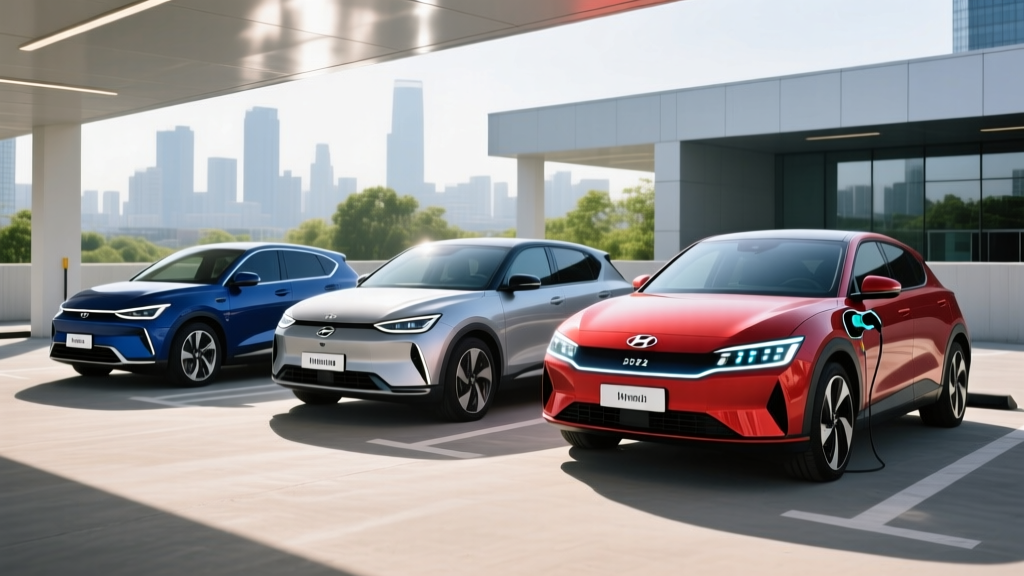
Hyundai offered two fully electric models for the 2022 model year. Understanding the specs — not just the brochure numbers, but what they mean for daily driving in 2026 — is essential before you sign a purchase agreement.
| Spec | 2022 Ioniq 5 (RWD Long Range) | 2022 Ioniq 5 (AWD) | 2022 Kona Electric |
|---|---|---|---|
| EPA Range | 303 mi | 256 mi | 258 mi |
| Battery (usable) | 77.4 kWh (NMC) | 77.4 kWh (NMC) | 64 kWh (NMC) |
| Horsepower | 225 hp | 320 hp | 201 hp |
| 0–60 mph | 7.0 sec | 5.0 sec | 6.4 sec |
| Max DC Fast Charge | ~235 kW (800V) | ~235 kW (800V) | ~75 kW (400V) |
| 10–80% DCFC Time | ~18 min | ~18 min | ~47 min |
| Level 2 (240V) Rate | 10.9 kW | 10.9 kW | 7.2 kW |
| MPGe (combined) | 114 MPGe | 101 MPGe | 120 MPGe |
| Battery Warranty | 8 yr / 100,000 mi | 8 yr / 100,000 mi | 8 yr / 100,000 mi |
| Original MSRP (base) | $44,875 | $48,875 | $34,000 |
| 2026 Used Price (est.) | $28,000–$33,000 | $30,000–$35,000 | $20,000–$25,000 |
The Ioniq 5's 800-volt architecture is the standout feature that still matters in 2026. While most competitors in its era — and some new EVs today — use 400V systems limited to 150 kW or less, the Ioniq 5 can accept up to ~235 kW at a compatible DC fast charger. That translates to a real 10–80% charge in roughly 18 minutes, which is still competitive with 2026 models. The Kona Electric, by contrast, uses a conventional 400V system that tops out around 75 kW — functional for road trips but noticeably slower.
Real-World Range vs. EPA Sticker
Ioniq 5 RWD (EPA 303 mi): Expect 250–275 miles on a highway-heavy trip at 70 mph in moderate weather. In winter conditions (below 30°F), range drops to roughly 210–240 miles due to cabin heating demands and increased battery resistance. The Ioniq 5 lacks a standard heat pump on 2022 US trims, which exacerbates cold-weather losses.
Kona Electric (EPA 258 mi): Expect 220–240 miles in mixed highway driving, dropping to 180–200 miles in freezing temperatures. The Kona's smaller 64 kWh battery leaves less margin for error on longer trips.
Cost Breakdown: Buying, Charging, and Owning a 2022 Hyundai EV in 2026
The purchase price is only the beginning. Here's what five years of ownership actually looks like when you buy one of these used in 2026.
| Cost Category | Used 2022 Ioniq 5 RWD | Used 2022 Hyundai Tucson (Gas, AWD) |
|---|---|---|
| Purchase Price | $30,000 | $24,000 |
| §25E Used-EV Credit | −$4,000 | $0 |
| Net Purchase | $26,000 | $24,000 |
| Fuel/Energy (15,000 mi/yr) | $4,200 ($0.14/kWh avg, home) | $9,750 ($3.25/gal, 28 MPG) |
| Maintenance (5 yr) | $1,500 | $3,800 |
| Insurance (5 yr) | $8,500 | $7,000 |
| Estimated Depreciation | $9,000 | $8,000 |
| Total 5-Year Cost | $40,200 | $42,550 |
Key takeaway: The used Ioniq 5 saves roughly $2,350 over five years vs. a comparable gas Tucson, primarily through lower fuel and maintenance costs. The savings widen if you have access to free or cheap workplace charging, or if gas prices rise above $3.50/gallon. The savings narrow if you rely exclusively on public DC fast charging at $0.40–$0.60/kWh, which pushes annual energy costs to $5,500–$7,000.
Maintenance specifics: EVs eliminate oil changes, spark plugs, timing belts, and exhaust repairs. You'll still need tire rotations (EVs wear tires faster due to instant torque and heavier weight — budget $800–$1,000 for a set of four tires every 30,000–40,000 miles), cabin air filter replacements, brake fluid checks, and wiper fluid. Regenerative braking significantly extends pad life — many EV owners haven't replaced brake pads at 80,000+ miles.
EV vs. Gas vs. Hybrid: Which 2022 Hyundai Fits Your Life?
| Factor | Ioniq 5 (BEV) | Kona Electric (BEV) | Tucson Hybrid (HEV) | Tucson PHEV |
|---|---|---|---|---|
| EPA Range / MPG | 303 mi | 258 mi | 38 MPG combined | 33 mi electric + 35 MPG |
| Fuel Cost per Mile | $0.04 (home) | $0.04 (home) | $0.12 | $0.06 (mixed) |
| Home Charging Needed? | Highly recommended | Highly recommended | No | Recommended for EV mode |
| Road-Trip Convenience | 18-min DCFC stops | 47-min DCFC stops | 5-min gas stop | 5-min gas stop |
| Cold-Weather Penalty | 20–30% range loss | 20–30% range loss | ~10% MPG loss | Reduced EV range |
| Used Price (2026) | $28K–$33K | $20K–$25K | $22K–$27K | $26K–$31K |
| Tax Credit Eligible? | Up to $4,000 (§25E) | Up to $4,000 (§25E) | No | No (used) |
The hybrid and PHEV options make sense if you lack reliable home charging access or regularly drive in areas with sparse DC fast-charging infrastructure. The Ioniq 5 is the clear pick if you can charge at home and want the lowest per-mile operating cost. The Kona Electric is a budget-friendly entry point with adequate range for commutes under 60 miles round-trip, but its slower 75 kW charging makes road trips tedious.
The §25E Used-EV Tax Credit: What You Can Actually Claim
Buying a 2022 Hyundai EV in 2026 means you're buying used — which means the §25E Previously-Owned Clean Vehicle Credit applies, not the §30D new-vehicle credit. Here are the rules as of 2026:
- Credit amount: 30% of the sale price, capped at $4,000
- Vehicle price cap: Sale price must be $25,000 or less — this disqualifies most used Ioniq 5s but many Kona Electrics qualify
- Income limits: AGI must not exceed $75,000 (single), $112,500 (head of household), or $150,000 (joint)
- Vehicle age: Must be at least 2 model years old (a 2022 model qualifies in 2026)
- Dealer requirement: Must purchase from a licensed dealer, not a private party
- Point-of-sale transfer: You can transfer the credit to the dealer for an upfront price reduction
- Claim frequency: Once every 3 years per buyer
Practical reality: A used 2022 Kona Electric selling for $23,000 from a dealer qualifies for $4,000 off (30% of $23,000 = $6,900, but capped at $4,000), bringing your net cost to $19,000. A used Ioniq 5 at $28,000 exceeds the $25,000 sale-price cap, meaning no §25E credit — unless you negotiate the price below $25,000, which is unlikely for a well-maintained example. Always verify current rules at IRS.gov and consult a tax professional.
Charging at Home and on the Road: What to Expect
| Level | Power | Ioniq 5 Miles/Hour | Kona Electric Miles/Hour | Typical Use Case |
|---|---|---|---|---|
| Level 1 (120V) | 1.4 kW | ~5 mi/hr | ~4 mi/hr | Emergency / overnight top-up |
| Level 2 (240V, 48A) | 10.9 kW (Ioniq 5) / 7.2 kW (Kona) | ~39 mi/hr | ~26 mi/hr | Home / workplace daily charging |
| DC Fast (peak) | 235 kW (Ioniq 5) / 75 kW (Kona) | ~700 mi/hr (peak) | ~270 mi/hr (peak) | Road trips, quick top-ups |
Home charging setup: For a 2022 Ioniq 5, you'll want a Level 2 home charger rated for at least 48 amps on a 60-amp circuit to maximize its 10.9 kW onboard charger. Budget $500–$800 for a quality Level 2 unit (ChargePoint Home Flex, Emporia Level 2, or Wallbox Pulsar Plus) and $800–$2,000 for professional installation by a licensed electrician, depending on your panel capacity and wiring distance. If your home has a 100-amp electrical panel, you may need a panel upgrade ($1,500–$3,000) to support a 60-amp circuit. Always get a licensed electrician's assessment before purchasing equipment.
Public DC fast charging: The Ioniq 5's 800V architecture means you should seek out 350 kW-capable chargers (Electrify America, select EVgo stations) to realize its 235 kW peak rate. At a 150 kW charger, it will still charge quickly but won't hit its full potential. The charging curve tapers significantly above 80% state of charge — the last 20% can take as long as the first 70%. For road trips, plan to charge from 10% to 80% and then drive on, rather than topping up to 100%.
The Kona Electric's 75 kW peak is its biggest limitation in 2026. Even at a 350 kW station, it won't accept more than 75 kW. A 10–80% charge takes roughly 47 minutes, which is noticeably longer than the Ioniq 5 and many newer EVs.
Connector note: Both 2022 models came with CCS1 connectors. In 2026, Tesla's NACS connector has become the industry standard, with most automakers switching. Hyundai provides a NACS adapter for older CCS-equipped models — check with your dealer for availability and compatibility, as adapter solutions have evolved since 2024. At minimum, you'll need a CCS-to-NACS adapter to access Tesla Superchargers, which now number over 30,000 in North America.
Myths vs. Facts: Common Misconceptions About Used 2022 Hyundai EVs
| Myth | Fact |
|---|---|
| "The battery will need replacing soon and cost $20,000." | Hyundai's NMC batteries in the Ioniq 5 and Kona Electric are warrantied for 8 years/100,000 miles at 70% capacity retention. Real-world data from 4-year-old Hyundai EVs shows typical degradation of 5–10%, meaning a 2022 Ioniq 5 with 40,000 miles likely still has 92–95% of its original capacity. Full battery replacement (rarely needed) runs $12,000–$18,000 but is covered under warranty if capacity drops below 70%. |
| "Used EVs are risky because you can't check battery health." | The Ioniq 5 and Kona Electric both display a State of Health (SoH) estimate through the infotainment system or via an OBD-II reader with apps like Car Scanner. Ask the seller for a SoH reading before purchasing. Anything above 90% at 4 years old is excellent. |
| "I can't take road trips — charging takes too long." | The Ioniq 5's 18-minute 10–80% charge at a 350 kW station is comparable to a gas stop with a restroom break and snack run. The Kona Electric's 47-minute charge is less convenient but manageable with meal-stop planning. Use fueleconomy.gov and apps like PlugShare or A Better Routeplanner to plan routes. |
| "EV insurance is impossibly expensive." | Insurance for a used Ioniq 5 averages $1,600–$1,900/year in 2026 — roughly 15–25% higher than a comparable gas Tucson. Shop quotes from GEICO, Progressive, and State Farm, as EV insurance pricing varies widely by carrier. |
| "A 2022 model is outdated compared to 2026 EVs." | The 2022 Ioniq 5's 800V charging architecture, 303-mile range, and V2L (vehicle-to-load) capability still match or exceed several 2026 competitors in its price range. Software updates have added features since launch. The infotainment and ADAS (Highway Driving Assist, which is SAE Level 2 — you must remain engaged) remain competitive. |
Decision Framework: Should You Buy a 2022 Hyundai Electric Car in 2026?
Choose the 2022 Ioniq 5 if:
- You can install a Level 2 home charger (240V, 60-amp circuit)
- Your daily driving is under 80 miles round-trip, with occasional 200–300 mile road trips
- You value fast DC charging (18-min 10–80%) for road-trip convenience
- You want a spacious crossover with modern design and V2L capability (power devices from the car)
- Your budget is $28,000–$35,000 (before any tax credit)
- You live in a moderate or warm climate, or can tolerate 20–30% winter range loss
Choose the 2022 Kona Electric if:
- Your budget is under $25,000 and you want to maximize the §25E used-EV credit
- Your commute is under 50 miles round-trip and road trips are rare
- You prioritize lowest purchase price over charging speed
- You don't mind 47-minute DC fast-charge stops on the occasional road trip
- You want a compact crossover that's easy to park in urban environments
Choose a Tucson Hybrid or PHEV instead if:
- You cannot install home charging (apartment, street parking, no garage)
- You regularly drive in rural areas with sparse charging infrastructure
- You live in an extremely cold climate (frequent sub-10°F weather) and need consistent range
- You tow regularly (neither EV is rated for significant towing; the Tucson gas/hybrid handles light towing better)
Frequently Asked Questions
How long will the 2022 Ioniq 5 battery last?
Hyundai warranties the battery for 8 years or 100,000 miles at 70% capacity retention. Based on degradation data from Hyundai's NMC cells, most Ioniq 5 batteries retain 90–95% capacity at 4 years / 50,000 miles. Realistically, these batteries should provide 15–20 years of usable service before dropping to 70% capacity, at which point the car still has 212 miles of range — adequate for most daily driving.
Can I charge a 2022 Hyundai EV at a Tesla Supercharger?
Not natively — both 2022 models use CCS1 connectors, while Tesla Superchargers use NACS. However, Hyundai has offered NACS adapters for CCS-equipped vehicles. Check with your dealer for the current adapter solution and confirm compatibility with the Supercharger network. Non-Tesla Supercharger access (stations opened to other brands) may also be available in your area.
What's the real-world highway range of the 2022 Ioniq 5?
On a flat interstate at 70 mph in 65–75°F weather, expect 250–275 miles from a full charge. At 80 mph or in hilly terrain, that drops to 230–250 miles. In freezing weather (20°F or below), plan for 210–240 miles. The EPA's fueleconomy.gov page for the Ioniq 5 provides official test data.
Does the 2022 Ioniq 5 qualify for any tax credit in 2026?
As a used purchase, it may qualify for the §25E Previously-Owned Clean Vehicle Credit of up to $4,000, but only if the sale price is $25,000 or less and your income falls under the caps ($75K single / $150K joint). Most used Ioniq 5s sell above $25,000, making the credit difficult to claim. The Kona Electric, with lower used prices, is more likely to qualify. Consult IRS guidelines and a tax professional.
Is the Ioniq 5's Highway Driving Assist self-driving?
No. Highway Driving Assist (HDA) is an SAE Level 2 driver-assistance system. It combines adaptive cruise control with lane-centering on divided highways, but you must keep your hands on the wheel and eyes on the road at all times. It does not handle city streets, construction zones, or complex merging scenarios autonomously. Only Level 4 systems like Waymo's driverless robotaxi operate without human supervision.
What maintenance does a 2022 Kona Electric need?
Routine maintenance includes tire rotation every 7,500 miles, cabin air filter replacement every 15,000–20,000 miles, brake fluid inspection every 30,000 miles, and windshield washer fluid. There are no oil changes, transmission fluid changes, spark plugs, or emissions tests. Budget roughly $300–$400 per year for basic maintenance — about one-third of what a comparable gas vehicle requires.
Should I worry about the 2022 model lacking a heat pump?
The 2022 US-spec Ioniq 5 did not include a heat pump as standard equipment (it was available in some international markets). This means cold-weather range loss is more pronounced than in EVs with heat pumps — expect 25–30% loss in freezing conditions vs. 15–20% for heat-pump-equipped EVs. If you live in a cold climate, precondition the cabin while plugged in to mitigate this, and plan road-trip charging stops with the range reduction in mind.