Quick Answer: Hyundai's concept EV pipeline centers on three production-bound vehicles for 2026–2028: the Ioniq 9 three-row SUV (on sale now, from $53,350), the Ioniq 5 N performance crossover (EPA 221 mi, 0-60 in 3.4 sec), and the upcoming Ioniq 2 compact hatchback (announced for late 2026, targeting ~$30,000). If you need an EV today, the Ioniq 5 (EPA 318 mi, 800V architecture, 10-80% in 18 min) remains the strongest all-around pick. Concept-only vehicles like the Prophecy and Concept Seven are design studies and not available for purchase.
Hyundai's EV Concept-to-Production Pipeline
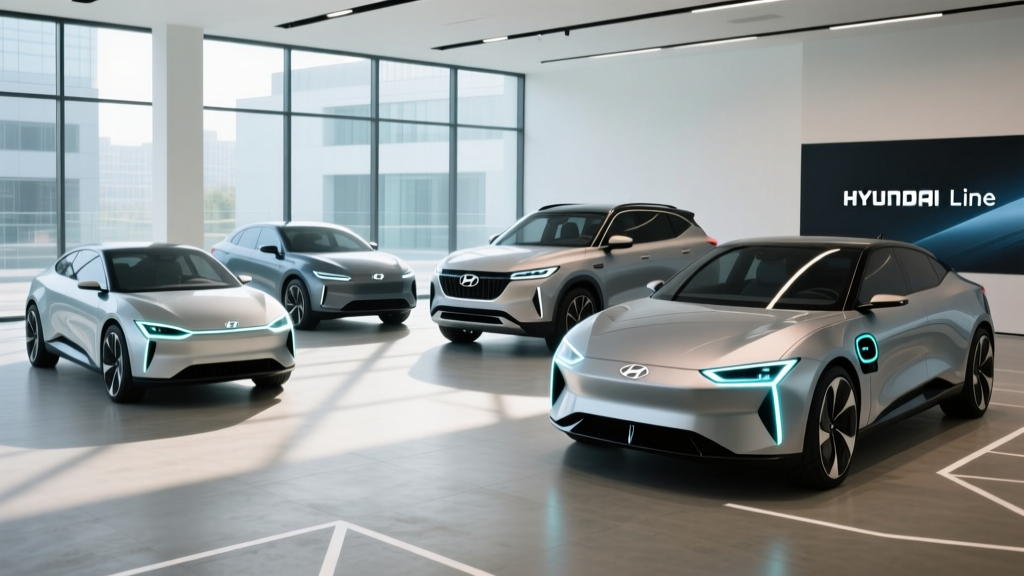
Hyundai has been aggressive about turning auto-show concepts into showroom reality. The Concept Seven (debuted at LA Auto Show 2021) became the production Ioniq 9, which went on sale in early 2025. The Prophecy concept previewed the Ioniq 6 sedan. The most recent concept to watch is the Ioniq Concept 2, a compact hatchback previewing Hyundai's entry-level electric offering aimed squarely at the Chevy Bolt and Nissan Leaf replacement market.
Here is where each Hyundai concept EV stands as of 2026:
| Concept | Production Model | Status | Starting MSRP |
|---|---|---|---|
| Concept Seven | Ioniq 9 | On sale (2025+) | $53,350 |
| Prophecy | Ioniq 6 | On sale (2023+) | $37,500 |
| 45 Concept | Ioniq 5 | On sale (2022+) | $42,600 |
| Ioniq Concept 2 | Ioniq 2 (expected) | Announced, late 2026 | ~$30,000 est. |
| RN22e | Undecided | Concept only | N/A |
The distinction matters for buyers: only the Ioniq 5, Ioniq 6, and Ioniq 9 are available to order or take delivery today. The Ioniq 2 is announced but not yet on sale, and specs remain preliminary.
Specs That Matter: Range, Charging, and Performance
Hyundai's E-GMP platform underpins all current Ioniq models and delivers one of the best charging architectures in the industry. Every E-GMP vehicle uses 800-volt battery systems (NMC chemistry), enabling DC fast charging at up to 240 kW — meaning a 10-80% charge in roughly 18 minutes at a compatible 350 kW station. That is roughly half the time of competitors limited to 400V systems.
| Spec | Ioniq 5 (SEL AWD) | Ioniq 6 (SEL AWD) | Ioniq 9 (SEL AWD) |
|---|---|---|---|
| EPA Range | 290 mi | 316 mi | 311 mi |
| Battery (usable) | 77.4 kWh, NMC | 77.4 kWh, NMC | 110.3 kWh, NMC |
| Peak DC Charge | 240 kW | 240 kW | 240 kW |
| 10–80% DCFC Time | ~18 min | ~18 min | ~24 min |
| Level 2 Rate | 10.9 kW | 10.9 kW | 11 kW |
| Horsepower | 320 hp | 320 hp | 379 hp |
| 0–60 mph | 4.5 sec | 4.5 sec | 5.2 sec |
| MPGe (combined) | 110 MPGe | 117 MPGe | 97 MPGe |
| Base MSRP | $42,600 | $37,500 | $53,350 |
Real-World Range Reality: EPA estimates are measured under mixed city/highway conditions at moderate temperatures. Expect highway-only driving at 75 mph to reduce range by 10–15% (e.g., Ioniq 5 AWD: ~250 mi real-world highway). In cold weather (below 30°F), expect 20–30% range loss due to cabin heating and battery chemistry. Hyundai's heat pump (standard on most trims) mitigates some of this, but winter commuters should plan around 200–220 usable miles in the Ioniq 5.
EV vs. Gas: The True Cost of Hyundai Ownership
The most common question from first-time EV buyers is whether the higher sticker price pays for itself. The answer depends on three variables: your electricity rate, your annual mileage, and whether you qualify for the federal tax credit.
Let's compare the Ioniq 5 SEL AWD ($42,600) against the Hyundai Tucson AWD gas ($31,250) over five years and 75,000 miles:
| Cost Factor | Ioniq 5 SEL AWD | Tucson AWD Gas |
|---|---|---|
| MSRP | $42,600 | $31,250 |
| Federal Tax Credit (§30D) | Up to $7,500* | $0 |
| Effective Purchase Price | ~$35,100 | $31,250 |
| Fuel/Energy (75k mi) | $2,810 (home charging, $0.14/kWh) | $7,500 ($3.50/gal, 28 MPG avg) |
| Maintenance (5 yr) | ~$1,200 | ~$3,400 |
| Insurance (5 yr avg) | ~$9,500 | ~$7,800 |
| 5-Year Total | ~$48,610 | ~$49,950 |
*Federal §30D credit eligibility depends on buyer income (AGI caps: $150k single / $300k joint), vehicle MSRP caps ($55k SUVs / $80k vans/trucks), and battery sourcing requirements. Ioniq 5 assembled in Georgia qualifies for the full $7,500 for eligible buyers as of 2026. Check IRS §30D rules before purchasing. Point-of-sale transfer is available at participating dealers.
The Ioniq 5 pulls ahead in year three for most buyers who charge primarily at home. The gap widens further if your utility offers off-peak EV rates (as low as $0.08/kWh in some regions), dropping 75,000 miles of "fuel" to under $1,700.
However, the math flips if:
- You rely exclusively on public DC fast charging (costs $0.35–$0.55/kWh on networks like Electrify America, erasing fuel savings)
- You drive fewer than 8,000 miles/year (less fuel to offset the upfront premium)
- You do not qualify for the federal credit due to income or tax liability limitations
What First-Time EV Buyers Must Know Before Choosing a Hyundai Concept EV
Hyundai's E-GMP platform is genuinely excellent, but ownership satisfaction hinges on logistics you should sort out before signing a purchase agreement.
Home Charging Is Non-Negotiable for Most Owners
Over 80% of EV charging happens at home. A Level 2 home charger (240V, 32–48 amps) adds roughly 25–32 miles of range per hour, meaning an overnight session fully replenishes the battery. Budget $500–$1,500 for a quality Level 2 unit (ChargePoint Home Flex, Emporia V2, or Wallbox Pulsar Plus) and $500–$2,500 for electrician installation, depending on whether your panel needs a 200-amp upgrade. If you live in an apartment or lack dedicated parking, public charging dependency will raise your costs and inconvenience significantly.
The Charging Curve Taper Is Real
Hyundai advertises "18-minute 10–80% charging." That is accurate at a compatible 350 kW station. But charging above 80% slows dramatically — the final 20% can take as long as the first 80%. On road trips, plan to charge in the 10–80% window and skip topping off unless your destination is very close.
NACS vs. CCS: Connector Transition
Hyundai's 2025+ models ship with the NACS (Tesla-style) charge port, granting native access to Tesla Supercharger stations (now 20,000+ stalls in North America). Earlier 2022–2024 Ioniq 5 and 6 models use CCS1; Hyundai offers a free NACS adapter for original owners of CCS-equipped vehicles. If buying used, confirm which port the specific vehicle has.
Myths vs. Facts: Common Hyundai EV Misconceptions
| Myth | Fact |
|---|---|
| "The battery will need replacing in 5 years." | Hyundai warranties the battery for 10 years/100,000 miles with a 70% capacity retention guarantee. Real-world degradation data from Ioniq 5 owners shows ~5–8% loss after 60,000 miles. |
| "Concept EVs are available to order." | Concepts like the RN22e and Ioniq Concept 2 are design studies. Only production models (Ioniq 5/6/9) are purchasable. The Ioniq 2 is announced for late 2026 but not yet on sale. |
| "All Hyundais get the $7,500 tax credit." | Eligibility depends on MSRP caps, buyer AGI, and battery mineral sourcing. Ioniq 5 and Ioniq 9 built in Metaplant Georgia qualify for eligible buyers; always verify on fueleconomy.gov. |
| "EVs cost more to insure — always." | Ioniq 5 insurance averages 15–25% higher than a Tucson, but the gap is narrowing. Shop quotes from GEICO, Progressive, and Tesla/Root for competitive EV-specific rates. |
| "Cold weather makes EVs useless." | Expect 20–30% range loss below 30°F. With preconditioning and a heat pump, the Ioniq 5 still delivers 200+ usable winter miles — enough for most commutes. |
Decision Framework: Which Hyundai EV Should You Choose?
Choose the Ioniq 5 if: You want the best all-around electric crossover with class-leading charging speed, need ~290 miles of range, and want a vehicle that qualifies for the full federal tax credit. Best for: daily commuters, small families, road-trippers willing to plan DC fast-charge stops.
Choose the Ioniq 6 if: You prioritize maximum efficiency (117 MPGe combined, the most aerodynamic Hyundai EV) and prefer a sedan profile. Best for: highway commuters, solo drivers or couples, buyers who want the longest per-kWh range in the lineup at a lower starting price ($37,500).
Choose the Ioniq 9 if: You need three rows of seating and are willing to pay a premium ($53,350+). Best for: families of 5+, those replacing a Telluride or Palisade, buyers who value the 110.3 kWh battery for long-distance comfort.
Wait for the Ioniq 2 if: You want a sub-$35,000 compact EV and don't need a vehicle immediately. Announced for late 2026 with preliminary specs targeting ~250 miles of range. Note: specs and pricing are not finalized.
Do NOT buy if: You lack home or workplace charging access, drive in areas with limited public DC fast-charging infrastructure, or cannot qualify for any federal or state incentives and find the upfront premium prohibitive versus a hybrid like the Tucson Hybrid (38 MPG combined, $33,350).
Hyundai Concept EV FAQ
Can I buy a Hyundai concept EV like the Prophecy or RN22e?
No. Hyundai concept EVs are design and technology showcases, not production vehicles. The Prophecy concept influenced the Ioniq 6, and the Concept Seven became the Ioniq 9. The RN22e remains a concept with no confirmed production timeline. Only the Ioniq 5, Ioniq 6, and Ioniq 9 are available for purchase in 2026.
What is the cheapest Hyundai EV I can buy today?
The Ioniq 6 SE Standard Range starts at $37,500 (EPA 270 mi, RWD). After the potential $7,500 federal credit (for eligible buyers), the effective price drops to approximately $30,000 — competitive with many gas crossovers. The upcoming Ioniq 2 is expected to undercut this when it launches in late 2026.
Does the Hyundai Ioniq 5 qualify for the full $7,500 federal tax credit?
As of 2026, the Ioniq 5 assembled at Hyundai's Metaplant in Georgia qualifies for the full §30D credit for eligible buyers. Eligibility requires: AGI under $150,000 (single) or $300,000 (joint), MSRP under $55,000 for SUVs ($80,000 for trucks/vans), and compliance with battery critical-mineral and component sourcing rules. The credit can be transferred to the dealer at point of sale for an instant price reduction. Verify current eligibility at irs.gov.
How long does a Hyundai EV battery last?
Hyundai covers its EV batteries with a 10-year/100,000-mile warranty, guaranteeing at least 70% capacity retention. Real-world data from early Ioniq 5 owners (2022–2024 models) shows approximately 5–8% degradation after 60,000 miles. NMC chemistry degrades primarily from extreme SoC states — charging to 80% daily rather than 100%, and avoiding prolonged storage below 10%, extends battery life. Replacement cost, if needed out of warranty, is estimated at $12,000–$18,000 depending on the model.
Is Hyundai's EV charging speed really faster than competitors?
Yes, at compatible stations. Hyundai's 800V E-GMP architecture supports up to 240 kW peak DC charging, delivering a 10–80% charge in approximately 18 minutes. Most competitors (Ford Mustang Mach-E, VW ID.4, Subaru Solterra) use 400V systems limited to 150–170 kW, requiring 25–35 minutes for the same session. The caveat: you must use a 350 kW-capable station (Electrify America, select Tesla Superchargers with adapter) to see peak speeds. At a 150 kW station, the advantage narrows.