The Heaviest EV on the Road: Why Hummer EV Weight Matters
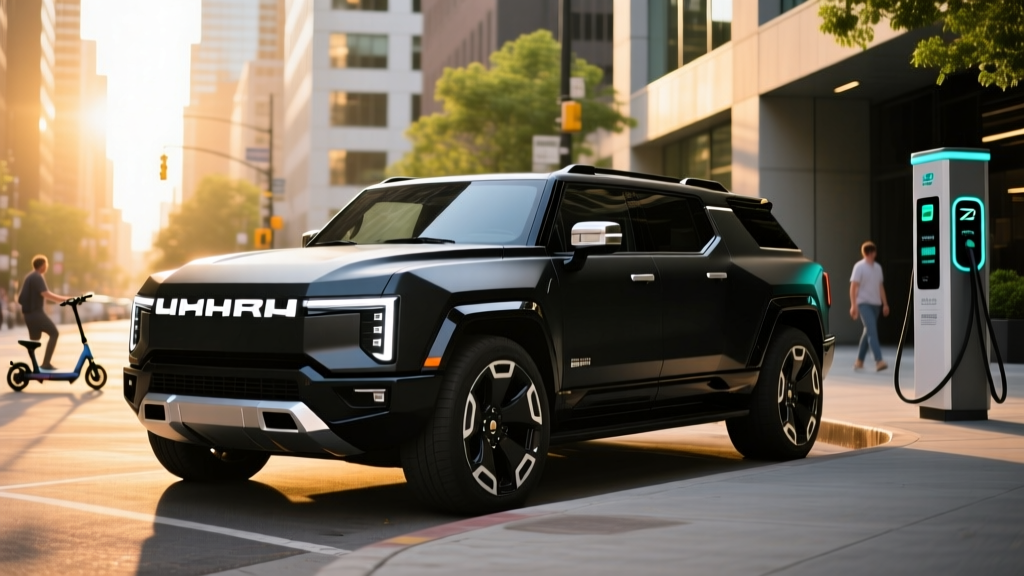
If you've searched "how much does a Hummer EV weigh," you're not alone — it's one of the most common questions about GMC's electric supertruck. The answer is staggering: the 2026 GMC Hummer EV Pickup tips the scales at approximately 9,046 pounds (curb weight for the 3X trim with the Extreme Off-Road Package). The SUV variant is slightly lighter at around 9,000 pounds even. For context, that's roughly the weight of two Honda Civics stacked on top of each other, or about 1,500 pounds heavier than a Ford F-150 Lightning Extended Range.
This extreme mass isn't an accident. It's the direct result of housing GM's massive 246 kWh Ultium battery pack — one of the largest ever put in a production passenger vehicle — plus the reinforced chassis, adaptive air suspension hardware, and the three-motor e4WD drivetrain needed to move it all. The weight has real implications for range efficiency, tire wear, charging energy costs, and even the infrastructure required to park it. Let's break down everything buyers need to know.
| Spec | 2X (Dual-Motor) | 3X (Tri-Motor) |
|---|---|---|
| Curb Weight | ~8,600 lbs | ~9,046 lbs |
| Battery (Usable) | ~170 kWh (est.) | ~246 kWh (NMC) |
| EPA Range | ~314 miles | ~329 miles |
| Horsepower | 625 hp | 830 hp (Watts to Freedom: 1,000 hp) |
| Torque | 7,400 lb-ft (wheel) | 11,500 lb-ft (wheel) |
| 0-60 mph | ~4.2 sec | ~3.0 sec (WTF mode) |
| Max DC Fast Charge | ~300 kW | ~350 kW |
| Level 2 Charge Rate | 11.5 kW (~30 mi/hr) | 11.5 kW (~30 mi/hr) |
| EPA Efficiency | ~47 MPGe | ~47 MPGe (43 kWh/100mi) |
| Towing Capacity | 7,500 lbs | 7,500 lbs |
| Starting MSRP | $99,995 | $119,995 |
Real-World Range: What 9,000 Pounds Does to Efficiency
The EPA rates the 3X Hummer EV Pickup at 329 miles of range, while the dual-motor 2X comes in around 314 miles. Those numbers are impressive for a vehicle this heavy, but they tell only part of the story. According to data from fueleconomy.gov, the Hummer EV consumes roughly 43 kWh per 100 miles — making it one of the least efficient EVs on the market. For comparison, a Tesla Model Y uses about 26 kWh/100mi.
EPA Sticker: 329 miles (3X Pickup)
Highway (70-75 mph): Expect 250-275 miles. The Hummer's aerodynamic profile — a brick wall on wheels — punishes efficiency at sustained speed. The massive frontal area creates enormous drag.
Cold Weather (below 32°F): Plan for 200-230 miles. Battery chemistry slows in the cold, cabin heating draws heavily from the pack, and there's no waste heat from an engine to exploit.
Towing (5,000+ lb trailer): Range drops to roughly 150-180 miles depending on trailer aerodynamics and terrain.
Best Case (city driving, mild weather): 310-340 miles is achievable with heavy regenerative braking recuperation.
The Hummer EV's Ultium battery uses NMC (nickel manganese cobalt) chemistry, which prioritizes energy density over cycle longevity compared to LFP cells. GM has not published a confirmed usable kWh figure for the 2X pack, but teardown data and charging analyses suggest approximately 170 kWh usable, versus the 3X's ~246 kWh. The enormous capacity is what makes 329 miles possible despite terrible efficiency — it's brute force rather than elegance.
Charging Speed: Filling a 246 kWh Battery
Charging a Hummer EV is a lesson in physics. The 3X supports a peak DC fast-charge rate of 350 kW on 800-volt architecture, which sounds blistering — but remember, you're filling a 246 kWh tank. Even at peak speed, a 10-80% charge takes approximately 30-35 minutes. In practice, the charge curve tapers significantly above 60% SoC, and sustained rates often average closer to 200-220 kW during a typical session.
| Charge Level | Power | Miles Added/Hour | Notes |
|---|---|---|---|
| Level 1 (120V) | 1.4 kW | ~3 mi/hr | Emergency/top-up only; full charge takes 7+ days |
| Level 2 (240V, 48A) | 11.5 kW | ~30 mi/hr | Full charge in ~21 hours (3X); requires 60A circuit |
| DC Fast (350 kW peak) | Up to 350 kW | ~800+ mi/hr (peak) | 10-80% in ~30-35 min; needs CCS or NACS adapter |
For home charging, you'll want a hardwired Level 2 station on a dedicated 60-amp circuit. At 11.5 kW, overnight charging adds roughly 200-250 miles in an 8-hour session — enough for most daily driving, but a full 0-100% replenishment takes well over 20 hours. If your home has a 200-amp electrical panel, you may need a panel upgrade ($1,500-$3,000) to accommodate the charger alongside other high-draw appliances.
One critical note: the 2026 Hummer EV ships with a NACS (North American Charging Standard) port, giving native access to Tesla Superchargers. For Electrify America and other CCS networks, GM includes a NACS-to-CCS adapter. Verify adapter compatibility before planning road trips.
Performance: Defying Physics With 1,000 Horsepower
The Hummer EV's party trick is Watts to Freedom (WTF) mode, which drops the adaptive air suspension by two inches, preconditions the battery for maximum discharge, and unleashes the full 1,000 horsepower (3X trim). The result: a 9,046-pound vehicle rockets to 60 mph in approximately 3.0 seconds. It's surreal — like watching a building sprint.
The dual-motor 2X is no slouch at 625 hp and a ~4.2-second 0-60 time, which is quicker than most sport sedans. The tri-motor 3X adds a front-axle motor for true e4WD torque vectoring, enabling features like CrabWalk (diagonal movement at low speed for tight trail obstacles) and Extract Mode (air suspension lifts 6 inches for maximum ground clearance of 15.9 inches).
Off-road capability is genuine, not cosmetic. With 35-inch Goodyear Wrangler Territory MT tires, underbody armor, and four-wheel steering, the Hummer EV can tackle terrain that would strand most SUVs. But the weight is a liability in soft sand or deep mud — 9,000 pounds sinks where lighter vehicles float.
Pricing, Trims & Federal Tax Credit Eligibility
The 2026 GMC Hummer EV starts at $99,995 for the 2X Pickup and climbs to $119,995 for the 3X. The SUV body style adds roughly $5,000 across trims. Fully optioned with the Extreme Off-Road Package ($9,995), Infinity Roof with removable panels, and premium interior, a 3X can exceed $140,000.
| Trim | Base MSRP | As-Tested (Typical) | §30D Credit Eligible? |
|---|---|---|---|
| 2X Pickup | $99,995 | $105,000-$110,000 | No — exceeds $80,000 truck MSRP cap |
| 3X Pickup | $119,995 | $130,000-$142,000 | No — exceeds $80,000 truck MSRP cap |
| 2X SUV | $104,995 | $110,000-$118,000 | No — exceeds $80,000 SUV MSRP cap |
| 3X SUV | $124,995 | $135,000-$145,000 | No — exceeds $80,000 SUV MSRP cap |
Here's the dealbreaker for incentive shoppers: the Hummer EV does not qualify for the $7,500 federal EV tax credit under IRS §30D. The credit caps eligible vehicles at $80,000 MSRP for trucks, vans, and SUVs (and $55,000 for sedans), per IRS guidelines. Every Hummer EV trim far exceeds that threshold. Additionally, buyer income caps ($150K single / $300K joint) and battery critical-mineral sourcing requirements further limit the credit pool — but the MSRP cap alone disqualifies the Hummer regardless.
Some buyers may find partial relief through state-level incentives (check your state's EV rebate program) or through favorable lease structures where the dealer captures a commercial clean vehicle credit and passes savings via reduced lease payments. Consult a tax professional for your specific situation.
Cargo, Interior Space & Daily Livability
The Hummer EV Pickup offers a 5-foot bed with approximately 37.7 cubic feet of cargo volume, plus a front trunk (frunk) with roughly 11.3 cubic feet. The frunk includes a drain plug for use as a cooler — a nice tailgate-party touch. The SUV variant provides about 81.8 cubic feet behind the front seats with the rear row folded.
Interior dimensions are generous, as you'd expect from a vehicle this size:
- Front legroom: ~45.6 inches
- Rear legroom: ~38.9 inches (Pickup) / ~37.5 inches (SUV)
- Front headroom: ~42.5 inches (with Infinity Roof removed)
- Seating: 5 passengers maximum
The cabin centers around a 13.4-inch infotainment touchscreen running GM's Ultifi platform with Google Built-In (Maps, Assistant, Play Store). A 12.3-inch driver display handles gauges and navigation. Wireless Apple CarPlay and Android Auto are standard. The available Super Cruise hands-free driving system covers over 750,000 miles of compatible highways — but remember, this is SAE Level 2 driver assistance, not autonomous driving. You must remain attentive and keep your eyes on the road.
Warranty Coverage & Battery Longevity
GMC backs the Hummer EV with a competitive warranty package:
- Battery/Powertrain: 8 years / 100,000 miles (whichever comes first), with a minimum 70% capacity retention guarantee
- Bumper-to-Bumper: 3 years / 36,000 miles
- Corrosion: 6 years / 100,000 miles
- Roadside Assistance: 5 years / 100,000 miles
The 70% retention threshold is industry standard, though some competitors (like Hyundai) guarantee 70% over 10 years/100,000 miles. Given the NMC chemistry and the enormous pack size, degradation in absolute terms means losing 70+ kWh of capacity over the warranty period — still leaving substantial range. However, out-of-warranty battery replacement for a 246 kWh pack would be extraordinarily expensive, likely $30,000-$45,000+ based on current cell pricing trajectories and labor. This is a long-term ownership risk worth factoring in.
Who Should Buy the Hummer EV (And Who Shouldn't)
- Unmatched presence and off-road capability in the EV space
- 329-mile EPA range despite extreme weight
- 3.0-second 0-60 in WTF mode — genuinely supercar-quick
- CrabWalk and four-wheel steering are legitimately useful off-road
- 350 kW DC fast charging on 800V architecture
- NACS native port for Tesla Supercharger access
- Removable Infinity Roof panels for open-air driving
- 9,046 lbs — extreme weight hurts efficiency, tire cost, and parking
- 47 MPGe / 43 kWh/100mi — very expensive to charge at public DC stations
- $100K+ starting price with zero federal tax credit eligibility
- 7,500-lb towing capacity is less than a loaded F-150 Lightning (10,000 lbs)
- Too wide (86.7 inches w/ mirrors) for many parking garages and drive-throughs
- Only 5 seats — no third-row option in the SUV
- Out-of-warranty battery replacement could exceed $35,000
Choose the Rivian R1T instead if: You want similar off-road ability in a lighter, more efficient package (~7,100 lbs), with a lower starting price (~$79,900) and better real-world efficiency.
Choose the Ford F-150 Lightning if: You need a work truck with 10,000-lb towing, a larger bed, and pricing that can qualify for the federal tax credit on lower trims.
Frequently Asked Questions
How much does a Hummer EV weigh exactly?
The 2026 GMC Hummer EV Pickup 3X weighs approximately 9,046 pounds curb weight. The dual-motor 2X is slightly lighter at around 8,600 pounds. The SUV variant weighs roughly 9,000 pounds for the 3X. This makes it the heaviest production passenger EV currently sold in the United States.
What is the real-world range of the Hummer EV?
The EPA rates the 3X at 329 miles, but real-world highway driving at 70-75 mph typically yields 250-275 miles. In cold weather (below freezing), expect 200-230 miles. City driving with regenerative braking can approach or slightly exceed the EPA figure.
How fast does the Hummer EV charge?
On a 350 kW DC fast charger, the 3X charges from 10-80% in approximately 30-35 minutes, though sustained rates taper above 60%. At home on a Level 2 charger (11.5 kW), expect about 30 miles of range per hour, meaning a full charge takes over 20 hours.
Does the Hummer EV qualify for the $7,500 federal tax credit?
No. Under IRS §30D rules, the Hummer EV exceeds the $80,000 MSRP cap for trucks and SUVs. No trim qualifies regardless of buyer income or battery sourcing. Check IRS.gov for current rules and consult a tax professional.
Is the Hummer EV worth buying vs the Rivian R1T or F-150 Lightning?
It depends on your priorities. The Hummer EV wins on raw presence, battery capacity, and straight-line acceleration. The Rivian R1T is lighter, more efficient, and offers a quad-motor option. The F-150 Lightning is more practical for work use with higher towing capacity and lower pricing that can qualify for tax credits. For pure capability-per-dollar, the Lightning and R1T are stronger value propositions.
Why is the Hummer EV so heavy?
The primary driver is the 246 kWh Ultium battery pack (3X), which alone weighs an estimated 2,900+ pounds. Add the reinforced body-on-frame chassis, adaptive air suspension components, three electric motors, underbody armor, and the sheer size of the vehicle, and you arrive at 9,046 pounds. The battery mass is necessary to achieve 329 miles of range given the vehicle's poor aerodynamic efficiency.
What battery chemistry does the Hummer EV use?
The Hummer EV uses GM's Ultium platform with NMC (nickel manganese cobalt) lithium-ion chemistry. NMC offers higher energy density than LFP (lithium iron phosphate), which is essential for fitting enough capacity into the vehicle, but it typically has a shorter cycle life and higher thermal sensitivity than LFP.