Quick Answer: Is the Hummer EV Worth Buying?
The 2026 GMC Hummer EV lineup (Edition 1, 3X, 2X) delivers up to 381 miles of EPA-estimated range, peaks at 350 kW DC fast charging (10-80% in approximately 22 minutes), and starts at $96,545 MSRP before incentives. It replaces the old gas Hummer H2/H3 that averaged 10-14 MPG combined. Real-world highway range drops to roughly 310-340 miles depending on speed and temperature. If you have home Level 2 charging, tow modestly, and want a full-size electric truck/SUV with off-road capability, the Hummer EV is a legitimate option. If you lack home charging access or regularly drive more than 300 highway miles between charges, consider the constraints carefully before committing.
2026 Hummer EV Lineup: Trims, Range, and Pricing
The Hummer EV comes in two body styles — the Hummer EV Pickup and the Hummer EV SUV — across three main trims for the 2026 model year. Here are the exact specifications that matter for your buying decision:
| Trim | Body | Battery (Usable kWh) | EPA Range | HP / Torque | 0-60 mph | Base MSRP |
|---|---|---|---|---|---|---|
| 2X | Pickup | ~170 kWh (NMC) | 318 mi | 655 hp / 7,400 lb-ft* | ~4.3 sec | $96,545 |
| 3X | Pickup | ~210 kWh (NMC) | 355 mi | 830 hp / 11,500 lb-ft* | ~3.0 sec | |
| 3X | SUV | ~210 kWh (NMC) | 314 mi | 830 hp / 11,500 lb-ft* | ~3.5 sec | |
| Edition 1 | Pickup | ~210 kWh (NMC) | 381 mi | 1,000 hp / 12,000 lb-ft* | ~3.0 sec |
*Wheel torque figures (after gear reduction); motor output torque is significantly lower. Source: GMC Hummer EV specifications.
All trims use nickel-manganese-cobalt (NMC) lithium-ion pouch cells supplied by Ultium Cells. The massive battery packs are the largest in any production passenger vehicle, which directly explains both the class-leading range and the 9,000+ pound curb weight.
Real-World Range vs. EPA Sticker
EPA estimate: up to 381 miles (Edition 1 Pickup)
Real-world expectations:
- Highway driving at 70-75 mph: expect 300-340 miles (Edition 1), 280-310 miles (3X SUV)
- Cold weather (below 32°F): subtract 15-25% from EPA figures — the Hummer EV's enormous frontal area and weight amplify cold-weather losses
- Towing: range drops 40-55% when towing near the 7,500 lb max capacity
- City/regenerative driving: can approach or slightly exceed EPA estimates thanks to regen capturing energy in stop-and-go traffic
The Hummer EV has a heat pump for cabin heating, which helps mitigate cold-weather losses compared to resistive heating, but the sheer mass and aerodynamic drag still exact a toll.
Charging Speed and Infrastructure: What You Need to Know
Charging a battery this large requires serious infrastructure. Here is the breakdown by charging level:
| Charging Level | Power (kW) | Miles Added per Hour | Time 10-80% (Edition 1, ~210 kWh) | Typical Location |
|---|---|---|---|---|
| Level 1 (120V) | 1.4 kW | ~3 mi/hr | ~100+ hours | Standard household outlet |
| Level 2 (240V, 48A) | 11.5 kW | ~28 mi/hr | ~13-14 hours | Home wall connector |
| Level 2 (240V, 80A) | 19.2 kW | ~47 mi/hr | ~8 hours | High-power home or commercial |
| DC Fast (peak) | 350 kW | ~100 mi in 10 min | ~22 minutes | Electrify America / Tesla Supercharger (NACS adapter) |
The Hummer EV's 350 kW peak DC fast-charge capability is among the fastest available, enabled by GM's Ultium 800-volt architecture. However, that peak rate is not sustained across the full charge session. The charge curve tapers meaningfully above 50% SoC and drops sharply above 80% to protect the NMC cells. A realistic 10-80% session at a 350 kW station takes approximately 22 minutes; 10-90% extends to roughly 35-40 minutes.
For home charging, the math is straightforward but the commitment is significant. With a 210 kWh battery, even an 80-amp Level 2 charger (19.2 kW) requires about 8 hours for a near-full charge. Most Hummer EV owners will plug in nightly and rarely charge from empty. A 48-amp Level 2 circuit (11.5 kW) is more common for residential installations and will add roughly 28 miles of range per hour — adequate for daily use if your commute is under 150 miles round-trip.
Important note on home electrical requirements: An 80-amp charger requires a 100-amp dedicated circuit. Many homes have 200-amp main panels that cannot support this without a panel upgrade ($2,000-$5,000+). Consult a licensed electrician before committing to equipment. A 48-amp charger on a 60-amp circuit is far more common and practical.
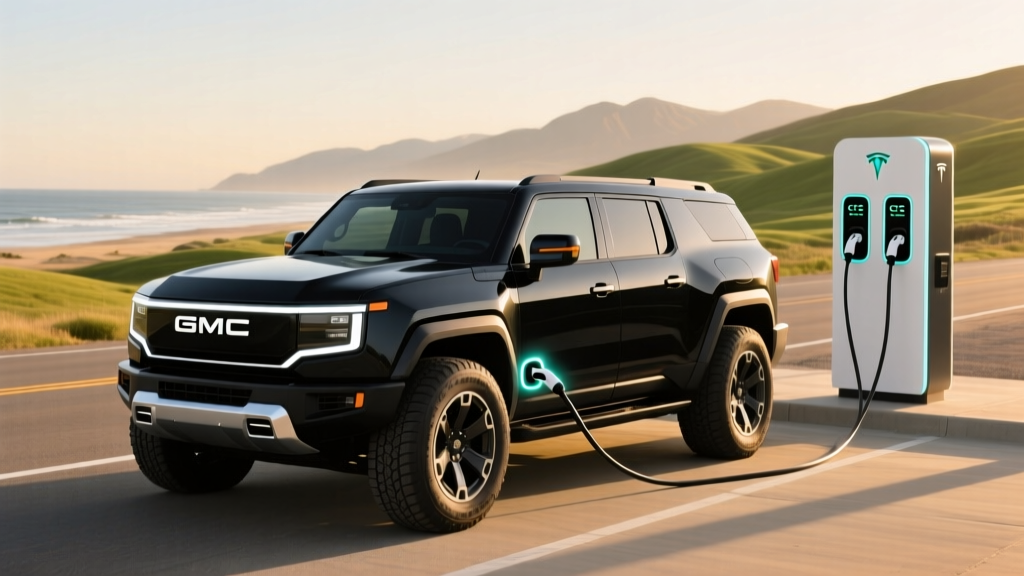
For connector compatibility, the 2026 Hummer EV uses the NACS (North American Charging Standard) connector natively, granting direct access to the Tesla Supercharger network — over 25,000 stalls nationwide. CCS compatibility is available via adapter for Electrify America and other networks.
Hummer EV vs. Gas Hummer: The Cost and Efficiency Reality
The old Hummer H2 (2003-2009) achieved roughly 10-11 MPG combined with a 6.0L V8. The Hummer H3 (2006-2010) managed about 14-15 MPG combined. The electric Hummer EV has no EPA MPG rating in the traditional sense — it uses MPGe (miles per gallon equivalent) and kWh/100 miles.
| Metric | Hummer EV (Edition 1) | Hummer H2 (6.0L V8) | 2026 Ford F-150 Gas (3.5L V6) |
|---|---|---|---|
| EPA Efficiency | ~47 MPGe / ~72 kWh/100mi | ~10-11 MPG | ~20 MPG combined |
| Fuel/Energy Cost per Mile | $0.05-$0.09 (home charging) | $0.33-$0.38 ($3.50/gal gas) | $0.18-$0.21 |
| Annual Fuel/Energy (15,000 mi) | $750-$1,350 | $4,950-$5,700 | $2,700-$3,150 |
| 0-60 mph | ~3.0 sec | ~10.0 sec | ~5.8 sec |
| Towing Capacity | 7,500 lbs | 6,200 lbs | 13,000 lbs |
| Maintenance (annual est.) | $300-$500 | $1,200-$1,800 | $800-$1,200 |
The efficiency picture is nuanced. The Hummer EV is the least efficient EV on the road by energy consumption per mile — its 72+ kWh/100mi figure is roughly double that of a Tesla Model Y (~28 kWh/100mi). But electricity is so much cheaper per unit of energy than gasoline that even an inefficient EV undercuts a gas vehicle on cost per mile. At the national average residential electricity rate of approximately $0.16/kWh (EIA 2025 data), charging at home costs roughly $0.12 per mile in the Hummer EV versus $0.35 per mile in a gas Hummer H2.
The trade-off: public DC fast charging at $0.40-$0.55/kWh pushes the Hummer EV's road-trip energy cost to $0.29-$0.40 per mile — close to what a mid-size gas truck costs. Home charging access is essential for the economic case.
Total Cost of Ownership: 5-Year Breakdown
| Cost Category | Hummer EV 3X Pickup | Gas Full-Size Truck (e.g., F-150 Lariat) |
|---|---|---|
| Purchase Price (MSRP) | $104,595 | $62,000 |
| Federal Tax Credit (§30D) | Up to $7,500 (eligibility varies) | $0 |
| Effective Purchase Price | ~$97,095 | $62,000 |
| Energy/Fuel (5 yrs, 75K mi) | $4,500-$7,500 | $13,500-$15,750 |
| Maintenance (5 yrs) | $1,500-$2,500 | $4,500-$6,000 |
| Insurance (5 yrs, est.) | $15,000-$20,000 | $9,000-$12,000 |
| Home Charger Install | $1,200-$3,500 | $0 |
| Depreciation (5-yr est.) | $40,000-$50,000 | $22,000-$28,000 |
| 5-Year Total Cost | ~$120,000-$145,000 | ~$89,000-$101,000 |
The Hummer EV costs significantly more to own over five years than a comparably equipped gas truck, driven primarily by its higher purchase price and steeper depreciation. The energy and maintenance savings are real — roughly $10,000-$14,000 saved over five years — but they do not offset the $35,000+ purchase price gap. Buyers should view the Hummer EV as a performance and technology purchase, not a pure cost-savings play.
Insurance is a major cost factor. The Hummer EV's 9,000+ lb curb weight, high repair costs for the massive battery pack, and 830-1,000 horsepower output push insurance premiums 40-70% higher than a conventional full-size truck. Expect annual premiums of $3,000-$4,000 depending on your location and driving record.
Federal Tax Credit and Incentive Eligibility
The Hummer EV's eligibility for the §30D federal tax credit (up to $7,500) is not guaranteed and depends on several factors that change periodically:
- MSRP cap: Pickup trucks must be under $80,000 MSRP; SUVs under $80,000. The Hummer EV Pickup base 2X starts at $96,545, which exceeds the MSRP cap. This means the Hummer EV Pickup does NOT qualify for the new-vehicle §30D credit as currently structured.
- Buyer income limits: AGI caps of $150,000 (single), $225,000 (head of household), $300,000 (joint) apply.
- Battery sourcing requirements: Critical minerals and battery component sourcing from FTA countries must meet escalating thresholds.
- Point-of-sale transfer: Eligible credits can be transferred to the dealer at purchase for an immediate price reduction, per IRS §30D rules.
Given the MSRP cap issue, most Hummer EV buyers will not qualify for the federal purchase credit. Check with your dealer and a tax professional for the latest eligibility determination. Some states offer separate incentives that may apply regardless of MSRP — consult your state energy office for current programs.
Common Misconceptions About the Hummer EV
| Myth | Fact |
|---|---|
| "It's a zero-emissions vehicle." | Tailpipe emissions are zero, but upstream electricity generation matters. The Hummer EV's enormous energy consumption (~72 kWh/100mi) means its grid carbon footprint depends heavily on your local utility mix. On a coal-heavy grid, its lifecycle emissions advantage over an efficient gas truck narrows significantly. |
| "The 381-mile range means you'll never need to charge on road trips." | Real highway range is 300-340 miles at best. With charging taper above 80%, practical road-trip legs are 250-280 miles before you want to stop. Plan accordingly. |
| "It charges as fast as any other EV." | While peak rate is 350 kW, the massive battery means even fast charging adds proportionally less range per minute than a smaller-battery EV. You'll spend more time at chargers on road trips than in a Rivian R1T or Tesla Cybertruck. |
| "I can charge it on a regular outlet overnight." | Level 1 (120V) adds roughly 3 miles per hour. A full charge would take over 100 hours. Level 1 is essentially useless for this vehicle beyond emergency trickle charging. |
| "The CrabWalk feature makes it self-driving." | CrabWalk is a 4-wheel steering maneuverability feature, not an autonomous driving system. The Hummer EV's Super Cruise is an SAE Level 2 driver-assistance system — you must remain attentive and keep your hands available. |
Real-World Ownership: Who Should Buy the Hummer EV?
After evaluating the specs, costs, and practicalities, here is an actionable decision framework:
Choose the Hummer EV If:
- You have reliable home Level 2 charging (minimum 48-amp, ideally 80-amp) and can charge overnight
- Your daily driving is under 200 miles round-trip, and you take road trips no more than a few times per year
- You want a full-size electric truck with serious off-road capability (Extract Mode, adaptive air suspension, underbody armor)
- Performance matters: 0-60 in 3 seconds in a 9,000-lb truck is genuinely extraordinary
- You can absorb higher insurance premiums and steeper depreciation as part of the ownership experience
- You value the NACS connector for direct Tesla Supercharger access on road trips
Look Elsewhere If:
- You lack home charging access — public charging a 210 kWh battery is time-consuming and expensive
- You regularly tow heavy loads over long distances — range drops 40-55% under tow, making 150-mile tow legs the practical limit
- Budget is a primary concern — the 5-year total cost of ownership is $120,000-$145,000
- You need maximum towing capacity — the Hummer EV's 7,500 lb rating trails the Ford F-150 Lightning (10,000 lb) and Rivian R1T (11,000 lb)
- You live in an area with limited DC fast-charging infrastructure and plan frequent long-distance travel
Battery Longevity and Warranty
GM provides an 8-year/100,000-mile battery and powertrain warranty covering defects and capacity loss below 70% of original capacity. The NMC chemistry in the Ultium pack is proven but will degrade over time. Expect approximately 8-12% capacity loss over the first 100,000 miles under normal use. The Hummer EV's oversized battery actually works in your favor here: because most owners will use only a fraction of the total capacity daily, the shallower charge cycles reduce degradation stress. A battery replacement, should it ever be needed out of warranty, would likely exceed $25,000-$35,000 given the pack size — a sobering long-term cost consideration.
Competitive Alternatives to Consider
Before committing to the Hummer EV, cross-shop these electric trucks and SUVs:
- Rivian R1T (Dual-Motor Max): 410 mi EPA range, 10,000 lb towing, ~$87,000 — more efficient, more tow capacity, smaller footprint
- Ford F-150 Lightning (Extended Range): 320 mi EPA range, 10,000 lb towing, ~$72,000 — far more affordable, proven platform
- Tesla Cybertruck (Cyberbeast): 320 mi EPA range, 11,000 lb towing, ~$99,990 — comparable price, more efficient, stainless steel body
- Chevrolet Silverado EV (4WT/3LT): Up to 440 mi EPA range, 10,000 lb towing, ~$75,000-$85,000 — GM's own Ultium platform with more range and tow capacity at lower cost
Per fueleconomy.gov, the Hummer EV ranks among the least energy-efficient EVs available, but its combination of range, power, and off-road capability remains unique in the segment.
Frequently Asked Questions
Can I charge the Hummer EV at Tesla Superchargers?
Yes. The 2026 Hummer EV uses the NACS connector natively and can access Tesla Supercharger stalls directly. This provides access to over 25,000 Supercharger locations nationwide, which is the most reliable DC fast-charging network available.
How much does it cost to charge the Hummer EV at home?
At the national average electricity rate of $0.16/kWh, a full charge of the 210 kWh battery (Edition 1/3X) costs approximately $33.60. A typical daily top-up of 40-60 kWh costs $6.40-$9.60. Monthly home charging for 1,000 miles of driving runs roughly $75-$115.
Is the Hummer EV good for towing?
It can tow up to 7,500 pounds, which covers most boat and small camper trailers. However, expect range to drop by 40-55% when towing near capacity. A 350-mile EPA range becomes roughly 160-210 miles under heavy tow, requiring frequent charging stops on longer hauls.
Does the Hummer EV qualify for any tax credits?
The Hummer EV Pickup exceeds the §30D MSRP cap of $80,000 for trucks, making it ineligible for the federal new-vehicle credit. State incentives vary by jurisdiction — check with your dealer and a tax professional for current eligibility. The IRS clean vehicle credits page provides the latest rules.
How does Super Cruise work in the Hummer EV?
Super Cruise is an SAE Level 2 hands-free driver-assistance system that works on over 750,000 miles of compatible divided highways in the US and Canada. It uses LiDAR map data, cameras, and a driver-attention monitoring system. You must remain alert and ready to take over — it is not self-driving. The system handles steering, acceleration, and braking on mapped roads but cannot navigate construction zones, unmapped roads, or complex urban environments.
What is the Hummer EV's ground clearance?
With the adaptive air suspension in Extract Mode, the Hummer EV achieves up to 15.9 inches of ground clearance — more than a Ford Bronco Raptor. This mode raises the suspension approximately 6 inches above standard ride height for extreme off-road obstacles.