The Hummer EV Lease Deal: What You're Actually Signing Up For
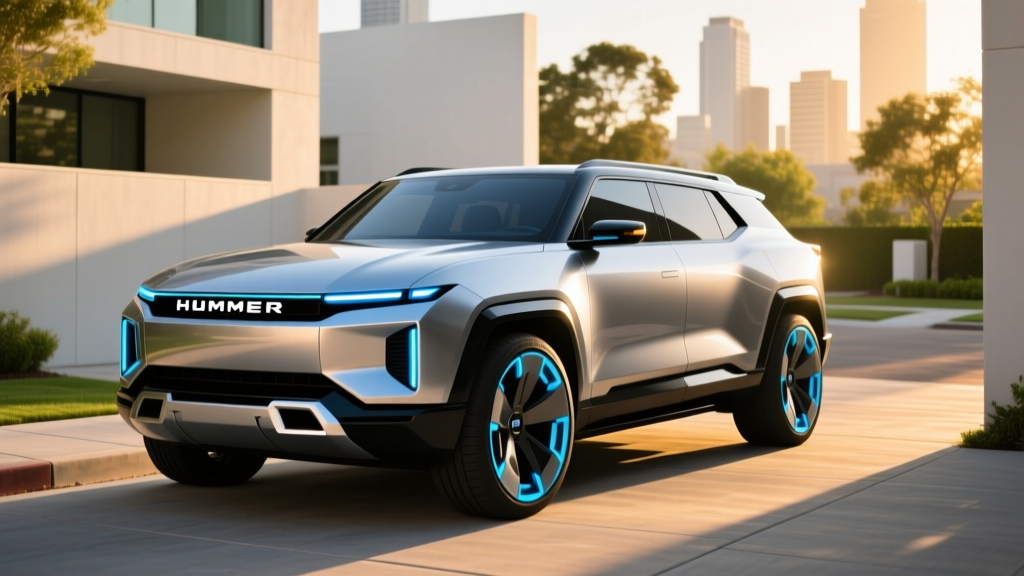
The GMC Hummer EV — whether the Pickup or SUV variant — is one of the most polarizing electric vehicles on the market. At over 9,000 pounds, with up to 830 horsepower and a 246.5 kWh Ultium battery pack, it's an engineering spectacle. But when you're evaluating a Hummer EV lease deal in 2026, the sticker price is only the beginning. This guide dissects the real total cost of ownership, federal and state incentive eligibility, and the financial trade-offs that determine whether leasing this electric supertruck makes sense for your budget.
For the 2026 model year, the Hummer EV Pickup starts around $98,845 (2X trim) and climbs past $140,000 for the fully loaded Edition 1. The SUV variant follows a similar trajectory. Lease offers vary by dealer and region, but typical 36-month leases with 10,000 miles/year often land between $1,100 and $1,600/month depending on trim, down payment, and money factor. Let's break down what happens after you drive off the lot.
5-Year Total Cost of Ownership Breakdown
Whether you lease for 36 months and buy out, or purchase outright and hold for five years, here's what the math looks like. We're using the 2026 Hummer EV Pickup 2X (MSRP ~$98,845) as our baseline, compared against a similarly priced gas-powered full-size truck averaging 18 MPG combined.
| Cost Category | Hummer EV (5 Years) | Gas Truck Baseline (5 Years) |
|---|---|---|
| Purchase / Lease Payments | $72,000–$84,000 (lease) or $98,845+ (purchase) | $65,000–$78,000 |
| Fuel / Charging | $4,200–$6,800 | $12,500–$15,000 |
| Insurance | $14,000–$18,000 | $8,500–$11,000 |
| Maintenance | $1,800–$2,800 | $4,500–$6,000 |
| Depreciation (estimated) | $38,000–$48,000 | $22,000–$30,000 |
| Estimated 5-Year Total | $130,000–$159,000 | $112,500–$140,000 |
The Hummer EV's operating costs (fuel and maintenance) are dramatically lower, but higher insurance premiums, steeper depreciation, and the sheer purchase price offset those savings significantly. A lease can mitigate depreciation risk — you hand the keys back and let GMC absorb the resale hit — but monthly payments remain substantial.
Federal Tax Credit: Do You Qualify Under §30D?
The federal EV tax credit under IRS §30D can reduce your effective cost by up to $7,500, but the Hummer EV's eligibility is complex and has shifted with evolving battery-sourcing rules. Here's the current 2026 eligibility checklist:
- MSRP Cap: The Hummer EV Pickup qualifies under the $80,000 cap for trucks (the SUV variant must stay under $80,000 to qualify — most trims exceed this and are ineligible).
- Buyer Income Limits: Modified adjusted gross income (MAGI) must not exceed $300,000 (joint filers), $225,000 (head of household), or $150,000 (single filers).
- Battery Component Sourcing: A percentage of battery components must be manufactured or assembled in North America, increasing annually. As of 2026, the threshold is stringent — GMC's Ultium platform is North American-built, which generally satisfies this requirement.
- Critical Minerals Sourcing: A growing percentage of critical minerals must be sourced from the U.S. or free-trade-agreement partners. Verify current-year compliance on the fueleconomy.gov tax credit lookup.
- Point-of-Sale Transfer: As of 2024, buyers can transfer the credit to the dealer at the point of sale, effectively reducing the purchase price or down payment by up to $7,500 on the spot. This applies to leases as well, where the lessor typically captures the credit and may (or may not) pass savings to the lessee — always confirm this in your lease agreement.
- Lease Loophole (Commercial Credit): Some Hummer EV lease deals are structured under §45W (commercial clean vehicle credit), where the leasing company claims the credit and bakes savings into the monthly payment. Ask your dealer explicitly how the credit is applied.
Key caveat: Tax credit rules change frequently. Always verify your specific vehicle's eligibility on fueleconomy.gov and consult a tax professional before relying on the credit in your financial planning.
Charging vs. Gas: The Per-Mile Cost Reality
The Hummer EV's efficiency is, predictably, modest for its size. The EPA rates the 2026 Pickup at approximately 47 MPGe combined (roughly 72 kWh/100 miles). That's thirstier than most EVs, but electricity remains far cheaper per mile than gasoline.
| Metric | Hummer EV | Gas Truck (18 MPG) |
|---|---|---|
| Energy Cost Assumption | $0.16/kWh (national avg. residential) | $3.60/gallon |
| Consumption per 100 miles | ~72 kWh | ~5.56 gallons |
| Cost per mile | ~$0.115 | ~$0.20 |
| Annual fuel cost (12,000 mi) | ~$1,380 | ~$2,400 |
| 5-year fuel cost | ~$6,900 | ~$12,000 |
At residential electricity rates, the Hummer EV saves roughly $1,000–$1,100 per year in fuel costs versus a comparable gas truck. Over five years, that's $5,000+ in savings. However, if you rely heavily on DC fast charging at public stations (where rates can reach $0.35–$0.50/kWh), those savings shrink considerably — potentially down to $200–$400 annually.
The Hummer EV's 246.5 kWh battery (one of the largest in any production vehicle) supports up to 350 kW peak DC fast charging via its 800-volt architecture. In practice, expect peak rates around 290–320 kW with a 10–80% charge time of approximately 35–40 minutes. The massive battery means even at moderate charging speeds, you're adding meaningful range — but that 800+ kWh capacity also means a full home Level 2 charge (at 11.5 kW) takes roughly 21 hours from empty.
Maintenance Savings: Where the EV Advantage Is Real
Electric drivetrains eliminate dozens of maintenance items that gas trucks require. Here's what you avoid with the Hummer EV:
| Maintenance Item | Gas Truck Frequency | Hummer EV |
|---|---|---|
| Oil Changes | Every 7,500–10,000 mi ($60–$120 each) | Not required |
| Transmission Fluid | Every 30,000–60,000 mi | Not required (single-speed reduction gear) |
| Spark Plugs | Every 60,000–100,000 mi | Not required |
| Brake Pads | Every 30,000–50,000 mi | 60,000+ mi (regen braking reduces wear ~60–70%) |
| Exhaust / Emissions | Periodic inspections, catalytic converter risk | Not required |
| Estimated 5-yr maintenance | $4,500–$6,000 | $1,800–$2,800 |
You'll still need tire rotations (the Hummer EV's 35-inch tires are expensive — budget $400–$600 per tire when replacement time comes), cabin air filter changes, brake fluid checks, and coolant system service for the battery thermal management system. But the net savings over five years typically run $2,000–$3,500.
Insurance Costs: The Unpleasant Surprise
EV insurance premiums are typically 15–30% higher than equivalent gas vehicles, and the Hummer EV sits at the extreme end of that spectrum. Expect annual premiums of $2,800–$3,600 depending on your state, driving record, and coverage level.
Why the premium? Several factors converge:
- Repair costs: The Hummer EV's specialized Ultium battery pack, advanced ADAS sensors, and aluminum-intensive body mean collision repairs are expensive and require certified technicians.
- Vehicle weight: At 9,000+ lbs, the Hummer EV causes more damage to other vehicles in multi-vehicle accidents, increasing liability exposure for insurers.
- Replacement cost: With MSRPs approaching $100,000–$140,000, total-loss payouts are steep.
- Parts availability: GMC's EV parts supply chain is still maturing, leading to longer repair times and rental car expenses that insurers must cover.
Before signing any Hummer EV lease deal, get insurance quotes from at least three carriers. Some insurers now offer dedicated EV policies with bundled home-charging equipment coverage that can partially offset the premium gap.
Depreciation and Resale Value Trends
This is where the lease-vs-buy calculus gets critical. EV depreciation has been volatile. Data from 2024–2025 showed some luxury EVs losing 50–60% of value within three years, driven by Tesla price cuts, rapidly improving new-model range, and shifting consumer sentiment.
The Hummer EV faces specific depreciation headwinds:
- Niche market: The buyer pool for a $100,000+, 9,000-lb electric supertruck is narrow.
- Technology obsolescence: By 2029, solid-state batteries and 400+ mile range EVs at lower prices could make the Hummer EV's 329-mile EPA range and massive battery look dated.
- Weight-related tire and suspension wear may concern second-hand buyers.
Estimated 5-year depreciation for the Hummer EV: 38–48%, meaning a $98,845 truck could be worth $51,000–$61,000 at year five. A comparable gas truck (e.g., GMC Sierra Denali) typically holds 55–65% over the same period.
This is why leasing matters. A 36-month Hummer EV lease transfers depreciation risk to GMC. If resale values crater, you simply return the vehicle. If you buy, you absorb the loss. For a vehicle in this price segment with uncertain long-term resale, a lease deal with a competitive money factor and realistic residual value can be the financially prudent choice.
State, Local, and Utility Incentives
Important: State and local incentives vary dramatically by jurisdiction and change frequently. Always verify current programs through your state energy office and local utility before relying on them.
Beyond the federal §30D credit, many states and utilities offer additional incentives that can stack:
- California: CVRP rebate (up to $7,000 for income-qualified buyers, though luxury vehicles may be excluded) plus HOV lane access.
- Colorado: State EV tax credit up to $5,000 for vehicles under certain MSRP thresholds.
- Utility rebates: Many utilities offer $500–$1,500 rebates for Level 2 home charger purchase and installation. Some offer time-of-use (TOU) rates that reduce charging costs by 30–50% if you charge overnight.
- Home charging installation: The federal Residential Clean Energy Credit (30C predecessor rules) may cover up to $1,000 of home EVSE installation costs, though eligibility depends on census tract qualifications.
For the Hummer EV specifically, some state rebates have MSRP caps ($60,000–$80,000) that exclude it. Federal credits remain the primary incentive lever.
Frequently Asked Questions
How much does it really cost to own a Hummer EV over 5 years?
Between $130,000 and $159,000 when including purchase/lease payments, charging, insurance, maintenance, and depreciation. The majority of that cost is the vehicle itself and its depreciation. Operating costs (charging + maintenance) are significantly lower than a gas truck, saving roughly $7,000–$10,000 over five years.
Do I qualify for the $7,500 federal tax credit on the Hummer EV?
Possibly, but it depends on your income (MAGI under $300K joint / $150K single), the specific trim's MSRP (the Pickup qualifies under the $80K truck cap at lower trims; the SUV often exceeds the $80K cap), and current battery-sourcing compliance. Check fueleconomy.gov for the specific VIN eligibility and consult a tax professional. On a lease, the leasing company may claim the credit under §45W — confirm whether savings are passed through to your monthly payment.
How much do I save on fuel and maintenance vs. a gas truck?
Approximately $5,000–$7,000 in fuel savings and $2,000–$3,500 in maintenance savings over five years, assuming 12,000 miles/year and residential charging at $0.16/kWh. If you rely on public DC fast charging, fuel savings shrink to $2,000–$4,000.
Are EVs more expensive to insure, specifically the Hummer EV?
Yes. Expect to pay 25–40% more than a comparable gas truck. The Hummer EV's high MSRP, 9,000+ lb weight, specialized repair requirements, and limited parts availability drive premiums to $2,800–$3,600/year. Get quotes before signing.
How well does the Hummer EV hold its value?
Estimated 5-year depreciation is 38–48%, worse than comparable gas trucks (25–35% depreciation). This makes leasing attractive — you transfer resale risk to the lessor. If buying, plan for significant equity loss and consider gap insurance.
What's the real-world range of the Hummer EV?
The EPA rates the 2026 Hummer EV Pickup 2X at approximately 329 miles. In real-world highway driving (70+ mph), expect 260–290 miles. In cold weather (below 30°F), range can drop to 220–250 miles due to battery heating demands and reduced regenerative braking efficiency. The massive 246.5 kWh battery provides a buffer, but aerodynamic drag on this 9,000-lb vehicle is relentless at speed.