Why GM Paused Hummer EV and Escalade IQ Production
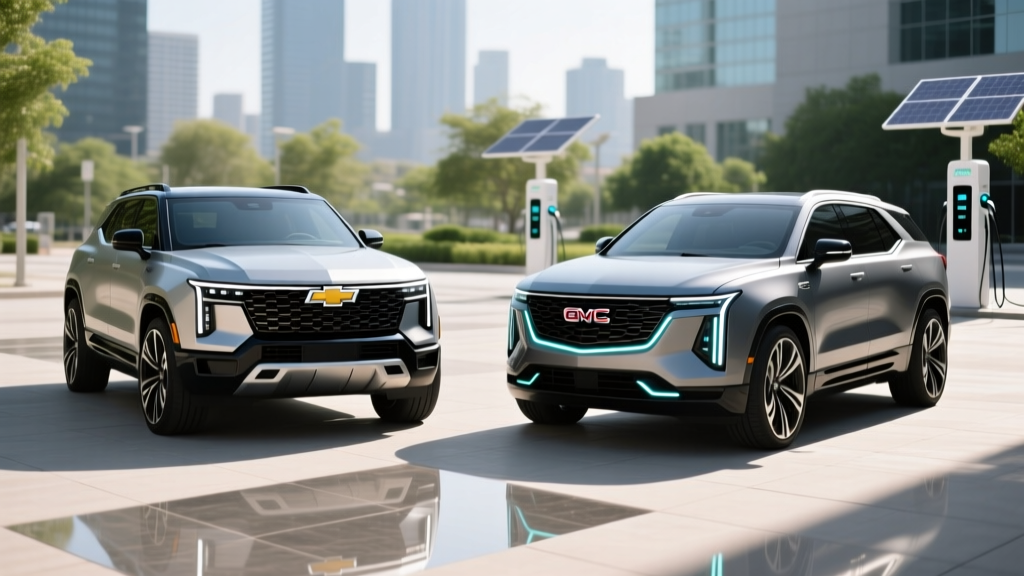
General Motors' decision to temporarily halt production of the GMC Hummer EV and Cadillac Escalade IQ at its Factory ZERO (Detroit-Hamtramck) assembly plant has left prospective buyers scrambling for clarity. The production pause, which GM attributes to Ultium battery platform retooling and supply-chain rebalancing, affects both the pickup and SUV variants of the Hummer EV as well as the all-electric Escalade IQ luxury flagship.
If you're researching the hummer ev escalade iq production halt and wondering whether to wait, pivot to a competitor, or lock in a dealer allocation now, this guide breaks down exactly what we know — paired with the hard specs, real-world range data, and ownership economics you need to make an informed decision.
GM has not issued a firm restart date as of early 2026, though internal communications to dealers suggest a phased resumption by mid-2026. Both vehicles remain listed on GMC and Cadillac's configurators, but delivery timelines have stretched to 6–10 months for new orders.
Hummer EV Pickup: 2026 Specs at a Glance
| Spec | Hummer EV Pickup (3X) | Hummer EV Pickup (2X) |
|---|---|---|
| EPA Range | 329 miles | 381 miles |
| Battery (Usable) | ~212.7 kWh (NMC, 24 modules) | ~212.7 kWh (NMC, 24 modules) |
| Horsepower | 1,000 hp (Watts to Freedom) | 830 hp |
| 0-60 mph | ~3.0 seconds | ~3.5 seconds |
| Drivetrain | Tri-motor AWD (e4WD) | Dual-motor AWD |
| Max DC Fast Charge | 350 kW (peak) | 350 kW (peak) |
| 10-80% DC Charge | ~35 minutes (est.) | ~35 minutes (est.) |
| Level 2 Home Charge | 11.5 kW (~16 mi/hr) | 11.5 kW (~16 mi/hr) |
| MPGe (Combined) | 47 MPGe | 50 MPGe |
| kWh/100 mi | 72 kWh/100 mi | 67 kWh/100 mi |
| Towing Capacity | 7,500 lbs | 7,500 lbs |
| Cargo (Bed) | 81.8 cu ft | 81.8 cu ft |
| Frunk | 10.5 cu ft | 10.5 cu ft |
| Base MSRP | $149,995 | $104,995 |
| Battery/Powertrain Warranty | 8 yr / 100,000 mi | 8 yr / 100,000 mi |
Escalade IQ: 2026 Specs at a Glance
| Spec | Escalade IQ Luxury | Escalade IQ Sport |
|---|---|---|
| EPA Range | 460 miles (est. 24-module) | 460 miles (est. 24-module) |
| Battery (Usable) | ~200+ kWh (NMC, Ultium) | ~200+ kWh (NMC, Ultium) |
| Horsepower | 750 hp (AWD) | 750 hp (AWD) |
| 0-60 mph | Under 5.0 seconds | Under 5.0 seconds |
| Drivetrain | Dual-motor AWD | Dual-motor AWD |
| Max DC Fast Charge | 350 kW (peak, 800V architecture) | 350 kW (peak, 800V architecture) |
| 10-80% DC Charge | ~30 minutes (est.) | ~30 minutes (est.) |
| Level 2 Home Charge | 19.2 kW (~28 mi/hr) | 19.2 kW (~28 mi/hr) |
| MPGe (Combined) | ~52 MPGe (est.) | ~52 MPGe (est.) |
| Passenger Volume | ~140 cu ft (est.) | ~140 cu ft (est.) |
| Cargo (Behind 3rd Row) | ~25 cu ft | ~25 cu ft |
| Cargo (Max) | ~130 cu ft | ~130 cu ft |
| Base MSRP | $129,990 | $130,690 |
| Battery/Powertrain Warranty | 8 yr / 100,000 mi | 8 yr / 100,000 mi |
Real-World Range: What the EPA Sticker Doesn't Tell You
Hummer EV Pickup 2X: EPA 381 miles — Expect ~310–340 miles on mixed highway driving at 70 mph. In cold weather (below 30°F), range can drop to 250–280 miles due to battery heating demands and cabin HVAC load. The Hummer's massive frontal area and 9,000+ lb curb weight punish highway efficiency.
Hummer EV Pickup 3X: EPA 329 miles — Highway cruising yields approximately 270–300 miles. Cold weather: 220–260 miles.
Escalade IQ: EPA est. 460 miles — Cadillac's aerodynamic refinement over the Hummer helps. Expect ~380–420 miles highway, ~320–360 miles in winter conditions.
Both vehicles use GM's Ultium NMC (nickel manganese cobalt) battery chemistry, which offers higher energy density than LFP (lithium iron phosphate) but is more sensitive to extreme cold. The Hummer EV's 212.7 kWh pack is one of the largest ever fitted to a production vehicle, but its sheer weight — over 9,000 lbs for the pickup — means energy consumption hovers around 67–72 kWh per 100 miles. For context, a Tesla Model Y consumes roughly 28 kWh/100mi.
According to fueleconomy.gov, the Hummer EV 2X achieves 50 MPGe combined, which translates to roughly 1.4 miles per kWh. If you're planning road trips through mountain passes or towing, subtract another 30–40% from those figures.
Charging Speed: DC Fast Charge and Home Level 2
| Charging Method | Hummer EV | Escalade IQ |
|---|---|---|
| DC Fast Charge (Peak) | 350 kW | 350 kW (800V) |
| DC 10-80% Time | ~35 min | ~30 min |
| Sustained DC Rate (10-50%) | ~250-300 kW | ~280-330 kW |
| Level 2 (240V Home) | 11.5 kW (~16 mi/hr) | 19.2 kW (~28 mi/hr) |
| Level 1 (120V Trickle) | ~1.4 kW (~2 mi/hr) | ~1.4 kW (~2 mi/hr) |
| Connector | CCS1 (NACS adapter available) | CCS1 (NACS adapter available) |
Critical charging-curve reality: Peak 350 kW is not sustained. Both vehicles hit peak charge rate only between roughly 10–30% state of charge, then taper progressively. The Hummer's enormous 212.7 kWh pack means even at a sustained 250 kW average, filling from 10% to 80% requires pushing ~149 kWh — hence the 35-minute estimate. Above 80%, charging slows dramatically to protect battery health; expect 80-100% to add another 25-30 minutes.
For home charging, the Escalade IQ's 19.2 kW onboard charger is a standout — it can add roughly 28 miles of range per hour on a properly wired 100-amp Level 2 circuit. The Hummer EV's 11.5 kW charger is more modest, requiring roughly 18+ hours to fully replenish its massive battery from near-empty on Level 2. Most owners will need to budget for overnight charging and won't fully recharge daily unless driving modest distances.
Both vehicles ship with CCS1 connectors but can access Tesla Superchargers via GM-approved NACS adapters, expanding the public charging network significantly. Check GM's charging portal for the latest adapter compatibility details.
Pricing, Trims, and Federal Tax Credit Eligibility
| Model / Trim | Base MSRP | Federal §30D Credit | Effective Price |
|---|---|---|---|
| Hummer EV 2X Pickup | $104,995 | $0 (over MSRP cap) | $104,995 |
| Hummer EV 3X Pickup | $149,995 | $0 (over MSRP cap) | $149,995 |
| Hummer EV SUV 2X | $99,995 | $0 (over MSRP cap) | $99,995 |
| Escalade IQ Luxury | $129,990 | $0 (over MSRP cap) | $129,990 |
| Escalade IQ Sport | $130,690 | $0 (over MSRP cap) | $130,690 |
Tax credit reality check: Neither the Hummer EV nor the Escalade IQ qualifies for the $7,500 federal EV tax credit under IRS §30D rules. The reason is straightforward — the federal credit caps eligible SUVs at an $80,000 MSRP and pickup trucks/vans at $80,000 as well (the cap was standardized). Both vehicles far exceed this threshold. Additionally, buyer income limits ($300,000 joint / $150,000 single for new vehicles) and critical-mineral/battery-sourcing requirements further restrict eligibility for vehicles in this price class.
For the latest §30D rules, always verify at IRS.gov clean vehicle credits. Some states offer additional incentives that are not MSRP-capped — check your state's energy office or AFDC's state incentive database.
As-tested pricing for a well-equipped Hummer EV 3X with the Extreme Off-Road package and Infinity Roof panels can push past $160,000. The Escalade IQ, optioned with the available Executive Rear Seating package and Super Cruise, can approach $155,000.
Standout Tech and Notable Drawbacks
Hummer EV Highlights
- Watts to Freedom (WTF) Mode: Launch control that drops the air suspension, haptic seat feedback, and unleashes 1,000 hp for a 3.0-second 0-60 run in a 9,000-lb truck.
- CrabWalk: Four-wheel steering allows diagonal movement at low speeds — genuinely useful on tight off-road trails.
- Extract Mode: Air suspension lifts the body 14.9 inches of ground clearance for rock crawling.
- Infinity Roof: Removable transparent roof panels stow in the frunk.
- UltraVision: Up to 18 camera views including underbody cameras for off-road navigation.
Escalade IQ Highlights
- 55-inch Hyperscreen: Pillar-to-pillar LED display spanning the entire dashboard.
- Super Cruise: GM's hands-free Level 2 driver-assist system on 750,000+ miles of mapped roads. Driver attention is still required — this is not autonomous driving.
- Executive Rear Seating: Available stowable tables, dual 12.6-inch screens, and massaging seats.
- Air Ride Adaptive Suspension: Up to 2 inches of ride height adjustment.
- AKG Studio Reference Audio: 36-speaker system.
Drawbacks (Both Vehicles)
- Efficiency: 67-72 kWh/100mi is brutal — expect $0.15-0.25/mile in electricity costs depending on your utility rate.
- Weight: 9,000+ lbs (Hummer) and ~8,500 lbs (Escalade IQ) means increased tire wear, longer braking distances, and garage-floor stress concerns.
- Size: The Hummer EV is 86.7 inches wide (excluding mirrors) — too wide for many older parking structures and standard home garage doors.
- Charging infrastructure: At 350 kW peak, you need a high-power DC station to take advantage; many public chargers top out at 50-150 kW, stretching your stops significantly.
Who Should Buy — And Who Should Wait
Buy the Hummer EV if:
- You need a zero-emission truck with genuine off-road capability (CrabWalk, Extract Mode, locking differentials)
- You have home Level 2 charging and don't regularly drive more than 250 miles between charges
- Towing up to 7,500 lbs is part of your routine, and you want instant electric torque
- The production halt doesn't affect your timeline — you're willing to wait 6-10 months for delivery
Buy the Escalade IQ if:
- You want a three-row luxury electric SUV with 460 miles of range and flagship tech
- Super Cruise hands-free highway driving is a priority for your commute
- You value the 19.2 kW home charger for faster overnight replenishment
- You can absorb $130,000+ without a federal tax credit offset
Wait or look elsewhere if:
- You need a vehicle within 30-60 days — the production halt makes immediate delivery unlikely
- Efficiency and cost-per-mile matter — consider the Rivian R1S, Tesla Model X, or Cadillac Lyriq
- You want the federal tax credit — you'll need to shop below the $80,000 MSRP cap
- Garage space is tight — both vehicles are enormous
Competitor Comparison: What Else Fits the Budget?
| Vehicle | EPA Range | Starting MSRP | 0-60 mph | Max DC kW | §30D Credit |
|---|---|---|---|---|---|
| GMC Hummer EV 2X | 381 mi | $104,995 | 3.5 sec | 350 kW | No |
| Cadillac Escalade IQ | ~460 mi | $129,990 | <5.0 sec | 350 kW | No |
| Rivian R1T Dual-Motor | 352 mi | $79,900 | 4.5 sec | 200 kW | Possible* |
| Tesla Model X Plaid | 326 mi | $109,990 | 2.5 sec | 250 kW | No |
| Cadillac Lyriq | 314 mi | $58,590 | 6.35 sec | 190 kW | No** |
*Rivian R1T eligibility depends on trim MSRP, buyer income, and battery sourcing — verify at IRS.gov. **Lyriq base MSRP is under the cap, but battery-sourcing rules may disqualify it; check current-year IRS guidance.
Frequently Asked Questions
What is the real-world range of the Hummer EV?
The EPA rates the Hummer EV 2X at 381 miles and the 3X at 329 miles. In real-world highway driving at 70 mph, expect 310–340 miles (2X) and 270–300 miles (3X). Cold weather below 30°F reduces range by 20–30%, bringing the 2X down to roughly 250–280 miles. The massive battery compensates somewhat, but aerodynamic drag and 9,000+ lb weight are relentless efficiency killers.
How fast does the Escalade IQ charge at home?
The Escalade IQ supports up to 19.2 kW on Level 2 (240V), which adds roughly 28 miles of range per hour. A full charge from 10% to 100% takes approximately 10–12 hours on a dedicated 100-amp circuit. This requires professional installation — budget $1,500–$3,000 for the electrician work, and confirm your home's electrical panel has capacity. A panel upgrade to 200A or 400A service can add $2,000–$5,000.
Does the Hummer EV or Escalade IQ qualify for the federal EV tax credit?
No. Under current IRS §30D rules, both vehicles exceed the $80,000 MSRP cap for new clean vehicle credits. Additionally, the buyer income limits ($300,000 modified AGI for joint filers, $150,000 for single filers) and critical-mineral sourcing requirements further restrict eligibility at this price point. Always verify current rules at IRS.gov.
When will Hummer EV and Escalade IQ production resume?
GM has not provided a firm restart date as of early 2026. The production halt is tied to Ultium platform retooling at Factory ZERO. Dealer communications suggest a phased resumption by mid-2026, but this timeline is subject to change based on supply-chain conditions and battery cell availability. Prospective buyers should contact their dealer for allocation updates.
Is the Hummer EV worth buying vs. the Rivian R1T or Tesla Cybertruck?
It depends on your priorities. The Hummer EV dominates on raw presence, off-road capability (CrabWalk, Extract Mode), and battery capacity. The Rivian R1T is more efficient (roughly 48 kWh/100mi vs. 67-72), lighter, more practical for daily use, and may qualify for the federal credit. The Tesla Cybertruck offers faster charging via the Supercharger network natively and a lower starting price. If you want a statement vehicle with unmatched off-road EV tech and don't mind the efficiency penalty, the Hummer EV is unique. If daily drivability and cost matter more, the R1T is the stronger choice.
What are the biggest pros and cons of the Escalade IQ?
Pros: 460-mile estimated range (class-leading for luxury SUVs), 19.2 kW home charging, Super Cruise hands-free driving, 55-inch hyperscreen, three-row seating, air suspension, and 800V fast-charging architecture.
Cons: $130,000+ starting price with no federal credit, massive footprint (difficult in tight urban settings), unproven long-term reliability on the Ultium platform, and the production halt delaying deliveries by 6-10 months.
Bottom Line: Navigate the Production Halt Strategically
The Hummer EV and Escalade IQ remain the most ambitious electric vehicles GM has ever built — enormous batteries, powerful motors, and flagship technology that pushes the Ultium platform to its limits. But the production halt is a real obstacle for 2026 buyers, and neither vehicle offers a path to the federal tax credit.
If you're committed to either model, place your order now and prepare for a mid-to-late 2026 delivery window. Use the wait time to install a Level 2 home charger (budget $2,000–$4,000 including panel upgrades if needed) and verify your local utility's time-of-use rates — charging a 212 kWh battery at peak rates can cost $40–$60 per session.
If you need a vehicle sooner or want better efficiency and tax-credit eligibility, the Rivian R1S/R1T, Tesla Model X, and even GM's own Cadillac Lyriq offer compelling alternatives that are in active production and deliver today.