Is the GMC Hummer EV Actually Discontinued?
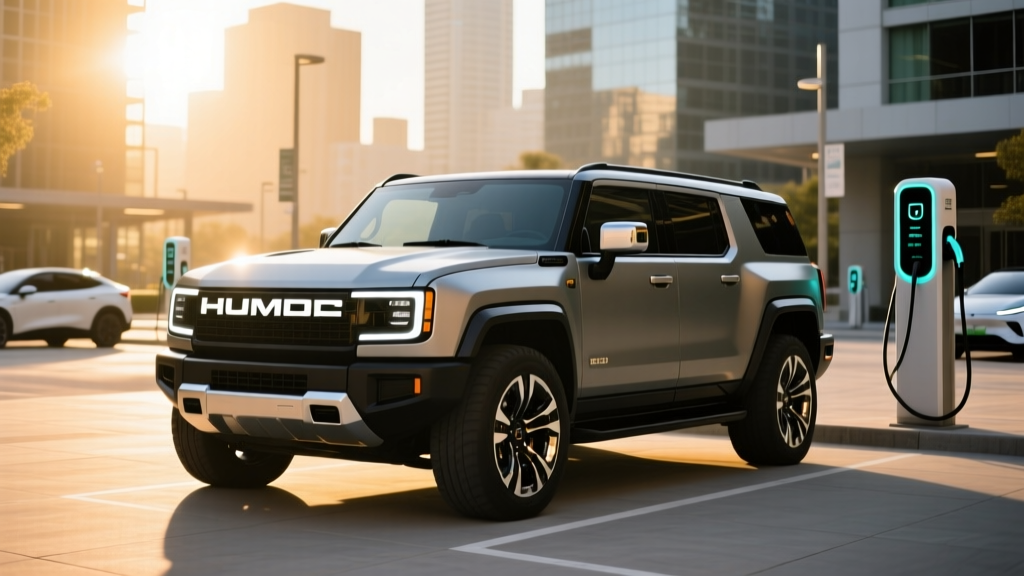
Searches for "hummer ev discontinued" spike every time GMC adjusts production schedules or trims a configuration from its order book. As of early 2026, the GMC Hummer EV Pickup and SUV remain in production at GM's Factory ZERO in Detroit-Hamtramck. However, GMC has streamlined the lineup, dropping certain trim and option combinations that were available at launch, and production volumes remain constrained by the Ultium battery supply chain. The rumor of full cancellation is premature — but the landscape for buyers has shifted enough to warrant a hard look at what you can actually order today, what it costs, and whether this 9,000-pound electric supertruck still makes sense against a growing field of rivals.
Range Reality Check
EPA Estimated Range: 314 miles (Pickup 3X, 24-module pack) / 281 miles (SUV 3X)
Real-World Expectation: Plan for 250–275 miles at sustained highway speeds (70–80 mph). In cold weather (below 30°F), expect a 20–30% reduction, dropping effective range to roughly 200–230 miles for the pickup. The Hummer EV's massive frontal area and weight work against highway efficiency.
2026 GMC Hummer EV: Full Spec Breakdown
| Specification | Hummer EV Pickup 3X | Hummer EV SUV 3X |
|---|---|---|
| EPA Range | 314 miles | 281 miles |
| Battery Capacity (usable) | ~212 kWh (24-module Ultium, NMC) | ~170 kWh (20-module Ultium, NMC) |
| Battery Chemistry | NMC (Nickel Manganese Cobalt) | NMC (Nickel Manganese Cobalt) |
| Horsepower | 830 hp (Watts to Freedom mode) | 830 hp |
| Torque | 1,200 lb-ft | 1,200 lb-ft |
| 0–60 mph | ~3.0 seconds | ~3.5 seconds |
| Drivetrain | Tri-motor AWD (e4WD) | Dual-motor AWD |
| Max DC Fast Charge | 350 kW (800V architecture) | 300 kW (800V architecture) |
| 10–80% DC Charge Time | ~30 minutes (peak conditions) | ~28 minutes |
| Level 2 Home Charging | 11.5 kW (~16 mi/hr) | 11.5 kW (~16 mi/hr) |
| MPGe (combined) | 47 MPGe | 49 MPGe |
| Efficiency | ~72 kWh/100 mi | ~69 kWh/100 mi |
| Base MSRP (2026) | $106,400 | $99,995 |
| As-Tested (Edition 1 / loaded) | $140,000+ | $120,000+ |
| Battery/Powertrain Warranty | 8 years / 100,000 miles | 8 years / 100,000 miles |
| Cargo Bed / Trunk | 81.8 cu ft (bed, 5-ft box) | 81.8 cu ft (rear cargo w/ seats folded) |
| Front Trunk (Frunk) | 10.2 cu ft | 7.1 cu ft |
| Ground Clearance (max) | 15.9 in (Extract Mode) | 15.9 in (Extract Mode) |
| Towing Capacity | 7,500 lbs | 5,500 lbs |
Sources: EPA fueleconomy.gov, GMC official specs.
Charging Speed: What 800V Architecture Actually Delivers
The Hummer EV uses GM's Ultium platform with an 800-volt architecture capable of accepting up to 350 kW on compatible DC fast chargers. But peak numbers only tell part of the story.
The charging curve reality: The 24-module, ~212 kWh pack in the Pickup 3X is one of the largest battery packs in any production vehicle. Even at a 350 kW charger (like Electrify America's newest 350 kW stalls), you'll see peak rates only between roughly 10–40% state of charge. Above 60%, the charge rate tapers significantly to protect cell longevity. A 10–80% session takes approximately 30 minutes under ideal thermal conditions — meaning a preconditioned battery and moderate ambient temperature.
Level 2 home charging: At 11.5 kW (48A on a 60A circuit), you'll recover about 16 miles of range per hour. Fully replenishing the 212 kWh pack from 10% takes roughly 18–19 hours. For daily driving of 40–60 miles, overnight charging is perfectly adequate. But if you drain the pack on a road trip, expect a full day of Level 2 charging to recover.
Cold-weather charging: The Hummer EV includes battery preconditioning for DC fast charging, which warms the pack when you navigate to a charger in the infotainment system. Without preconditioning in sub-freezing temps, charge speeds can drop 40–50%. Always precondition.
Performance and Driving Dynamics
The tri-motor Pickup 3X produces 830 horsepower and 1,200 lb-ft of torque in Watts to Freedom (WTF) mode — GMC's launch-control setting that lowers the air suspension, stiffens the adaptive dampers, and preconditions the powertrain. The result is a 0–60 mph time of approximately 3.0 seconds for a vehicle with a curb weight near 9,050 pounds. That physics-defying acceleration is genuinely startling the first time you experience it.
But straight-line speed isn't the whole story. The Hummer EV features:
- CrabWalk: Rear-wheel steering up to 10 degrees, allowing diagonal movement at low speeds — genuinely useful on tight trails.
- Extract Mode: Raises the air suspension 6 inches for 15.9 inches of ground clearance, with approach/departure/breakover angles that rival dedicated off-roaders.
- Adaptive Air Ride: Automatically levels the vehicle when towing and lowers at highway speeds for aerodynamic efficiency.
- Super Cruise: GM's hands-off-wheel Level 2 driver-assistance system, operational on over 750,000 miles of mapped highways in North America.
Super Cruise Is Level 2, Not Self-Driving
GM's Super Cruise is an SAE Level 2 system. It provides hands-free steering, acceleration, and braking on compatible highways, but the driver must remain attentive. An infrared camera monitors your eyes and will issue escalating alerts if you look away. You are legally and practically responsible for the vehicle at all times. This is not a Level 4 autonomous system like Waymo's robotaxi service.
Pricing, Trims, and Federal Tax Credit Eligibility
The Hummer EV has never been an affordable proposition, and 2026 pricing reflects GMC's positioning of it as a halo vehicle.
| Trim / Configuration | 2026 MSRP | Federal §30D Credit | Effective Price |
|---|---|---|---|
| Pickup 2X (dual-motor) | $98,895 | See eligibility note | Varies |
| Pickup 3X (tri-motor) | $106,400 | See eligibility note | Varies |
| SUV 2X (dual-motor) | $99,995 | See eligibility note | Varies |
| SUV 3X (tri-motor) | $110,995 | See eligibility note | Varies |
| Edition 1 (loaded, limited) | $140,000+ | See eligibility note | Varies |
Federal EV Tax Credit (§30D) — Key Rules for 2026
- MSRP Cap: Trucks, SUVs, and vans must have an MSRP at or below $80,000 to qualify. The Hummer EV exceeds this cap on every current trim — meaning it does not qualify for the $7,500 federal credit.
- Income Cap: Adjusted gross income must be ≤ $150,000 (single) / $300,000 (joint). Even if the MSRP qualified, many buyers would need to verify income.
- Battery Sourcing: Critical minerals and battery components must meet escalating domestic-content thresholds. GM has made progress on North American sourcing, but the MSRP cap moots this for the Hummer EV.
- Point-of-Sale Transfer: Eligible credits can be transferred to the dealer at purchase for an immediate price reduction — but again, the Hummer EV's MSRP disqualifies it.
Source: IRS.gov — Credits for New Clean Vehicles. Tax rules change; consult a tax professional for your specific situation.
Bottom line: The Hummer EV does not qualify for the federal §30D tax credit due to its MSRP exceeding the $80,000 cap for trucks/SUVs. Some state-level incentives may apply (check your local DMV or energy office), but buyers should budget the full MSRP plus destination and dealer fees.
Interior, Cargo, and Daily Livability
The Hummer EV's cabin is spacious but not luxurious in the way a $140,000 vehicle might suggest. Materials are durable and easy to clean (appropriate for off-road use), but hard plastics appear in secondary touch points. The 13.4-inch infotainment touchscreen running Google Built-In is responsive and well-organized, with native Google Maps, Assistant, and Play Store access.
Passenger space:
- Front headroom: 42.1 inches
- Rear legroom: 38.9 inches (Pickup) / 37.2 inches (SUV)
- Seating: 5 passengers (no third row)
Cargo:
- Pickup bed: 81.8 cu ft (5-foot box — shorter than a standard full-size truck bed due to the massive battery)
- Frunk: 10.2 cu ft (Pickup) — large enough for charging cables and a weekend bag
- SUV rear cargo: 81.8 cu ft with rear seats folded
Notable drawbacks: The 5-foot bed limits utility compared to a standard 6.5-foot truck bed. The Hummer EV's 81.5-inch width (without mirrors) makes some urban parking structures and drive-throughs genuinely stressful. Visibility rearward is compromised by the thick C-pillars and high bedline; you'll rely heavily on cameras.
Pros and Cons: The Honest Assessment
Pros
- Tri-motor 830 hp delivers supercar-rivaling acceleration in a full-size truck
- 800V architecture enables 350 kW peak DC charging (among the fastest available)
- CrabWalk and Extract Mode provide genuine off-road capability
- Super Cruise hands-free driving on 750K+ miles of mapped roads
- 314-mile EPA range is competitive despite the 9,000-lb weight
- 8-year/100,000-mile battery and powertrain warranty
Cons
- Base MSRP of $98,895–$110,995; no federal tax credit due to MSRP cap
- Efficiency of 47–49 MPGe means high electricity costs per mile vs. lighter EVs
- 5-foot bed limits truck utility; 81.5-inch width limits urban usability
- Level 2 home charging takes 18+ hours for a full pack replenishment
- Interior quality doesn't match the six-figure price tag
- Long order wait times; production remains limited
Hummer EV vs. Key Competitors: Is It Worth Buying?
The Hummer EV competes in a narrow but growing segment of high-performance electric trucks and large SUVs. Here's how it stacks up on the metrics that matter:
| Metric | GMC Hummer EV Pickup 3X | Rivian R1T Tri-Motor | Ford F-150 Lightning Platinum | Tesla Cybertruck Cyberbeast |
|---|---|---|---|---|
| EPA Range | 314 mi | ~328 mi (est.) | 300 mi | 320 mi |
| Battery (usable kWh) | ~212 kWh | ~149 kWh | 131 kWh | ~123 kWh |
| Horsepower | 830 hp | 850 hp | 580 hp | 845 hp |
| 0–60 mph | ~3.0 sec | ~2.9 sec | ~3.8 sec | ~2.6 sec |
| Max DC Charge | 350 kW | 200 kW | 150 kW | 250 kW |
| Base MSRP | $106,400 | $105,900 | $96,874 | $99,990 |
| Federal Tax Credit | No (MSRP cap) | No (MSRP cap) | No (MSRP cap) | No (MSRP cap) |
| Towing Capacity | 7,500 lbs | 11,000 lbs | 8,500 lbs | 11,000 lbs |
| Bed Length | 5 ft | 4.5 ft | 5.5 ft | 6 ft |
Choose the Hummer EV If:
- You want the most physically imposing EV on the road with unmatched off-road tech (CrabWalk, Extract Mode)
- 800V fast-charging infrastructure matters to you and you have access to 350 kW chargers
- You value GM's Super Cruise for hands-free highway commuting
- Budget is flexible and you accept no federal tax credit
Look Elsewhere If:
- You need a longer truck bed for work or hauling (F-150 Lightning or Cybertruck)
- Towing over 7,500 lbs is a priority (Rivian R1T or Cybertruck)
- Efficiency and lower per-mile charging costs matter (all three competitors use smaller packs and deliver better MPGe)
- You want a more refined, luxury-grade interior at this price point (Rivian R1T Quad-Motor or consider the Cadillac Escalade IQ)
Who Should Actually Buy the Hummer EV?
The Hummer EV is a niche product for buyers who want a statement vehicle with legitimate off-road and performance credentials. It works best as:
- A lifestyle/enthusiast truck: Weekend trail runs, overlanding, and showing up to the boat launch with 830 hp on tap.
- A daily driver with home charging: If you have a Level 2 charger at home and a commute under 100 miles round-trip, the 314-mile range is more than adequate, and you'll rarely need DC fast charging.
- Not ideal for: Fleet/commercial use, budget-conscious buyers, urban dwellers without dedicated parking, or anyone who needs a full-size truck bed for work.
Frequently Asked Questions
Is the Hummer EV discontinued in 2026?
No. As of early 2026, GMC continues to produce the Hummer EV Pickup and SUV at Factory ZERO. However, GMC has simplified the orderable configurations, and production volumes remain limited. Certain early-order trims and option packages have been discontinued or consolidated, which may be fueling cancellation rumors.
What is the real-world range of the Hummer EV?
The EPA rates the Pickup 3X at 314 miles and the SUV 3X at 281 miles. In real-world highway driving at 70–80 mph, expect 250–275 miles. In cold weather (below 30°F), effective range can drop to 200–230 miles due to battery resistance and cabin heating demands.
How fast does the Hummer EV charge?
On a 350 kW DC fast charger with a preconditioned battery, the Pickup 3X can charge from 10–80% in approximately 30 minutes. Peak charge rates are only sustained between roughly 10–40% SoC, after which the curve tapers. At home on a Level 2 charger (11.5 kW), expect about 16 miles of range per hour and a full charge in 18–19 hours.
Does the Hummer EV qualify for the federal EV tax credit?
No. Under IRS §30D rules, trucks and SUVs must have an MSRP of $80,000 or less to qualify for the $7,500 credit. The Hummer EV starts at $98,895, well above the cap. Some state and local incentives may still apply — check your state energy office or DMV.
How much does the Hummer EV cost after incentives?
Since it does not qualify for the federal credit, expect to pay the full MSRP plus destination charges. The 2X Pickup starts at $98,895; the 3X Pickup at $106,400; loaded Edition 1 models exceed $140,000. State incentives vary — California's CVRP, for example, has income-based rebates that may apply.
Is the Hummer EV worth buying over the Rivian R1T or Tesla Cybertruck?
It depends on priorities. The Hummer EV wins on sheer presence, CrabWalk off-road capability, and 350 kW charging speed. The Rivian R1T offers better towing (11,000 lbs), a more refined interior, and a growing adventure network. The Cybertruck offers the longest bed (6 ft), competitive performance, and Tesla's Supercharger network. If off-road theatrics and GM's Super Cruise matter most, the Hummer EV holds its ground. If practicality and efficiency rank higher, the alternatives are stronger choices.
What is the battery warranty on the Hummer EV?
GM covers the Ultium battery pack and electric powertrain components for 8 years or 100,000 miles, whichever comes first. The warranty covers defects and capacity loss below a specified threshold (typically 60–70% state of health, per GM's Ultium warranty terms). Given the ~212 kWh pack size, out-of-warranty replacement would be extremely costly — estimates for packs of this capacity range from $25,000 to $40,000+.