The Real Hummer EV Cost: Beyond the Sticker Price
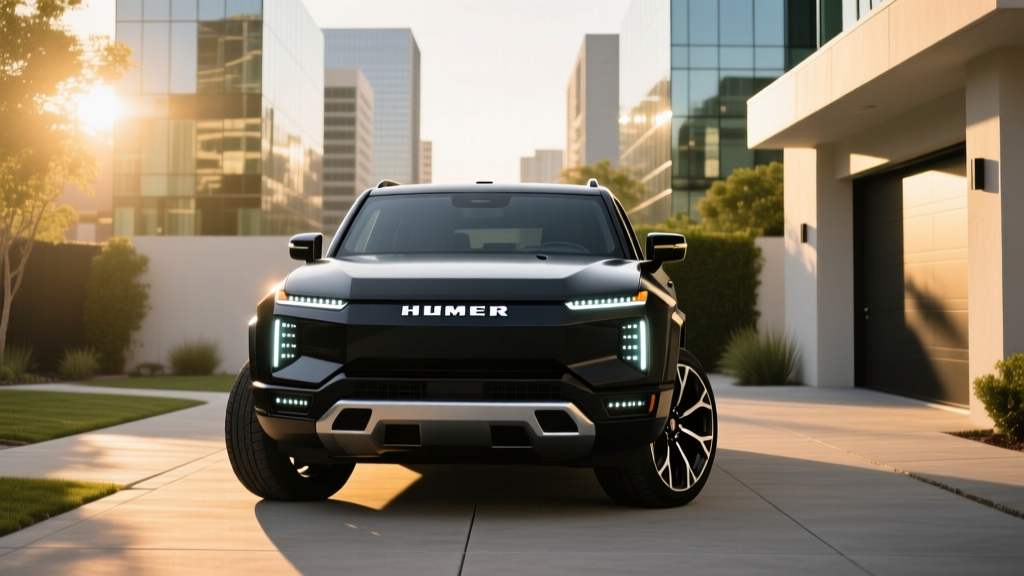
The GMC Hummer EV is one of the most polarizing electric vehicles on the road — a 9,000-pound supertruck with up to 1,000 horsepower, 350 kW fast-charging capability, and an EPA-estimated range of 381 miles (Edition 1 with the 24-module Ultium battery). But with starting MSRPs that push well past six figures, the real question for buyers isn't just what the Hummer EV costs at the dealership — it's what it costs to own over five years, including charging, insurance, maintenance, and depreciation.
This guide breaks down the complete 2026 Hummer EV cost of ownership using current EPA data, IRS tax credit rules, and real-world ownership variables. Whether you're eyeing the 2X Pickup, the 3X SUV, or the range-topping Edition 1, the numbers below will show you exactly where your money goes.
2026 Hummer EV Pricing by Trim
Before we calculate ownership costs, here's where the Hummer EV lineup stands for the 2026 model year:
| Trim | Body Style | Base MSRP | EPA Range | HP | 0-60 mph |
|---|---|---|---|---|---|
| 2X Pickup | Pickup | $99,995 | ~318 mi | 655 | ~4.5 sec |
| 3X Pickup | Pickup | $119,995 | ~329 mi | 830 | ~3.5 sec |
| 2X SUV | SUV | $100,495 | ~314 mi | 655 | ~4.7 sec |
| 3X SUV | SUV | $120,495 | ~325 mi | 830 | ~3.6 sec |
| Edition 1 (Pickup) | Pickup | $132,995 | 381 mi | 1,000 (Watts to Freedom) | ~3.0 sec |
All trims use GM's Ultium battery platform with NMC (nickel manganese cobalt) lithium-ion chemistry. The Edition 1's 24-module pack is one of the largest production EV batteries ever fitted, contributing to both its range and its substantial curb weight. Battery warranty covers 8 years / 100,000 miles with a capacity retention threshold of 70%.
Federal Tax Credit: Do You Qualify?
The federal EV tax credit under IRS §30D can offset up to $7,500 of the Hummer EV's purchase price — but eligibility hinges on several requirements that disqualify many luxury EV buyers. As of 2026, the credit is available as a point-of-sale transfer, meaning the dealership can apply it directly to your purchase price rather than waiting until you file taxes.
- MSRP Cap: Pickup trucks and SUVs must have an MSRP at or below $80,000. Vans and sedans: $55,000. The Hummer EV exceeds this cap on every trim.
- Buyer Income Limits: Modified adjusted gross income (MAGI) must not exceed $300,000 (joint filers), $225,000 (head of household), or $150,000 (single filers).
- Battery Sourcing: Critical minerals and battery components must meet phased-in domestic-content thresholds. For 2026, 80% of critical minerals and 100% of battery components must be sourced from the US or FTA partners.
- Point-of-Sale Transfer: Eligible buyers can transfer the credit to the dealer at purchase, reducing the upfront cost immediately.
- New Vehicle Requirement: Must be new, purchased for personal use, and primarily used in the US.
The hard truth: Every 2026 Hummer EV trim exceeds the $80,000 MSRP cap for trucks and SUVs. This means no Hummer EV qualifies for the $7,500 federal tax credit, regardless of your income or battery sourcing. This is a critical factor in the ownership cost equation — buyers should budget the full MSRP without expecting federal credit relief.
For authoritative details on current eligibility, consult the IRS Clean Vehicle Credit page or speak with a qualified tax professional. Rules are subject to legislative change.
5-Year Total Cost of Ownership Breakdown
Below is a realistic 5-year / 60,000-mile ownership projection for the 2026 GMC Hummer EV 3X Pickup ($119,995 MSRP), compared against a comparable gas-powered full-size truck (we'll use the GMC Sierra 1500 Denali Ultimate, MSRP ~$78,000, EPA combined 19 MPG).
| Cost Category | Hummer EV 3X (5 Years) | Sierra 1500 Denali (5 Years) |
|---|---|---|
| Purchase Price (MSRP) | $119,995 | $78,000 |
| Federal Tax Credit | $0 (exceeds MSRP cap) | N/A |
| Estimated Depreciation (5 yr) | -$48,000 (40%) | -$27,300 (35%) |
| Fuel / Charging (60,000 mi) | $4,800 | $12,630 |
| Insurance (5 years) | $21,000 | $14,500 |
| Maintenance (5 years) | $2,200 | $5,800 |
| Estimated Repairs | $800 | $1,500 |
| Total 5-Year Cost | $148,795 | $105,130 |
| Net Depreciation + Running Costs | $76,800 | $51,730 |
Key takeaway: The Hummer EV's higher purchase price, steeper depreciation, and significantly higher insurance premiums outweigh its fuel and maintenance savings over five years. The running cost advantage is real — you'll save roughly $7,830 on energy and $3,600 on maintenance — but it doesn't close the ~$43,665 gap created by the purchase premium and insurance differential.
Charging vs Gas: The Per-Mile Math
This is where the Hummer EV makes its strongest economic case, even as a 9,000-lb vehicle.
| Metric | Hummer EV 3X | Sierra 1500 Denali |
|---|---|---|
| Energy Consumption | ~47 kWh/100 mi (real-world) | 19 MPG combined (EPA) |
| Home Charging Rate (avg) | $0.14/kWh (US average) | — |
| Gas Price (2026 avg) | — | $3.80/gallon |
| Cost Per Mile | $0.066/mi | $0.21/mi |
| Cost for 12,000 mi/year | $792/year | $2,520/year |
| 5-Year Fuel/Energy (60k mi) | $3,960 (home) | $12,630 |
Caveats that matter:
- The $0.066/mile figure assumes predominantly home Level 2 charging at the US residential average of ~$0.14/kWh. If you rely on DC fast charging (Electrify America, EVgo), expect $0.35-$0.50/kWh, which pushes your cost to $0.16-$0.24/mile — nearly erasing the advantage over gas.
- The Hummer EV's efficiency is among the worst in the EV market at roughly 47 kWh/100 miles (the EPA rates it around 47-52 MPGe depending on trim). That massive 246 kWh battery is heavy, and moving 9,000 pounds requires enormous energy.
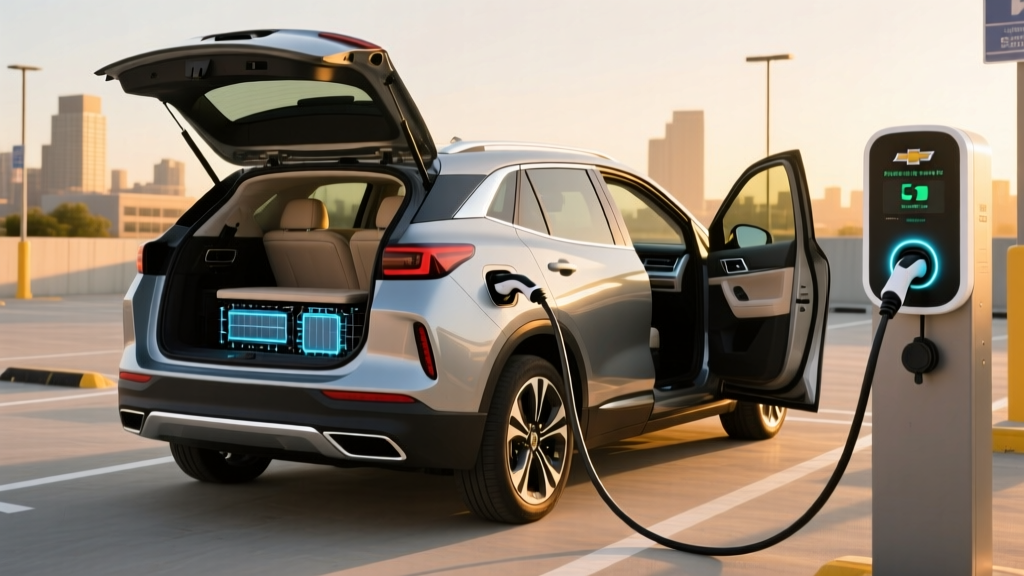
- DC fast charging: The Hummer EV supports up to 350 kW peak on compatible chargers. In practice, expect peak rates around 280-300 kW with a 10-80% charge in approximately 30-35 minutes, tapering significantly above 80% State of Charge.
- Level 2 home charging at 11.5 kW (the Hummer EV's onboard charger rate) adds roughly 22-25 miles of range per hour — a full charge from 10% takes approximately 20+ hours. Plan overnight charging accordingly.
For verified efficiency data, check the EPA's fueleconomy.gov comparison tool.
Maintenance Savings: Where EVs Shine
The Hummer EV eliminates several recurring maintenance items that gas truck owners accept as routine costs:
| Service Item | Hummer EV | Gas Truck (Sierra 1500) |
|---|---|---|
| Oil Changes | $0 (no engine oil) | $450-$600 / 5 years |
| Transmission Fluid | $0 (single-speed reduction gear) | $200-$350 / 5 years |
| Brake Pads/Rotors | $200-$400 (regen extends life 2-3x) | $800-$1,500 / 5 years |
| Air Filters (engine) | $0 | $100-$200 / 5 years |
| Spark Plugs | $0 | $300-$500 / 5 years |
| Coolant Flush | $150-$200 (battery thermal system) | $150-$200 |
| Cabin Air Filter | $80-$120 | $80-$120 |
| Tire Rotation | $200-$300 | $200-$300 |
| Tire Replacement | $2,000-$3,200 (heavy vehicle wear) | $1,600-$2,400 |
| Total Est. Maintenance | ~$2,200 | ~$5,800 |
The tire caveat: The Hummer EV's extreme weight (9,000+ lbs for the Edition 1) accelerates tire wear significantly. Expect to replace tires every 25,000-30,000 miles rather than the 40,000-50,000 miles typical for lighter vehicles. The 35-inch Goodyear Wrangler Territory tires fitted to many trims aren't cheap. Budget for two sets of tires over five years of 60,000-mile ownership.
Regenerative braking is the Hummer EV's maintenance superpower. By using the electric motors to decelerate, the friction brakes see dramatically less use. Many EV owners report original brake pads lasting 80,000-100,000+ miles. In the Hummer EV's case, the vehicle's mass partially offsets this advantage — more weight means more kinetic energy to dissipate — but you'll still see meaningful savings.
Insurance Cost Reality
This is the cost category that catches many first-time EV buyers off guard. The Hummer EV is among the most expensive vehicles to insure in the EV market.
Estimated annual premium: $3,800-$4,600 (national average for a 3X trim with a clean driving record), compared to $2,500-$3,200 for a gas Sierra 1500 Denali.
Why the premium gap?
- Repair costs: The Hummer EV's Ultium battery pack, CrabWalk rear-steer system, and advanced sensor arrays (cameras, ultrasonics, radar) make collision repairs extraordinarily expensive. A minor rear-quarter-panel impact can total the vehicle if battery damage is suspected.
- Parts scarcity: GM produces the Hummer EV in limited volumes at Factory Zero in Detroit-Hamtramck. Replacement body panels, battery modules, and specialty components carry long lead times and high prices.
- Vehicle value: Insurers base premiums partly on replacement cost. A $120,000-$133,000 vehicle demands higher premiums than a $78,000 gas truck.
- Specialized labor: High-voltage system repairs require certified EV technicians, a smaller (and more expensive) labor pool than conventional mechanics.
- Performance classification: The 3X's 830 HP and 3.5-second 0-60 time push it into sports-car insurance territory despite its truck body style.
Tip: Shop quotes from at least three carriers before purchasing. Some insurers (notably Geico and USAA) have been more competitive on EV premiums in recent years. Bundling home and auto can save 10-15%.
Depreciation and Resale Value
EV depreciation has been one of the most volatile ownership variables in recent years. After a sharp correction in 2023-2024 that saw some EVs lose 50-60% of value within two years, the market has stabilized — but large, expensive EVs still depreciate faster than their gas counterparts.
Hummer EV 5-year depreciation estimate: 38-45%
For the 3X Pickup at $119,995 MSRP, that translates to approximately $45,600-$54,000 in value loss over five years, leaving a residual value of roughly $66,000-$74,400.
Factors working against the Hummer EV's resale value:
- Battery degradation concerns: Used EV buyers are increasingly sophisticated about State of Health (SoH). The Ultium pack's NMC chemistry typically sees 8-12% degradation over five years and 60,000 miles, which is acceptable but creates negotiation friction.
- Technology obsolescence: Charging standards, software features, and battery chemistry evolve rapidly. A 2026 Hummer EV's tech may feel dated by 2031.
- Limited buyer pool: The Hummer EV's extreme size, weight, and price narrow the used market significantly. Not everyone can store, charge, or justify a 9,000-lb supertruck.
- Warranty transferability: GM's 8-year/100,000-mile battery warranty transfers to subsequent owners, which helps residual value. A 2026 model will still carry ~3 years of battery coverage at the 5-year mark.
For comparison, the gas Sierra 1500 Denali typically depreciates 33-38% over five years, retaining value better due to its broader buyer pool and proven powertrain longevity expectations.
State, Local, and Utility Incentives
Potential incentive categories to investigate:
- State EV rebates: Some states (Colorado, for example) offer EV rebates with higher MSRP thresholds or no cap at all. Amounts range from $1,000 to $5,000+ depending on the state and your income.
- Utility charging rebates: Many utilities offer $500-$1,500 rebates for Level 2 home charger installation, and some provide off-peak charging credits worth $200-$500/year.
- HOV lane access: States like California, Colorado, and Virginia offer single-occupant HOV lane access for qualifying EVs — a non-monetary benefit with significant time value for commuters.
- Property tax exemptions: Some states exempt EVs from annual personal property tax or vehicle registration surcharges, saving $100-$400/year.
- Home charging infrastructure: Budget $800-$2,500 for a hardwired Level 2 charger installation (48A, requiring a 60A circuit). If your electrical panel needs an upgrade to 200A service, add $1,500-$3,000. The Hummer EV's 11.5 kW onboard charger can fully utilize a 48A circuit.
Check the Alternative Fuels Data Center state incentive database for current programs in your area.
Decision Framework: Is the Hummer EV Worth the Cost?
Buy the Hummer EV if:
- You want a zero-emission truck with genuine off-road capability (15.9 inches of ground clearance, CrabWalk diagonal driving, underbody armor) and don't need the federal tax credit to justify the purchase.
- You can charge predominantly at home on Level 2 power, where the $0.07/mile energy cost delivers meaningful savings over a gas truck's $0.21/mile.
- You value the performance (830-1,000 HP), tech (Super Cruise hands-free driving on mapped highways), and statement-making presence enough to absorb higher insurance and depreciation costs.
- Your household income exceeds the §30D caps anyway, making the federal credit moot.
Look elsewhere if:
- Total cost of ownership is a primary purchase driver — the Rivian R1T, Ford F-150 Lightning (discontinued but available used), or even the Chevy Silverado EV offer lower entry prices and some qualify for the federal credit.
- You rely on public DC fast charging — the Hummer EV's enormous battery makes public charging expensive and time-consuming relative to lighter EVs.
- You plan to sell within 3-4 years — depreciation will hit hardest in the early years, and the used market for six-figure EVs remains uncertain.
Frequently Asked Questions
How much does it really cost to own a Hummer EV over 5 years?
For the 3X Pickup, expect approximately $148,000-$150,000 in total 5-year costs including purchase price, energy, insurance, maintenance, and depreciation. The net cost after accounting for resale value is roughly $76,000-$78,000 — significantly more than a comparably equipped gas full-size truck.
Does the Hummer EV qualify for the $7,500 federal tax credit?
No. Under current IRS §30D rules, trucks and SUVs must have an MSRP at or below $80,000 to qualify. Every 2026 Hummer EV trim starts at $99,995 or above, making none of them eligible regardless of buyer income or battery sourcing.
How much do I save on fuel compared to a gas truck?
Assuming home Level 2 charging at $0.14/kWh and driving 12,000 miles per year, you'll spend roughly $792/year on electricity vs. $2,520/year on gas for a 19-MPG full-size truck — a savings of about $1,728/year or $8,640 over five years. This savings narrows significantly if you rely on paid DC fast charging.
Are EVs more expensive to insure?
Generally yes, and the Hummer EV is at the high end. Expect annual premiums of $3,800-$4,600 vs. $2,500-$3,200 for a comparable gas truck. The gap is driven by higher repair costs, specialized parts, the vehicle's high replacement value, and its sports-car-level performance.
How well does the Hummer EV hold its value?
Expect 38-45% depreciation over five years, which is steeper than the gas truck average of 33-38%. The limited buyer pool for six-figure used EVs, evolving battery technology, and the vehicle's extreme size all contribute to faster value loss. GM's transferable 8-year battery warranty provides some support.
What does home charging setup cost for the Hummer EV?
Budget $800-$2,500 for a Level 2 wall connector installation on an existing 200A electrical panel. If your home needs a panel upgrade (common in older homes), add $1,500-$3,000. The Hummer EV's 11.5 kW onboard charger adds roughly 22-25 miles of range per hour on a 48A circuit.
What is the Hummer EV's battery warranty?
GM covers the Ultium battery pack for 8 years or 100,000 miles (whichever comes first) against defects and capacity loss below 70% of original capacity. This warranty transfers to subsequent owners.