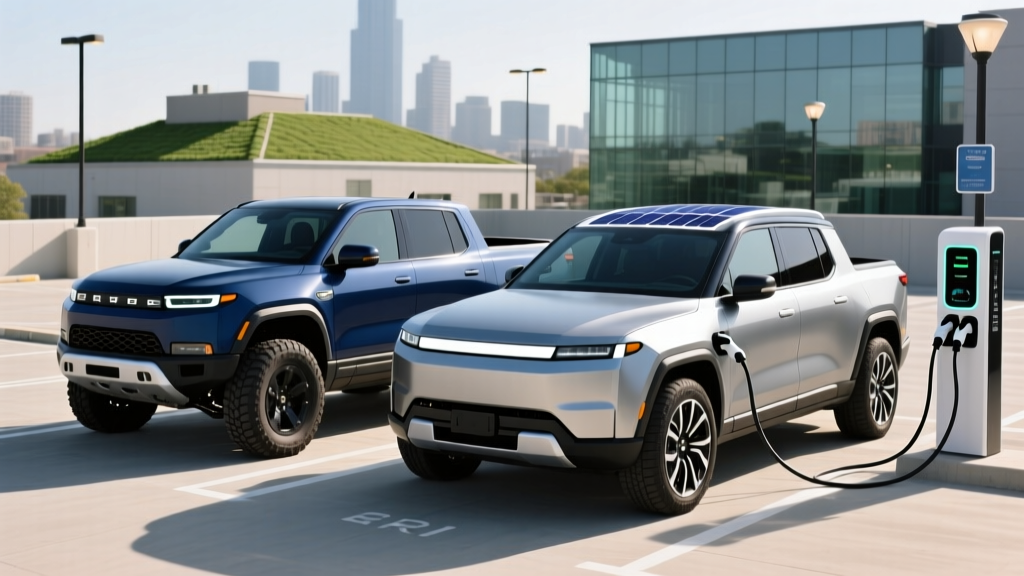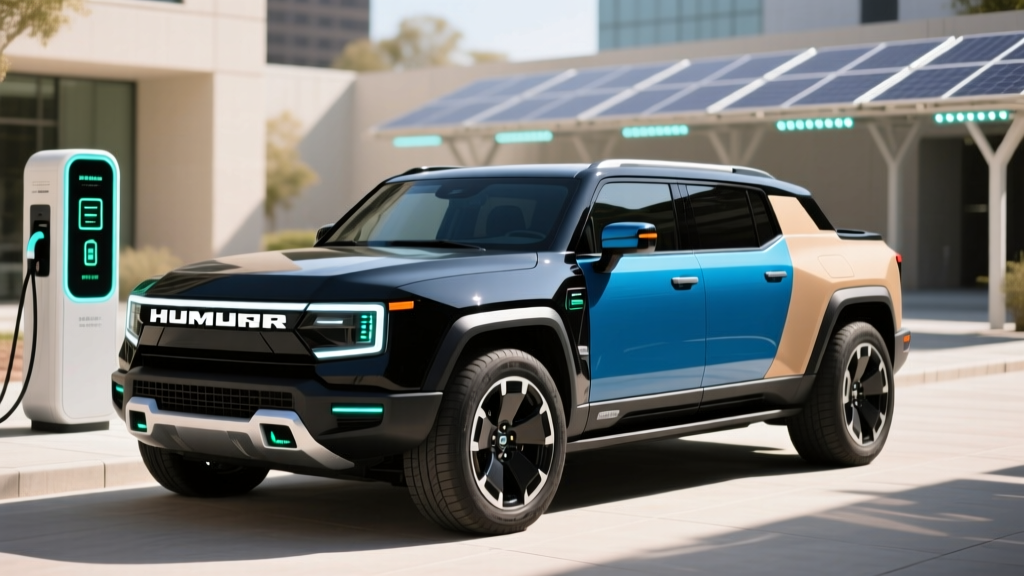
The GMC Hummer EV is an 800-plus-horsepower, 9,000-pound electric supertruck that somehow manages to be both absurd and genuinely impressive. For 2026, GMC continues to refine the lineup with the Pickup and SUV variants, offering buyers a choice between maximum off-road capability and slightly more manageable daily-driver proportions. But before we get into the specs that matter for ownership, let's address what brings many shoppers here: the full palette of 2026 Hummer EV colors and how they pair with the available trim levels.
2026 Hummer EV Colors: The Full Lineup
GMC offers the 2026 Hummer EV in a curated selection of exterior colors that lean into the truck's military-inspired heritage while providing enough variety for personal taste. Here's the complete breakdown:
- Interstellar White — The signature launch color; clean, high-contrast, shows off the body lines. Standard on all trims.
- Meteorite Metallic — A dark gunmetal gray with subtle metallic flake. Pairs well with the available black roof and accent packages.
- Neptune Blue Matte — A flat-finish deep blue exclusive to the Edition 1 and 3X trims; evokes the original H1 military aesthetic.
- Voltage Yellow — A bold, high-visibility yellow-green that commands attention. Available on 2X and 3X trims.
- Deep Aurora Metallic — A rich, dark green with bronze undertones; new for 2025 and carried into 2026.
- Graphite Blue Metallic — A sophisticated near-black with blue undertones in direct sunlight.
- Solar Orange — A vibrant, warm orange available on 2X and above; one of the most photographed Hummer EV colors on social media.
All colors are available with either the standard black roof or the available body-color roof delete. The Infinity Roof with removable sky panels (standard on 2X and 3X) comes in black regardless of body color. Interior color options are more limited: Lunar Horizon (light gray) and Lunar Shadow (dark) are the two primary themes, with available stitching and trim accents varying by trim.
Range, Battery, and Efficiency: The Numbers Behind the Bulk
The Hummer EV's battery is as outsized as the truck itself. GMC uses a double-stacked Ultium lithium-ion battery pack with two available configurations:
| Spec | 2X (20-Module) | 3X (24-Module) |
|---|---|---|
| Usable Battery Capacity | ~175 kWh | ~212 kWh |
| Chemistry | NMC (Nickel Manganese Cobalt) | NMC (Nickel Manganese Cobalt) |
| EPA Range (Pickup) | 381 miles | 314 miles |
| EPA Range (SUV) | 314 miles | 298 miles |
| MPGe (Combined) | 47 MPGe | 42 MPGe |
| Efficiency (kWh/100 mi) | ~72 kWh | ~80 kWh |
The counterintuitive reality: the larger 24-module battery reduces range because it adds roughly 700 pounds of weight. The 20-module 2X is the efficiency sweet spot if you don't need the 3X's third motor and Watts to Freedom launch mode. According to fueleconomy.gov, the Hummer EV's efficiency is among the lowest of any current-production EV — a direct consequence of its 10,400-lb curb weight and truck-like aerodynamics.
Charging Speed: DC Fast and Level 2 at Home
The Hummer EV's 800-volt Ultium architecture enables some of the fastest DC charging in the full-size truck segment, but the enormous battery means absolute charge times are still lengthy.
| Charging Level | Max Power | 10-80% Time | Miles Added per Hour |
|---|---|---|---|
| Level 1 (120V, 12A) | 1.4 kW | N/A (days) | ~3-4 mi/hr |
| Level 2 (240V, 48A) | 11.5 kW | ~14-17 hours | ~25-30 mi/hr |
| Level 2 (240V, 80A) | 19.2 kW | ~9-11 hours | ~40-48 mi/hr |
| DC Fast Charge | 350 kW (peak) | ~30-35 min (3X) | ~100+ mi in 10 min (peak) |
The 350 kW peak charge rate is impressive on paper, but real-world charging curves tell a more nuanced story. The Hummer EV sustains peak rate only between roughly 10-30% state of charge (SoC), then tapers progressively. From 50-80%, you'll see rates closer to 100-150 kW. This means a 10-80% session on a 350 kW charger takes approximately 30-35 minutes for the 24-module pack and 25-30 minutes for the 20-module pack. At a typical 150 kW Electrify America or EVgo station, add 10-15 minutes to those estimates.
Home charging is where the battery size becomes a real ownership consideration. On a standard 48-amp Level 2 home charger (the most common residential installation), a full 0-100% charge takes roughly 18-20 hours for the 3X. Most owners will charge nightly from 30-80%, which takes about 8-10 hours — perfectly manageable with overnight charging. However, if you arrive home near-empty after a road trip, expect a full replenishment to take most of a day. An 80-amp circuit reduces this significantly but requires a 100-amp dedicated breaker and heavier-gauge wiring — factor in $500-$1,500 additional electrical work beyond a standard Level 2 install.
Performance: 0-60, Horsepower, and Drivetrain
The Hummer EV's performance figures belong to a supercar, not a truck that weighs as much as two Honda Civics stacked on top of each other.
| Spec | 2X (Dual Motor) | 3X (Tri-Motor) |
|---|---|---|
| Drivetrain | AWD (Dual Motor e4WD) | AWD (Tri-Motor e4WD) |
| Horsepower | 625 hp | 830 hp (WTF mode: 1,000+ hp) |
| Torque | 7,400 lb-ft (wheel) | 11,500 lb-ft (wheel) |
| 0-60 mph | ~4.5 sec | ~3.0 sec (WTF mode) |
| Top Speed | ~106 mph | ~106 mph |
| Towing Capacity | 7,500 lbs | 7,500 lbs |
The tri-motor 3X's Watts to Freedom (WTF) launch mode drops the adaptive air suspension, haptics rumble the seat, and the truck rockets to 60 mph in approximately 3.0 seconds — a genuinely surreal experience in a vehicle with a 35-foot turning radius. The dual-motor 2X is no slouch at 4.5 seconds, and its lighter front end actually makes it feel slightly more agile in corners.
Off-road, the Hummer EV delivers with 4-Wheel Steer (CrabWalk diagonal movement), Extract Mode (raises suspension 6 inches for 15.9 inches of ground clearance), underbody armor, and 37-inch Goodyear Wrangler Territory MT tires on the 3X. Approach, departure, and breakover angles rival dedicated off-roaders.
Pricing, Trims, and Federal Tax Credit Eligibility
The Hummer EV is a premium-priced electric truck, and 2026 pricing reflects GMC's positioning against the Rivian R1T, Tesla Cybertruck, and Ford F-150 Lightning Platinum.
| Trim | Body Style | Base MSRP | Est. As-Tested |
|---|---|---|---|
| 2X | Pickup | $98,845 | $105,000-$112,000 |
| 2X | SUV | $99,845 | $106,000-$115,000 |
| 3X | Pickup | $119,845 | $128,000-$142,000 |
| 3X | SUV | $120,845 | $130,000-$145,000 |
Does the Hummer EV Qualify for the Federal EV Tax Credit?
Under IRS §30D rules for 2026, the Hummer EV faces a significant hurdle: the MSRP cap for trucks is $80,000. Every Hummer EV trim exceeds this cap, meaning no Hummer EV variant qualifies for the $7,500 federal tax credit. Additionally, buyer income limits ($300,000 joint / $225,000 head of household / $150,000 single) and battery critical-mineral sourcing requirements would further complicate eligibility even if the MSRP cap weren't a barrier.
Some buyers may be able to reduce their effective cost through state-level incentives (California, Colorado, and others offer rebates that aren't MSRP-capped), dealer discounts, or by leasing — which routes the commercial clean vehicle credit (§45W) through the leasing company. Consult a tax professional for your specific situation.
Cargo, Passenger Space, and Daily Practicality
The Hummer EV Pickup offers a 5-foot bed (4 feet with the midgate closed) and a front trunk (e-trunk or "frunk") that's large enough for a full-size cooler. The SUV sacrifices the bed for enclosed cargo space but gains a more weather-secure storage area.
- Pickup bed length: 5 ft (midgate open: ~6.5 ft to tailgate)
- Frunk volume: ~11.3 cu ft (lockable, drainable)
- SUV cargo (behind rear seats): ~35 cu ft
- SUV cargo (seats folded): ~82 cu ft
- Front legroom: 45.6 inches
- Rear legroom: 38.9 inches (Pickup) / 37.2 inches (SUV)
- Seating capacity: 5 passengers
Interior quality is a mixed bag. The 13.4-inch infotainment touchscreen running Google Built-In is excellent, with native Google Maps navigation, EV-specific route planning, and access to the Play Store. However, some interior plastics feel closer to GMC Sierra than premium-EV at this price point. The available UltraVision camera system (up to 18 views, including underbody) is genuinely useful for off-roading and tight-space maneuvering. The Super Cruise hands-on-wheel Level 2 driver-assistance system covers over 750,000 miles of compatible highways and is one of the best adaptive cruise + lane-centering systems available — though it is not autonomous driving and requires continuous driver attention.
Pros, Cons, and Who Should Buy the Hummer EV
Pros
- Staggering performance: 0-60 in ~3.0 sec (3X WTF mode)
- Genuine off-road capability with CrabWalk, Extract Mode, and armor
- 350 kW DC fast charging via 800V architecture
- Up to 381 miles EPA range (2X Pickup)
- Super Cruise Level 2 highway assist included
- Head-turning presence; no other EV looks like this
- Spacious frunk and versatile bed/midgate (Pickup)
Cons
- Extremely poor efficiency: ~72-80 kWh/100 mi
- No federal tax credit eligibility (MSRP exceeds $80K cap)
- Massive size: 217+ inches long, 86+ inches wide — challenging in garages and parking
- Home charging from empty takes 18-20 hours (Level 2, 48A)
- Interior materials don't fully match the six-figure price
- Towing (7,500 lbs) cuts range by 40-50%
- Limited rear visibility (SUV); camera dependency
How It Compares: Hummer EV vs. Key Rivals
The Hummer EV occupies a unique niche, but buyers cross-shop it with several other premium electric trucks and SUVs:
- vs. Rivian R1T (Tri Motor): The R1T is lighter, more efficient (~42 kWh/100 mi), more garage-friendly, and offers comparable off-road ability. The Hummer wins on raw power, presence, and maximum range (2X). The R1T also exceeds the tax credit MSRP cap.
- vs. Tesla Cybertruck Cyberbeast: The Cyberbeast matches the Hummer's 0-60 (~2.6 sec claimed) at a significantly lower price (~$99,990) and better efficiency. The Hummer counters with superior interior quality, more traditional off-road hardware, and Super Cruise.
- vs. Ford F-150 Lightning Platinum: The Lightning is more practical, more affordable (~$96,000), and far more efficient, but can't match the Hummer's performance or off-road capability. The Lightning also exceeds the tax credit cap at Platinum trim.
Warranty and Long-Term Ownership
GMC backs the Hummer EV with competitive warranty coverage:
- Battery & Propulsion: 8 years / 100,000 miles (whichever comes first), with a minimum 70% capacity retention guarantee
- Bumper-to-Bumper: 3 years / 36,000 miles
- Powertrain (non-electric components): 5 years / 60,000 miles
- Corrosion: 6 years / 100,000 miles
- Roadside Assistance: 5 years / 100,000 miles
The NMC battery chemistry is proven across GM's Ultium platform, but the sheer size of the Hummer's pack means an out-of-warranty replacement would be extraordinarily expensive — likely $25,000-$40,000+ based on current Ultium cell pricing. Real-world degradation data for the Hummer EV specifically is still limited given the truck's 2022 launch, but GM's Ultium packs in fleet testing have shown less than 10% degradation over 100,000 miles in moderate climates. Expect similar results with proper thermal management use (the Hummer EV has active liquid cooling and heating).
Insurance costs are notably high. Expect annual premiums of $3,500-$5,500+ depending on your profile — the combination of a six-figure MSRP, 830 hp, and expensive body panels drives rates well above the EV average. Get quotes before committing.
Frequently Asked Questions
What is the real-world range of the Hummer EV?
The EPA rates the 2X Pickup at 381 miles and the 3X Pickup at 314 miles. In real-world highway driving at 70-75 mph, expect roughly 310-340 miles from the 2X and 260-290 miles from the 3X. Cold weather below freezing can reduce these figures by 20-30%. City and mixed driving with regenerative braking can match or slightly exceed EPA estimates thanks to the Hummer's strong regen capability.
How fast does the Hummer EV charge at home and on the road?
On DC fast charging, the Hummer EV peaks at 350 kW and charges from 10-80% in approximately 25-35 minutes depending on battery size and charger output. At home on a 48-amp Level 2 charger (240V), expect about 25-30 miles of range per hour of charging — a full charge from empty takes 18-20 hours for the 3X. An 80-amp Level 2 circuit cuts this to roughly 9-11 hours but requires upgraded electrical infrastructure.
Does the Hummer EV qualify for the $7,500 federal tax credit?
No. Under IRS §30D rules, the federal new clean vehicle credit has an MSRP cap of $80,000 for trucks, vans, and SUVs. Every 2026 Hummer EV trim starts at $98,845 or above, disqualifying it entirely. Some state incentives may still apply — check your state's energy office or IRS.gov for current rules. Leasing may allow the lessor to claim the commercial credit and pass savings through as a lower lease payment.
What colors does the 2026 Hummer EV come in?
The 2026 Hummer EV is available in seven exterior colors: Interstellar White, Meteorite Metallic, Neptune Blue Matte (3X/Edition 1 only), Voltage Yellow, Deep Aurora Metallic, Graphite Blue Metallic, and Solar Orange. Interior options include Lunar Horizon (light gray) and Lunar Shadow (dark). The Infinity Roof with removable panels comes in black only.
Is the Hummer EV worth buying over a Rivian R1T or Cybertruck?
It depends on your priorities. Choose the Hummer EV if you want maximum presence, the most powerful production truck available (830 hp / 1,000+ hp in WTF mode), CrabWalk, and proven Super Cruise highway driving. Choose the Rivian R1T if you want better efficiency, a more manageable footprint, and a more premium interior. Choose the Cybertruck Cyberbeast if you want similar performance at a lower price and don't mind Tesla's polarizing design. None of these qualify for the federal tax credit at current MSRP levels.
Can the Hummer EV tow, and how does towing affect range?
The Hummer EV has a 7,500-lb maximum towing capacity (both Pickup and SUV). However, towing near max capacity reduces range by approximately 40-50% due to the enormous increase in aerodynamic drag and rolling resistance. Expect roughly 150-180 miles of real-world range when towing 6,000-7,500 lbs with the 3X. Plan charging stops accordingly — you'll need DC fast charging every 100-120 miles on long towing trips.