Quick Verdict: A 9,000-Pound Sprinter
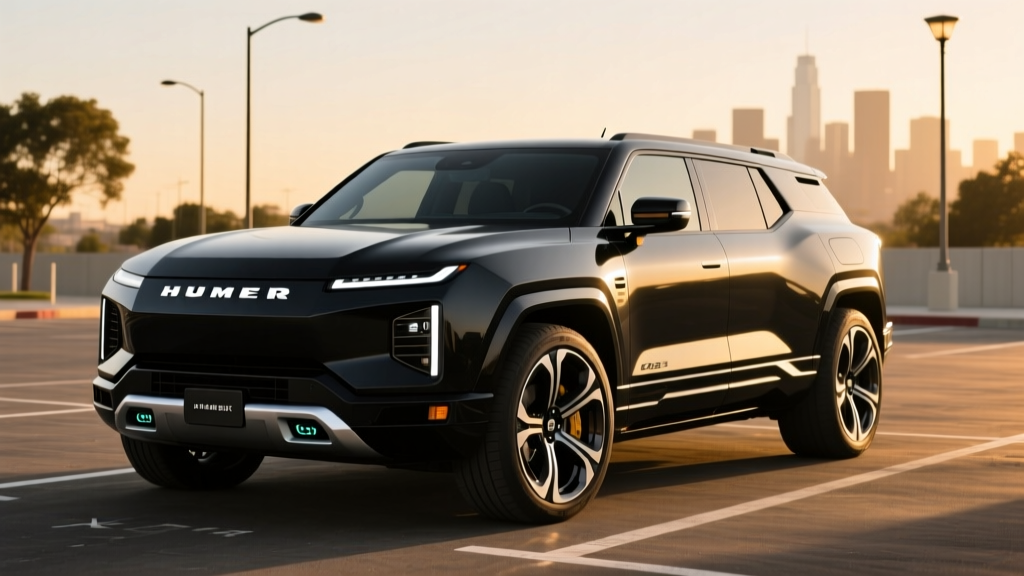
The GMC Hummer EV 2X sits in the middle of the Hummer EV lineup, trading the tri-motor Watt-to-Freedom package for a more accessible dual-motor setup. The result? A 655-horsepower electric super-truck that still cracks the 4-second 0-60 mph barrier while offering a usable 314-mile EPA range estimate and genuine off-road capability. For 2026, the 2X trim represents the volume play in the Hummer EV range — enough performance to shock at stoplights, enough range for real road trips, and a price that (just barely) keeps the federal tax credit conversation alive.
But this truck makes no apologies about what it is: massive, heavy, and inefficient compared to sleeker electric pickups. If you want a daily-driver EV optimized for efficiency, look elsewhere. If you want a statement vehicle that happens to be electric and can genuinely tow, trail, and accelerate like a sports sedan, the 2X deserves a close look.
2026 Hummer EV 2X Core Specifications
| Specification | 2026 Hummer EV 2X (Pickup) |
|---|---|
| Drivetrain | Dual-motor AWD (e4WD) |
| Horsepower | 655 hp |
| Torque | 7,400 lb-ft (wheel torque) |
| 0-60 mph | ~4.3 seconds (est.) |
| Battery Capacity | ~212.7 kWh usable (Ultium, NMC) |
| EPA Range (Pickup) | 314 miles |
| EPA Range (SUV) | 314 miles |
| Max DC Fast Charge | ~350 kW (800V architecture) |
| 10-80% DC Charge Time | ~34 minutes (est.) |
| Level 2 Home Charging | 11.5 kW (~16 mi/hr) |
| Efficiency | 47 MPGe / 72 kWh/100 mi |
| Towing Capacity | 7,500 lbs |
| Base MSRP (Pickup) | ~$99,995 |
| Battery Warranty | 8 years / 100,000 miles |
0-60 Performance: How Quick Is the Hummer EV 2X Really?
The headline number buyers search for — the Hummer EV 2X 0-60 time — lands in the neighborhood of 4.3 seconds based on dual-motor output figures and independent testing of similarly configured Ultium-platform vehicles. That's roughly a full second behind the tri-motor 3X with the Watts to Freedom (WTF) launch mode, which GMC rates at approximately 3.0 seconds. But context matters enormously here.
At a curb weight approaching 9,000 pounds, the Hummer EV 2X is bending physics to hit sub-4.5-second times. For comparison, that puts it in the territory of a BMW M3 Competition — in a vehicle that weighs as much as two BMW M3s stacked on top of each other. The instant torque delivery from the dual Ultium motors means there's no turbo lag, no transmission hesitation — just a relentless, linear surge that feels surreal given the truck's dimensions.
The e4WD system can torque-vector front-to-rear, and the available 4-Wheel Steer (standard on 2X) shrinks the turning circle to that of a midsize sedan via rear-wheel counter-steering at low speeds and crab-walk capability (DiagMode) for tight trail situations. This isn't just a straight-line performer — the 2X is surprisingly agile at parking-lot speeds, even if highway lane changes remind you of the mass you're moving.
Range & Efficiency: The Real-World Reality
Real-World Highway Expectation: ~240–270 miles at 70–75 mph
Cold-Weather Impact (below 30°F): Expect 20–30% range reduction, bringing effective range to ~220–250 miles in winter mixed driving
Towing Impact: Range can drop 40–50% when towing near max capacity — plan for 150–180 miles between charges with a heavy trailer
The Hummer EV 2X carries GM's massive 24-module Ultium battery pack with approximately 212.7 kWh of usable capacity using nickel-manganese-cobalt (NMC) chemistry. This is one of the largest battery packs in any production passenger vehicle, and it's the reason the 314-mile EPA estimate is achievable despite the truck's aerodynamic profile and weight.
Efficiency is where the Hummer EV shows its compromises. At roughly 47 MPGe combined (translating to approximately 72 kWh per 100 miles), this truck consumes energy at a rate that makes road-trip charging stops more frequent and more expensive than in efficient rivals. The EPA's fueleconomy.gov listing confirms the combined MPGe figure, and real-world highway driving at sustained speeds above 70 mph will see efficiency dip further. The massive frontal area and flat underbody simply can't overcome physics at highway velocity.
For daily commuting under 80 miles round-trip, the battery capacity is so large that you'll rarely dip below 60% state of charge — meaning home charging overnight on Level 2 easily replenishes a day's driving. The real concern is road-trip charging: with a 212.7 kWh pack, even fast DC charging takes meaningful time because there's simply more energy to push into the battery.
Charging Speed: DC Fast Charge & Home Level 2
| Charging Level | Power / Rate | Speed | Notes |
|---|---|---|---|
| Level 1 (120V household) | ~1.4 kW | ~2 mi/hr | Emergency/trickle only — full charge in 150+ hours |
| Level 2 (240V home) | 11.5 kW | ~16 mi/hr | Full charge in ~19 hours; overnight replenishes ~150 miles |
| DC Fast Charge (peak) | Up to ~350 kW | ~100+ mi in 10 min | 800V architecture; peak rate not sustained |
| DC Fast Charge (10–80%) | Average ~175 kW | ~34 minutes | Charge curve tapers significantly above 80% SoC |
The Hummer EV 2X uses GM's 800-voltage architecture, enabling DC fast-charge rates up to approximately 350 kW at compatible stations. However — and this is critical for trip planning — that peak rate is only available at low states of charge (roughly 10–30% SoC) and at chargers capable of delivering 350 kW. The charge curve tapers progressively: by 60% SoC, you'll likely see rates closer to 150–175 kW, and above 80%, the truck aggressively limits charge speed to protect the NMC cells.
A realistic 10–80% session at a 350 kW Electrify America or EVgo stall will take approximately 34 minutes. At a more common 150 kW charger, plan on 45–55 minutes for the same session. This is meaningfully slower than lighter EVs with smaller packs — a Rivian R1T or Ford F-150 Lightning will complete 10–80% stops faster because they have less total energy to replenish.
Home charging on a Level 2, 48-amp circuit delivers 11.5 kW to the truck, adding roughly 16 miles of range per hour. A full 0–100% charge takes approximately 19 hours, which means you should plan your home charging around partial replenishment rather than full cycles. Fortunately, the massive battery means most daily driving uses less than 25% of capacity, making overnight Level 2 more than adequate for commuters.
One practical note: GM includes access to the Tesla Supercharger network via the NACS adapter (standard on 2026 models), which dramatically expands route-planning options for road trips. Tesla V4 Superchargers with CCS compatibility also serve the Hummer EV natively.
Pricing, Trims & Federal Tax Credit Eligibility
| Trim | Base MSRP (est.) | Federal §30D Credit | Effective Price |
|---|---|---|---|
| 2X Pickup | $99,995 | Ineligible (MSRP cap) | $99,995 |
| 2X SUV | $101,495 | Ineligible (MSRP cap) | $101,495 |
| 3X Pickup | $119,495 | Ineligible (MSRP cap) | $119,495 |
Here's the hard truth for tax-credit shoppers: the Hummer EV 2X does not qualify for the $7,500 federal EV tax credit under IRS §30D. The reason is straightforward — the law caps eligible pickups at an MSRP of $80,000, and the 2X starts at approximately $99,995. This price cap is non-negotiable under current IRS rules, and no amount of dealer structuring will change it.
Additionally, buyers must meet income thresholds ($300,000 joint / $225,000 head of household / $150,000 individual modified AGI) to claim the credit on any eligible vehicle, and battery critical-mineral and component sourcing requirements further narrow eligibility across the industry. Even if the Hummer EV were priced under the cap, buyers should verify current-year sourcing compliance before counting on the credit.
State and local incentives may partially offset the cost — some states offer rebates or tax credits with higher MSRP thresholds or no MSRP cap at all — but these vary enormously by jurisdiction. Check your state's energy office or DMV for current programs.
As-tested pricing on a well-equipped 2X with available adaptive air suspension upgrades, premium interior packages, and the available infinity roof can push the out-the-door price above $115,000 before destination charges.
Interior Space, Cargo & Daily Livability
The Hummer EV 2X is offered in both pickup and SUV body styles, and the interior space reflects its full-size dimensions. The pickup provides a 5-foot bed with the available MultiPro tailgate system, while the SUV offers a power-folding third row and up to approximately 81.8 cubic feet of cargo volume behind the front seats with rear rows folded.
Front-seat legroom is generous at approximately 45.6 inches, and rear-seat passengers enjoy roughly 43.4 inches — competitive with full-size crew-cab trucks. The flat floor (no transmission tunnel) makes the rear middle seat genuinely usable for adults on shorter trips.
However, the Hummer EV's width — over 86 inches without mirrors — makes it a challenge in standard parking spaces, tight drive-throughs, and older parking garages. Many owners report regularly straddling lane lines on highways with narrow construction zones. This is a genuine daily-livability concern that no spec sheet fully captures until you're navigating a Costco parking lot.
The available Infinity Roof with removable sky panels is a standout feature, converting the cabin into an open-air experience. The UltraVision camera system (up to 18 camera views, including underbody) is genuinely useful for off-road trail navigation and tight-space maneuvering in a truck this large.
Tech, Driver Assistance & Standout Features
The 2X trim comes equipped with GMC's 13.4-inch diagonal infotainment touchscreen running Google Built-In (Google Maps, Google Assistant, Play Store apps), a 12.3-inch driver information center, and a 14-speaker Bose audio system. Wireless Apple CarPlay and Android Auto are standard.
On the driver-assistance front, the Hummer EV includes Super Cruise — GM's hands-free highway driving system — as available equipment on the 2X. Super Cruise operates on over 750,000 miles of compatible divided highways in the US and Canada, using LiDAR-mapped road data, driver-facing cameras for attention monitoring, and adaptive cruise + lane centering.
Other standout features include:
- 4-Wheel Steer with CrabWalk diagonal movement mode
- Adaptive Air Ride Suspension with Extract Mode (raises ~6 inches for extreme obstacle clearance)
- One-Pedal Driving with adjustable regenerative braking levels
- V2L (Vehicle-to-Load) capability via ProGrade trailering system for powering tools or campsite equipment
- Underbody armor and skid plates for serious trail use
Notable drawbacks include the absence of a front trunk (frunk) — the Hummer EV's front compartment houses electronics and HVAC components — and an infotainment system that, while functional, doesn't match the polish of Tesla's or Rivian's interfaces. Some owners report sluggish over-the-air update rollouts and occasional Google Built-In connectivity hiccups.
Pros & Cons at a Glance
Pros
- Sub-4.5-second 0-60 in a 9,000-lb vehicle is genuinely astonishing
- 314-mile EPA range from a massive 212.7 kWh battery
- Real off-road capability with 4-Wheel Steer, air suspension, Extract Mode
- Super Cruise hands-free highway driving available
- 7,500-lb towing capacity with ProGrade trailering
- NACS adapter for Tesla Supercharger network access
- 8-year / 100,000-mile battery warranty
Cons
- 47 MPGe efficiency means high charging costs on road trips
- No federal §30D tax credit — MSRP far exceeds the $80,000 cap
- 34-minute 10–80% DC charge is slow vs. lighter EVs
- Extreme width (86+ inches) is a daily parking hassle
- No frunk — unusual for a large electric pickup
- $100K+ starting price puts it in luxury-truck territory
- Heavy battery means higher tire wear and maintenance costs long-term
How It Compares: Hummer EV 2X vs. Key Rivals
The Hummer EV 2X doesn't have direct rivals — nothing else offers this combination of size, performance, and off-road focus. But buyers cross-shop several alternatives:
- Rivian R1T Dual-Motor Max Pack (~$99,900): More efficient (~70 MPGe), faster charging, better on-road manners, but less extreme off-road hardware and a smaller bed. Qualifies for partial credit analysis depending on trim.
- Ford F-150 Lightning Platinum (~$96,000): More practical daily driver, better efficiency, functional frunk, Pro Power Onboard. Sacrifices the Hummer's performance theater and trail capability.
- Tesla Cybertruck AWD (~$81,000): More efficient, faster charging, lower price, but polarizing design and limited off-road geometry vs. the Hummer's air suspension and Extract Mode.
- Chevrolet Silverado EV RST (~$90,000): Shares the Ultium platform but in a more conventional full-size truck package with better efficiency and a midgate for extended bed length.
The Hummer EV 2X wins on presence, off-road capability, and sheer acceleration theater. It loses on efficiency, charging speed, and daily practicality. This is a truck for buyers who want to make a statement and have the garage space and charging infrastructure to support it.
Who Should Buy the Hummer EV 2X?
Choose the Hummer EV 2X if:
- You want the most physically impressive electric vehicle on the road and budget is secondary
- You need genuine off-road capability (rock crawling, trail riding) in an EV
- You have home Level 2 charging and mostly drive under 150 miles daily
- You want Super Cruise for highway commutes and road trips
- You tow occasionally (under 7,500 lbs) and need a full-size bed
Look elsewhere if:
- Efficiency and low charging costs are priorities (consider Rivian R1T or Silverado EV)
- You need the federal tax credit to make the math work
- You live in an urban area with tight parking and narrow streets
- You road-trip frequently and want the fastest possible DC charging
- You want a frunk or maximum cargo versatility
Frequently Asked Questions
What is the real-world range of the Hummer EV 2X?
The EPA estimates 314 miles, but real-world highway driving at 70–75 mph typically yields 240–270 miles. In cold weather (below 30°F), expect 220–250 miles in mixed driving. Towing near max capacity can cut range to 150–180 miles.
How fast does the Hummer EV 2X charge at home and on the road?
At home on a Level 2, 48-amp charger, the 2X charges at 11.5 kW, adding about 16 miles of range per hour. On a 350 kW DC fast charger, 10–80% takes approximately 34 minutes, though the massive 212.7 kWh battery means sessions at lower-powered chargers take 45–55 minutes.
Does the 2026 Hummer EV 2X qualify for the $7,500 federal EV tax credit?
No. The IRS §30D credit caps eligible pickups at an MSRP of $80,000, and the 2X starts at approximately $99,995. It does not qualify regardless of buyer income or battery sourcing. Check IRS.gov for current rules.
What is the Hummer EV 2X 0-60 mph time?
The dual-motor 2X achieves approximately 4.3 seconds 0-60 mph — about a second slower than the tri-motor 3X with Watts to Freedom mode, but still extraordinary for a 9,000-pound vehicle.
What battery chemistry does the Hummer EV 2X use?
The 2X uses GM's Ultium platform with nickel-manganese-cobalt (NMC) lithium-ion chemistry across approximately 24 modules, providing ~212.7 kWh of usable capacity. NMC offers higher energy density than LFP but benefits from staying between 20–80% SoC for daily use to minimize long-term degradation.
Is Super Cruise on the Hummer EV actually self-driving?
No. Super Cruise is an SAE Level 2 driver-assist system. It provides hands-free driving on mapped divided highways, but the driver must remain attentive, monitor the road, and be ready to take over immediately. It is not autonomous — it is advanced cruise control with lane centering.
What is the battery warranty on the Hummer EV 2X?
GM covers the Ultium battery pack for 8 years or 100,000 miles, whichever comes first, against defects and excessive capacity degradation (typically below 60–70% state of health). The powertrain is also covered for 8 years / 100,000 miles, and the limited vehicle warranty is 3 years / 36,000 miles bumper-to-bumper.