Quick Verdict: The Hummer EV's 0-60 Time Defies Physics (and Its Price Tag)
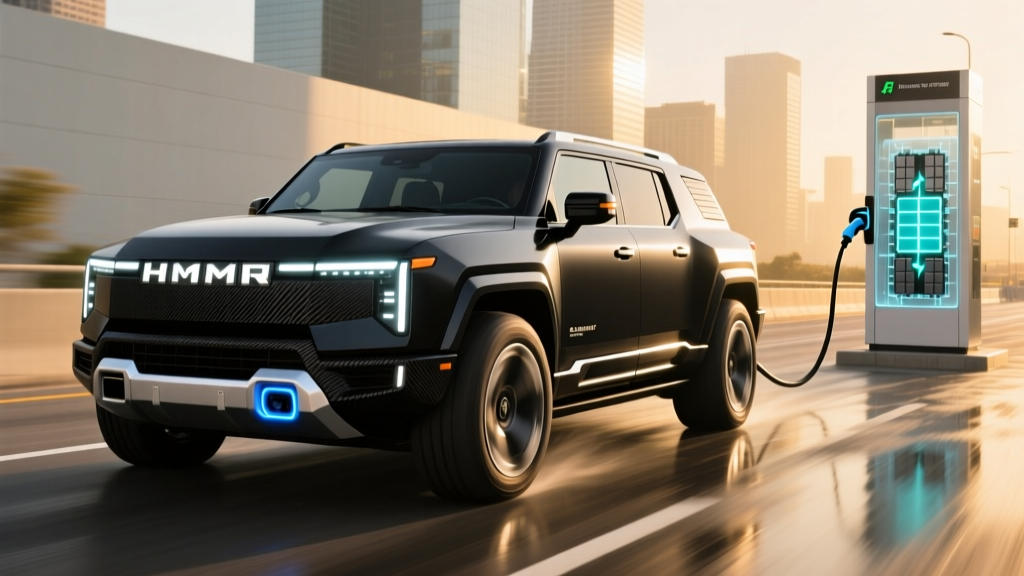
When GMC introduced the Hummer EV, the headline was its sub-3-second 0-60 mph time — a figure that seemed absurd for a truck weighing over 9,000 pounds. Now in its third model year, the 2026 Hummer EV Pickup and SUV retain that party trick while adding refinements to software, charging, and the Super Cruise driver-assistance system. But beneath the Watts to Freedom launch mode and crab-walking spectacle lies a serious question: does a $98,000-plus electric supertruck deliver daily-ownership value, or is it a six-figure flex?
This review breaks down every number that matters — from the Hummer EV's 0-60 time and real-world highway range to its DC fast-charging curve, home charging requirements, and 2026 federal tax credit eligibility. We'll also compare it against the Rivian R1T, Tesla Cybertruck, and Ford F-150 Lightning to help you decide.
2026 Hummer EV Full Spec Sheet
| Specification | Pickup 2X | Pickup 3X | SUV 2X | SUV 3X |
|---|---|---|---|---|
| EPA Range | 381 mi | 329 mi | 314 mi | 298 mi |
| Battery Capacity (usable) | ~212 kWh (est. 20-mod) | ~246 kWh (24-mod) | ~212 kWh (est. 20-mod) | ~246 kWh (24-mod) |
| Battery Chemistry | NMC (Nickel Manganese Cobalt) | NMC | NMC | NMC |
| Horsepower | 625 hp | 830 hp | 625 hp | 830 hp |
| Torque | 7,400 lb-ft (wheel) | 10,400 lb-ft (wheel) | 7,400 lb-ft (wheel) | 10,400 lb-ft (wheel) |
| 0-60 mph | ~3.7 sec | 3.0 sec | ~3.7 sec | 3.0 sec |
| Drivetrain | Dual-motor AWD | Tri-motor AWD | Dual-motor AWD | Tri-motor AWD |
| Max DC Fast Charge | ~240 kW (est.) | ~240 kW (est.) | ~240 kW (est.) | ~240 kW (est.) |
| Level 2 Home Charge | 11.5 kW / ~19 mi/hr | 11.5 kW / ~19 mi/hr | 11.5 kW / ~19 mi/hr | 11.5 kW / ~19 mi/hr |
| MPGe (combined) | 47 MPGe | 43 MPGe | 47 MPGe | 43 MPGe |
| Efficiency | ~72 kWh/100mi | ~78 kWh/100mi | ~72 kWh/100mi | ~78 kWh/100mi |
| Towing Capacity | 7,500 lbs | 7,500 lbs | 7,500 lbs | 7,500 lbs |
| Base MSRP | $98,845 | $112,095 | $98,845 | $109,095 |
| Battery/Powertrain Warranty | 8 yr / 100,000 mi | 8 yr / 100,000 mi | 8 yr / 100,000 mi | 8 yr / 100,000 mi |
Note: GMC lists torque in "wheel torque," which multiplies motor output through the gear reduction. Motor-output torque is significantly lower. EPA figures sourced from fueleconomy.gov.
Hummer EV 0-60 Time: How It Actually Hits 3.0 Seconds
The tri-motor 3X models (both Pickup and SUV) achieve a manufacturer-claimed 0-60 mph time of 3.0 seconds using the Watts to Freedom (WTF) launch mode. This mode lowers the adaptive air suspension, preconditions the battery for maximum discharge, and engages a haptic and audio sequence before releasing full power. In independent testing by multiple outlets, the Hummer EV 3X has consistently hit 60 mph between 3.0 and 3.3 seconds — remarkable for a vehicle with a curb weight exceeding 9,000 lbs on the 3X Pickup.
The dual-motor 2X trims deliver an estimated 0-60 time of approximately 3.7 seconds, still blistering for any truck and quicker than most performance SUVs. For context, a Ford F-150 Lightning Extended Range (563 hp) runs 0-60 in roughly 3.8 seconds, while the Rivian R1T Dual-Motor Max hits 60 in about 3.5 seconds.
Worth noting: the WTF launch mode is not designed for repeated use. Battery thermal management limits back-to-back launches, and you'll need roughly a 15-minute cooldown between full-power runs. This is a party trick, not a drag-racing feature.
Range and Efficiency: EPA Sticker vs. Real-World Expectations
EPA Range (Pickup 2X): 381 miles
Real-World Expectation: 280–310 miles at sustained highway speeds (70-80 mph); 240–270 miles in cold weather (below 32°F) with cabin heating. City driving with regenerative braking recovers closer to the EPA figure.
The Hummer EV's efficiency is its biggest trade-off. At 43-47 MPGe combined (depending on trim), it consumes roughly 72-78 kWh per 100 miles — approximately double the energy per mile of a Hyundai Ioniq 5 or Tesla Model Y. The physics are straightforward: a 9,000+ lb vehicle with the aerodynamic profile of a brick requires enormous energy to move.
On a 300-mile highway road trip at 75 mph in 45°F weather, expect the 3X Pickup's real range to fall to roughly 240-260 miles before you're searching for a charger. The 2X Pickup, with its smaller battery and dual-motor setup, actually achieves the longest EPA range (381 miles) but will similarly lose 20-30% at highway speeds in cold conditions.
The enormous Ultium battery pack — up to 24 modules with an estimated 246 kWh of usable capacity in 3X trims — is the largest in any production passenger vehicle. This is NMC (nickel manganese cobalt) chemistry, optimized for energy density over cycle life. GMC recommends daily charging to 80-90% for longevity, reserving 100% charges for road trips.
Charging Speed: DC Fast Charging and Home Level 2
| Charging Method | Power (kW) | Speed (miles/hr added) | Notes |
|---|---|---|---|
| Level 1 (120V household) | ~1.4 kW | ~2 mi/hr | Emergency only; 246 kWh battery takes days |
| Level 2 (240V home, 48A) | 11.5 kW | ~19 mi/hr | Full charge in ~13-21 hours depending on pack |
| DC Fast Charge (peak) | ~240 kW | ~100+ mi/hr at peak | 10-80% in ~35-40 min; tapers significantly above 80% |
| DC Fast Charge (350 kW station) | Limited to ~240 kW | — | Vehicle cannot accept full 350 kW; station overhead wasted |
The Hummer EV uses a CCS1 connector and can accept up to approximately 240 kW at a DC fast charger. However, the massive battery means that even at peak charge rate, a 10-80% session takes roughly 35-40 minutes — longer than lighter EVs with smaller packs. The charge curve holds near peak power from roughly 10-50% state of charge, then tapers progressively. Above 80%, charging slows dramatically to protect the NMC cells, often dropping below 50 kW.
For home charging, the onboard 11.5 kW charger is adequate for overnight replenishment but means a full 0-100% charge on the 246 kWh pack takes over 21 hours. Most owners will charge from 20-80% overnight in roughly 12-13 hours on a Level 2 home charger. A 60-amp dedicated circuit with a hardwired Level 2 station (like a ChargePoint Home Flex or Emporia Level 2) is strongly recommended over a mobile connector for a battery this large.
Pricing, Trims, and 2026 Federal Tax Credit Eligibility
| Trim | Base MSRP | Federal Tax Credit (§30D) | Effective Price* |
|---|---|---|---|
| Pickup 2X | $98,845 | $0 (exceeds MSRP cap) | $98,845 |
| Pickup 3X | $112,095 | $0 (exceeds MSRP cap) | $112,095 |
| SUV 2X | $98,845 | $0 (exceeds MSRP cap) | $98,845 |
| SUV 3X | $109,095 | $0 (exceeds MSRP cap) | $109,095 |
*Effective price does not include destination ($1,995), dealer adjustments, or state/local incentives. Tax credit per IRS §30D rules.
Here's the tax credit reality check every buyer needs: the Hummer EV does not qualify for the federal §30D new clean vehicle tax credit. Under current IRS rules, pickup trucks and SUVs have an MSRP cap of $80,000 for credit eligibility. Every Hummer EV trim exceeds this cap by $18,000-$32,000, making it ineligible regardless of battery sourcing, buyer income, or point-of-sale transfer provisions.
The 2X trims start at $98,845 before destination and options. The 3X tri-motor trims — the ones that deliver the headline 3.0-second 0-60 — start above $109,000. Fully loaded Edition 1 or similarly optioned models with the Extreme Off-Road package, power retractable roof, and premium interior can exceed $130,000.
Some state-level incentives may partially offset costs (check your state's EV rebate program), but no federal credit applies. Factor this into your total cost of ownership comparison against eligible competitors.
Interior, Cargo, Tech, and Driver Assistance
The Hummer EV's cabin reflects its price: a 13.4-inch infotainment touchscreen running GM's latest Ultifi software, a 12.3-inch digital instrument cluster, and an available 12.3-inch passenger display. The system supports wireless Apple CarPlay and Android Auto, over-the-air updates, and Google Built-In navigation. Interior materials on 3X trims include heated and ventilated leather seats with 16-way power adjustment.
Cargo and passenger space:
- Pickup bed: 5 feet (with midgate open: ~8 feet to cab wall)
- SUV cargo (behind rear seats): ~35.9 cu ft; folded: ~81.8 cu ft
- Front trunk (frunk): ~11.3 cu ft (e-trunk with power operation)
- Rear legroom (Pickup): ~38.9 inches
- Rear legroom (SUV): ~36.4 inches
The power e-trunk (front trunk) is lockable, weather-sealed, and includes a drain plug — practical for tailgating or gear storage. The Infinity Roof with removable sky panels (standard on 3X, available on 2X) stores in the frunk, offering an open-air experience unique among electric trucks.
Super Cruise: GM's Level 2 hands-free driver-assistance system is available on the Hummer EV, covering over 750,000 miles of compatible roads in the US and Canada. It uses a driver-facing camera to monitor attention and requires the driver to remain alert. This is not autonomous driving — it's a sophisticated Level 2 system (per SAE classification) that handles steering and speed on mapped highways but requires human takeover for construction zones, unmapped roads, and complex merges.
Standout tech:
- CrabWalk: 4-wheel steering allows diagonal movement (up to 10 degrees) for tight trail navigation
- Extract Mode: Air suspension raises 6 inches for extreme obstacle clearance
- Underbody armor with skid plates and underbody cameras
- Adaptive air suspension with automatic ride-height adjustment
- UltraVision: up to 18 camera views including underbody
Pros and Cons: The Honest Assessment
Pros
- 3.0-second 0-60 mph (3X) — quickest production truck available
- Class-leading battery capacity; longest EPA range of any electric truck (2X Pickup: 381 mi)
- CrabWalk 4-wheel steering and Extract Mode for serious off-road capability
- Super Cruise hands-free driving on 750,000+ miles of roads
- Power e-trunk and removable Infinity Roof panels
- Air suspension provides adjustable ride height and comfortable highway ride
Cons
- Efficiency is poor: 43-47 MPGe; high electricity cost per mile
- No federal tax credit eligibility (all trims exceed $80K MSRP cap)
- Real-world highway range drops 20-30% at speed, worse in cold
- 35-40 minute 10-80% DC charge time due to massive battery
- 9,000+ lb curb weight impacts tire wear, braking distance, and garage/parking suitability
- Base price near $99K; 3X models exceed $112K before options
Hummer EV vs. Key Competitors: Which Electric Truck Wins?
| Spec | Hummer EV 3X Pickup | Rivian R1T Tri-Motor Max | Tesla Cybertruck Cyberbeast | Ford F-150 Lightning Platinum |
|---|---|---|---|---|
| 0-60 mph | 3.0 sec | ~2.9 sec | 2.6 sec | ~3.8 sec |
| EPA Range | 329 mi | 420 mi | 320 mi | 300 mi (Ext. Range) |
| Max DC Charge | ~240 kW | ~220 kW | ~250 kW | ~150 kW |
| Battery (usable) | ~246 kWh | ~149 kWh | ~123 kWh | ~131 kWh |
| Towing | 7,500 lbs | 11,000 lbs | 11,000 lbs | 10,000 lbs |
| Base MSRP | $112,095 | $105,900 | $99,990 | $96,874 |
| Fed. Tax Credit | None | None | None | None |
The Cybertruck Cyberbeast is technically quicker (2.6 sec) and lighter, with a stainless-steel exoskeleton that polarizes buyers. The Rivian R1T Tri-Motor Max offers the longest range (420 mi EPA) and 11,000-lb towing, with a more refined interior. The F-150 Lightning is the most practical work truck, with the lowest starting price in this group, though its charging speed lags.
The Hummer EV wins on sheer spectacle and off-road hardware (CrabWalk, Extract Mode, underbody cameras). It loses on efficiency, charging time, and price. If you need a work truck, the Lightning or R1T serve better. If you want the most attention-grabbing EV on any road or trail, nothing else matches the Hummer.
Who Should Buy the 2026 Hummer EV?
Buy it if: You want an electric truck that doubles as an off-road toy and a conversation piece, you have reliable home Level 2 charging, your daily commute is under 100 miles round-trip, and budget is secondary to experience. The Hummer EV rewards owners who use CrabWalk on trails, drop the Infinity Roof panels on weekend drives, and appreciate launching a 9,000-lb truck to 60 mph in 3 seconds.
Look elsewhere if: You prioritize efficiency and low cost-per-mile, you need maximum towing capacity, you rely heavily on public DC fast charging for long road trips (the 35-40 minute charge stops add up), or you're counting on the federal tax credit to offset the purchase price.
Frequently Asked Questions
What is the real-world range of the Hummer EV?
The EPA rates the 2X Pickup at 381 miles and the 3X Pickup at 329 miles. In real-world highway driving at 70-80 mph, expect 280-310 miles from the 2X and 250-280 miles from the 3X. In cold weather (below 32°F) with cabin heating, subtract another 10-15%, bringing the 3X down to roughly 220-250 miles of usable range before needing a charge.
How fast does the Hummer EV charge at home and on the road?
At home on a 240V Level 2 charger (11.5 kW), the Hummer EV adds roughly 19 miles of range per hour. A full 0-100% charge on the 246 kWh battery takes over 21 hours. On a DC fast charger, it peaks at approximately 240 kW, achieving a 10-80% charge in about 35-40 minutes. Above 80% state of charge, the rate tapers sharply.
Does the Hummer EV qualify for the $7,500 federal EV tax credit?
No. Under IRS §30D rules, new EV pickups and SUVs must have an MSRP at or below $80,000 to qualify. All 2026 Hummer EV trims start at $98,845 or higher, making them ineligible for the federal credit regardless of buyer income or battery sourcing. Check IRS.gov for current rules and consult a tax professional for your specific situation.
Is the Hummer EV worth buying over the Rivian R1T or Tesla Cybertruck?
It depends on priorities. The Hummer EV is the most capable off-road (CrabWalk, Extract Mode, underbody armor) and has the largest battery. The Rivian R1T offers more range (420 mi EPA on Max pack), higher towing (11,000 lbs), and a more practical size. The Cybertruck Cyberbeast is quicker (2.6 sec 0-60) and lighter. For pure spectacle and trail capability, the Hummer wins. For daily usability and road trips, the R1T is the stronger choice.
How much does it cost to charge a Hummer EV?
At the US average residential electricity rate of approximately $0.17/kWh (2026 EIA data), fully charging the 246 kWh battery at home costs roughly $42. On a DC fast charger at $0.35-$0.48/kWh (common on Electrify America or EVgo), a 10-80% session costs $35-$60. Per-mile energy cost is approximately $0.12-$0.13 at home — roughly double the per-mile cost of a Tesla Model Y or Hyundai Ioniq 5, due to the Hummer's poor efficiency (43-47 MPGe).
What is the Hummer EV's battery warranty?
GMC covers the Ultium battery pack and electric powertrain for 8 years or 100,000 miles, whichever comes first. The warranty guarantees the battery will retain at least 60% of its original capacity during the coverage period. This is consistent with industry standards but the 60% retention threshold is on the lower end — some competitors guarantee 70%.