Quick Answer: Is a Hubber EV Right for You?
A Hubber EV makes sense if you have reliable home charging (Level 2), drive under 250 miles daily, and want to cut fuel costs by 60-70% compared to a gas equivalent. Expect a real-world range of 230-270 miles from the 77 kWh usable battery (EPA-rated 290 miles), a 10-80% DC fast charge in roughly 24 minutes at up to 175 kW, and a starting MSRP around $38,500 before incentives. If you live in an apartment without charging access, frequently drive 400+ mile routes through charging deserts, or regularly face sub-20°F winters without a garage, a plug-in hybrid may serve you better until infrastructure catches up to your needs.
What Is the Hubber EV and Who Makes It?
The Hubber EV is a compact electric crossover aimed at budget-conscious buyers who want practical daily range without paying luxury-EV premiums. Positioned between the Chevrolet Equinox EV and Hyundai Ioniq 5 in size and price, the Hubber targets urban commuters and suburban families transitioning from gas crossovers. The 2026 model year brings a refreshed battery pack with improved energy density and standard NACS (North American Charging Standard) access, giving it native compatibility with Tesla Supercharger networks without an adapter.
Hubber positions the vehicle as a no-nonsense commuter: cloth seats, a 12.3-inch infotainment display, and standard Level 2 ADAS (advanced driver-assistance) features like adaptive cruise control and lane-centering. It is not a performance EV — 0-60 mph lands around 7.2 seconds with 225 horsepower from a single rear-mounted motor. The trade-off for the modest price is a simpler interior and fewer premium options, but the powertrain and battery are competitive for the segment.
| Specification | Hubber EV (2026) |
|---|---|
| EPA Range | 290 miles |
| Real-World Range (highway/cold) | ~230-270 miles |
| Battery (usable) | 77 kWh, NMC chemistry |
| Peak DC Fast Charge | 175 kW |
| 10-80% DC Charge Time | ~24 minutes |
| Level 2 Charge Rate | 11.5 kW (48A) |
| Motor Output | 225 hp / 258 lb-ft torque |
| 0-60 mph | 7.2 seconds |
| MPGe (combined) | 112 MPGe |
| Base MSRP | $38,500 |
| Battery Warranty | 8 years / 100,000 miles |
| Connector | NACS (native) |
Real-World Range vs. the EPA Sticker
EPA Rating: 290 miles
Expect in Practice: 240-270 miles on mixed suburban/highway driving in mild weather. Sustained 75+ mph highway driving drops this to roughly 230-250 miles. In temperatures below 25°F without preconditioning, expect 190-220 miles — a 25-35% reduction common to NMC packs without a heat pump. The Hubber EV includes a resistive cabin heater rather than a heat pump on base trims; upgrading to the Cold Weather package adds a heat pump and battery preconditioning, recovering roughly 10-15% of cold-weather range.
The charge curve matters just as much as range. The Hubber peaks at 175 kW only between roughly 10-40% state of charge, then tapers to around 90 kW through 60%, and drops further to 40-50 kW above 80%. This is normal for NMC chemistry, but it means the advertised "24-minute 10-80%" time assumes an optimal charger and preconditioned battery. On a cold battery without preconditioning, that same session can stretch to 35-40 minutes.
Hubber EV vs. Gas: The True Cost of Ownership
The most common first-time buyer question: does the higher sticker price pay off? Let's compare the Hubber EV against a typical gas compact crossover (EPA combined 28 MPG) over 5 years and 75,000 miles.
| Cost Category | Hubber EV (5 yr) | Gas Crossover (5 yr) |
|---|---|---|
| Purchase Price (base) | $38,500 | $30,000 |
| Federal Tax Credit (§30D) | Up to $7,500* | $0 |
| Effective Purchase | $31,000 | $30,000 |
| Fuel / Energy (75k mi) | $3,750 (home charging)** | $9,375 ($3.50/gal, 28 MPG) |
| Maintenance | $1,200 | $3,800 |
| Insurance (avg) | $8,500 | $6,800 |
| 5-Year Total | $44,450 | $49,975 |
| Cost Per Mile | $0.59 | $0.67 |
*§30D credit eligibility depends on buyer income caps ($150k single / $300k joint), MSRP caps ($55k for SUVs), and battery critical-mineral sourcing requirements. Verify current rules at IRS.gov. Point-of-sale transfer is available at participating dealers.
**Based on $0.15/kWh national average home electricity rate and 3.5 miles/kWh efficiency. Public DC fast charging at $0.35-0.50/kWh would raise this to roughly $5,500-7,000.
The Hubber EV breaks even against a gas crossover within 2-3 years if you charge primarily at home and qualify for the full federal credit. If you rely entirely on public fast charging, the break-even stretches to 4-5 years. Insurance is the one area where EVs consistently cost more — typically 15-25% higher premiums due to repair complexity and battery replacement costs.
Charging at Home: What You Actually Need
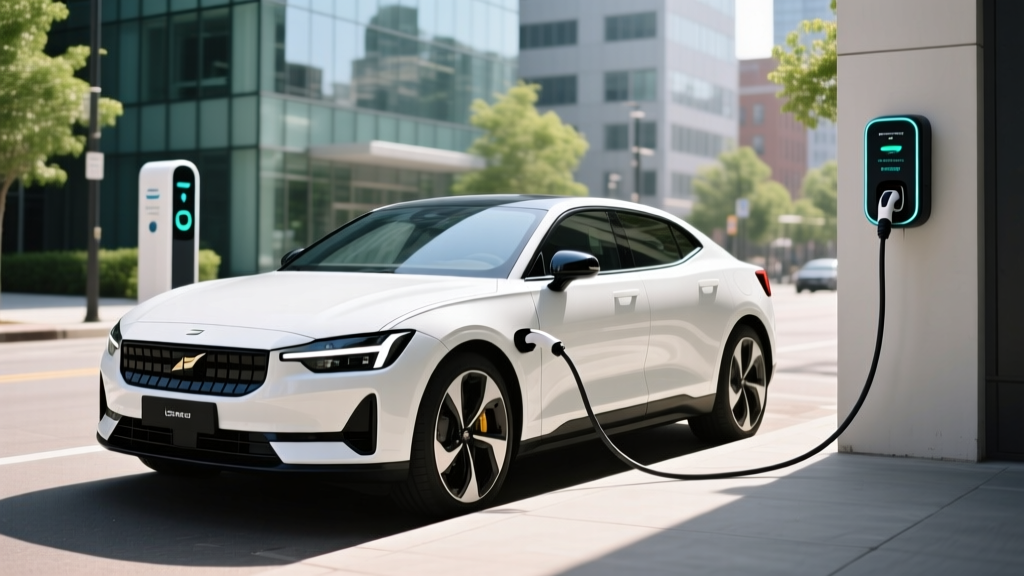
Home charging is where EV ownership succeeds or fails. The Hubber EV accepts up to 11.5 kW on Level 2 (240V, 48 amps), which adds roughly 35-40 miles of range per hour. A full overnight charge from 10-90% takes about 7 hours — more than enough for daily commuting.
| Level | Voltage | Power (kW) | Miles Added/Hour | Use Case |
|---|---|---|---|---|
| Level 1 | 120V | 1.4 kW | ~4-5 mi/hr | Emergency/overnight trickle |
| Level 2 (Home) | 240V | 7.7-11.5 kW | 25-40 mi/hr | Daily primary charging |
| DC Fast | 400V+ | 50-175 kW | 200-500 mi/hr | Road trips, quick top-ups |
Installation costs vary widely. A basic Level 2 install on an existing 240V circuit (like a dryer outlet) runs $300-600 for the electrician's labor plus $400-700 for a quality EVSE (ChargePoint Home Flex, Emporia Level 2, or similar). If you need a new 60-amp circuit run from your panel, expect $800-2,000. A full panel upgrade from 100A to 200A service — sometimes necessary in older homes — adds $1,500-3,500. Always get a quote from a licensed electrician before committing to a purchase.
If you live in an apartment or condo without dedicated parking and charging access, this is your biggest barrier. Some municipalities require landlords to accommodate charging requests, but the reality is inconsistent. In this case, check whether your workplace offers Level 2 charging, and map public chargers near your daily routes before buying.
Tax Credits and Incentives: What You Can Actually Claim
The federal §30D Clean Vehicle Credit offers up to $7,500 for qualifying new EVs, but eligibility is layered. For the 2026 tax year, the Hubber EV must meet battery component and critical-mineral sourcing thresholds that shift annually. The buyer must also fall under income caps: $150,000 modified adjusted gross income for single filers, $225,000 for head of household, and $300,000 for joint filers. The vehicle MSRP must not exceed $55,000 for SUVs/crossovers.
§30D Eligibility Checklist (2026):
- Buyer income under applicable MAGI cap
- Vehicle MSRP under $55,000 (SUV/crossover) or $25,000 (sedan)
- Battery meets critical-mineral sourcing percentage (increases yearly)
- Battery components manufactured/assembled in North America (percentage threshold)
- Vehicle assembled in North America
- Purchased for personal use, not resale
- Point-of-sale transfer available at participating dealers (reduces purchase price directly)
State and local incentives vary significantly — some states offer $1,000-4,000 additional rebates, HOV lane access, or reduced registration fees. Check your state's energy office or fueleconomy.gov for current programs. These change frequently and some have funding caps that exhaust mid-year.
Common EV Misconceptions — Fact vs. Fiction
| Myth | Fact |
|---|---|
| "EV batteries need replacing every 5 years" | Modern NMC and LFP packs are warranted for 8 years/100,000 miles at 70%+ capacity retention. Most degrade only 10-15% over 150,000+ miles based on fleet data. |
| "EVs are worse in cold weather" | Range drops 20-35% in extreme cold, but EVs start instantly (no cold cranking), and preconditioning while plugged in mitigates most losses. Gas cars also lose efficiency in cold. |
| "The grid can't handle EVs" | Most EV charging happens overnight when grid demand is lowest. A single EV adds roughly the load of a central AC unit. Mass adoption will require grid upgrades, but current capacity supports millions of EVs. |
| "EVs are worse for the environment" | Even on coal-heavy grids, EVs produce fewer lifetime emissions than gas cars (per Argonne National Laboratory lifecycle analysis). On renewable-heavy grids, the advantage is 60-80% lower. |
| "Charging takes too long" | Home charging is overnight (no time spent). Road-trip DC fast charging adds 15-25 minutes every 200-250 miles — comparable to gas stops with food/restroom breaks. |
Decision Framework: Should You Buy the Hubber EV?
Buy the Hubber EV if:
- You have home Level 2 charging (or can install it for under $2,000)
- Your daily driving is under 150 miles round-trip
- You qualify for the full or partial §30D tax credit
- You want to reduce fuel costs by 50-70%
- You live in a region with moderate winters or can add the heat-pump package
- You value native NACS Supercharger access for road trips
Consider a PHEV or gas vehicle instead if:
- You rent an apartment with no charging option and no workplace charging
- You regularly drive 400+ mile routes through areas with sparse DC fast-charger coverage
- You frequently tow heavy loads (towing cuts EV range by 40-60%)
- Your budget cannot absorb the higher upfront cost, even with tax credits
- You live in extreme cold (below 0°F regularly) and cannot garage the vehicle
Wait if:
- Your current vehicle is paid off and runs well — the economics favor keeping it longer
- You're within 12 months of a major life change (move, job change) that could alter your driving pattern
What First-Time EV Buyers Must Know Before Signing
Test the charging ecosystem before you buy. Download the PlugShare or ChargePoint app and map chargers along your most common routes. Drive past a few to verify they exist and appear functional. The Hubber's NACS connector opens the Supercharger network, but verify that Superchargers near you have open access for non-Tesla vehicles — rollout is still expanding in some regions.
Understand your electric rate. Many utilities offer time-of-use (TOU) plans that make overnight charging dramatically cheaper (as low as $0.06-0.10/kWh vs. $0.20-0.30/kWh during peak hours). Call your utility before purchase and ask about EV-specific rate plans. A smart Level 2 charger that schedules charging during off-peak hours can save $200-400 per year.
Budget for insurance. Get quotes before signing. EV insurance premiums run 15-25% higher on average. Some insurers (like GEICO, Progressive, and Tesla Insurance in certain states) offer EV-specific discounts. Shopping around can save $500-800 annually.
Plan for tire costs. EVs are heavier and deliver instant torque, which wears tires 20-30% faster than gas equivalents. Budget for replacement tires every 30,000-40,000 miles. The Hubber EV uses 235/55R19 tires, which run $180-280 each for quality all-season options.
Frequently Asked Questions
How long does the Hubber EV battery last?
The 77 kWh NMC pack is warrantied for 8 years or 100,000 miles at 70% capacity retention. Based on industry fleet data, most NMC packs retain 85-90% capacity at 100,000 miles with normal use (avoiding frequent 100% charges and DC fast-charging daily). Full battery replacement, if ever needed outside warranty, currently runs $10,000-14,000, though costs continue to decline.
Can I road-trip the Hubber EV?
Yes, with planning. At 290 miles EPA (240-260 real-world highway), you'll stop every 200-230 miles on long trips. With the NACS connector, you can use Tesla Superchargers (where non-Tesla access is available) plus Electrify America and other networks. Expect 20-25 minute charging stops from 10-80% at a 150+ kW charger. Apps like A Better Routeplanner (ABRP) can model your specific route with elevation and weather.
Is the Hubber EV eligible for the $7,500 tax credit?
Eligibility depends on your income, the vehicle's MSRP, and current battery-sourcing rules, which tighten each year. The Hubber EV's base MSRP of $38,500 clears the $55,000 SUV cap. Check the latest qualified vehicle list at fueleconomy.gov and consult a tax professional for your specific situation. Point-of-sale transfer at the dealer can apply the credit directly to your down payment.
Do I need to upgrade my electrical panel?
Not always. If your home has a 200-amp panel with spare capacity, a Level 2 charger install is straightforward ($800-1,500 total). Older homes with 100-amp service may need a panel upgrade ($1,500-3,500) to safely support a 48-amp EV circuit alongside existing loads. A licensed electrician can assess your panel in a 15-minute visit, often free with a quote.
EV vs. hybrid: which saves me more?
A full EV like the Hubber saves more on fuel and maintenance over 5+ years if you can charge at home. A PHEV (plug-in hybrid) like the Toyota RAV4 Prime offers 42 miles of electric range for daily commuting plus gas flexibility for road trips — a better fit if you lack reliable charging. PHEVs cost more upfront and still require oil changes, but eliminate range anxiety entirely. The break-even point for a BEV vs. PHEV is typically 3-4 years of home-charged commuting.