What Is a Hub Electric Motor?
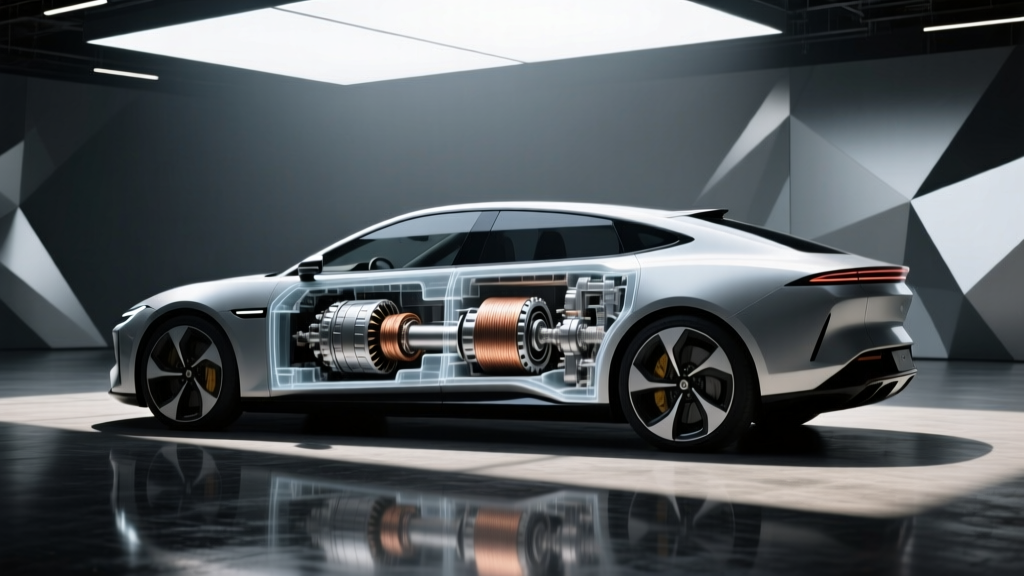
A hub electric motor (also called an in-wheel motor) places the electric drive unit directly inside the wheel hub, eliminating the need for axles, differentials, and driveshafts found in conventional EV powertrains. Instead of one or two centralized motors sending torque through mechanical linkages, each driven wheel contains its own motor. The result is more interior space, independent torque vectoring per wheel, and potentially fewer drivetrain components to maintain. As of 2026, hub motors remain primarily in commercial and prototype applications — Lordstown Motors attempted a production hub-motor pickup (the Endurance) before filing for bankruptcy in 2023, and companies like Protean Electric and Elaphe continue developing the technology for fleet and next-generation passenger vehicles. No mainstream 2026 consumer EV currently on sale in the U.S. uses hub motors.
How Hub Electric Motors Compare to Conventional EV Drivetrains
To understand whether a hub electric motor matters for your next EV purchase, you need to see how it stacks up against the centralized motor layout used in virtually every production EV today — from the Tesla Model Y to the Hyundai Ioniq 5 to the Ford Mustang Mach-E.
| Attribute | Hub Electric Motor (In-Wheel) | Conventional Centralized EV Motor | Gas Vehicle (ICE) |
|---|---|---|---|
| Motor location | Inside each wheel hub | 1-3 motors on axle/subframe | Engine bay, drives wheels via transmission |
| Drivetrain components | Minimal — no differential, driveshaft, or CV joints on driven wheels | Reduction gear, half-shafts, differential | Transmission, driveshaft, differential, axles |
| Torque vectoring | Independent per wheel (precise) | Limited via brake-based or dual-motor software | Very limited (brake-based or mechanical LSD) |
| Unsprung weight | Higher (motor mass in wheel) | Lower (motor is sprung mass) | Lower |
| Interior space gain | Flat floor, no transmission tunnel or motor subframe intrusion | Flat floor possible, but motor subframe takes space | Transmission tunnel reduces cabin space |
| Efficiency (drivetrain loss) | ~3-5% loss (direct drive) | ~5-10% loss (through reduction gear) | ~15-25% loss (through transmission + drivetrain) |
| Production maturity (2026) | Limited — commercial/fleet prototypes | Mass production, proven at scale | Mature, century of refinement |
| Consumer availability (U.S.) | None currently on sale | Dozens of models across all segments | Hundreds of models |
The key engineering tradeoff is unsprung weight. When you put a motor inside the wheel, that mass is no longer supported by the suspension — it's "unsprung." Heavier unsprung mass means the wheel has more inertia when hitting bumps, which can degrade ride quality and tire contact with the road. Companies like Elaphe and Protean have worked to reduce hub motor mass (some units are under 25 kg / 55 lbs per wheel), but the physics challenge remains significant for passenger comfort.
Real Costs: Hub Motor EVs vs. Conventional EVs vs. Gas Cars
Since no consumer hub-motor EV is available in 2026, we can't give you a dealer price. But we can break down what the ownership economics look like for a typical conventional EV versus a comparable gas car — the baseline you'd be comparing any future hub-motor vehicle against.
| Cost Category | 2026 Conventional EV (e.g., Hyundai Ioniq 5 SEL, ~$46,000 MSRP) | 2026 Gas Car (e.g., Toyota RAV4 XLE, ~$33,000 MSRP) | Future Hub-Motor EV (Estimated) |
|---|---|---|---|
| Base MSRP | $46,000 | $33,000 | Unknown — likely $45,000-$60,000+ for first-gen consumer models |
| Federal tax credit (§30D) | Up to $7,500 if eligible (income, MSRP cap, battery sourcing rules apply — see IRS.gov) | $0 | Eligibility depends on battery sourcing and MSRP caps at time of launch |
| Effective purchase price | ~$38,500 (with full credit) | $33,000 | TBD |
| Fuel/energy cost (5 yr / 75,000 mi) | ~$4,500-$6,000 (home L2 charging at $0.14/kWh avg) | ~$9,400 (28 MPG combined at $3.50/gal) | Similar to conventional EV — motor type doesn't drastically change kWh/mi |
| Maintenance (5 yr) | ~$1,500-$2,500 (no oil changes, fewer brake replacements with regen) | ~$3,500-$5,000 (oil, filters, transmission fluid, more brake wear) | Potentially lower — fewer drivetrain components, but hub motor replacement cost unknown |
| Insurance (5 yr avg) | ~$9,000-$12,000 (EV premiums run 15-25% higher) | ~$7,500-$9,500 | Likely higher — limited repair network, specialized parts |
| Estimated 5-yr total cost | ~$53,500-$62,000 | ~$53,400-$59,900 | TBD |
The takeaway: conventional EVs are already approaching gas-car total cost of ownership parity over five years, especially when the §30D federal tax credit applies. A hub-motor EV would need to match or beat this while proving long-term reliability of in-wheel components — a tall order for a first-generation product.
Range, Efficiency, and the Hub Motor Question
Hub motors theoretically improve drivetrain efficiency by 2-5 percentage points by eliminating the reduction gear and mechanical linkages. In practice, that translates to roughly 5-15 additional miles of EPA range on a vehicle with a 77 kWh battery pack — a modest gain.
However, the added unsprung weight can increase rolling resistance and energy consumption on rough roads, partially offsetting the efficiency benefit. Real-world testing from Protean Electric's prototype programs has shown mixed results: gains on smooth highway routes, losses on urban potholed streets.
For context, here's what you get from top conventional EVs in 2026:
- Hyundai Ioniq 5 (77.4 kWh, NMC): EPA 310 mi (Long Range RWD); expect ~250-270 mi highway, ~220 mi in sub-freezing cold
- Tesla Model Y (75 kWh, NMC): EPA 320 mi (Long Range AWD); expect ~270-290 mi highway
- Chevrolet Equinox EV (85 kWh, NMC): EPA 319 mi (3RS); expect ~260-280 mi highway
A hub-motor variant of a similar platform would likely land within ±10 miles of these figures. The motor architecture alone is not a range revolution.
Real-World Ownership Considerations
If a hub-motor EV reaches the consumer market, buyers should weigh several practical factors beyond the spec sheet:
Home Charging Access
This remains the single biggest ownership variable for any EV, regardless of motor type. A Level 2 home charger (240V, 7.7-11.5 kW) adds roughly 25-44 miles of range per hour and costs $800-$2,500 installed depending on your electrical panel. Without home charging, you're dependent on public DC fast chargers, where costs run $0.35-$0.55/kWh — cutting your fuel savings roughly in half versus home rates.
Climate and Cold-Weather Range Loss
All EVs lose 20-35% of their EPA range in sustained sub-freezing temperatures. Hub motors don't change this — battery chemistry (NMC vs. LFP) and thermal management systems (heat pump vs. resistive heater) are what matter. A hub-motor EV with an LFP battery and no heat pump would suffer the same cold-weather penalties as a conventional LFP EV.
Repair and Service Network
This is where hub-motor EVs face their biggest consumer hurdle. If a hub motor fails, the repair requires a technician trained on in-wheel systems — a specialty that barely exists in the U.S. dealer and independent shop network today. By contrast, centralized EV motors are serviced at every brand-certified dealer. A hub motor replacement could cost $2,000-$5,000 per unit (estimated, based on commercial fleet quotes from Elaphe), versus $4,000-$8,000 for a complete centralized motor replacement — but you might need to replace two or four hub units over the vehicle's life versus one central motor.
Driving Patterns
Hub motors shine in stop-and-go urban driving where independent torque vectoring improves low-speed maneuverability and regenerative braking can be precisely distributed per wheel. Highway-dominant commutes see less benefit. If your driving is 80%+ highway, a conventional EV's efficiency and proven high-speed stability are a safer bet.
Myths vs. Facts About Hub Electric Motors
| Myth | Fact |
|---|---|
| "Hub motors double your EV range." | Efficiency gains are 2-5% at the drivetrain level — roughly 5-15 extra miles on a 300-mile pack. Battery size and chemistry still dominate range. |
| "They eliminate all maintenance." | Hub motors remove differential and driveshaft service but introduce new failure points: wheel-integrated bearings, seals exposed to road debris, and in-wheel cooling systems. |
| "No EVs will ever use them." | Commercial and fleet applications are advancing. Companies like Elaphe supply hub motors for electric buses and delivery vans. Consumer adoption depends on cost reduction and reliability data. |
| "Hub motors make the car handle worse." | Added unsprung mass can hurt ride quality on rough roads, but modern active suspensions can compensate. The net effect depends on vehicle tuning, not the motor alone. |
| "They're cheaper to manufacture." | Per-unit motor cost may be higher since you need 2-4 units instead of 1. Savings come from eliminating drivetrain parts, but the net manufacturing cost advantage is debated. |
Decision Framework: Should You Wait for a Hub Motor EV?
Buy a Conventional EV Now If:
- You need a vehicle in 2026 and want proven reliability with a full dealer service network
- You want to take advantage of current §30D tax credits (up to $7,500, subject to IRS eligibility rules including income caps, MSRP limits, and battery sourcing requirements)
- Your priority is range, charging speed, and total cost of ownership — conventional EVs have matured across all three
- You drive a mix of highway and city and want predictable handling and ride quality
Consider a Hub-Motor EV (When Available) If:
- You operate a commercial fleet (delivery vans, shuttles) where flat-floor packaging and tight turning radius matter
- You want maximum interior space in a compact vehicle footprint — hub motors free up subframe area
- You're an early adopter willing to accept first-generation reliability risk and limited service infrastructure
- Independent per-wheel torque vectoring is critical for your use case (e.g., low-traction commercial environments)
Stick With a Hybrid or Gas Vehicle If:
- You lack reliable home or workplace charging access
- You regularly drive 400+ miles in a single trip through areas with sparse DC fast-charging infrastructure
- Your budget is under $30,000 and you need a new vehicle — the cheapest EVs still start above $33,000 before credits
Frequently Asked Questions
Are any 2026 consumer EVs sold with hub electric motors?
No. As of 2026, no mainstream automaker sells a consumer passenger vehicle with hub motors in the United States. The Lordstown Endurance, which was the closest attempt, was discontinued after Lordstown Motors' 2023 bankruptcy. Hub motors remain in development and limited commercial fleet use.
Do hub motors charge faster than conventional EV motors?
No. Charging speed is determined by the battery's chemistry, thermal management system, and onboard charge controller — not the motor type. A hub-motor EV with the same 77 kWh NMC battery and 240 kW peak DC charging capability would charge at the same rate (roughly 10-80% in 18 minutes) as a conventional EV with identical battery specs.
What's the biggest risk of buying a first-generation hub-motor EV?
Serviceability. If a hub motor fails out of warranty, you'll need a specialist to replace an in-wheel unit — and the repair network for this technology doesn't exist yet at the consumer level. Conventional EV motors can be serviced at any brand-certified dealer. Factor in potentially higher insurance premiums due to limited repair data and parts availability.
Do hub motors affect tire wear?
Possibly. The added unsprung mass means more force transmitted through the tire contact patch on bumps, which can accelerate wear on rough roads. Additionally, independent torque vectoring — while great for handling — can increase tire scrub during aggressive cornering. Expect to monitor tire wear more closely and rotate on schedule (every 5,000-7,500 miles).
Will hub motors become standard in future EVs?
Unlikely to become standard across all EVs, but they may find niches in compact city cars (where packaging efficiency matters most), commercial delivery vehicles, and autonomous shuttles (where flat floors and tight turning radii are priorities). Centralized motors will remain dominant for performance and highway-oriented vehicles due to their lower unsprung weight and proven reliability.
How does the §30D tax credit apply to a future hub-motor EV?
The same IRS §30D rules would apply as with any other new clean vehicle: the vehicle must have a battery capacity of at least 7 kWh, be assembled in North America (for full credit), meet MSRP caps ($55,000 for sedans, $80,000 for SUVs/trucks/vans), and the buyer must fall under income limits ($150,000 single / $300,000 joint). Critical mineral and battery component sourcing requirements also apply. Always verify current-year rules with a tax professional before purchasing.