Why a Tesla Test Drive Requires More Prep Than a Traditional Car
Tesla doesn't operate dealerships in the conventional sense. There are no commission-based salespeople walking the lot, no haggling over invoice prices, and no trade-in appraisals happening in a back office. Instead, Tesla sells direct-to-consumer through its website and company-owned galleries. This changes how you approach a test drive — and what you should evaluate when you get behind the wheel.
If you're researching how to test drive a Tesla in 2026, the process starts online. You schedule a demo drive through Tesla's website or by visiting a local gallery or service center. Availability varies by metro area; some locations keep a small fleet of current Model 3 and Model Y variants for 15- to 20-minute loop drives, while smaller galleries may offer ride-alongs only. In markets where Tesla operates under direct-sales restrictions (Texas, for example), the experience may differ slightly.
This guide walks you through the logistics of booking a drive, the exact specifications you should verify in the current 2026 lineup, the real-world range and charging data that matter most, and the tax credit rules that could knock up to $7,500 off your purchase price at the point of sale.
How to Schedule a Tesla Demo Drive in 2026
Here's the step-by-step process for getting behind the wheel:
- Visit tesla.com/drive or the Tesla app and select "Demo Drive."
- Choose your nearest gallery or service center with demo availability. Major metros (Los Angeles, San Francisco, Chicago, New York, Miami) typically have multiple locations with demo fleets.
- Select the model and trim you want to experience. In 2026, the core options are the Model 3 Rear-Wheel Drive, Model 3 Long Range AWD, Model Y Rear-Wheel Drive, and Model Y Long Range AWD.
- Pick a date and time. Weekend slots fill 1–2 weeks out in most markets; weekday mornings tend to be more open.
- Bring your valid driver's license. Tesla requires a license check before any demo drive. Some locations also ask for proof of insurance.
The typical demo drive lasts 15–20 minutes on a preset route. That's enough time to feel the acceleration, test regenerative braking, sample the touchscreen interface, and evaluate cabin noise — but not enough to assess highway range or charging behavior. If you want a longer evaluation, consider renting a Tesla through a peer-to-peer platform like Turo for a full day, which lets you test real-world highway efficiency, Supercharger speeds, and overnight home charging on a standard 120V or 240V outlet.
2026 Tesla Model 3 & Model Y: Spec Table and What to Verify on Your Drive
Before you sit down in the demo car, know the numbers. The table below reflects 2026 model-year specifications for the highest-volume trims. Tesla periodically adjusts pricing and features mid-year, so always confirm current figures on Tesla's official configurator.
| Spec | Model 3 RWD | Model 3 Long Range AWD | Model Y RWD | Model Y Long Range AWD |
|---|---|---|---|---|
| EPA Range | 363 mi | 363 mi | 320 mi | 337 mi |
| Battery (usable) | ~60 kWh (LFP) | ~79 kWh (NMC) | ~60 kWh (LFP) | ~79 kWh (NMC) |
| Drivetrain | RWD, single motor | AWD, dual motor | RWD, single motor | AWD, dual motor |
| Horsepower | 271 hp | 346 hp | 295 hp | 384 hp |
| 0–60 mph | 5.8 sec | 4.2 sec | 6.6 sec | 4.8 sec |
| Max DC Fast Charge | 170 kW | 250 kW | 170 kW | 250 kW |
| 10–80% DCFC Time | ~25 min | ~22 min | ~25 min | ~22 min |
| Level 2 Home Charging | 11.5 kW (~44 mi/hr) | 11.5 kW (~44 mi/hr) | 11.5 kW (~44 mi/hr) | 11.5 kW (~44 mi/hr) |
| Efficiency (MPGe) | 132 MPGe combined | 125 MPGe combined | 123 MPGe combined | 119 MPGe combined |
| Cargo Volume | 23 cu ft (trunk+frunk) | 23 cu ft (trunk+frunk) | 76 cu ft (rear seats folded) | 76 cu ft (rear seats folded) |
| Base MSRP | $38,990 | $45,990 | $44,990 | $48,990 |
Sources: EPA fueleconomy.gov, Tesla configurator. Specs reflect 2026 model year as published; verify at time of purchase.
Real-World Range: What the EPA Sticker Doesn't Tell You
The EPA range figures above assume a mix of city and highway driving at moderate temperatures. In practice:
• Highway-only at 75 mph: Expect 85–90% of EPA range (e.g., Model 3 RWD: ~305–325 mi).
• Cold weather (below 32°F): Expect 20–30% range loss due to battery resistance and cabin heating. A Model 3 Long Range rated at 363 mi may deliver 250–290 mi in sub-freezing highway conditions.
• City driving with regen: You may exceed EPA estimates by 5–10% in stop-and-go traffic where regenerative braking recovers energy.
Key takeaway: Plan road trips around 70–75% of the EPA sticker for a comfortable buffer, especially in winter or at sustained highway speeds.
During your test drive, watch the energy graph on the touchscreen. Tesla's onboard computer projects real-time range based on your recent driving pattern — a far more useful number than the static EPA estimate. If your demo route includes a highway segment, note how quickly the projected range drops at 70+ mph. Model 3 and Model Y are among the most efficient EVs in their class (measured in watt-hours per mile), but aerodynamic drag still penalizes high-speed driving significantly.
One chemistry note: the RWD trims use lithium iron phosphate (LFP) batteries, which tolerate frequent 100% charging better than the nickel-manganese-cobalt (NMC) packs in Long Range models. Tesla recommends daily charging to 80% for NMC and 100% for LFP. Ask your demo host which chemistry is in the car you're driving — it affects your daily charging routine.
Charging Speed: DC Fast Charging and Home Level 2
Charging speed is arguably the single most important ownership variable after range. Here's what to expect from the 2026 Model 3 and Model Y lineup:
| Charging Level | Power | Miles Added per Hour | Notes |
|---|---|---|---|
| Level 1 (120V household) | ~1.4 kW | ~4–5 mi/hr | Emergency/top-up only; ~60 mi overnight |
| Level 2 (240V, 48A) | 11.5 kW | ~44 mi/hr | Full charge in ~6–7 hours; standard home setup |
| DC Fast Charge (RWD/LFP) | Peak 170 kW | ~750 mi/hr (peak) | 10–80% in ~25 min; tapers above 80% |
| DC Fast Charge (Long Range/NMC) | Peak 250 kW | ~1,000+ mi/hr (peak) | 10–80% in ~22 min; tapers sharply above 80% |
Charging curve reality: The "peak 250 kW" figure for Long Range models is a maximum, not a sustained rate. The battery accepts peak power only between roughly 10–30% state of charge. By 50% SoC, the rate typically drops to 150–170 kW, and above 80% it falls below 50 kW. This is why Tesla (and every other automaker) quotes 10–80% times rather than 0–100%. On a road trip, plan your Supercharger stops around the 10–80% window for the fastest experience.
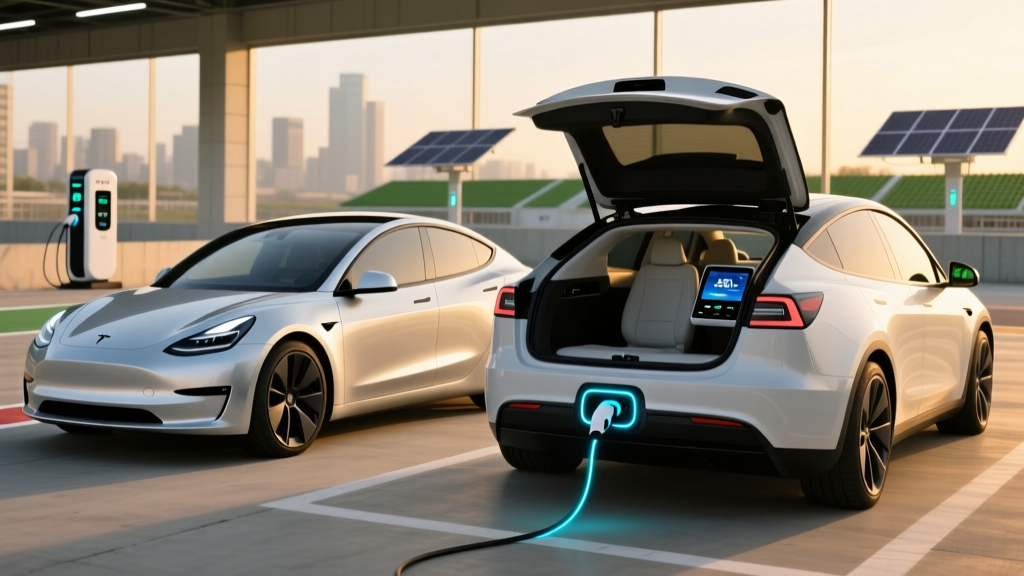
Tesla's NACS (North American Charging Standard) connector is now the industry standard, with Ford, GM, Rivian, Hyundai, and others adopting it. When you test drive, ask the host to walk you through the Supercharger plug-in process — it's a one-hand operation with no app or card required at Tesla stations, which remains a major usability advantage over CCS networks.
Pricing, Tax Credits, and True Cost After Incentives
Tesla's pricing is fixed — no negotiation, no dealer markups. But the federal IRS §30D clean vehicle credit can reduce your effective cost significantly if you meet the eligibility requirements.
| Model / Trim | Base MSRP | Max §30D Credit | Effective Price (if eligible) |
|---|---|---|---|
| Model 3 RWD | $38,990 | $7,500 | $31,490 |
| Model 3 Long Range AWD | $45,990 | $7,500 | $38,490 |
| Model Y RWD | $44,990 | $7,500 | $37,490 |
| Model Y Long Range AWD | $48,990 | $7,500 | $41,490 |
- MSRP cap: Sedans (Model 3) must be ≤$55,000; SUVs/trucks/vans (Model Y) ≤$80,000.
- Buyer income cap: Modified AGI ≤$150,000 (single), ≤$225,000 (head of household), ≤$300,000 (joint).
- Battery sourcing: The credit splits into two halves ($3,750 each) — one for critical minerals sourcing, one for battery component manufacturing. Qualification depends on where battery materials are mined and processed. Check Tesla's website or the IRS eligible-vehicle list for current sourcing status.
- Point-of-sale transfer: Since 2024, you can transfer the credit to Tesla at purchase, reducing your out-of-pocket cost immediately rather than waiting for a tax refund.
- VIN and final assembly: Vehicle must undergo final assembly in North America (all US-market Teslas are assembled in Fremont, CA, or Austin, TX).
Credit rules change frequently. Verify eligibility on irs.gov and consult a tax professional before relying on the credit in your purchase decision.
What to Evaluate During Your Tesla Test Drive
A 15-minute demo loop won't reveal everything, but here's a prioritized checklist to maximize your time:
Driving Dynamics
- Acceleration: Even the base Model 3 RWD hits 60 mph in 5.8 seconds — quicker than most gas sedans. The Long Range AWD at 4.2 seconds is genuinely fast. Test from a stoplight merge.
- Regenerative braking: Tesla defaults to strong regen, enabling near one-pedal driving. Lift off the accelerator and feel how aggressively the car decelerates. This takes 1–2 days to fully adapt to but most owners prefer it.
- Ride quality: The 2024+ "Highland" refresh significantly improved the Model 3's suspension compliance. Model Y received a similar "Juniper" update. Note how the car handles expansion joints and rough pavement.
- Cabin noise: Tesla added acoustic glass and improved sound deadening in recent refreshes. At 65 mph, compare it to any ICE car you currently drive.
Technology and Interface
- Touchscreen reliance: Virtually all vehicle controls — climate, mirrors, glovebox, wipers — are accessed through the 15.4-inch center screen. There is no traditional instrument cluster. Decide if you're comfortable with this.
- Autopilot (Level 2 ADAS): Ask the host to demonstrate Autopilot on a divided road. Note: this is SAE Level 2 driver assistance — you must keep your hands on the wheel and eyes on the road at all times. Tesla's Full Self-Driving (Supervised) is also Level 2 and is not autonomous driving.
- Navigation with Supercharger routing: Enter a destination 200+ miles away and watch how the nav system automatically plans charging stops, preconditions the battery, and estimates arrival state of charge.
Tesla Autopilot and FSD (Supervised) are SAE Level 2 driver-assistance systems. They do not make the vehicle self-driving. The driver must remain fully engaged, monitor the road, and be prepared to take over at any moment. FSD (Supervised) adds features like city street navigation and traffic-light recognition but still requires active driver supervision. Only Level 4 services (e.g., Waymo robotaxis in designated zones) operate without a human driver.
Cargo and Practicality
- Model 3: 23 cu ft total (trunk + frunk). Adequate for two adults' luggage on a road trip. Rear seats fold 60/40.
- Model Y: Up to 76 cu ft with rear seats folded — competitive with midsize SUVs. Available third-row option (very small, best for children). The hatchback opening is wide and practical.
- Frunk: Both models have a front trunk useful for charging cables, a small bag, or groceries.
Tesla vs. Key Competitors: Is It Still the Default Choice?
- Supercharger network access is a priority (15,000+ stalls in North America)
- You want the lowest energy consumption in class (kWh/100mi)
- Over-the-air updates and software integration matter to you
- You prefer a minimal, screen-centric interior
- You want point-of-sale tax credit transfer at purchase
- You prefer physical buttons and a traditional instrument cluster (Hyundai Ioniq 5, BMW i4)
- You need faster peak charging (Ioniq 5 peaks at 350 kW on 800V architecture)
- Build quality consistency is a top concern (BMW, Mercedes)
- You want a dealership service experience with loaner cars
- You need towing capacity above 3,500 lbs (Rivian R1S, F-150 Lightning)
The Hyundai Ioniq 5 and Kia EV6 offer 800-volt architectures enabling 10–80% charges in ~18 minutes on 350 kW chargers — measurably faster than Tesla's ~22–25 minutes. However, Tesla's Supercharger network remains the most reliable and ubiquitous DC fast-charging ecosystem in the US, which matters on road trips where CCS station uptime is still inconsistent.
Warranty, Ownership Costs, and Long-Term Considerations
Tesla's warranty structure is straightforward:
- Basic vehicle warranty: 4 years / 50,000 miles
- Battery and drive unit warranty: 8 years / 100,000 miles (RWD) or 8 years / 120,000 miles (Long Range AWD), with a minimum 70% capacity retention threshold
- Expected battery degradation: Tesla's fleet data shows median degradation of approximately 12% at 200,000 miles for NMC packs. LFP packs tend to degrade more slowly but have lower energy density.
Insurance costs for Teslas tend to run 15–30% higher than comparable ICE vehicles due to repair costs and parts pricing. Get a quote before purchasing — it can add $400–$800/year depending on your profile and state.
Tesla's mobile service and Ranger (at-home) service model means many repairs happen in your driveway, but body shop wait times after collisions can be lengthy in some markets since Tesla-certified body shops are still limited relative to legacy brands.
Frequently Asked Questions
Do I need an appointment to test drive a Tesla?
Yes. Tesla requires demo drives to be scheduled in advance through their website or app. Walk-in availability is rare and not guaranteed, especially on weekends.
Can I test drive a Tesla if I don't plan to buy immediately?
Tesla allows demo drives regardless of purchase timeline. There's no obligation and no sales pressure since Tesla employees don't work on commission. However, availability may be limited during high-demand periods like end-of-quarter delivery pushes.
What's the real-world highway range of a Model 3 Long Range?
The EPA rates the 2026 Model 3 Long Range AWD at 363 miles. On a sustained 75 mph highway drive at moderate temperatures, expect approximately 305–325 miles. In cold weather (below freezing), that drops to roughly 250–290 miles depending on cabin heating use and wind conditions.
Does the Tesla Model 3 qualify for the $7,500 federal tax credit?
It can — but eligibility depends on your income (≤$150K single / ≤$300K joint), the vehicle's MSRP (under the $55K sedan cap), and current battery sourcing compliance under §30D rules. The credit can be transferred at point of sale to reduce your purchase price immediately. Verify current eligibility at irs.gov before relying on the credit.
How long does it take to charge a Tesla at home?
On a 240V Level 2 home charger (48 amps / 11.5 kW), a Model 3 or Model Y adds approximately 44 miles of range per hour. A full charge from 10% to 100% takes roughly 6–7 hours. Most owners charge overnight and wake up to a full battery every morning — the equivalent of starting each day with a "full tank."
Is Tesla's FSD (Full Self-Driving) worth the extra cost?
FSD (Supervised) remains an SAE Level 2 driver-assistance system that requires your full attention at all times. It adds automated city-street navigation, traffic light/stop sign recognition, and lane-change assistance. As of 2026, it is not autonomous driving and does not replace an attentive driver. At its current price point, most buyers are better served by the included Autopilot and allocating the savings toward home charging equipment.