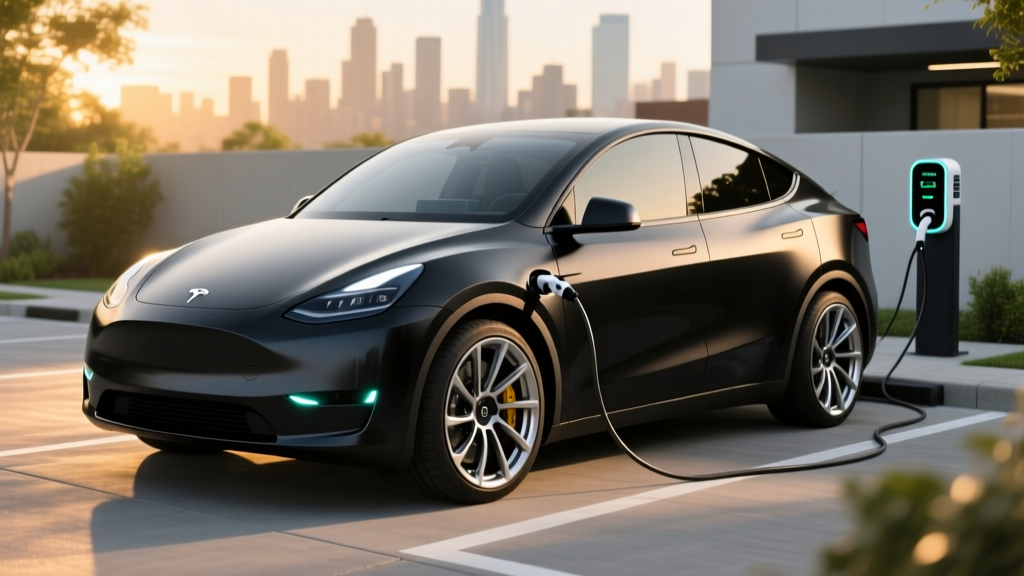
Booking a Tesla test drive is not the same as walking into a traditional dealership. Tesla sells direct, which means no haggling with a salesperson on a commission — but it also means the process is entirely digital-first. If you've been searching how do I test drive a Tesla, this guide walks you through the exact steps, what to expect behind the wheel, and the hard numbers you need to evaluate whether a Model 3, Model Y, Model S, or Model X is the right EV for your garage.
How to Schedule a Tesla Test Drive in 2026
Tesla offers demo drives through its website and at most gallery and service-center locations. Here is the current process:
- Visit tesla.com/drive and select your nearest location.
- Choose a model — availability varies by store inventory. Model 3 and Model Y are the most widely available; Model S and X may require an appointment at select locations.
- Select a date and time. Slots are typically 15–30 minutes and fill up on weekends.
- Bring a valid driver's license. No trade-in appraisal or financing paperwork is required upfront.
- Arrive 10 minutes early. A Tesla Advisor (not a commissioned salesperson) will walk you through the vehicle and accompany you on a predetermined route.
Pro tip: If a Tesla store is not nearby, check whether a mobile demo event is scheduled in your area. Tesla periodically brings vehicles to shopping centers and community events in underserved markets. You can also request a "Demo Drive" delivery to your home in some metro areas — availability is limited but expanding.
Tesla Lineup at a Glance: 2026 Specs Comparison
Before you test drive, know the numbers. The table below summarizes the current 2026 lineup with EPA-verified figures and manufacturer data. Always confirm the latest specs on fueleconomy.gov, as mid-year revisions do occur.
| Spec | Model 3 Long Range AWD | Model Y Long Range AWD | Model S Dual Motor | Model X Dual Motor |
|---|---|---|---|---|
| EPA Range | 341 mi | 320 mi | 402 mi | 335 mi |
| Battery (usable) | ~75 kWh (NMC) | ~75 kWh (NMC) | ~95 kWh (NMC) | ~95 kWh (NMC) |
| Peak DC Fast Charge | 250 kW | 250 kW | 250 kW | 250 kW |
| 10–80% DCFC Time | ~27 min | ~27 min | ~30 min | ~31 min |
| Level 2 Home Charge | 11.5 kW (~44 mi/hr) | 11.5 kW (~44 mi/hr) | 11.5 kW (~34 mi/hr) | 11.5 kW (~30 mi/hr) |
| 0–60 mph | 4.2 sec | 4.8 sec | 3.1 sec | 3.8 sec |
| Horsepower | ~346 hp | ~384 hp | ~670 hp | ~670 hp |
| Drivetrain | Dual Motor AWD | Dual Motor AWD | Dual Motor AWD | Dual Motor AWD |
| EPA Efficiency | 132 MPGe / 25 kWh/100mi | 122 MPGe / 27 kWh/100mi | 124 MPGe / 27 kWh/100mi | 109 MPGe / 31 kWh/100mi |
| Cargo Volume | 23 cu ft (trunk + frunk) | 76 cu ft (seats folded) | 28 cu ft (trunk + frunk) | 88 cu ft (seats folded) |
| Base MSRP | $47,740 | $48,240 | $79,990 | $84,990 |
Real-World Range: What the EPA Sticker Doesn't Tell You
EPA Range vs. Reality: The EPA sticker assumes a mixed city/highway cycle at moderate temperatures. In real-world driving, expect the following adjustments:
- Highway cruising (75 mph): Subtract 10–15%. A Model 3 LR rated at 341 mi will deliver roughly 290–305 mi at sustained interstate speeds.
- Cold weather (below 32°F): Subtract 20–30% due to cabin heating and reduced battery efficiency. That same Model 3 may return 240–270 mi in winter conditions.
- City / stop-and-go: Range often exceeds the EPA figure thanks to regenerative braking recapturing energy.
During your test drive, pay attention to the energy graph on the touchscreen. Tesla's onboard trip planner uses real-time consumption data and is one of the most accurate range predictors in the industry — far more reliable than the static EPA number for your specific route.
Charging Speed and Infrastructure: What to Expect
Tesla's Supercharger network remains the gold standard for DC fast charging reliability, with over 6,000 stalls across North America. Here is what charging actually looks like across all three levels:
| Charging Level | Power (kW) | Miles Added per Hour | Typical Use Case |
|---|---|---|---|
| Level 1 (120V outlet) | ~1.4 kW | ~3–5 mi/hr | Emergency / trickle top-off |
| Level 2 (240V home / destination) | 11.5 kW (48A) | ~30–44 mi/hr | Daily overnight charging |
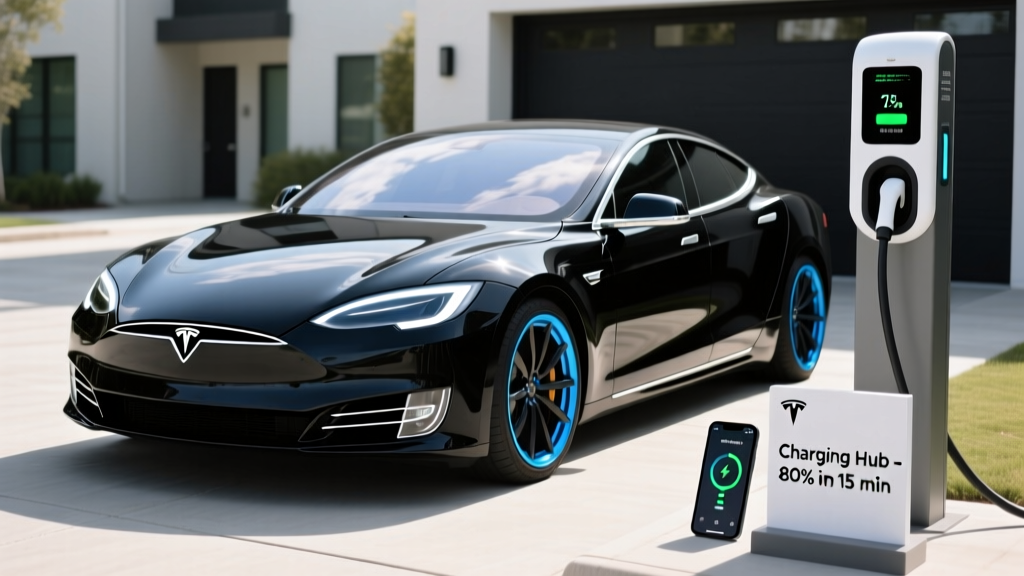
| DC Fast Charge (V3 Supercharger) | Up to 250 kW | ~170 mi in 15 min | Road trips, quick top-ups |
Charging-curve reality check: Peak 250 kW is only sustained between roughly 10–30% State of Charge (SoC). Above 50%, the rate tapers significantly — expect ~100 kW by 60% and ~50 kW above 80%. This is why Tesla quotes 10–80% times (~27 minutes for Model 3/Y) rather than 0–100%. On your test drive, ask the advisor to show you a Supercharger stop if one is nearby — preconditioning the battery en route is automatic when you navigate to a Supercharger, and it makes a measurable difference in charge speed.
NACS connector note: All Teslas use the North American Charging Standard (NACS) connector natively. With the industry-wide adoption of NACS by Ford, GM, Rivian, and others through 2025–2026, Tesla owners now have the broadest fast-charging compatibility without adapters.
Pricing, Trims, and Federal Tax Credit Eligibility
Tesla pricing shifts frequently — sometimes multiple times per quarter. Below is the current MSRP structure and how the federal EV tax credit factors in. For the latest rules, always verify on IRS.gov §30D.
| Model / Trim | Base MSRP | MSRP Cap (§30D) | Income Cap (MAGI) | Max Credit | Est. After-Credit Price |
|---|---|---|---|---|---|
| Model 3 RWD | $39,990 | $55,000 (sedans) | $150K single / $300K joint | Up to $7,500* | ~$32,490 |
| Model 3 Long Range AWD | $47,740 | $55,000 (sedans) | $150K single / $300K joint | Up to $7,500* | ~$40,240 |
| Model Y Long Range AWD | $48,240 | $80,000 (SUVs/trucks) | $150K single / $300K joint | Up to $7,500* | ~$40,740 |
| Model S Dual Motor | $79,990 | $55,000 (sedans) | — | $0 (over cap) | $79,990 |
| Model X Dual Motor | $84,990 | $80,000 (SUVs) | — | $0 (over cap) | $84,990 |
*Critical sourcing caveat: The full $7,500 credit splits into two halves — $3,750 for critical-minerals sourcing and $3,750 for battery-component manufacturing, both with phase-in thresholds that tighten each year. As of 2026, battery components must be 100% manufactured or assembled in North America, and critical minerals must meet escalating domestic/free-trade-agreement percentages. Tesla's Fremont and Austin battery sourcing has historically qualified for both halves on Model 3 and Model Y, but confirm the exact credit amount at point of sale, as supply-chain changes can shift eligibility. The credit can now be transferred to the dealer at point of sale, reducing your purchase price directly rather than waiting for a tax-season refund.
Warranty, Battery Longevity, and Ownership Costs
Tesla's warranty structure is straightforward but worth understanding before you sign:
- Basic Vehicle Limited Warranty: 4 years / 50,000 miles, whichever comes first.
- Battery & Drive Unit Warranty: 8 years / 120,000 miles (Model 3/Y) or 8 years / 150,000 miles (Model S/X). Tesla guarantees the battery will retain at least 70% of its original capacity during this period.
- Battery chemistry note: Model 3 RWD uses LFP (lithium iron phosphate) chemistry, which tolerates daily 100% charging and has a longer cycle life but lower energy density. Long Range and Performance trims use NMC (nickel manganese cobalt), which Tesla recommends charging to 80% daily for longevity.
Real-world degradation data from Tesla's 2025 Impact Report shows average battery capacity retention of ~88% at 150,000 miles across the fleet. Out-of-warranty battery replacement costs range from $8,000–$16,000 depending on the pack, though most Tesla batteries outlast the vehicle itself.
Technology, Autopilot, and What to Evaluate on Your Test Drive
SAE Automation Level: Level 2. Tesla's Autopilot and Full Self-Driving (Supervised) are driver-assistance systems — not autonomous driving. You must keep your hands on the wheel and eyes on the road at all times. The vehicle can steer, accelerate, and brake within its lane, but it does not handle all driving scenarios. Only Level 4 services like Waymo operate without a human driver in defined areas.
During your test drive, focus on these Tesla-specific features:
- One-pedal driving: Tesla's regenerative braking is aggressive. Practice modulating the accelerator — you can come to a near-complete stop without touching the brake pedal. This takes 10–15 minutes to build muscle memory.
- Autopilot on a highway on-ramp: Ask the advisor to activate Autopilot on a divided road. Note the steering smoothness, lane-centering confidence, and how the system handles curves.
- Touchscreen-first interface: Nearly all vehicle controls — mirrors, glovebox, wipers, climate — are buried in the 15.4-inch touchscreen. Some buyers love the minimalism; others find it distracting. Spend at least 5 minutes navigating menus during your drive.
- Over-the-air updates: Tesla pushes software updates that can add range, improve charge speed, or introduce new features. Your 2026 Model 3 will not be the same software product in 2028.
Notable drawbacks: Tesla has eliminated ultrasonic sensors and radar in favor of Tesla Vision (camera-only). Parking-assist accuracy has improved but still trails ultrasonic-based systems from competitors. The absence of Apple CarPlay and Android Auto is a dealbreaker for some — Tesla's native navigation and media apps are robust, but phone mirroring is not supported.
Pros, Cons, and Who Should Buy a Tesla
Pros
- Supercharger network — most reliable DC fast-charging infrastructure in North America
- Class-leading efficiency — Model 3 achieves 132 MPGe combined
- OTA updates — vehicle improves over time without dealer visits
- Strong resale value relative to non-Tesla EVs
- Direct sales model — no dealer markups or negotiation games
- Expanding NACS ecosystem — your charger is now everyone's charger
Cons
- Touchscreen-dependent controls can distract while driving
- No Apple CarPlay or Android Auto
- Camera-only parking assist less precise than ultrasonic competitors
- Build-quality variability — panel gaps still reported on some deliveries
- FSD (Supervised) costs $8,000 or $99/mo and remains Level 2 — not self-driving
- Limited service-center density in rural areas
Choose Tesla If…
- You're a daily commuter who can charge at home and wants minimal fuel cost (~$0.04–$0.06/mi on residential electricity).
- You road-trip regularly and want the most seamless long-distance charging experience available.
- You're a tech-forward buyer who values OTA updates and a software-centric vehicle.
Look Elsewhere If…
- You need Apple CarPlay — Hyundai Ioniq 5, Ford Mustang Mach-E, and BMW i4 all support it.
- You want a traditional dealer experience with in-person service and trade-in negotiation.
- You tow heavy loads — the Cybertruck handles towing better than any current Model Y/S/X.
Frequently Asked Questions
What is the real-world range of a Tesla Model 3 or Model Y?
The EPA rates the 2026 Model 3 Long Range AWD at 341 miles and the Model Y Long Range AWD at 320 miles. In real-world highway driving at 75 mph, expect roughly 290–305 miles for the Model 3 and 270–290 miles for the Model Y. In freezing temperatures, subtract another 20–30% due to cabin heating and battery resistance. Tesla's onboard trip planner adjusts predictions based on your actual driving, terrain, and weather — it is generally more accurate than the static EPA figure.
How fast does a Tesla charge at home and on the road?
At home on a 240V Level 2 charger (11.5 kW / 48A), a Model 3 or Model Y adds roughly 44 miles of range per hour — enough to fully recharge overnight from any daily driving. On a V3 Supercharger (250 kW DC), you can add up to 170 miles in 15 minutes, with a 10–80% session taking approximately 27 minutes. Charging speed tapers significantly above 80% SoC to protect battery health.
How much does a Tesla cost after the federal tax credit?
The Model 3 RWD starts at $39,990 and may qualify for up to $7,500 under IRS §30D, bringing the effective price to roughly $32,490. The Model Y Long Range starts at $48,240, also eligible for up to $7,500, netting approximately $40,740. Eligibility depends on buyer income (MAGI under $150K single / $300K joint), MSRP caps ($55K for sedans, $80K for SUVs), and battery-component/critical-mineral sourcing requirements. The credit can be applied at point of sale. Model S and X exceed MSRP caps and do not qualify.
Is a Tesla worth buying versus competitors like the Hyundai Ioniq 5 or Ford Mustang Mach-E?
Tesla's advantages are the Supercharger network, class-leading efficiency, and continuous OTA improvements. The Ioniq 5 charges faster on 350 kW CCS chargers (10–80% in ~18 min vs Tesla's ~27 min) and offers Apple CarPlay. The Mach-E provides a more traditional interior layout and dealer-service network. If Supercharger access is your priority, Tesla still wins. If you prefer CarPlay, physical buttons, or faster peak charging, competitors are compelling alternatives.
Does the Tesla Model 3 or Model Y qualify for the federal EV tax credit?
Yes — both the Model 3 and Model Y have historically qualified for the full $7,500 federal tax credit under §30D, subject to buyer income limits, MSRP caps, and battery-sourcing requirements that tighten annually. Tesla's North American battery manufacturing and sourcing have generally met the thresholds, but always confirm eligibility at the time of purchase on IRS.gov or through Tesla's point-of-sale credit transfer process.
Do I need to charge to 100% every day?
No. For NMC battery packs (Long Range and Performance trims), Tesla recommends setting the daily charge limit to 80% and only charging to 100% when you need full range for a trip. LFP packs (Model 3 RWD) tolerate daily 100% charging and Tesla actually recommends calibrating to 100% at least weekly for accurate range estimation.
Can I test drive a Tesla if there's no store near me?
Tesla occasionally hosts mobile demo events in cities without permanent galleries. You can also check for "Demo Drive" home-delivery availability in select metro areas through tesla.com/drive. As a last resort, many Tesla owners in EV-focused communities (Reddit, local EV clubs) are willing to let prospective buyers experience a passenger ride, though this is not a substitute for a supervised official test drive.