If you've just slid into the driver's seat of a Tesla Model 3 for the first time, you might be looking around for a start button, an ignition slot, or a key to turn. There isn't one. Tesla's approach to starting and driving its vehicles is deliberately minimalist — and it confuses nearly every first-time driver. This guide walks you through exactly how to start a Tesla Model 3, then dives deep into the 2026 model's real-world range, charging speeds, pricing, tax-credit eligibility, and how it stacks up against the competition.
How to Start a Tesla: Step-by-Step for Every Model 3 Variant
Starting a Tesla Model 3 is less about "starting" and more about waking the car up and putting it in gear. Here's the sequence for the current-generation (Highland refresh and later) Model 3:
- Unlock the vehicle. Use the Tesla phone app (Bluetooth key), a key card tapped on the B-pillar, or a key fob (if equipped). The door handles present automatically, and the car powers on its low-voltage systems.
- Sit in the driver's seat and press the brake pedal. This is the equivalent of turning the ignition. The central touchscreen wakes fully, instrument data appears on the driver display (or the center screen on older trims), and the car is now "on" — though you'll hear no engine noise.
- Select Drive. Use the column-mounted gear selector stalk (push down for Drive, push up for Reverse, press the end button for Park). On newer Model 3 Highland variants with no physical stalk, swipe on the touchscreen gear selector or use the overhead console buttons.
- Release the brake and press the accelerator. The car moves. There is no idle creep by default unless you enable "Creep" mode in the driving settings.
- To "turn off" the vehicle: Simply shift into Park, exit the car, and walk away with your phone key. The Model 3 powers down automatically. You can also tap Controls → Safety → Power Off on the touchscreen if you're sitting inside and want to shut down systems manually.
That's it. No start button, no ignition sequence, no engine warm-up. The car is always in a low-power standby state, much like a smartphone. This applies to the Model 3 Rear-Wheel Drive, Long Range AWD, and Performance variants alike.
2026 Tesla Model 3: Specs at a Glance
| Spec | RWD (Standard Range) | Long Range AWD | Performance |
|---|---|---|---|
| EPA Range | 272 mi | 341 mi | 315 mi |
| Battery (usable) | ~60 kWh (LFP) | ~75 kWh (NMC) | ~75 kWh (NMC) |
| Drivetrain | Rear-Wheel Drive | Dual-Motor AWD | Dual-Motor AWD |
| Horsepower | 271 hp | 346 hp | 510 hp |
| 0-60 mph | 5.8 sec | 4.2 sec | 2.9 sec |
| Max DC Fast Charge | 170 kW | 250 kW | 250 kW |
| 10-80% DCFC Time | ~25 min | ~25 min | ~25 min |
| Level 2 Home Charge | ~44 mi/hr (11.5 kW) | ~44 mi/hr (11.5 kW) | ~44 mi/hr (11.5 kW) |
| MPGe (combined) | 132 MPGe | 131 MPGe | 119 MPGe |
| kWh/100 mi | 25 | 26 | 28 |
| Base MSRP | $38,990 | $45,990 | $52,990 |
Real-World Range: What the EPA Numbers Don't Tell You
EPA Sticker: 272 mi (RWD) / 341 mi (Long Range) / 315 mi (Performance)
Highway (75 mph, moderate climate): Expect ~230 mi (RWD) / ~285-300 mi (Long Range) / ~265 mi (Performance)
Cold Weather (below 32°F, mixed driving): Subtract 20-30% — the Long Range drops to ~240-270 mi; the RWD LFP variant may see a steeper ~30% drop due to LFP chemistry being less tolerant of cold without preconditioning.
Tesla's EPA range estimates remain among the more accurate in the industry, but real-world results depend heavily on driving style, terrain, and temperature. According to data from fueleconomy.gov, the Model 3 Long Range AWD achieves 131 MPGe combined (26 kWh/100 mi), which is excellent efficiency for a dual-motor sedan.
On sustained highway runs at 70-75 mph, the Model 3 Long Range typically delivers 285-300 miles before needing a charge — roughly 15% below its EPA sticker. This is normal: EPA testing cycles include significant city driving where regenerative braking recaptures energy. Highway-only driving is the worst-case scenario for any EV.
The LFP (lithium iron phosphate) battery in the RWD variant has a key advantage: Tesla recommends charging it to 100% regularly, unlike the NMC batteries in the Long Range and Performance trims where 80-90% daily charging is recommended to preserve longevity. This means the RWD's 272-mile EPA range is fully usable every day, whereas the Long Range's 341 miles is best treated as 270-310 miles of daily usable range (at 80-90% SoC).
Charging Speed: DC Fast Charging and Home Level 2
Charging speed is where the Model 3's maturity shows. Tesla's Supercharger network remains the gold standard for reliability and speed, and the Model 3 takes full advantage.
| Charging Level | Power / Voltage | Miles Added per Hour | Notes |
|---|---|---|---|
| Level 1 (120V outlet) | ~1.4 kW | ~3-5 mi/hr | Emergency/trickle only |
| Level 2 (240V, 48A) | 11.5 kW | ~44 mi/hr | Full charge in ~7-8 hrs (Long Range) |
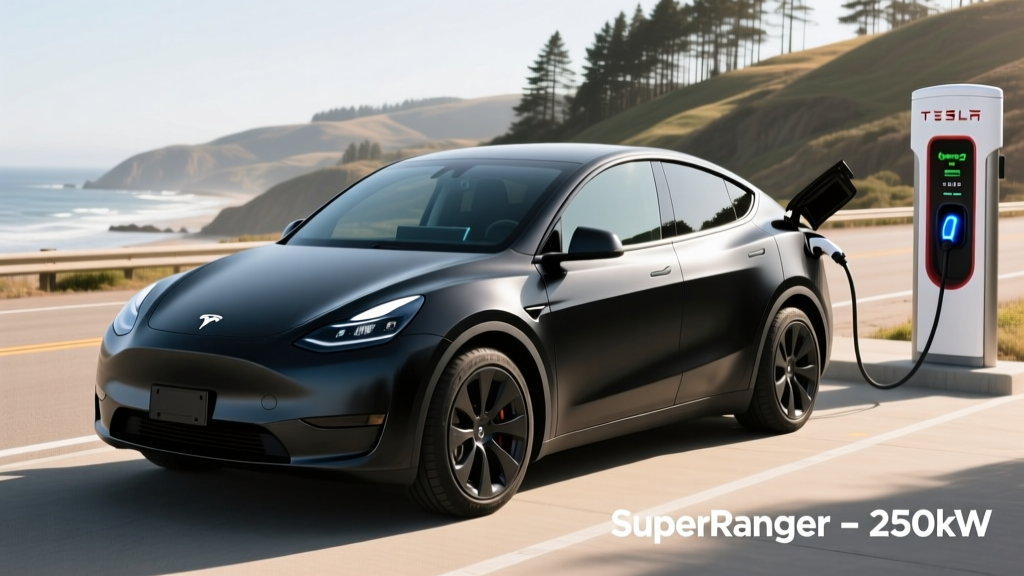
| DC Fast (Supercharger V3) | Up to 250 kW peak | ~175 mi in 15 min | 10-80% in ~25 min; tapers above 80% |
| DC Fast (Supercharger V4) | Up to 250 kW (vehicle-limited) | Similar to V3 | Newer stations with cable management improvements |
Understanding the charge curve: The Model 3 Long Range peaks at 250 kW but only sustains that rate briefly, typically between 10-30% State of Charge (SoC). From 30-60%, it holds roughly 150-180 kW. Above 80%, speed drops sharply to under 50 kW as the battery management system protects cell health. This is why Tesla's navigation system routes you to arrive at Superchargers at a low SoC — preconditioning the battery (heating it to optimal temperature) is critical for hitting peak charge rates, especially in cold weather.
The RWD model's LFP battery charges at a lower peak of 170 kW on DC fast charging, making its 10-80% time slightly longer at roughly 25-28 minutes. LFP cells charge more linearly but at a lower peak rate — a trade-off for their longer cycle life and lower cost.
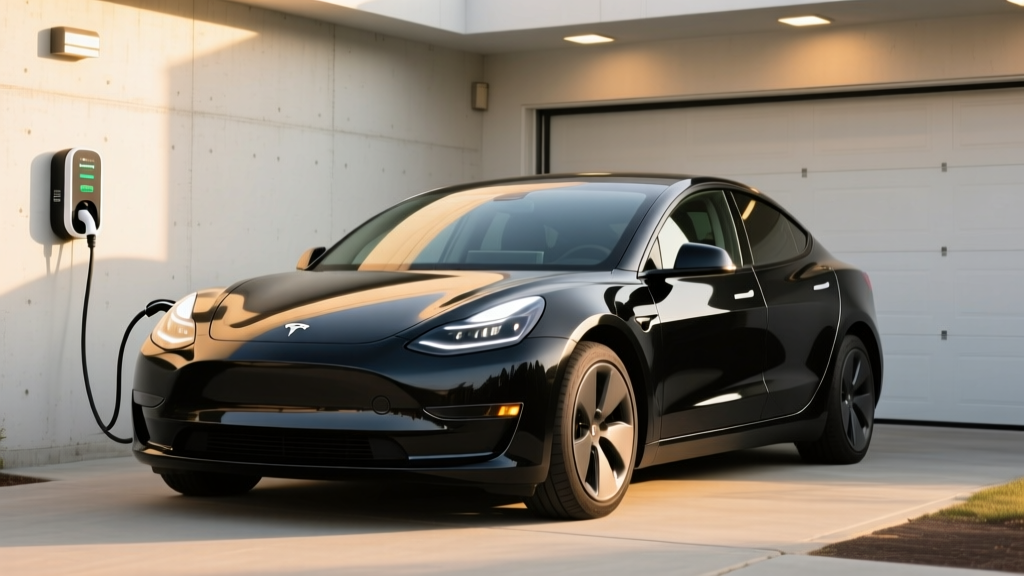
At home on a 240V Level 2 wall connector (48 amps), all Model 3 variants add roughly 44 miles of range per hour of charging. A full overnight charge from 20% to 80% takes about 5-6 hours, which is more than adequate for daily driving. Tesla's Wall Connector costs around $475, and professional installation typically runs $500-$1,500 depending on your electrical panel's capacity — budget more if you need a 200-amp panel upgrade.
Pricing, Trims, and Federal Tax Credit Eligibility
The 2026 Model 3 lineup starts at $38,990 for the RWD variant, making it one of the most affordable premium electric sedans on the market. Here's how the pricing breaks down, including potential savings from the federal EV tax credit under IRS §30D:
| Trim | Base MSRP | Federal Credit (max) | Effective Price |
|---|---|---|---|
| RWD | $38,990 | Up to $7,500* | From ~$31,490* |
| Long Range AWD | $45,990 | Up to $7,500* | From ~$38,490* |
| Performance | $52,990 | Up to $7,500* | From ~$45,490* |
*Critical tax credit caveats: The §30D credit has multiple requirements that change periodically. As of 2026, per IRS guidelines, eligibility depends on:
- Buyer income caps: Modified AGI must not exceed $150,000 (single) / $300,000 (joint filing)
- MSRP cap: The vehicle's MSRP must be at or below $55,000 for sedans (all Model 3 trims qualify)
- Battery sourcing: Critical minerals and battery components must meet escalating domestic-content thresholds that tighten annually — check Tesla's website and the IRS clean vehicle credit page for current Model 3 eligibility, as sourcing requirements may affect the credit amount quarter by quarter
- Point-of-sale transfer: Buyers can transfer the credit to Tesla at purchase for an immediate price reduction rather than waiting to claim it on their tax return
Always verify current eligibility before purchasing — battery sourcing rules are the most volatile factor and can change a vehicle's credit qualification from one quarter to the next.
Performance, Interior, and Technology
The Model 3 continues to set the benchmark for driving dynamics in the affordable EV sedan segment. Even the base RWD model hits 60 mph in 5.8 seconds — quicker than most turbocharged gas sedans in its price range. The Performance variant's 2.9-second 0-60 time puts it in supercar territory for roughly $53,000 before incentives.
The Highland refresh (introduced for 2024 and carried forward) brought meaningful interior upgrades:
- Ventilated front seats — a welcome addition for warm climates
- Ambient lighting with customizable color zones
- Improved cabin insulation — road and wind noise are noticeably reduced over pre-2024 models
- Rear-seat touchscreen (8 inches) for climate and entertainment control
- 15.4-inch central touchscreen handling all infotainment, navigation, and vehicle settings
Cargo and passenger space: The Model 3 offers 23 cubic feet of trunk space (including the front trunk/frunk), which is competitive with midsize sedans. Rear legroom measures 35.2 inches — adequate for adults under 6 feet but tighter than a Hyundai Ioniq 6 or BMW i4. The glass roof creates an airy cabin but offers no retractable shade, which can make the interior warm in direct summer sun.
Driver assistance: Tesla's Basic Autopilot comes standard and includes adaptive cruise control, lane centering, and automatic emergency braking. Full Self-Driving (Supervised) remains a $8,000 option or $99/month subscription. It is critical to understand that FSD is a SAE Level 2 driver-assist system — it does not make the car self-driving, and the driver must remain fully attentive at all times. Tesla's camera-only vision approach (no LiDAR or radar) continues to draw scrutiny from NHTSA regarding its safety performance in edge cases.
Warranty and Long-Term Ownership
Tesla's warranty structure is straightforward:
- Basic Vehicle Limited Warranty: 4 years / 50,000 miles
- Battery & Drive Unit Warranty (RWD): 8 years / 100,000 miles, with at least 70% capacity retention
- Battery & Drive Unit Warranty (Long Range & Performance): 8 years / 120,000 miles, with at least 70% capacity retention
The 70% retention threshold is standard across the industry. Real-world data from high-mileage Tesla owners suggests Model 3 batteries typically retain 85-90% capacity after 100,000 miles, though LFP batteries in the RWD model may show different degradation curves than NMC packs. LFP chemistry generally offers longer cycle life (3,000+ full cycles vs. ~1,500 for NMC) but slightly lower energy density, which is why the RWD has a smaller battery and shorter range.
Insurance costs remain a consideration: the Model 3 typically carries premiums 15-25% higher than a comparably priced gas sedan, though Tesla's own insurance program (available in most states) uses real-time driving data to offer competitive rates for safe drivers.
Pros and Cons: The Honest Verdict
- Best-in-class Supercharger network access (now with NACS adapter compatibility for third-party networks)
- Class-leading efficiency (25-28 kWh/100 mi)
- Over-the-air updates continuously add features
- Minimal maintenance costs (no oil changes, fewer brake replacements due to regen)
- Strong resale value relative to most EVs
- 250 kW peak DC charging on Long Range/Performance
- No physical gear stalk on newest Highland variants (screen-based selector)
- Rear-seat space is snug for tall passengers
- No Apple CarPlay or Android Auto — Tesla's native system only
- FSD (Supervised) is expensive and still requires full driver attention
- Turn-signal buttons on steering wheel (Highland) are divisive vs. traditional stalks
- RWD LFP variant has slower DC fast charging (170 kW peak)
Is the Model 3 Worth It vs. the Competition?
The Model 3's closest competitors include the Hyundai Ioniq 6 (361-mi EPA range, 800V architecture for ultra-fast 10-80% charging in ~18 min), the BMW i4 (more luxurious interior, ~307-mi range, higher price), and the Polestar 2 (competitive range, Google-based infotainment). The Ioniq 6 charges faster on compatible 350 kW chargers and offers more rear-seat room, but lacks Tesla's Supercharger ecosystem. The BMW i4 wins on interior refinement and driving feel but costs significantly more.
The Model 3 wins on total cost of ownership for most buyers: low purchase price after incentives, outstanding efficiency, minimal maintenance, and the most reliable DC fast-charging network in North America. If you prioritize back-seat comfort or want Apple CarPlay, the Ioniq 6 deserves a serious look. If you want a premium badge and build quality, the i4 is compelling. But for a daily-driver EV sedan that nails the fundamentals — range, charging, and software — the Model 3 remains the default recommendation.
Frequently Asked Questions
Do I need to press a button to start a Tesla Model 3?
No. Simply sit in the driver's seat with your phone key or key card authenticated, press the brake pedal, and the car powers on. Select Drive using the gear selector (stalk or touchscreen, depending on model year), and you're ready to go.
What happens if my Tesla's 12V battery dies?
The Model 3 uses a 16V lithium low-voltage battery (on Highland models) or a traditional 12V lead-acid battery (pre-2024). If this battery is depleted, you cannot unlock or start the car normally. Tesla provides a 12V jump-start access point behind the front bumper tow-eye cover. Keep a portable lithium jump-starter in the trunk for emergencies.
What is the real-world range of the Tesla Model 3 Long Range?
The EPA rates it at 341 miles. In real-world highway driving at 70-75 mph in moderate temperatures, expect 285-300 miles. In cold weather (below freezing), plan for 240-270 miles due to battery resistance and cabin heating demands.
How fast does the Model 3 charge at home?
On a 240V Level 2 Tesla Wall Connector (48 amps / 11.5 kW), the Model 3 adds approximately 44 miles of range per hour. A typical overnight session from 20% to 80% takes about 5-6 hours.
Does the 2026 Tesla Model 3 qualify for the federal EV tax credit?
It can, but eligibility depends on your income (under $150K single / $300K joint), the vehicle's MSRP (all Model 3 trims fall under the $55,000 sedan cap), and current battery-sourcing requirements per IRS §30D rules. Always check IRS.gov and Tesla's website for the latest quarter's sourcing compliance status before purchasing.
Is Tesla's Full Self-Driving worth the cost?
For most drivers, no — at $8,000 or $99/month, FSD (Supervised) remains a Level 2 system requiring constant driver attention. Basic Autopilot (included free) handles highway cruising well. Consider the monthly subscription if you want to test the feature without a large upfront commitment, but do not expect autonomous driving capability.