If you've landed here searching how to short Tesla stock, you likely already know TSLA is one of the most heavily debated equities on the market. But before you open a margin account and place a bet against Elon Musk's flagship automaker, it pays to understand the actual product on the ground — the vehicles that generate Tesla's revenue. As someone who has owned, charged, and road-tripped multiple Tesla models, I'll walk you through the 2026 Tesla Model Y — the company's global volume leader — with the exact numbers, real-world caveats, and ownership realities that Wall Street analysts often gloss over. Whether you're a bear looking for fundamental cracks or a buyer weighing the Model Y against the competition, this deep-dive gives you the data to make an informed move.
2026 Tesla Model Y: The Quick Verdict
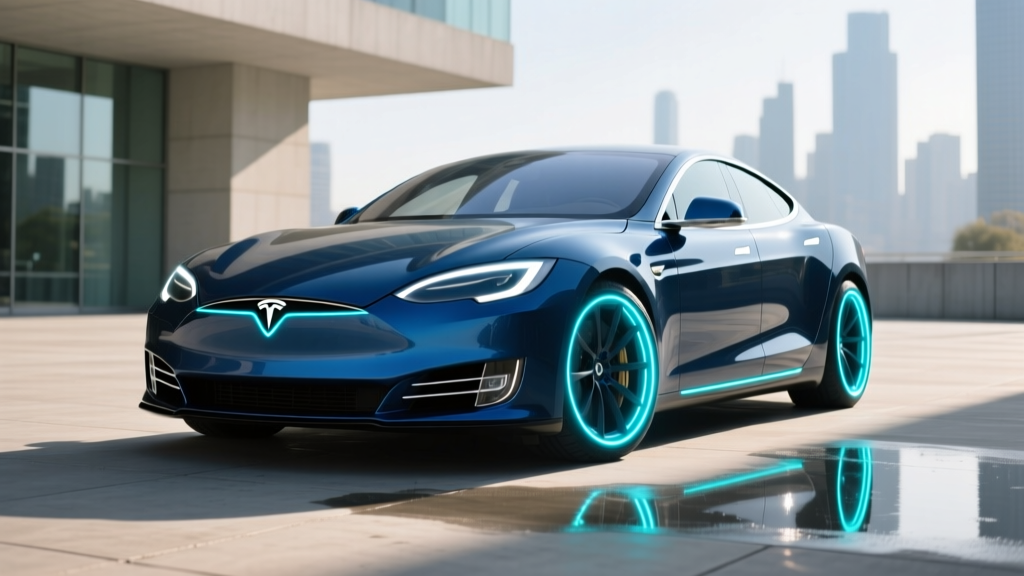
The 2026 Tesla Model Y (refreshed internally as the "Juniper" update that debuted in mid-2025) remains the best-selling electric vehicle globally by volume. It's faster to charge, quieter, and more refined than the pre-refresh versions — but it faces legitimate competition from the Hyundai Ioniq 5, Ford Mustang Mach-E, and Chevrolet Equinox EV that didn't exist at this scale a few years ago. For short-sellers, the question isn't whether the Model Y is a good EV — it is — but whether Tesla's margins, market share, and valuation multiples can hold against a wave of sub-$40,000 rivals.
| EPA Range | 320 miles |
| Battery (usable) | 75 kWh, NMC (Nickel Manganese Cobalt) |
| Peak DC Fast Charge | 250 kW (Supercharger V4) |
| 10–80% DC Charge Time | ~25 minutes |
| Level 2 Home Charge | 11.5 kW / ~44 mi/hr |
| 0–60 mph | 4.8 seconds |
| Horsepower | 384 hp (dual-motor AWD) |
| MPGe (combined) | 117 MPGe / 29 kWh/100mi |
| Base MSRP | $44,990 (Long Range AWD) |
| Battery Warranty | 8 years / 120,000 miles |
Real-World Range: What the EPA Sticker Doesn't Tell You
The EPA rates the 2026 Model Y Long Range AWD at 320 miles. That number is achievable under ideal conditions — moderate temperatures (60–75°F), mixed city/highway driving at or under 65 mph, with climate control set conservatively. But real-world range is rarely ideal.
EPA sticker: 320 miles
Highway (70–80 mph, moderate weather): ~265–285 miles
Cold weather (below 30°F, highway): ~220–250 miles (20–30% reduction)
City driving with regen: ~300–320 miles (regen recaptures energy in stop-and-go)
Source: fueleconomy.gov and owner-reported data. Cold-weather losses are inherent to lithium-ion chemistry — the battery's internal resistance increases in low temperatures, and cabin heating draws significant power even with Tesla's standard heat pump.
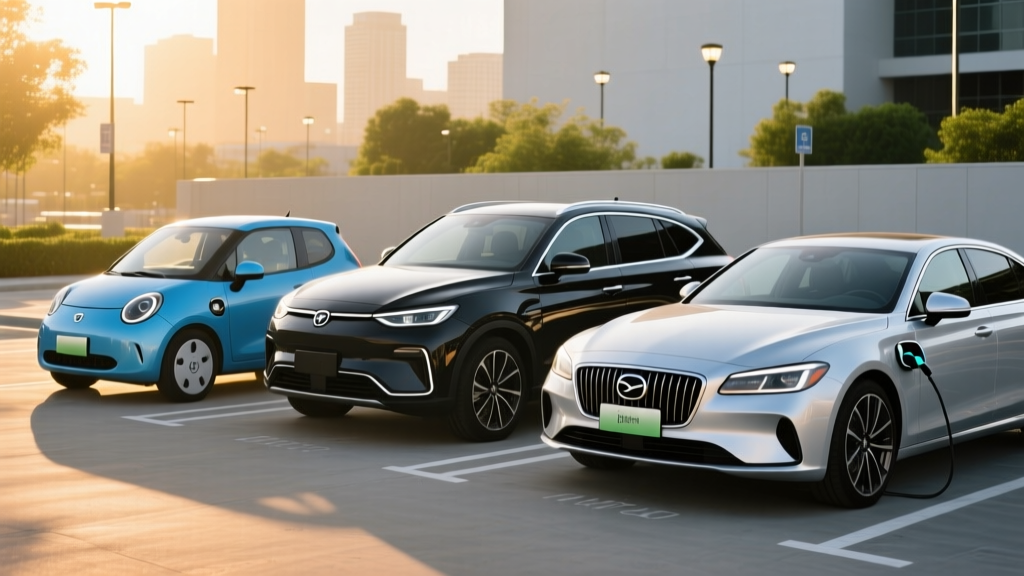
For short-sellers evaluating Tesla's competitive position, range matters because rivals have closed the gap. The Hyundai Ioniq 5 (Long Range AWD) delivers an EPA 320 miles on a slightly larger 77.4 kWh battery, while the Chevrolet Equinox EV 3RS hits 319 miles at a significantly lower starting price. Tesla's efficiency advantage — once a wide moat — is now merely competitive, not dominant.
Charging Speed: Supercharger Network vs. the Competition
Charging speed remains one of Tesla's strongest competitive advantages, though the moat is narrowing as the North American Charging Standard (NACS) opens Supercharger access to Ford, Rivian, and GM vehicles.
| Level | Power | Speed | Notes |
|---|---|---|---|
| Level 1 (120V household) | 1.4 kW | ~4 mi/hr | Emergency/trickle only; 80+ hrs for full charge |
| Level 2 (240V home, Wall Connector) | 11.5 kW | ~44 mi/hr | Full charge in ~7 hrs; requires 60A circuit |
| DC Fast Charge (Tesla Supercharger V4) | Peak 250 kW | 10–80% in ~25 min | Charge curve tapers sharply above 80%; sustained avg ~150 kW |
| DC Fast Charge (3rd-party CCS via adapter) | Up to 150–250 kW | 10–80% in ~28–35 min | Depends on station; Electrify America, EVgo compatible |
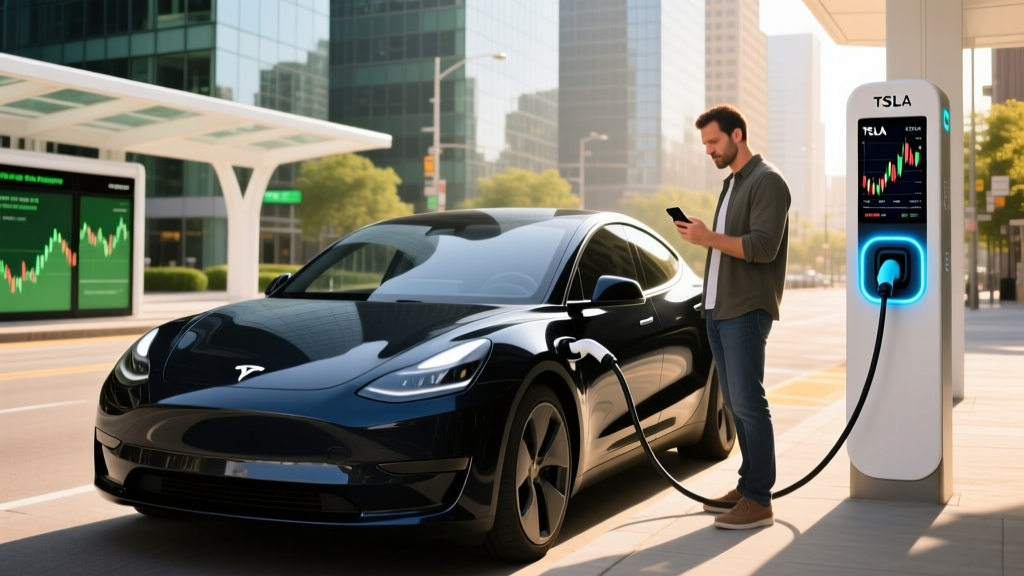
Key ownership insight: Peak kW is not sustained kW. The Model Y hits 250 kW only briefly between roughly 10–30% State of Charge (SoC). From 30–60%, it sustains around 150–180 kW, and from 60–80%, it drops to 80–100 kW. This charge-curve taper is standard for NMC chemistry — Tesla manages it well with battery preconditioning (the car warms the pack when navigating to a Supercharger), but you won't see 250 kW for the full session. On a road trip, plan stops around the 10–80% window for the fastest throughput.
For investors eyeing TSLA downside: the Supercharger network was once an exclusive Tesla moat. With NACS adoption, Ford F-150 Lightning and Rivian R1S owners now access V3 and V4 stalls. That's good for the EV ecosystem but erodes a key reason buyers chose Tesla specifically.
Performance and Driving Dynamics
The 2026 Model Y Long Range AWD uses a dual-motor setup — an induction motor up front and a permanent-magnet synchronous motor in the rear — producing a combined 384 horsepower and a 4.8-second 0–60 mph time. That's brisk for a family crossover and quicker than the Mach-E Premium AWD (5.1 sec) or Ioniq 5 AWD (5.0 sec).
The Juniper refresh improved ride quality substantially. Tesla retuned the suspension, added acoustic glass, and improved seat cushioning — addressing the two most common complaints from 2023–2024 owners (harsh ride and road noise). The result is a car that finally feels like it matches its price tag in refinement.
The Performance trim ($49,990) drops the 0–60 to 3.5 seconds with 456 hp, but sacrifices roughly 15 miles of range (EPA 305 mi) and rides on stiffer suspension that most commuters won't appreciate daily.
Pricing, Tax Credits, and What You Actually Pay
| Trim | MSRP | Drivetrain | EPA Range |
|---|---|---|---|
| Long Range RWD | $42,490 | Single-motor RWD | 335 mi |
| Long Range AWD | $44,990 | Dual-motor AWD | 320 mi |
| Performance AWD | $49,990 | Dual-motor AWD | 305 mi |
Federal tax credit (§30D) eligibility for the 2026 Model Y is not a simple "everyone gets $7,500." Under current IRS rules, eligibility depends on:
- MSRP cap: SUVs/vans/pickups must be ≤ $80,000 — all Model Y trims qualify.
- Buyer income cap: Modified AGI must not exceed $150,000 (single), $225,000 (head of household), or $300,000 (joint).
- Battery sourcing: Critical minerals and battery components must meet phased percentage thresholds from US or FTA-partner countries. Tesla sources LFP cells from CATL (China) for the RWD trim, which may disqualify that specific variant from the full credit in 2026. The Long Range AWD uses US-assembled NMC cells and is more likely to qualify for the full $7,500.
- Point-of-sale transfer: Buyers can apply the credit as an immediate dealer discount rather than waiting for a tax refund.
Bottom line for buyers: A qualifying buyer purchasing the Long Range AWD could see an effective price of roughly $37,490 after the full $7,500 credit. Consult a tax professional — rules change, and state incentives (like California's CVRP or Colorado's innovative motor vehicle credit) can stack on top.
For short-sellers: The effective post-credit price of ~$37,500 puts the Model Y directly against the Chevrolet Equinox EV 3RS (~$36,000 after credit) and the Hyundai Ioniq 5 SE (~$39,000 after credit). Tesla's pricing power — once able to command a premium — is under genuine pressure. Gross automotive margins have compressed from a peak of ~28% (2022) to the mid-teens, reflecting these competitive dynamics.
Interior Space, Cargo, and Daily Practicality
The Model Y remains one of the most practical crossovers in its segment:
- Cargo (rear seats up): 30.2 cu ft
- Cargo (rear seats folded): 72.1 cu ft
- Front trunk (frunk): 4.1 cu ft
- Rear legroom: 41.6 inches
- Front headroom: 41.0 inches
- Optional third row: Available but extremely tight — best for children only, and it eliminates most under-floor cargo space.
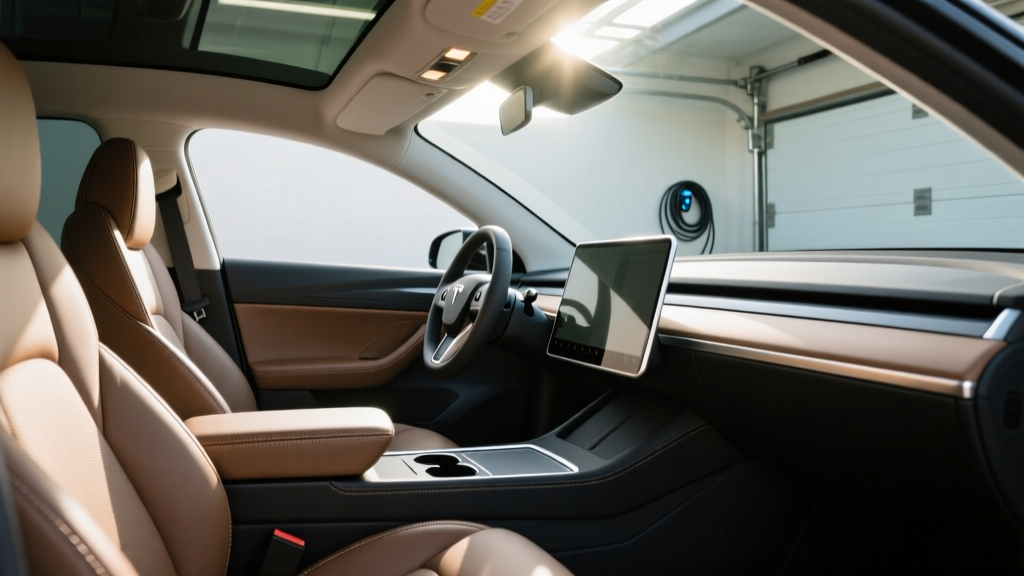
The Juniper refresh moved the turn signal stalks back to the steering column (reversing the controversial 2024 button-only signals) and added a rear-seat touchscreen for climate and media control. These are quality-of-life fixes that address real owner frustrations.
Notable drawback: Tesla's minimalist interior still lacks physical buttons for climate, mirrors, and glovebox — everything routes through the 15.4-inch center touchscreen. Some buyers love the simplicity; others find it distracting while driving. There's also no heads-up display, a feature now standard on the Ioniq 5 and Mach-E at similar price points.
Driver-Assist Tech: Autopilot and FSD Supervised
Tesla's Autopilot (standard) and Full Self-Driving Supervised ($8,000 option or $99/month) are SAE Level 2 driver-assistance systems. They do NOT make the car self-driving. The driver must keep hands on the wheel (or demonstrate attention via the cabin camera), monitor the road, and be prepared to take over immediately. Only Level 4 systems (e.g., Waymo's robotaxi service) operate without a human driver in defined zones.
Autopilot includes adaptive cruise control, lane centering, and automatic emergency braking. It's competent for highway cruising but requires active supervision. FSD Supervised adds automatic lane changes, traffic light/stop sign recognition, and city-street navigation — impressive in well-marked suburban areas but prone to hesitation in complex construction zones, unprotected left turns, and heavy rain.
For investors: FSD revenue (either upfront or subscription) is a high-margin line item for Tesla. But NHTSA continues to scrutinize Level 2 systems, and any regulatory restriction on Tesla's Autosteer or FSD deployment would directly impact both vehicle appeal and software revenue projections.
Warranty and Long-Term Battery Outlook
| Coverage | Terms |
|---|---|
| Basic Vehicle | 4 years / 50,000 miles |
| Battery & Drive Unit | 8 years / 120,000 miles (Long Range/Performance) |
| Battery Capacity Retention | Warranted to retain ≥70% of original capacity during coverage period |
Tesla's NMC batteries have demonstrated strong longevity in practice. Data aggregated from owner reports shows typical degradation of roughly 10–12% over 100,000 miles, with the curve flattening significantly after the initial 20,000-mile break-in period. A full battery replacement out of warranty runs $12,000–$16,000 at current Tesla service pricing — a figure that bears on total cost of ownership calculations.
Compared to Hyundai's industry-leading 10-year/100,000-mile battery warranty, Tesla's 8-year/120,000-mile coverage is competitive but not class-leading. Short-sellers should note that battery warranty claims represent a contingent liability that grows as Tesla's installed fleet ages past the 100,000-mile mark.
Who Should Buy the Model Y — and Who Should Look Elsewhere
- You want the most proven Supercharger network for frequent road trips
- You value over-the-air updates that add features post-purchase
- You want strong performance (4.8s 0–60) in a practical family crossover
- You live in an area with robust Supercharger coverage
- You want physical buttons and a traditional instrument cluster (try Ioniq 5 or Mach-E)
- You need the longest possible warranty (Hyundai: 10yr/100k battery)
- Price is paramount — the Equinox EV undercuts by $5,000+ after incentives
- You need V2L (vehicle-to-load) to power devices from your car — Tesla still doesn't offer it
The Bear Case: What Short-Sellers Should Watch
If you're researching how to short Tesla stock, the vehicle fundamentals tell a nuanced story. The Model Y is a genuinely good EV that's gotten better with the Juniper refresh. But the bear case isn't about whether the car is good — it's about valuation, margin compression, and competitive intensity:
- Margin pressure: Tesla's automotive gross margins (excluding regulatory credits) have declined from ~28% to the mid-teens as price cuts were needed to maintain volume against rivals.
- Market share erosion: In the US, Tesla's BEV market share has slipped from ~65% (2023) to approximately 48–50% (2025–2026), per registration data.
- Supercharger moat erosion: NACS adoption means Ford, GM, Rivian, and others now access Superchargers — reducing a key Tesla-only advantage.
- FSD regulatory risk: Any NHTSA action restricting Autopilot/FSD deployment could impact both vehicle demand and high-margin software revenue.
- Valuation premium: TSLA trades at a significant P/E premium over legacy automakers, pricing in robotaxi revenue, energy storage growth, and AI — none of which are reflected in the Model Y's spec sheet.
The car is solid. The stock's valuation assumes a future that extends well beyond selling vehicles — and that's where the short thesis lives or dies.
Frequently Asked Questions
What is the real-world range of the 2026 Tesla Model Y?
The EPA rates the Long Range AWD at 320 miles. In real-world highway driving at 70–80 mph, expect 265–285 miles. In cold weather (below 30°F), range drops to roughly 220–250 miles due to battery chemistry limitations and cabin heating demands. City driving with regenerative braking can get close to the EPA number.
How fast does the Model Y charge at home and on the road?
At home on a Level 2 Tesla Wall Connector (11.5 kW / 60A circuit), the Model Y adds about 44 miles of range per hour, reaching a full charge in roughly 7 hours. On a Tesla Supercharger V4 (peak 250 kW DC), a 10–80% charge takes approximately 25 minutes, though the charge rate tapers significantly above 60% SoC.
How much does the 2026 Model Y cost after tax credits?
The Long Range AWD starts at $44,990. Qualifying buyers (income under $150K single / $300K joint, and the vehicle meeting battery-sourcing requirements) can receive up to $7,500 via the IRS §30D federal credit, bringing the effective price to roughly $37,490. Always verify current eligibility on irs.gov and consult a tax professional.
Is the Model Y worth buying vs. the Hyundai Ioniq 5 or Ford Mach-E?
The Model Y wins on Supercharger network access, efficiency, and performance-per-dollar. The Ioniq 5 offers a longer warranty (10yr/100k battery), physical buttons, V2L capability, and 800V architecture for faster peak charging at compatible stations. The Mach-E offers a more traditional interior layout and strong handling. Test-drive all three — the "best" depends on your priorities.
Does the 2026 Model Y qualify for the federal EV tax credit?
It depends on the trim and your income. The Long Range AWD with US-assembled NMC cells is likely eligible for the full $7,500 for buyers under the income caps. The RWD variant with imported LFP cells may face reduced credit due to critical-mineral sourcing rules that tightened in 2025–2026. Check the latest DOE/IRS eligible vehicle list before purchasing.
What are the biggest risks of shorting Tesla stock in 2026?
Shorting TSLA carries significant risk beyond vehicle fundamentals. Tesla's energy storage business (Megapack) is growing rapidly and commands higher margins. FSD subscription revenue is high-margin recurring income. Robotaxi announcements (even if Level 4 deployment remains limited) can drive sentiment-driven rallies that squeeze short positions. The stock trades on narrative and future optionality as much as current automotive earnings — making it one of the most dangerous shorts in the market regardless of how good or bad any single vehicle is.