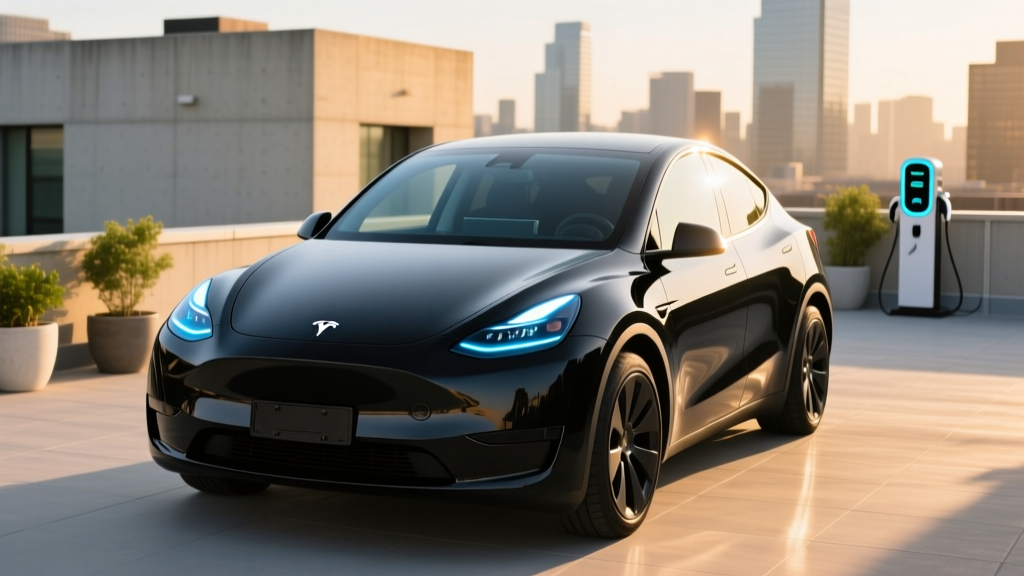
If you've searched "how to purchase a Tesla" and landed here, you're likely zeroing in on the Model Y — Tesla's best-selling electric SUV and one of the most popular EVs in the United States. But buying a Tesla is different from walking into a traditional dealership. There's no haggling, no dealer markups (usually), and the entire process happens online. This guide walks you through exactly how to purchase a Tesla Model Y in 2026, with the real-world data you need to make an informed decision: EPA range versus what you'll actually see, charging speeds, battery chemistry trade-offs, total pricing after incentives, and whether it still holds up against an increasingly competitive field of electric SUVs.
The 2026 Tesla Model Y at a Glance
Before we break down the buying process, here are the core specifications you need to know. The 2026 Model Y is offered in three main configurations: Long Range RWD, Long Range AWD, and Performance AWD. Tesla refreshed the Model Y (internally called "Juniper") with updated styling, a revised interior, and improved efficiency. Below are the key figures based on current EPA data and Tesla's official specifications.
| Spec | Long Range RWD | Long Range AWD | Performance AWD |
|---|---|---|---|
| EPA Range | 320 mi | 300 mi | 280 mi |
| Battery Capacity (usable) | ~75 kWh | ~75 kWh | ~75 kWh |
| Battery Chemistry | NMC (Nickel Manganese Cobalt) | NMC | NMC |
| Drivetrain | Rear-Wheel Drive | Dual-Motor AWD | Dual-Motor AWD |
| Horsepower | ~346 hp | ~384 hp | ~456 hp |
| 0–60 mph | 5.8 sec | 4.8 sec | 3.5 sec |
| Efficiency (MPGe combined) | 123 MPGe | 117 MPGe | 111 MPGe |
| Efficiency (kWh/100 mi) | 27 kWh | 29 kWh | 30 kWh |
| Max DC Fast Charge | 250 kW | 250 kW | 250 kW |
| 10–80% DC Fast Charge | ~25 min | ~25 min | ~25 min |
| Level 2 Home Charging | 11.5 kW (~44 mi/hr) | 11.5 kW (~44 mi/hr) | 11.5 kW (~44 mi/hr) |
| Cargo Volume (rear seats up) | 30.2 cu ft | 30.2 cu ft | 30.2 cu ft |
| Cargo Volume (rear seats folded) | 72.1 cu ft | 72.1 cu ft | 72.1 cu ft |
| Rear Legroom | 38.0 in | 38.0 in | 38.0 in |
| Base MSRP | $44,990 | $47,990 | $52,990 |
| Battery Warranty | 8 yr / 120,000 mi | 8 yr / 120,000 mi | 8 yr / 120,000 mi |
Sources: EPA / fueleconomy.gov, Tesla Model Y Design Studio
Real-World Range: What the EPA Number Doesn't Tell You
Real-World Highway (70–75 mph): ~250–270 miles
Real-World Cold Weather (below 32°F): ~210–240 miles
Real-World City/Mixed (moderate temps): ~280–300 miles
The EPA range figure is a useful baseline, but it's not what you'll see on every drive. In our experience and consistent with independent testing, the Model Y Long Range AWD delivers roughly 250–270 miles at sustained highway speeds of 70–75 mph in mild weather. EVs are inherently less efficient at highway speeds because there's no regenerative braking to recapture energy — you're pushing air resistance continuously.
Cold weather is the bigger variable. Lithium-ion batteries lose efficiency in freezing temperatures, and cabin heating draws significant power (the Juniper refresh includes a heat pump, which helps substantially compared to resistive heating). Expect a 20–30% range reduction in sustained sub-freezing conditions. If your commute is 60 miles round-trip in a Minnesota winter, you'll still have plenty of buffer — but a 280-mile road trip in January may require a charging stop you wouldn't need in July.
City driving with frequent stops is where the Model Y shines. Regenerative braking recaptures energy at every light, and you'll often match or slightly exceed the EPA combined number in stop-and-go traffic during moderate temperatures.
Charging Speed: DC Fast Charging and Home Setup
Charging speed is arguably the single most important spec for EV ownership satisfaction. The Model Y supports a peak DC fast-charge rate of 250 kW on Tesla's V3 and V4 Superchargers. Here's what that translates to in practice:
| Charging Level | Power (kW) | Miles Added per Hour | Typical Use Case |
|---|---|---|---|
| Level 1 (120V outlet) | ~1.4 kW | ~3–5 mi/hr | Emergency / overnight trickle |
| Level 2 (240V, Wall Connector) | 11.5 kW | ~44 mi/hr | Primary home charging |
| DC Fast Charge (Supercharger V3) | Up to 250 kW peak | ~1,000 mi/hr at peak | Road trips, rapid top-ups |
| DC Fast Charge (10–80%) | Sustained avg ~150 kW | — | ~25 minutes typical |
A critical nuance: the 250 kW figure is a peak, not a sustained rate. The Model Y's charge curve tapers significantly above 60% state of charge (SoC). You'll see 250 kW briefly between roughly 10–25% SoC, then the rate steps down progressively. The 10–80% time of approximately 25 minutes reflects this taper. If you're charging from 50–80%, expect it to take longer per mile added than the 10–50% stretch. This is standard for NMC battery chemistry — Tesla's battery management system protects long-term cell health by throttling charge speed at higher SoC.
For home charging, Tesla's Wall Connector at 48 amps (11.5 kW) adds roughly 44 miles of range per hour. A full overnight charge from 20% to 80% takes about 5–6 hours, which is more than adequate for daily use. Installation typically requires a 60-amp dedicated circuit; budget $500–$2,000 for electrician labor depending on your panel's proximity to the garage. If your home has a 200-amp electrical panel with spare capacity, installation is straightforward. Older homes with 100-amp panels may need a panel upgrade ($1,500–$3,000 additional).
How to Actually Purchase a Tesla: The Online Process
Unlike traditional automakers, Tesla sells directly to consumers — no franchised dealerships involved. Here's the step-by-step process:
- Configure online: Visit Tesla.com and select Model Y. Choose your trim (Long Range RWD, Long Range AWD, or Performance), exterior color, wheel size (19" or 21"), and interior color. Note that 21" wheels reduce EPA range by approximately 10–15 miles due to increased rolling resistance and weight.
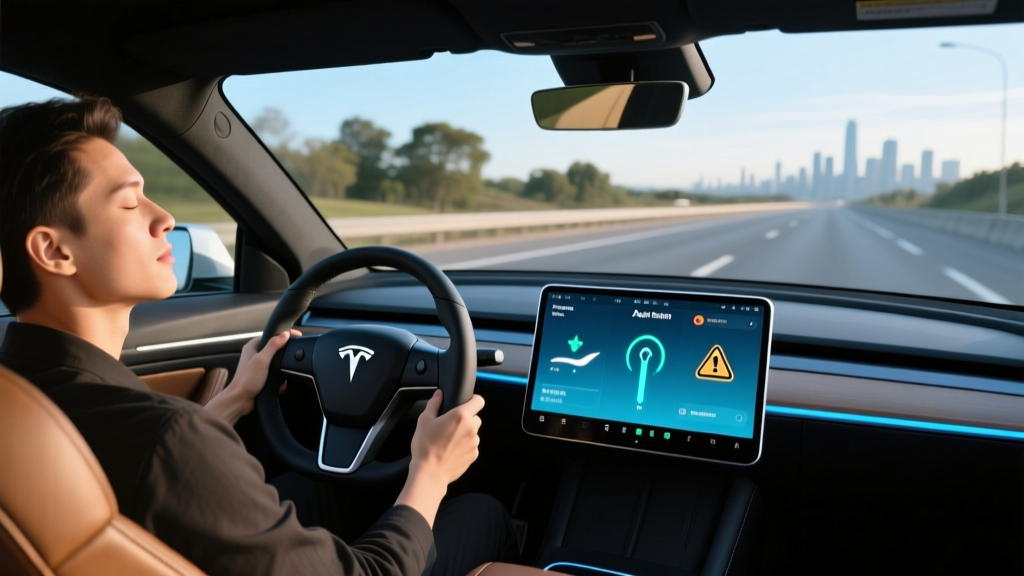
- Add Autopilot or FSD: Basic Autopilot (Traffic-Aware Cruise Control + Autosteer) is included standard. Full Self-Driving (Supervised) is an $8,000 add-on or $99/month subscription. FSD is a Level 2 SAE driver-assistance system — it does not make the car autonomous, and you must remain fully engaged with hands on the wheel and eyes on the road.
- Place your order: Pay a non-refundable order fee (typically $250). Tesla provides an estimated delivery window — usually 2–6 weeks depending on configuration and region.
- Arrange financing or payment: Tesla offers in-house financing, or you can secure a loan from your own bank/credit union. Leasing is available in select states.
- Apply for incentives: At checkout, you can elect to transfer the federal EV tax credit (if eligible) as a point-of-sale reduction. More on this below.
- Delivery or pickup: Tesla delivers to your door in many metro areas, or you can pick up at a local Service Center. Inspect the vehicle carefully at delivery — panel gaps and paint imperfections, while improved, still occur occasionally.
Pricing, Trims, and Federal Tax Credit Eligibility
The 2026 Model Y lineup starts at $44,990 for the Long Range RWD and climbs to $52,990 for the Performance AWD. Here's how pricing breaks down after the federal tax credit:
| Trim | Base MSRP | Est. Destination | Federal Credit (§30D) | Effective Price (if eligible) |
|---|---|---|---|---|
| Long Range RWD | $44,990 | $1,390 | Up to $7,500 | ~$38,880 |
| Long Range AWD | $47,990 | $1,390 | Up to $7,500 | ~$41,880 |
| Performance AWD | $52,990 | $1,390 | Up to $7,500 | ~$46,880 |
Important: The federal EV tax credit under IRS §30D is not a guaranteed $7,500 for every buyer. Eligibility depends on several requirements that you must verify before counting on this reduction:
- MSRP Cap: The vehicle's MSRP must not exceed $80,000 for SUVs (the Model Y qualifies comfortably).
- Buyer Income Cap: Modified adjusted gross income (MAGI) must not exceed $150,000 (single filer), $225,000 (head of household), or $300,000 (joint filers).
- Battery Sourcing: The credit is split into two halves — $3,750 for critical minerals sourcing and $3,750 for battery component manufacturing. As of 2026, Tesla sources an increasing share of materials from USMCA-compliant supply chains, but the exact credit amount ($3,750 or $7,500) can vary by production batch. Verify the current sourcing status on Tesla's website at the time of purchase.
- Point-of-Sale Transfer: Since 2024, eligible buyers can transfer the credit to Tesla at the point of sale, reducing your purchase price directly rather than waiting for a tax refund. You must elect this during the purchase process.
- Tax Liability: If you claim the credit on your tax return instead (not at point of sale), it is non-refundable — meaning you need sufficient federal tax liability to benefit from it.
Always consult a tax professional and check the latest guidance on IRS.gov before finalizing your purchase. State and local incentives may also apply — check the AFDC incentive database for your area.
Model Y vs. the Competition: Is It Still the Best Electric SUV?
The electric SUV market in 2026 is far more competitive than it was even two years ago. Here's how the Model Y Long Range AWD stacks up against key rivals:
| Spec | Tesla Model Y LR AWD | Hyundai Ioniq 5 LR AWD | Ford Mustang Mach-E ER AWD | Kia EV6 LR AWD |
|---|---|---|---|---|
| EPA Range | 300 mi | 290 mi | 290 mi | 282 mi |
| Battery (usable) | ~75 kWh | 77.4 kWh | 88 kWh | 77.4 kWh |
| Max DC Charge | 250 kW | 240 kW | 150 kW | 240 kW |
| 10–80% Time | ~25 min | ~18 min | ~38 min | ~18 min |
| 0–60 mph | 4.8 sec | 5.1 sec | 5.1 sec | 4.9 sec |
| Cargo (rear up) | 30.2 cu ft | 27.2 cu ft | 29.7 cu ft | 24.4 cu ft |
| Base MSRP (AWD) | $47,990 | $50,250 | $48,995 | $50,400 |
| Charging Network | Supercharger (native) | NACS (Supercharger access) | NACS (Supercharger access) | NACS (Supercharger access) |
The Model Y's advantages remain clear: class-leading cargo space, Supercharger network integration (though competitors now have NACS access to Superchargers), and strong efficiency. The Ioniq 5 and EV6 charge faster (their 800V architecture enables quicker 10–80% times), while the Mach-E trails on DC charging speed but offers a more traditional SUV driving feel.
- You want maximum cargo space in an electric SUV
- You value the seamless Supercharger network experience (plug-and-charge with no app fumbling)
- You prefer OTA software updates that add features over time
- You want strong efficiency (kWh/100mi) for lower charging costs
- Fastest possible DC charging is your priority (Ioniq 5/EV6 at ~18 min)
- You want Apple CarPlay / Android Auto (Tesla does not support either)
- You prefer physical buttons and a more traditional interior layout
- You want a more plush, quiet ride (the Juniper refresh improved NVH, but reviewers still rate Hyundai/Kia slightly higher for refinement)
Pros, Cons, and Ownership Realities
- Class-leading cargo volume (30.2 cu ft rear up, 72.1 cu ft folded)
- Supercharger network remains the most reliable DC fast-charging ecosystem in the US
- Excellent efficiency — 27–30 kWh/100mi keeps charging costs low
- Strong over-the-air update cadence adds features post-purchase
- Competitive pricing, especially after the $7,500 federal credit
- Heat pump standard (efficient cold-weather cabin heating)
- Frunk (front trunk) adds ~4.1 cu ft of secure storage
- No Apple CarPlay or Android Auto — Tesla's native UI is the only option
- Minimalist interior isn't for everyone (no instrument cluster, most controls on the touchscreen)
- Panel gap and paint quality have improved but still draw complaints
- Service center availability varies significantly by region — some owners face long wait times
- FSD (Supervised) is expensive ($8,000) and remains a Level 2 system despite the name
- Ride quality is firm, especially with 21" wheels
- Rear visibility is limited; relies heavily on cameras
Who the Model Y Suits Best
Daily commuters: Excellent choice. The 300-mile EPA range handles even long commutes with room to spare, and overnight Level 2 home charging means you start every day with a full battery.
Families: The cargo space accommodates strollers, groceries, and luggage for road trips. Rear legroom (38.0 inches) fits child seats and adult passengers comfortably. The absence of a transmission tunnel creates a flat floor.
Road trippers: Supercharger coverage along major US highways is extensive. Plan stops every 200–250 miles (realistic highway range), and expect 20–30 minute charge breaks. The navigation system automatically routes through Superchargers and preconditions the battery for faster charging on arrival.
Towing: The Model Y is rated for 3,500 lbs of towing capacity — adequate for a small trailer or a pair of dirt bikes, but not a full-size camper. Towing reduces range by roughly 30–40%.
Battery Longevity, Warranty, and What to Expect
Tesla warranties the Model Y's battery and drive unit for 8 years or 120,000 miles (whichever comes first), with a minimum 70% capacity retention threshold over that period. The NMC chemistry used in the Long Range and Performance trims offers higher energy density than LFP (lithium iron phosphate), which is why these trims achieve 300+ miles from a relatively compact 75 kWh pack. However, NMC cells are slightly more sensitive to prolonged high states of charge.
For maximum battery longevity, Tesla recommends charging to 80% for daily use and reserving 100% charges for road trips. Following this practice, real-world data from high-mileage owners suggests degradation of approximately 10–12% over the first 100,000 miles — meaning a 300-mile Model Y might deliver roughly 265–270 miles when new-equivalent after that mileage. This is well within the warranty threshold.
Battery replacement costs, should you need one outside of warranty, are estimated at $12,000–$16,000 including labor. However, complete battery failure is rare; most degradation is gradual capacity loss rather than catastrophic failure.
Frequently Asked Questions
What is the real-world range of the Tesla Model Y?
The EPA rates the 2026 Model Y Long Range AWD at 300 miles. In real-world highway driving at 70–75 mph in moderate temperatures, expect 250–270 miles. In freezing weather, that drops to roughly 210–240 miles. City driving with regenerative braking often matches or slightly exceeds the EPA number.
How fast does the Model Y charge at home and on the road?
At home on a Level 2 Tesla Wall Connector (11.5 kW), the Model Y adds approximately 44 miles of range per hour — a full overnight session easily replenishes daily driving. On a V3 Supercharger (250 kW peak DC), a 10–80% charge takes about 25 minutes, though the rate tapers significantly above 60% SoC.
How much does the Tesla Model Y cost after tax credits?
If you qualify for the full $7,500 federal tax credit under IRS §30D, the Long Range RWD drops to approximately $38,880, the Long Range AWD to $41,880, and the Performance to $46,880 (all including destination). Eligibility depends on your income, the vehicle's battery sourcing compliance, and MSRP caps. Verify current rules on IRS.gov before purchasing.
Is the Tesla Model Y worth buying vs. competitors in 2026?
The Model Y remains the benchmark for cargo space, efficiency, and charging network access. If those are your priorities, it's still the top choice. If you prioritize faster DC charging (Ioniq 5/EV6), physical controls, or Apple CarPlay integration, competitors may suit you better. Test-drive multiple options before deciding.
Does the Tesla Model Y qualify for the federal EV tax credit?
Yes, the Model Y qualifies for up to $7,500 under §30D, provided you meet income requirements (MAGI ≤ $150K single / $300K joint), the vehicle's MSRP is under $80,000 (it is), and battery sourcing requirements are met at the time of purchase. The credit can be applied as a point-of-sale reduction. Always confirm current eligibility with your tax advisor.
What are the biggest drawbacks of owning a Tesla Model Y?
The most common owner complaints center on the lack of Apple CarPlay/Android Auto, the touchscreen-dependent interface (no physical climate or volume knobs), inconsistent build quality (improving but still a concern), and service center wait times in less densely populated areas. The ride is also firmer than some competitors, particularly with 21" wheels.
Can I charge a Tesla Model Y on non-Tesla chargers?
Yes. The 2026 Model Y uses the NACS (North American Charging Standard) connector natively. This is the same connector used at Tesla Superchargers. For CCS-equipped public chargers ( Electrify America, EVgo, etc.), you'll need a NACS-to-CCS adapter, which Tesla sells for approximately $250. Most public charging networks are adding NACS cables, but adapter ownership is still recommended for road trips outside major corridors.