The 2026 Tesla Model 3: Quick Verdict Before You Order
If you've been searching "how do I order a Tesla," the Model 3 remains the most accessible entry point into the Tesla ecosystem in 2026. Redesigned for the 2024 model year (internally called "Highland") and carried forward with incremental updates, the current Model 3 delivers up to 363 miles of EPA-estimated range in Long Range AWD trim, peaks at 250 kW on DC fast chargers, and starts at $38,990 before incentives. It's the default recommendation for buyers who want a proven, software-rich electric sedan with access to the Supercharger network — but it's not without trade-offs that matter in real-world ownership.
This guide walks through exactly what you'll configure, what you'll pay, how far it actually goes, and whether the federal tax credit applies to your situation — so you can place your order with confidence rather than guesswork.
How to Order a Tesla: The Step-by-Step Process
Unlike legacy automakers that route orders through franchised dealerships, Tesla sells direct. Here's the actual ordering workflow in 2026:
- Configure online at Tesla.com — Select Model 3, choose your trim (RWD, Long Range AWD, or Performance AWD), pick paint color, wheel size, and interior. There are no dealer markups; the price you see is the price you pay.
- Place a $250 non-refundable order fee — This secures your place in the production queue. Delivery timelines vary by region and trim, typically 2–6 weeks for common configurations.
- Complete financing or cash payment — Tesla offers in-house financing, or you can bring your own loan from a bank or credit union. You can also apply the federal EV tax credit as a point-of-sale transfer under current IRS §30D rules (more on this below).
- Schedule delivery — Tesla delivers to your nearest service center or, in some metro areas, directly to your home. You'll complete paperwork and a brief vehicle walkthrough.
Pro tip: Inventory vehicles (already built, in transit, or on lots) often deliver faster and occasionally carry small discounts on demo or loaner units. Check the "Inventory" tab on Tesla's site if you want to skip the build queue.
2026 Tesla Model 3: Full Spec Table
| Spec | RWD (Base) | Long Range AWD | Performance AWD |
|---|---|---|---|
| Base MSRP | $38,990 | $45,990 | $52,990 |
| EPA Range | 272 mi | 363 mi | 315 mi |
| Battery (usable) | ~57.5 kWh | ~75 kWh | ~75 kWh |
| Chemistry | LFP | NMC | NMC |
| Drivetrain | RWD (single motor) | AWD (dual motor) | AWD (dual motor) |
| Horsepower | 271 hp | 346 hp | 510 hp |
| 0–60 mph | 5.8 sec | 4.2 sec | 2.9 sec |
| Max DC Fast Charge | 170 kW | 250 kW | 250 kW |
| 10–80% DC Time | ~25 min | ~25 min | ~25 min |
| Level 2 Home Charge | 11.5 kW (~44 mi/hr) | 11.5 kW (~44 mi/hr) | 11.5 kW (~44 mi/hr) |
| MPGe (combined) | 132 MPGe | 132 MPGe | 121 MPGe |
| kWh/100 mi | 25 | 25 | 28 |
Source: EPA / fueleconomy.gov and Tesla specifications. Figures reflect 2025–2026 model-year data.
Real-World Range: What the EPA Sticker Doesn't Tell You
EPA Estimate: Up to 363 miles (Long Range AWD)
Real-World Expectation: 290–320 miles on mixed highway driving in moderate temperatures; 240–270 miles in sustained cold weather (below 32°F) or at highway speeds above 75 mph.
The Model 3 Long Range's 363-mile EPA figure is legitimate in mixed suburban driving at moderate speeds. But EV range is highly sensitive to conditions:
- Highway driving at 75+ mph: Expect roughly 15–20% less than the EPA sticker. Aerodynamic drag scales with the square of speed, and the Model 3's efficiency drops noticeably above 70 mph.
- Cold weather (20–32°F): Battery chemistry slows and cabin heating draws significant energy. Plan for 20–30% range loss unless you precondition the battery while plugged in.
- Mountain driving: Regenerative braking recovers some energy on descents, but sustained climbs can cut range by 25% or more.
The base RWD model uses an LFP (lithium iron phosphate) battery, which has slightly lower energy density than the NMC (nickel manganese cobalt) packs in Long Range and Performance trims. LFP's advantage: Tesla recommends charging to 100% daily, so you can use the full 272 miles without degradation concerns. NMC owners should typically charge to 80–90% daily and save 100% for road trips.
Charging Speed: DC Fast Charging and Home Level 2
Charging speed is where Tesla's ecosystem still shines — but the numbers require context.
| Charging Level | Max Power | Speed (Miles Added) | Typical Use Case |
|---|---|---|---|
| Level 1 (120V outlet) | ~1.4 kW | ~4–5 mi/hr | Emergency / overnight trickle |
| Level 2 (240V home) | 11.5 kW | ~44 mi/hr | Daily home charging |
| DC Fast (Supercharger V3/V4) | 250 kW (LR/Perf) 170 kW (RWD) | ~175 mi in 15 min (LR) | Road trips |
DC fast charging reality: The 250 kW peak rate applies only at a low state of charge (around 10–20%) and with a warm battery. The charge curve tapers significantly above 60% SoC, and drops sharply past 80%. A 10–80% session takes roughly 25 minutes at a V3 Supercharger, but an 80–100% top-off can add another 20+ minutes. Always plan road-trip stops around the 10–80% window for efficiency.
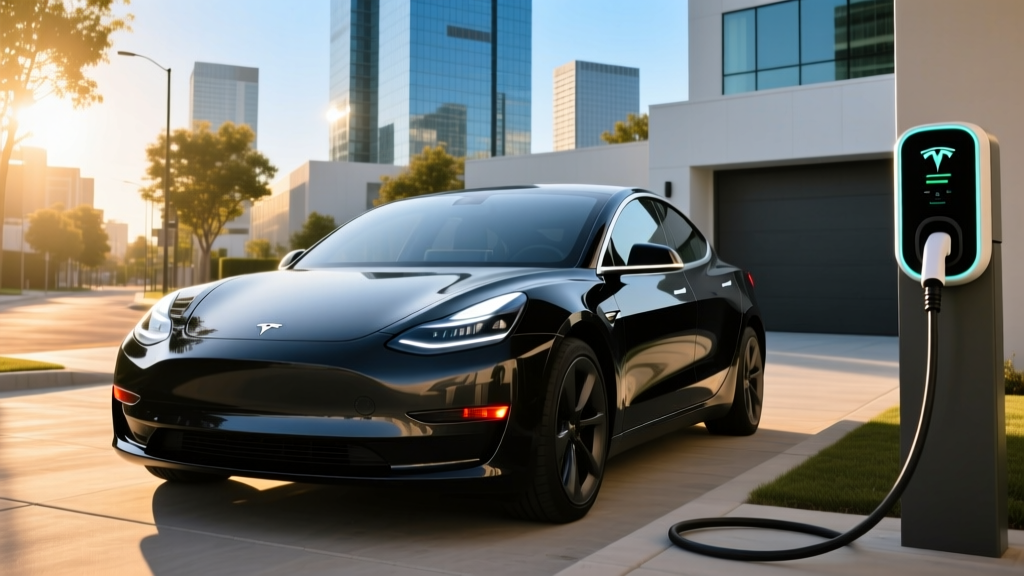
Home charging setup: Tesla includes a Mobile Connector with a NACS plug. For full Level 2 speed, install a Tesla Wall Connector or any NACS-compatible Level 2 unit on a 60-amp circuit. Budget $500–$1,500 for the unit and electrician, plus potential panel-upgrade costs if your home has a 100-amp service (a 200-amp upgrade runs $1,500–$3,000).
Connector note: All 2026 Model 3 vehicles use the NACS (North American Charging Standard) connector natively. This gives you direct access to Tesla's Supercharger network (20,000+ stalls in North America) and, increasingly, Electrify America and other networks adding NACS cables.
Pricing, Tax Credits, and What You'll Actually Pay
| Trim | Base MSRP | Est. §30D Credit | Effective Price |
|---|---|---|---|
| RWD | $38,990 | Up to $7,500* | ~$31,490* |
| Long Range AWD | $45,990 | Up to $7,500* | ~$38,490* |
| Performance AWD | $52,990 | Up to $7,500* | ~$45,490* |
*Federal tax credit eligibility under IRS §30D depends on multiple requirements that change periodically:
- MSRP cap: Sedans must be under $55,000 — all Model 3 trims qualify on MSRP alone.
- Buyer income limits: AGI must not exceed $150,000 (single), $225,000 (head of household), or $300,000 (joint filers).
- Battery sourcing: A percentage of critical minerals and battery components must be sourced from the U.S. or FTA partners. These thresholds increase annually and can reduce or eliminate the credit for specific build configurations.
- Point-of-sale transfer: As of 2024+, you can transfer the credit to Tesla at purchase, reducing your out-of-pocket cost immediately rather than waiting for tax filing.
Critical: Battery-sourcing rules are the variable most likely to affect your Model 3 order. Tesla's credit eligibility has shifted between $3,750 and $7,500 depending on the quarter and supply chain changes. Always verify the current credit amount on Tesla's checkout page and cross-reference with the IRS clean vehicle credit list before finalizing your order.
Pros and Cons: Honest Ownership Assessment
Pros
- Class-leading efficiency: 132 MPGe combined means low cost-per-mile on electricity
- Supercharger network access with NACS — the most reliable DC fast-charging ecosystem
- LFP battery on RWD allows daily 100% charging with minimal degradation concerns
- Minimalist interior with excellent build quality post-2024 redesign (ventilated seats, ambient lighting, rear touchscreen)
- Over-the-air updates continuously add features
- Strong resale value relative to most EVs
Cons
- No traditional instrument cluster — speed and navigation info display on the center screen, which requires glancing right
- Turn signals on the steering wheel (no stalk) take acclimation and frustrate some drivers
- Visibility: thick rear pillars and a sloping roofline limit over-the-shoulder sightlines
- Repair and body-shop access can be slow; Tesla's service network is thinner than legacy brands
- FSD (Supervised) is a Level 2 driver-assist system, not autonomous driving — it requires constant attention and is not included in the base price
- Insurance premiums tend to run 15–30% higher than comparable gas sedans
Interior, Cargo, and Technology
The refreshed Model 3 interior is a meaningful step up from pre-2024 models. Key specs:
- Front legroom: 42.3 inches
- Rear legroom: 35.3 inches (adequate for adults, tighter than a Hyundai Ioniq 6)
- Cargo volume: 23 cu ft trunk + 3 cu ft frunk (26 cu ft total)
- Infotainment: 15.4-inch center touchscreen with Netflix, YouTube, and gaming while parked; 8-inch rear touchscreen for climate and media controls
- Audio: 17-speaker premium system on Long Range and Performance (impressive clarity for the segment)
Driver assistance: Basic Autopilot (adaptive cruise + lane centering) is included. Enhanced Autopilot ($6,000) adds auto lane-change and navigate-on-autopilot. Full Self-Driving (Supervised) at $8,000 adds traffic-light and stop-sign recognition plus city-street autosteer. All are SAE Level 2 systems — you must keep your hands on the wheel and eyes on the road at all times. Tesla's camera-only "Tesla Vision" approach works well in clear conditions but can struggle in heavy rain, construction zones, and faded lane markings.
Warranty, Longevity, and Battery Replacement
- Basic vehicle warranty: 4 years / 50,000 miles
- Battery & drive unit warranty: 8 years / 100,000 miles (RWD); 8 years / 120,000 miles (Long Range & Performance)
- Capacity retention threshold: Tesla warrants at least 70% battery capacity retention during the warranty period
Real-world degradation data from large Tesla owner datasets shows typical Model 3 batteries losing roughly 5–8% capacity in the first 50,000 miles, then degrading more slowly. LFP batteries in the RWD model show excellent cycle-life durability. A full battery replacement outside warranty currently costs approximately $12,000–$16,000, though this is rare before 200,000+ miles.
Who Should Order the Tesla Model 3?
Order the Model 3 RWD if: You commute under 50 miles daily, have reliable home charging, and want the lowest entry price with an LFP battery you can charge to 100% without worry.
Order the Model 3 Long Range AWD if: You take regular road trips, live in a cold-weather climate, or need AWD traction. The 363-mile EPA range provides the best real-world buffer.
Order the Model 3 Performance if: You want sports-sedan acceleration (2.9 sec 0–60) and track capability, and you're willing to sacrifice ~50 miles of range for it.
Consider alternatives if: You need more rear-seat space (Hyundai Ioniq 6), prefer a physical instrument cluster and stalks (BMW i4), or want a hatchback body style (Polestar 2).
Frequently Asked Questions
How long does it take to get a Tesla after ordering?
Delivery timelines vary by configuration and region. Common builds (Long Range AWD in popular colors) typically deliver in 2–6 weeks. Custom or less-common configurations may take 6–10 weeks. Inventory vehicles can deliver within days.
Does the Tesla Model 3 qualify for the full $7,500 federal tax credit?
The Model 3 is eligible for up to $7,500 under IRS §30D, but the actual amount depends on current battery-sourcing rules, your income, and the MSRP cap (all trims qualify). Credit amounts have fluctuated between $3,750 and $7,500 based on supply-chain compliance. Verify on IRS.gov and Tesla's checkout page at the time of order.
What's the real-world range of the Model 3 Long Range?
Expect 290–320 miles in mixed driving at moderate temperatures. Highway driving at 75+ mph reduces this to roughly 280–300 miles. Cold weather (below 32°F) can drop range to 240–270 miles without preconditioning.
Can I charge a Tesla Model 3 at non-Tesla chargers?
Yes. The Model 3 uses NACS, which is becoming the industry standard. Most major networks (Electrify America, EVgo, ChargePoint) are adding NACS cables. You can also use a CCS-to-NACS adapter for older CCS-only stations.
Is Tesla's FSD worth the extra cost?
FSD (Supervised) is a Level 2 driver-assist system, not self-driving. It reduces fatigue on long trips and handles some city-street scenarios, but it requires constant supervision and makes occasional errors. Most buyers are better served by the included Basic Autopilot unless they frequently drive in heavy traffic or want to experiment with the latest features.
How much does home charging cost per mile?
At the U.S. average electricity rate of ~$0.16/kWh and the Model 3's efficiency of 25 kWh/100 mi, home charging costs approximately $0.04 per mile — roughly one-quarter the fuel cost of a 30 MPG gas car at $3.50/gallon.