Why Tesla Owners Want to Make Their Car Fart
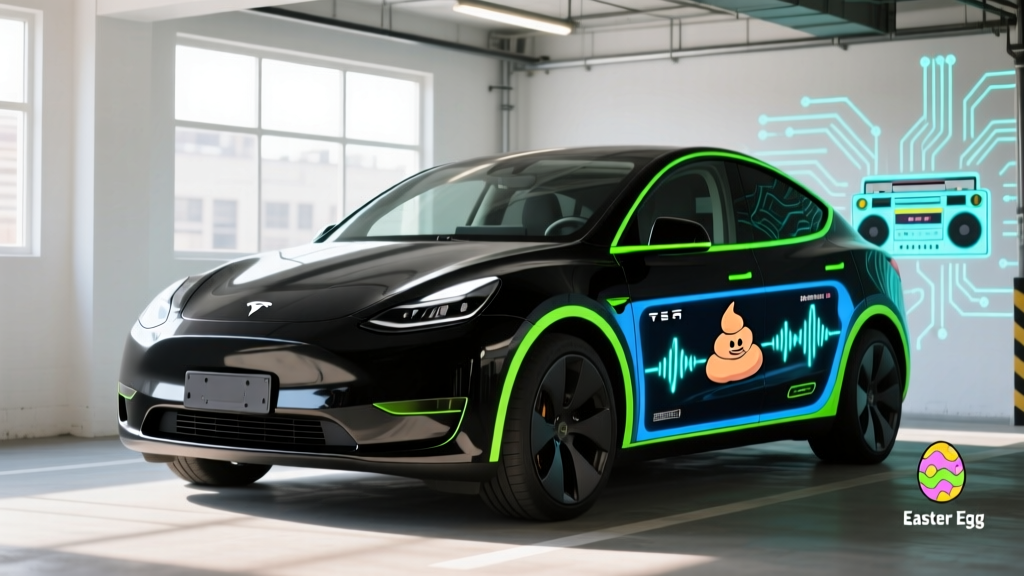
Search "how to make a tesla fart" and you'll find a surprisingly active community of owners looking to unlock one of the most entertaining Easter eggs in any electric vehicle. Tesla's software-first approach means the car isn't just a machine — it's a rolling computer with a sense of humor. The fart sound, routed through Tesla's external pedestrian warning speaker (PWS) or the internal cabin audio system, has become a rite of passage for new owners and a crowd-pleaser at Cars & Coffee events.
But before we walk through every method to trigger the sound — and yes, there are multiple ways depending on your model year and software version — let's ground this in the actual vehicle you're working with. Whether you're driving a 2026 Model 3, Model Y, Model S, or Model X, the underlying platform and software determine which tricks are available. This guide covers the how-to in full, then gives you the complete 2026 spec breakdown so you know exactly what you're driving beyond the party tricks.
Step-by-Step: How to Make a Tesla Fart
Tesla's fart functionality lives within the Toybox menu, accessible from the main touchscreen. The exact path and available sounds have evolved across software versions, but the core method remains consistent for 2026-model Teslas running software v12 and later.
Method 1: Boombox via Toybox (External Speaker)
- Tap the car icon at the bottom of your touchscreen to open Controls.
- Select Toybox from the menu (sometimes nested under "More" or the three-dot menu).
- Tap Boombox.
- Choose your sound category — select "Fart" or "Party Fart" from the available presets.
- Choose whether to play the sound outside the vehicle (through the PWS) or inside (through the cabin speakers).
- Tap Play. For external playback, the car must be in Park.
Method 2: Whoopie Cushion Mode (Passenger Seat Trigger)
Some 2026 software versions include a "Whoopie Cushion" Easter egg within Toybox. When activated, the system uses the occupant detection sensor in the passenger seat to trigger a fart sound when someone sits down. To enable:
- Go to Controls > Toybox.
- Look for "Whoopie Cushion" or "Emission Test" (naming varies by version).
- Toggle it ON.
- The sound will play through cabin speakers when the passenger seat detects weight.
Note: Tesla has periodically removed and re-added Easter eggs across OTA updates. If you don't see Whoopie Cushion in your Toybox, check for pending software updates or browse the Tesla app's Easter egg changelogs.
Method 3: Custom Sound via USB (Boombox Custom)
For owners who want a personalized fart sound (or any custom audio), Tesla's Boombox supports USB-loaded custom sounds:
- Format a USB drive as exFAT or FAT32.
- Create a folder named "Boombox" in the root directory.
- Place .wav or .mp3 files (short clips work best, under 10 seconds) inside the folder.
- Insert the USB drive into one of the vehicle's USB-C ports.
- Open Toybox > Boombox and your custom sounds will appear as selectable options.
This method lets you load everything from cartoon sound effects to movie quotes — the fart sound is just the beginning.
Important Limitations and Safety Notes
2026 Tesla Model 3: Full EV Review & Specs
The fart tricks are fun, but the 2026 Tesla Model 3 remains one of the most compelling electric sedans on the market on pure engineering merit. The current-generation "Highland" refresh (introduced for 2024 and refined through 2026) brought meaningful improvements in ride quality, cabin noise, and efficiency. Here's the complete spec breakdown.
| Spec | RWD (Base) | Long Range AWD | Performance |
|---|---|---|---|
| EPA Range | 272 miles | 341 miles | 315 miles |
| Battery (usable) | ~60 kWh (LFP) | ~75 kWh (NMC) | ~75 kWh (NMC) |
| Drivetrain | Rear-Wheel Drive | Dual-Motor AWD | Dual-Motor AWD |
| Horsepower | 271 hp | 346 hp | 510 hp |
| 0-60 mph | 5.8 sec | 4.2 sec | 2.9 sec |
| Peak DC Fast Charge | 170 kW | 250 kW | 250 kW |
| 10-80% DCFC Time | ~25 min | ~22 min | ~22 min |
| Level 2 Home Charge | 11.5 kW (~44 mi/hr) | 11.5 kW (~44 mi/hr) | 11.5 kW (~44 mi/hr) |
| MPGe (combined) | 132 MPGe | 125 MPGe | 115 MPGe |
| Efficiency (kWh/100mi) | 25 | 27 | 29 |
| Cargo (trunk + frunk) | 23 cu ft total | 23 cu ft total | 23 cu ft total |
| Rear Legroom | 35.3 in | 35.3 in | 35.3 in |
| Base MSRP | $38,990 | $45,990 | $52,990 |
Sources: fueleconomy.gov, Tesla.com official specs. Pricing as of early 2026; destination fee additional.
Range, Charging & Efficiency — Real-World Numbers
EPA 341 miles (Long Range AWD) — Expect ~280-300 miles in mixed real-world driving at highway speeds (70-75 mph). In cold weather (below 32°F / 0°C), reduce that to ~240-270 miles due to cabin heating demands and battery chemistry limitations. City driving with regenerative braking recovers energy and can match or slightly exceed EPA figures.
EPA 272 miles (RWD / LFP) — Expect ~230-250 miles highway. The LFP battery handles cold weather slightly worse than NMC in terms of range retention, but LFP degrades more slowly over the long term — a trade-off worth understanding.
Charging Speed: What to Actually Expect
The peak DC fast-charge number (250 kW on Long Range/Performance) is exactly that — a peak, not a sustained rate. Tesla's charge curve is aggressive in the 10-50% SoC window, then tapers significantly above 80%. Here's the real-world breakdown:
| Charging Level | Power (kW) | Miles Added per Hour | Notes |
|---|---|---|---|
| Level 1 (120V household) | ~1.4 kW | ~5 mi/hr | Emergency/trickle only |
| Level 2 (240V, 48A Wall Connector) | 11.5 kW | ~44 mi/hr | Full overnight charge in ~7-8 hrs |
| DC Fast (V3 Supercharger) | Up to 250 kW | ~170 mi in 15 min (10-50%) | Tapers above 80% SoC |
| DC Fast (V4 Supercharger) | Up to 250 kW | Similar to V3 for Model 3 | V4 architecture; same vehicle-side limit |
Key ownership insight: If you regularly charge at home on Level 2, the DC fast-charge speed matters mostly for road trips. A 48A Tesla Wall Connector on a 60A circuit delivers a full charge overnight for any trim — making daily public charging unnecessary for most owners. Preconditioning the battery (automatic when you navigate to a Supercharger) is essential for achieving peak charge speeds; arriving at a Supercharger with a cold battery can cut your charge rate by 40-60%.
LFP vs. NMC Battery Chemistry — Why It Matters
| Factor | LFP (RWD) | NMC (Long Range / Performance) |
|---|---|---|
| Energy Density | Lower (heavier pack for same kWh) | Higher (lighter, more range) |
| Cycle Life | 3,000+ cycles | 1,500-2,000 cycles |
| Recommended Daily SoC | 100% (charge to full daily) | 80% (charge to 100% only for trips) |
| Cold-Weather Performance | Slightly worse range retention | Better cold-weather range |
| Long-Term Degradation | Slower degradation curve | Moderate degradation (~10% at 150k mi) |
| Cost | Cheaper to manufacture | More expensive (cobalt/nickel) |
The RWD's LFP battery is a strong choice for commuters who want to charge to 100% daily without degradation guilt. The Long Range's NMC pack delivers the range and performance that road-trippers and cold-climate drivers need.
Pricing, Trims & Federal Tax Credit Eligibility
The 2026 Model 3 lineup is straightforward: three trims, each targeting a different buyer profile. Here's the pricing landscape with current federal incentive context.
| Trim | Base MSRP | Federal §30D Credit | Effective Price (if eligible) |
|---|---|---|---|
| RWD | $38,990 | Up to $7,500* | ~$31,490* |
| Long Range AWD | $45,990 | Up to $7,500* | ~$38,490* |
| Performance | $52,990 | Up to $7,500* | ~$45,490* |
*Federal §30D tax credit eligibility depends on multiple factors. As of 2026, the credit can be applied at point of sale (transferred to the dealer/manufacturer) if you meet all requirements. See the IRS Clean Vehicle Credit page for current rules.
§30D Eligibility Checklist (2026 Rules)
- MSRP Cap: Sedans must be under $55,000 MSRP. The RWD and Long Range qualify; the Performance at $52,990 also qualifies (before options push it over).
- Buyer Income Cap: Modified AGI must not exceed $150,000 (single), $225,000 (head of household), or $300,000 (joint). Check your prior-year or current-year AGI — whichever is lower.
- Battery Sourcing: The $7,500 credit splits into two halves — $3,750 for critical minerals sourcing and $3,750 for battery component manufacturing. Tesla's supply chain has shifted significantly to meet North American sourcing requirements, but the exact credit amount varies by production batch. Confirm the specific credit amount for your VIN at the point of sale.
- Point-of-Sale Transfer: Since 2024, you can transfer the credit to Tesla at purchase, reducing your out-of-pocket cost immediately rather than waiting for a tax refund.
Interior, Tech & Driver Assistance
The 2026 Model 3 Highland interior is a significant step up from the pre-2024 cabin. Tesla addressed the most common complaints — road noise, ride harshness, and material quality — with acoustic glass, revised suspension tuning, ventilated front seats, and ambient lighting.
Standout Tech Features
- 15.4-inch center touchscreen with faster processor (AMD Ryzen) and improved responsiveness.
- 8-inch rear passenger screen for climate, media, and entertainment control.
- Boombox / Toybox / Easter Eggs — fart sounds, light shows, Sentry Mode viewer, and more.
- Ambient lighting with customizable color zones across the dash and doors.
- Ventilated front seats (all trims — previously Performance-only).
- Sentry Mode with live camera feed and USB recording.
- Over-the-air updates — Tesla pushes feature additions, UI improvements, and performance tweaks regularly.
Autopilot & Full Self-Driving (Supervised)
Tesla Autopilot (standard) and Full Self-Driving Supervised (optional, $8,000 or $99/mo) are SAE Level 2 driver-assistance systems. This means the vehicle can control steering, acceleration, and braking under certain conditions, but you must remain fully attentive and ready to take over at any moment. FSD Supervised can navigate highway on-ramps, change lanes, and handle some city streets — but it is not autonomous driving. Only Level 4 services like Waymo operate without a human driver in defined areas.
In real-world use, Autopilot excels on well-marked highways. FSD Supervised has improved substantially through Tesla's end-to-end neural network approach (v12+), but it still makes errors at unprotected left turns, construction zones, and unusual intersections. Budget-conscious buyers should stick with the included Autopilot and skip the FSD upgrade unless they specifically want the feature and accept its limitations.
Notable Drawbacks
- No physical stalks: Turn signals are now steering-wheel buttons; gear selection is via touchscreen. This remains polarizing and takes 1-2 weeks to habituate.
- Rear visibility: The sloping roofline and small rear window limit outward sight lines. The backup camera compensates, but it's not a substitute for direct vision.
- No Apple CarPlay / Android Auto: Tesla's proprietary infotainment is capable but closed. If you rely on CarPlay for navigation or music, this is a dealbreaker.
- Insurance costs: Tesla insurance premiums remain higher than segment averages due to repair costs and claims data. Get a quote before purchasing.
Who Should Buy the 2026 Tesla Model 3?
- You're a daily commuter with home Level 2 charging and trips under 200 miles.
- You want the lowest entry price and can charge to 100% daily (LFP battery).
- You prioritize long-term battery longevity over maximum range.
- You take regular road trips of 250+ miles and need the range buffer.
- You live in a cold climate where NMC chemistry retains range better.
- You want dual-motor AWD for snow and rain traction.
- You want sub-3-second 0-60 performance and track capability.
- You're an enthusiast who values the adaptive suspension and Performance brakes.
- Your MSRP stays under $55,000 after options to retain §30D credit eligibility.
- You need a hatchback or SUV cargo area — consider the Model Y or Hyundai Ioniq 5.
- You want Apple CarPlay — consider the BMW i4 or Hyundai Ioniq 6.
- You need more rear-seat space — the Model 3's rear legroom (35.3 in) is adequate but not generous.
Pros & Cons at a Glance
- Best-in-class efficiency (25 kWh/100mi RWD)
- Extensive Supercharger network access
- Strong real-world range (341 mi EPA LR)
- OTA updates add features post-purchase
- LFP option for daily 100% charging
- Improved Highland ride quality and cabin quietness
- Toybox / Boombox Easter eggs for entertainment
- Low running costs vs. gas competitors
- No Apple CarPlay / Android Auto
- Stalkless controls (turn signal buttons) polarizing
- Higher insurance premiums than average
- Rear seat space tight for taller passengers
- FSD Supervised expensive and still Level 2
- Limited rear visibility
- Tax credit eligibility varies by VIN and buyer income
- Repair costs high after collisions
Warranty & Long-Term Ownership
| Coverage | Term |
|---|---|
| Basic Vehicle (bumper-to-bumper) | 4 years / 50,000 miles |
| Battery & Drive Unit (RWD / LFP) | 8 years / 100,000 miles |
| Battery & Drive Unit (LR AWD / Performance) | 8 years / 120,000 miles |
| Battery Capacity Retention Guarantee | Minimum 70% over warranty period |
Tesla's battery warranty guarantees that the pack will retain at least 70% of its original capacity during the warranty period. If degradation exceeds 30%, Tesla will repair or replace the battery. In practice, Tesla battery degradation data from fleet studies shows most Model 3 packs retain approximately 88-92% capacity at 100,000 miles — well within the warranty threshold. LFP packs in the RWD model are expected to degrade even more slowly, potentially retaining 90%+ at 150,000 miles based on early fleet data.
For total cost of ownership, the Model 3 benefits from minimal maintenance (no oil changes, no spark plugs, no transmission fluid), regenerative braking that extends pad life, and electricity costs that average $0.13-$0.16/kWh at home — translating to roughly $500-$700 per year in "fuel" for 12,000 miles of driving, versus $1,500-$2,000 in gasoline for a comparable ICE sedan.
Frequently Asked Questions
Can I make my Tesla fart while driving?
External Boombox sounds (including the fart) are limited to low speeds and Park on US-market 2026 Teslas. Above approximately 16 mph, the external speaker is disabled for safety and regulatory compliance. Internal cabin sounds can play at any speed. The turn-signal trigger works at low speeds in Drive.
Does making a Tesla fart drain the battery?
Negligibly. The PWS and cabin speakers draw minimal power — playing a 3-second fart sound uses a fraction of a watt-hour. You'd need to play it thousands of times to impact your range by even one mile.
Is the Boombox feature available on all 2026 Tesla models?
Boombox is available on all current-production Tesla vehicles (Model 3, Model Y, Model S, Model X) equipped with the external pedestrian warning speaker. This includes all 2026 models. Older vehicles (pre-2020) may not have the PWS hardware and would only support internal cabin playback.
What is the real-world range of the 2026 Model 3?
The Long Range AWD achieves an EPA-estimated 341 miles, but expect approximately 280-300 miles in real-world highway driving at 70-75 mph, and 240-270 miles in freezing temperatures. The RWD's 272-mile EPA rating translates to roughly 230-250 miles highway. These figures assume moderate climate control use and standard tire pressure.
How fast does the 2026 Model 3 charge at home?
On a Tesla Wall Connector (48A, 240V), all Model 3 trims charge at up to 11.5 kW, adding approximately 44 miles of range per hour. A full charge from 10% to 100% takes roughly 7-8 hours — easily completed overnight. A standard 240V dryer outlet (NEMA 14-50) on a 40A circuit delivers about 9.6 kW, or roughly 37 miles per hour.
Does the 2026 Model 3 qualify for the $7,500 federal EV tax credit?
It can — but eligibility depends on your income, the vehicle's MSRP, and battery sourcing compliance. The RWD ($38,990) and Long Range ($45,990) fall well under the $55,000 sedan MSRP cap. The Performance ($52,990) also qualifies at base price, but options can push it over. You must also meet income caps ($150K single / $300K joint) and the vehicle must meet critical mineral and battery component sourcing requirements per IRS §30D. The credit can be transferred at point of sale. Verify your specific VIN's eligibility with Tesla and a tax professional.
Is the 2026 Model 3 worth buying vs. competitors?
Against the Hyundai Ioniq 6 (EPA 361 mi, $42,715), the Model 3 Long Range offers comparable range with access to the Supercharger network — a significant road-trip advantage. Against the BMW i4 (EPA 307 mi, $52,200), the Model 3 is more affordable and more efficient, though the BMW offers Apple CarPlay and a more traditional luxury interior. The Model 3 remains the efficiency and value leader in the electric sedan segment, especially after the §30D credit, but it's not the right choice for buyers who prioritize traditional luxury or CarPlay integration.