The Rivian Lease Loophole: Why It Matters in 2026
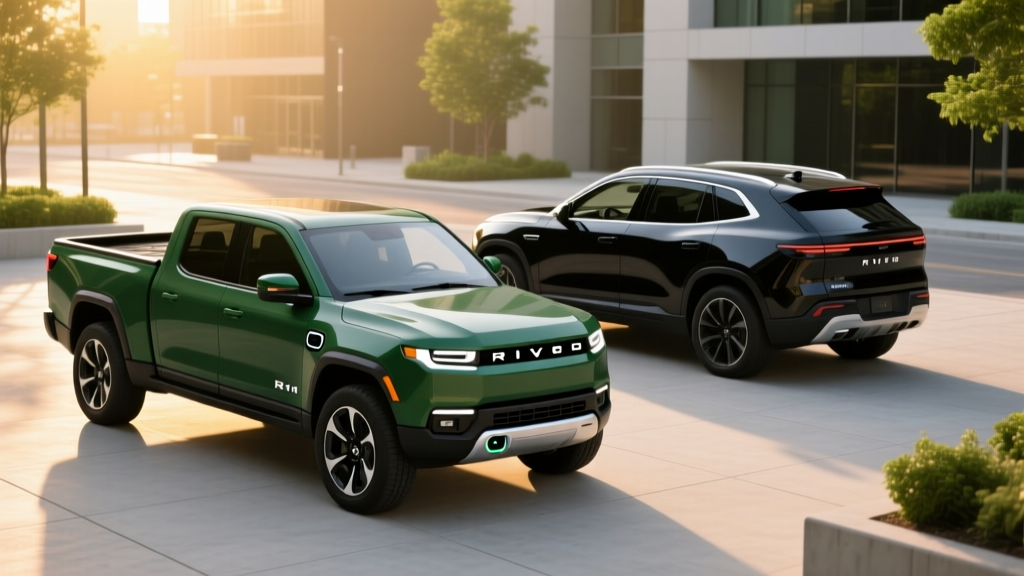
Leasing a Rivian has become the smartest path to driving an R1T electric truck or R1S electric SUV without navigating the increasingly complex IRS §30D purchase tax credit rules. Thanks to the commercial clean vehicle credit (§45W), leasing companies can claim a $7,500 credit on qualifying EVs and pass those savings to lessees as a capitalized cost reduction — regardless of the buyer's income, the vehicle's MSRP cap, or battery mineral sourcing requirements that constrain purchase credits.
This guide breaks down exactly how to lease a Rivian in 2026, what you'll pay, what range and charging performance to expect from the second-generation R1T and R1S, and whether a lease beats buying outright for your situation.
The 2026 Rivian R1T Dual-Motor Standard Pack carries an EPA-estimated range of 270 miles. In real-world highway driving at 70-75 mph, expect approximately 230-245 miles. In cold weather (below 30°F), plan for 190-215 miles of usable range before needing a charge. The Max Pack (149 kWh) pushes the EPA estimate to 420 miles, with real-world highway figures closer to 350-375 miles.
2026 Rivian R1T and R1S: Complete Spec Breakdown
Rivian refreshed the R1 platform for the 2025 model year with a new electrical architecture, improved battery chemistry, and more efficient drive units. These second-generation specs carry into 2026 production. Below is a consolidated look at the core configurations available for lease.
| Specification | Dual-Motor Standard | Dual-Motor Max | Performance Dual-Motor |
|---|---|---|---|
| EPA Range | 270 mi | 420 mi | 350 mi (Large Pack) |
| Battery Capacity | 92 kWh (usable) | 149 kWh (usable) | 109 kWh (usable) |
| Battery Chemistry | NMC (nickel manganese cobalt) | NMC | NMC |
| Horsepower | 533 hp | 533 hp | 665 hp |
| 0-60 mph | 4.5 sec | 4.9 sec | 3.0 sec |
| Drivetrain | AWD (dual-motor) | AWD (dual-motor) | AWD (dual-motor) |
| Max DC Fast Charge | 200 kW | 220 kW | 220 kW |
| 10-80% DC Time | ~28 min | ~42 min | ~30 min |
| Level 2 Home Charge | 11.5 kW (~25 mi/hr) | 11.5 kW (~25 mi/hr) | 11.5 kW (~25 mi/hr) |
| MPGe (Combined) | 70 MPGe | 73 MPGe | 68 MPGe |
| Efficiency | 48 kWh/100 mi | 46 kWh/100 mi | 50 kWh/100 mi |
| Towing Capacity | 11,000 lbs | 11,000 lbs | 11,000 lbs |
| Cargo Bed Volume | 54.0 cu ft | 54.0 cu ft | 54.0 cu ft |
| Frunk Volume | 11.0 cu ft | 11.0 cu ft | 11.0 cu ft |
| Base MSRP | $69,900 | $83,900 | $89,900 |
The R1S three-row SUV shares the same powertrain options with slightly lower range figures due to its larger, heavier body. The R1S Dual-Motor Standard achieves an EPA-estimated 260 miles, while the R1S Max Pack reaches up to 410 miles. Interior passenger volume in the R1S accommodates seven with 41.2 inches of front legroom and 38.6 inches in the second row, with a usable third row for children or shorter adults at 30.2 inches of legroom.
How Fast Does a Rivian Charge?
Rivian's second-generation architecture supports competitive but not class-leading DC fast charging. The critical detail buyers miss: peak charge rate is not sustained rate. A 220 kW peak on the Max Pack only applies between roughly 10-30% state of charge before tapering significantly.
| Charging Level | Power | R1T Standard (92 kWh) | R1T Max (149 kWh) |
|---|---|---|---|
| Level 1 (120V household) | 1.4 kW | ~3 mi/hr | ~3 mi/hr |
| Level 2 (240V home) | 11.5 kW | ~25 mi/hr (full in ~8 hr) | ~25 mi/hr (full in ~13 hr) |
| DC Fast Charge | 200-220 kW peak | 10-80% in ~28 min | 10-80% in ~42 min |
| NACS Compatibility | Native NACS port | Direct Tesla Supercharger access | Direct Tesla Supercharger access |
For home charging, Rivian's Wall Connector delivers up to 11.5 kW on a 48-amp circuit (requiring a 60-amp breaker). On a standard NEMA 14-50 outlet with the mobile charger, expect roughly 16-18 miles of range per hour at 7.7 kW — adequate for daily driving under 60 miles but slow for Max Pack replenishment.
The Rivian's native NACS (North American Charging Standard) port is a significant 2026 advantage. You can pull into any Tesla Supercharger V3 or V4 station and charge without adapters, accessing the most reliable public fast-charging network in North America. At Electrify America or EVgo stations, the NACS port works via the growing adapter ecosystem at CCS-equipped chargers, though native NACS infrastructure is expanding rapidly.
How to Lease a Rivian: Step-by-Step Process
Leasing a Rivian works differently than leasing from a traditional franchise dealer because Rivian sells direct-to-consumer. Here is the exact process:
- Configure your vehicle on Rivian.com. Choose R1T or R1S, select your powertrain (Dual-Motor, Performance, or Tri-Motor where available), battery pack (Standard, Large, or Max), exterior color, and interior package. Note the configured MSRP — this becomes the basis for your lease calculation.
- Select "Lease" as your payment method. Rivian partners with Ally Financial as its primary lease provider. When you select lease, the system shows estimated monthly payments based on your configuration, a standard 36-month term, and 10,000/12,000/15,000 annual mileage options.
- Apply for lease credit. Ally Financial runs a credit check. Approval and your money factor (lease interest rate) depend on your credit tier. Expect a money factor between 0.00125 (excellent credit, ~3.0% APR equivalent) and 0.00250 (good credit, ~6.0% APR equivalent).
- Confirm the $7,500 lease credit application. Under IRS §45W, Ally Financial (the lessor) claims the commercial clean vehicle credit and typically passes it as a cap cost reduction. This effectively lowers the capitalized cost by $7,500, reducing your monthly payment by roughly $200-220/month on a 36-month lease. Confirm with your Rivian advisor that this credit is reflected in your lease quote.
- Pay drive-off fees and take delivery. Typical drive-off includes first month's payment, acquisition fee (~$895), title/registration, and any down payment you choose. Rivian delivers to your door or to a local Service Center in most metro areas.
2026 Lease Pricing: What You'll Actually Pay
Lease payments vary by configuration, credit tier, mileage allowance, and down payment. Below are representative 2026 estimates for a 36-month lease with 10,000 miles/year, excellent credit, and $0 down (before the lease credit is applied):
| Model/Trim | MSRP | Lease Credit | Est. Monthly Payment ($0 Down) | Est. Monthly Payment ($5,000 Down) |
|---|---|---|---|---|
| R1T Dual-Motor Standard | $69,900 | -$7,500 | ~$875/mo | ~$730/mo |
| R1T Dual-Motor Large | $75,900 | -$7,500 | ~$960/mo | ~$815/mo |
| R1T Max Pack | $83,900 | -$7,500 | ~$1,080/mo | ~$935/mo |
| R1S Dual-Motor Standard | $74,900 | -$7,500 | ~$945/mo | ~$800/mo |
| R1S Max Pack (3-row) | $89,900 | -$7,500 | ~$1,160/mo | ~$1,015/mo |
Key lease cost factors to budget for: Acquisition fee (~$895), disposition fee at lease-end (~$495 if you don't purchase or lease another Rivian), excess mileage charges ($0.25-$0.30/mile over your allowance), and state-specific registration fees that may be higher for EVs. Insurance for the R1T averages $2,800-$3,600 annually depending on your location and driving record — get a quote before signing.
Federal Tax Credit: How the Lease Loophole Works
The standard IRS §30D purchase credit has become restrictive. To qualify when buying, you must meet modified adjusted gross income caps ($300,000 joint / $150,000 single), the vehicle must fall under MSRP limits ($80,000 for trucks/SUVs), and the battery must satisfy critical mineral and component sourcing thresholds that shift annually. Many buyers find their preferred configuration or personal income disqualifies them.
- No income cap — high-earners who are disqualified from §30D can still benefit from a lease.
- No MSRP cap — configurations exceeding $80,000 still qualify when leased.
- No battery sourcing requirement — the lessor (Ally Financial) claims the credit under commercial vehicle rules with different sourcing thresholds.
- Credit goes to the lessor — Rivian's leasing partner receives the $7,500 and passes it as a cap cost reduction. This is not guaranteed by law but is standard industry practice in 2026.
- Point-of-sale benefit — you don't wait until tax filing. The savings reduce your monthly payment from day one.
- Check current rules — consult IRS.gov clean vehicle credits or a tax professional for the latest guidance, as legislative changes could affect availability.
Rivian R1T and R1S: Standout Tech and Notable Drawbacks
Rivian's software-defined architecture is a genuine differentiator. Over-the-air updates have meaningfully improved the platform since launch — adding features like enhanced Rivian Driver+ (SAE Level 2) hands-on highway assist, camp kitchen integration for the R1T gear tunnel, and improved route planning with automatic battery preconditioning for DC fast charging.
Standout features:
- Rivian Driver+ provides competent highway lane-centering and adaptive cruise — it is a Level 2 driver-assist system requiring full driver engagement, not autonomous driving.
- The R1T gear tunnel (11.7 cu ft pass-through behind the cab) is a unique utility feature no competitor matches.
- Quad-motor configurations (where available) offer individual wheel torque control for exceptional off-road capability.
- Native NACS port provides seamless Supercharger access — a major road-trip convenience advantage over CCS-only competitors.
- Rivian's mobile app is among the best in the industry for remote climate control, charge monitoring, and vehicle location.
Notable drawbacks:
- DC fast charging at 200-220 kW peak is slower than the Hyundai Ioniq 5 (peak 350 kW) and Chevrolet Silverado EV (peak 350 kW). Road-trip charging stops take 5-10 minutes longer.
- The R1S third row is tight for adults — it's best suited for children on longer trips.
- Lease-end purchase option pricing is set at signing and may not reflect depreciation. If the vehicle's market value drops below the residual, you're paying above-market to buy it.
- Service center coverage is still expanding. Rural owners may face 100+ mile drives for warranty service.
- Insurance costs run 15-30% higher than comparable gas trucks due to repair complexity and parts costs.
- Lease loophole unlocks $7,500 regardless of income
- Native NACS / Supercharger access
- Class-leading off-road capability (quad-motor)
- Unique gear tunnel utility (R1T)
- Excellent OTA update cadence
- 11,000-lb towing capacity
- DC fast charging slower than rivals (200-220 kW)
- High insurance premiums
- Limited service center network
- R1S third row is cramped
- Lease-end purchase residual may exceed market value
- Premium pricing — no configuration under ~$70K
Warranty Coverage and Battery Longevity
Rivian provides a 5-year/60,000-mile limited vehicle warranty and an 8-year/175,000-mile battery and drive unit warranty. The battery warranty guarantees the pack will retain at least 70% of its original capacity during the coverage period — a competitive threshold that matches or exceeds most EV manufacturers.
Rivian uses NMC (nickel manganese cobalt) chemistry across all R1T and R1S packs. NMC offers higher energy density than LFP (lithium iron phosphate), which is why the Max Pack achieves 420 miles EPA in a package that would be significantly heavier with LFP cells. The trade-off: NMC degrades slightly faster than LFP over time and prefers not to sit at 100% state of charge for extended periods. For lease terms of 36 months, long-term degradation is largely irrelevant — you'll return the vehicle well within the warranty period.
Is Leasing a Rivian Worth It vs. Buying or Choosing a Competitor?
The lease-vs-buy decision hinges on three factors: your income, how long you plan to keep the vehicle, and your mileage.
- Your household income exceeds §30D caps ($300K joint / $150K single) and you can't claim the purchase credit.
- You want the latest hardware and software updates every 3 years — EV tech is moving fast.
- You drive under 15,000 miles per year.
- You want predictable monthly costs with warranty coverage for the entire term.
- You qualify for the §30D purchase credit and plan to keep the vehicle 5+ years.
- You drive more than 15,000 miles per year (excess mileage penalties add up).
- You want to build equity and avoid disposition fees.
- You want to modify the vehicle (lift kits, wraps, aftermarket accessories).
- You need faster DC charging for frequent road trips — the Ford F-150 Lightning or Hyundai Ioniq 5 charge faster.
- You need a sub-$50K entry point — the Rivian platform starts near $70K before options.
- You want a traditional dealer service network — Ford and Chevrolet have broader coverage.
Frequently Asked Questions
Can I buy the Rivian at the end of my lease?
Yes. Rivian leases through Ally Financial include a purchase option at lease-end with a predetermined residual value disclosed at signing. Typical residuals for a 36-month R1T lease run 52-58% of MSRP. If the used EV market has depreciated significantly, the residual may exceed market value — check current used pricing before committing to buy out the lease.
Does the Rivian R1T qualify for the $7,500 federal tax credit if I buy instead of lease?
It depends. The purchase credit under IRS §30D requires your income to fall below caps ($300,000 joint / $150,000 single), the vehicle MSRP to stay under $80,000 (for trucks and SUVs), and the battery to meet critical mineral and component sourcing requirements that tighten each year. Many R1T configurations exceed the $80,000 MSRP cap when optioned, making the lease path the only way to access the $7,500 benefit. Always verify current eligibility on IRS.gov.
What is the real-world range of the Rivian R1T on a road trip?
On a highway road trip at 70-75 mph in moderate temperatures (55-75°F), the R1T Dual-Motor Standard (EPA 270 mi) delivers approximately 230-245 miles before reaching 10% SoC. In winter conditions (20-30°F), expect 190-215 miles. Towing a 5,000-lb trailer reduces range dramatically to roughly 130-160 miles. The Max Pack extends these figures proportionally but adds ~500 lbs of battery weight.
How long does it take to charge a Rivian at home overnight?
On a Level 2 home charger at 11.5 kW (48 amps), the R1T Standard Pack (92 kWh) charges from 10-100% in approximately 8 hours — easily overnight. The Max Pack (149 kWh) requires roughly 13 hours for a full charge, meaning you may not fully replenish in a single night after a long road-trip day. Most daily driving of 40-80 miles requires only 2-4 hours of Level 2 charging.
Is the Rivian R1S a good family SUV?
For families with young children, the R1S is excellent — it offers three rows, a spacious frunk for strollers, a quiet cabin, and top safety ratings. For families with teenagers or adults regularly using the third row, the 30.2 inches of third-row legroom is tight on longer trips. Cargo volume behind the third row is limited at 10.4 cu ft, expanding to 57.2 cu ft with the third row folded. Compare this to the Rivian R1T, which sacrifices the third row for a 54 cu ft bed.
What are the biggest risks of leasing an EV in 2026?
The primary risk is that EV depreciation has been steeper than gas vehicles in recent years, driven by price cuts from Tesla and rapid tech improvements. If you plan to buy out your lease, you may owe more than the vehicle's market value. The secondary risk: lease credit availability depends on current tax law, and legislative changes could alter the §45W commercial credit that makes EV leases attractive. Lock in your lease terms when the credit is confirmed in writing.