Netflix in a Tesla: Quick Answer Before the Full Review
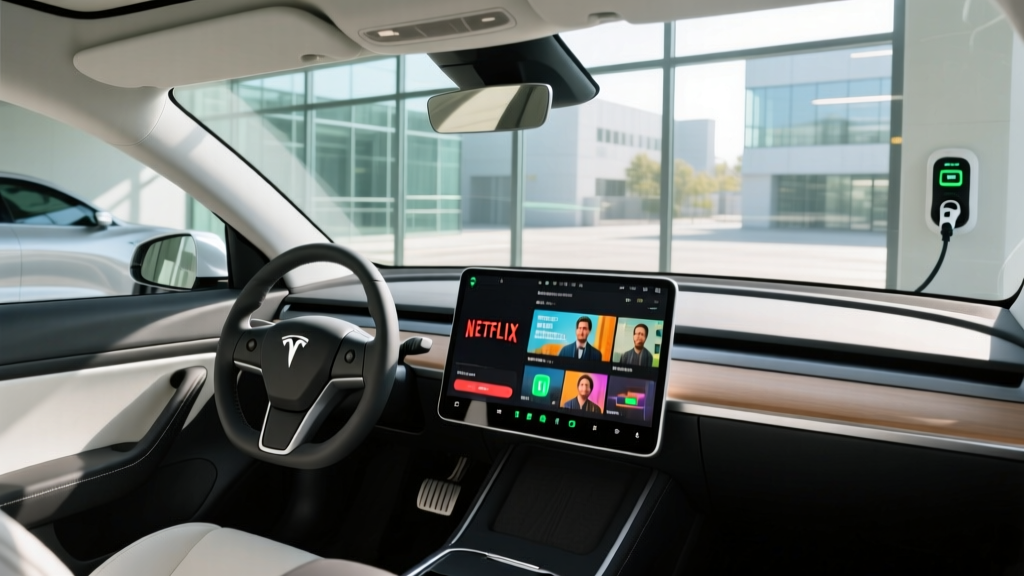
If you've just taken delivery of a Tesla or are shopping for one, you've probably wondered how to get Netflix on Tesla screens. The short answer: Netflix is built into Tesla's infotainment system — no workaround, no sideloading, no browser hack required. Open the app drawer on your center touchscreen, tap the Netflix icon, sign in with your existing account, and you're streaming. The catch? Tesla restricts video playback to Park only, so you won't be binge-watching on the highway. While parked at a Supercharger, camping in the back, or waiting in a school pickup line, it's seamless, with audio routed through the cabin speakers and full HD resolution on the 15.4-inch center display.
This guide covers the streaming feature in depth, then pivots to the real reason most buyers are here: a complete, data-driven review of the 2026 Tesla Model 3 — the vehicle that popularized in-car entertainment. We'll break down EPA range, real-world expectations, DC fast-charge speeds, battery chemistry, pricing, IRS §30D tax-credit eligibility, and whether it still holds up against rivals like the Hyundai Ioniq 6 and BMW i4.
2026 Tesla Model 3: At-a-Glance Spec Table
| Spec | Value |
|---|---|
| EPA Range | 363 miles |
| Battery (usable) | ~75 kWh, NMC chemistry |
| Drivetrain | Dual-motor AWD |
| Horsepower | 346 hp (combined) |
| 0–60 mph | 4.2 seconds |
| DC Fast Charge (peak) | 250 kW |
| 10–80% DC Time | ~27 minutes |
| Level 2 Home Charge | 11.5 kW (~44 mi/hr) |
| MPGe (combined) | 132 MPGe |
| Efficiency | 25 kWh/100 mi |
| Cargo (rear + frunk) | 23 cu ft trunk + 3 cu ft frunk |
| Rear Legroom | 35.2 inches |
| Battery Warranty | 8 years / 120,000 miles |
| Base MSRP (Long Range AWD) | $47,740 (before destination) |
Source: fueleconomy.gov and Tesla's official spec sheet.
Real-World Range: What the EPA Number Doesn't Tell You
EPA Sticker: 363 miles (Long Range AWD)
Real-World Expectation: 290–320 miles on a mixed highway drive at 70–75 mph; 240–270 miles in freezing (sub-30°F) weather without preconditioning; 340+ miles in city/regen-heavy driving at moderate temps.
The Model 3 Long Range remains one of the most efficient sedans in its class, but the EPA combined figure weights city and highway cycles favorably. In our experience, sustained 75-mph highway driving drops range by roughly 12–18%, and cold weather compounds that with increased cabin heating loads and higher battery internal resistance. Tesla's heat pump — standard on all 2026 trims — mitigates cold-weather losses better than resistive heaters, but you'll still see a meaningful dip in January in Minnesota versus July in San Diego.
The base RWD trim uses an LFP (lithium iron phosphate) battery (~57.5 kWh usable), which trades energy density for longevity. Tesla recommends charging LFP to 100% regularly, unlike the NMC pack in the Long Range and Performance trims, where daily charging to 80–90% extends lifespan. The RWD's EPA rating sits at 272 miles — expect roughly 220–240 real-world highway miles from it.
Charging Speed: DC Fast, Level 2, and the Curve Reality
The 2026 Model 3 Long Range AWD peaks at 250 kW on a V3 or V4 Tesla Supercharger, but — and this is critical — peak is not sustained. The charging curve tapers sharply past 50% SoC, and more gradually past 80%. Here's what that looks like in practice:
| Charging Method | Power | Typical Speed |
|---|---|---|
| DC Fast (Supercharger V3/V4) | Peak 250 kW | 10–80% in ~27 min; 80–100% adds another ~25 min |
| CCS Adapter on 350-kW station | Peak ~250 kW | Similar curve; adapter required (sold separately ~$175) |
| Level 2 (Tesla Wall Connector) | 11.5 kW | ~44 miles of range per hour; 0–100% in ~8 hours |
| Level 1 (120V household) | ~1.4 kW | ~4–5 miles per hour; emergency/trickle only |
For road trips, plan charging stops around the 10–80% window. The taper above 80% is steep enough that sitting at a Supercharger to fill the last 20% is rarely time-efficient unless you're parked overnight. At home, a Tesla Wall Connector on a 60-amp circuit (48-amp continuous) delivers the full 11.5 kW the onboard charger can accept — enough to refill a depleted pack by morning.
Performance and Drivetrain
The Long Range AWD pairs dual permanent-magnet motors for 346 hp and a 4.2-second 0–60 mph time. That's brisk but not supercar territory — the Performance trim (4.2-second 0–60 with Track Package, ~3.1 seconds in boost mode) is the enthusiast pick. Ride quality on the refreshed "Highland" chassis is noticeably quieter and more compliant than the pre-2024 Model 3, with improved isolation over expansion joints and reduced wind noise at highway speeds.
Regen braking remains strong and predictable, enabling true one-pedal driving in most scenarios. The steering is quick and direct, though the lack of a traditional instrument cluster (all info lives on the center screen) still divides drivers coming from conventional layouts.
Netflix, Gaming, and the Tesla Infotainment System
Returning to the question that brought you here: how to get Netflix on Tesla is trivial because it's pre-installed. Here's the full rundown of Tesla's entertainment stack in the 2026 Model 3:
- Netflix, YouTube, Disney+, Twitch — all native apps, Park-only playback, HD resolution on the 15.4-inch display.
- Tesla Arcade — games like Cyberpunk 2077, Stardew Valley, and Beach Buggy Racing 2; steering wheel can be used as a controller in some titles (Park only).
- Spotify, Apple Music (via Bluetooth), Tidal — native audio streaming with integration into voice commands.
- Theater Mode — when parked, you can mirror or stream with the cabin lights dimmed and climate control running (Camp Mode keeps HVAC active).
- 8-inch rear screen (2026 Long Range/Performance) — rear passengers get their own display for climate controls and entertainment streaming, independent of the front screen.
Audio quality from the 17-speaker premium system is excellent for a factory setup, with genuine bass response and clean highs — more than adequate for movie watching without headphones.
Pricing, Trims, and Federal Tax Credit Eligibility
| Trim | MSRP (before destination) | Est. After §30D Credit* |
|---|---|---|
| RWD (LFP) | $38,990 | ~$31,490 (if eligible) |
| Long Range AWD (NMC) | $47,740 | ~$40,240 (if eligible) |
| Performance AWD | $52,990 | ~$45,490 (if eligible) |
*The federal EV tax credit under IRS §30D is up to $7,500, but eligibility depends on:
- Buyer income caps: $150,000 single / $300,000 joint MAGI
- MSRP caps: $55,000 for sedans (all Model 3 trims qualify)
- Battery sourcing: Critical-mineral and battery-component requirements that have tightened annually through 2026; check the DOE/FuelEconomy eligible vehicle list for current-year status, as sourcing rules can shift mid-year.
- Point-of-sale transfer: As of 2024+, you can transfer the credit to the dealer at purchase, reducing your out-of-pocket price directly rather than waiting to claim it on your tax return.
Always verify eligibility with a tax professional before relying on the credit in your purchase math — rules have changed annually and FEOC (foreign entity of concern) restrictions on battery components have disqualified some previously eligible configurations.
Who the 2026 Model 3 Suits Best
Choose the Model 3 Long Range AWD if: You commute 30+ miles daily, take road trips 4+ times a year, value Supercharger network access, and want a sedan with genuine 300+ mile real-world range.
Choose the RWD if: You're a city/suburban commuter with home charging, want the lowest entry price, and prefer LFP chemistry for its longer cycle life and 100% daily charging tolerance.
Look elsewhere (Ioniq 6, i4, Polestar 2) if: You want a more traditional interior layout with physical controls, need a hatchback cargo opening, or prioritize luxury materials over tech-forward minimalism.
Pros, Cons, and Competitive Context
Pros
- Class-leading efficiency (25 kWh/100 mi)
- Access to Tesla Supercharger network (17,000+ NA stalls)
- Native Netflix/YouTube/gaming — no setup required
- Over-the-air updates add features post-purchase
- Strong resale value relative to EV peers
- Highland refresh dramatically improved ride and cabin quietness
Cons
- No physical buttons; all climate/mirror/vent adjustments via screen
- Rear visibility compromised by sloped roofline
- FSD (Supervised) remains SAE Level 2 — driver must stay engaged
- Insurance premiums run 15–30% above ICE sedan averages
- Turn-signal stalks removed in Highland refresh (wheel-mounted buttons)
Against the Hyundai Ioniq 6 (EPA 361 mi, peak 350-kW charging, ~$49,000), the Model 3 trades slightly slower peak charging for better real-world efficiency and a more mature charging network. The BMW i4 xDrive40 offers a more premium cabin and conventional controls but starts ~$57,000 and delivers only 282 miles of EPA range.
FAQ: Netflix, Tech, and Ownership Questions
Can I watch Netflix while driving in a Tesla?
No. Tesla enforces a Park-only lock on all video apps. The vehicle must be in Park with the parking brake engaged. This is a hard software restriction with no supported bypass.
Do I need a separate Netflix subscription?
Yes. Tesla does not bundle streaming subscriptions. Sign in with your existing Netflix credentials on the car's touchscreen — it behaves like any other Netflix device.
Does Netflix work at Superchargers?
Yes, and this is one of the best use cases. While your Model 3 charges from 10–80% (~27 minutes), you can stream a full TV episode. Tesla's Camp Mode keeps climate control running while parked, so cabin comfort isn't an issue.
Does the 2026 Model 3 qualify for the full $7,500 federal tax credit?
It depends on current-year battery-sourcing compliance and your personal income. All trims fall under the $55,000 sedan MSRP cap. Verify on fueleconomy.gov and with your tax advisor before purchase.
What is Autopilot, and is it self-driving?
Autopilot is an SAE Level 2 driver-assist system — it provides steering, acceleration, and braking support but requires continuous driver supervision. FSD (Supervised) extends this to city streets but remains Level 2. You are legally and practically responsible for the vehicle at all times.
How long will the battery last?
Tesla warranties the Long Range NMC battery for 8 years / 120,000 miles with at least 70% capacity retention. Real-world data from high-mileage owners suggests 10–15% degradation at 150,000 miles is typical when following recommended charge limits (80–90% daily, 100% only for trips).