The Short Answer: How to Charge an Electric Car at Home
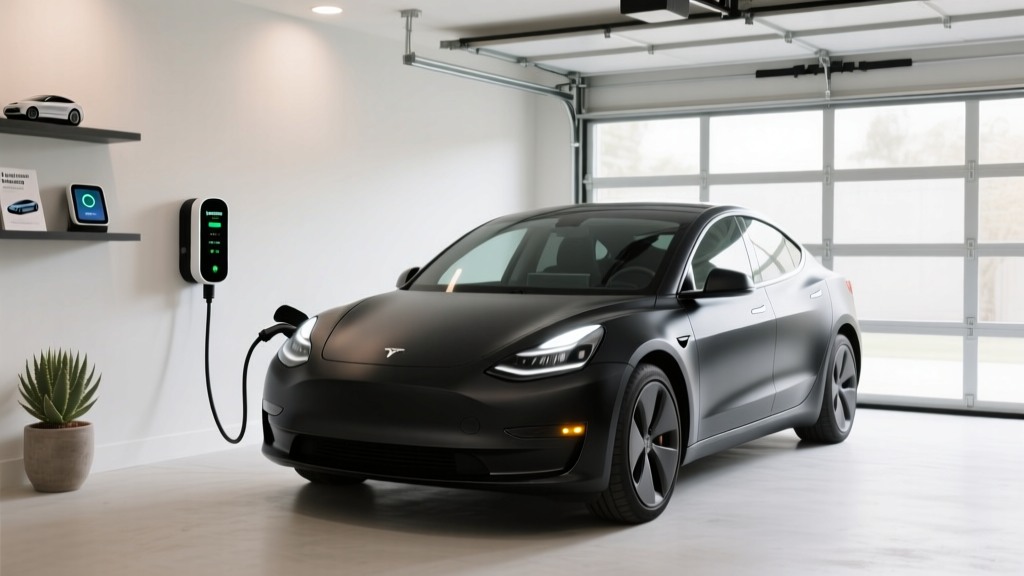
You have two realistic options. Level 1 charging uses a standard 120V household outlet and the cord that ships with most EVs, adding roughly 3–5 miles of range per hour — enough for short daily commutes under 30 miles. Level 2 charging requires a 240V circuit (like a dryer outlet) and a dedicated EVSE (Electric Vehicle Supply Equipment) unit, adding 25–44 miles per hour, which fully replenishes most EV batteries overnight. A Level 2 home installation typically costs $1,200–$2,800 all-in (equipment plus licensed electrician), and the average U.S. residential electricity rate of $0.17/kWh means a full charge for a 75 kWh battery costs roughly $12.75 — about one-third the cost of filling a comparable gas car.
Level 1 vs. Level 2: What Each Setup Actually Delivers
The single most important distinction in EV charging is the difference between kW (power — how fast energy flows) and kWh (energy — how much your battery holds). Think of kW as the width of a hose and kWh as the size of the bucket. A wider hose fills the bucket faster, but the bucket's size doesn't change.
| Charging Level | Voltage | Power Output | Miles Added/Hour | Full Charge Time (75 kWh Battery) | Best For |
|---|---|---|---|---|---|
| Level 1 | 120V (standard outlet) | 1.0–1.4 kW | 3–5 miles | 50–75 hours | Short commutes, PHEVs, budget setup |
| Level 2 | 240V (dedicated circuit) | 7.2–11.5 kW | 25–44 miles | 6.5–10 hours | Daily drivers, full overnight replenishment |
| DC Fast Charge | 400–800V (public station) | 50–350 kW | N/A (session-based) | 15–45 min (10–80%) | Road trips, no home charging access |
For context, a 2026 Tesla Model Y Long Range with an 82 kWh (usable ~78 kWh) battery would need roughly 55 hours on Level 1 from empty to full — clearly impractical for most owners. The same vehicle on a 48-amp (11.5 kW) Level 2 charger replenishes in about 7 hours, making overnight charging effortless. The Hyundai Ioniq 5 with its 77.4 kWh battery charges similarly on Level 2, though its 800V architecture gives it a significant advantage at DC fast chargers (peak 240 kW, 10–80% in approximately 18 minutes).
Level 2 Installation: What It Costs and What's Involved
Most EV owners who install a Level 2 charger at home report high satisfaction, but the upfront investment is real and varies widely depending on your home's electrical infrastructure. Here's a realistic cost breakdown based on 2026 national averages:
| Component | Low Estimate | High Estimate | Notes |
|---|---|---|---|
| EVSE hardware (Level 2 charger) | $300 | $700 | ChargePoint Home Flex, Emporia Level 2, Tesla Wall Connector |
| Electrical permit | $50 | $200 | Varies by municipality; required in most jurisdictions |
| Electrician labor (simple install) | $400 | $800 | Panel has capacity; short wire run to garage |
| Electrician labor (complex install) | $800 | $2,000+ | Long wire runs, conduit, or sub-panel needed |
| Electrical panel upgrade (if needed) | $1,500 | $3,500 | Upgrading from 100A to 200A service |
| Total (no panel upgrade) | $750 | $1,700 | Most common scenario |
| Total (with panel upgrade) | $2,250 | $5,200 | Older homes with 100A service |
The Panel Upgrade Gotcha
Before purchasing any EVSE, have a licensed electrician evaluate your electrical panel. A 48-amp Level 2 charger requires a 60-amp dedicated circuit (NEC code requires circuits be rated at 125% of continuous load). If your home has a 100-amp main panel that's already near capacity, you'll need either a panel upgrade or a load-management device like the Emporia Smart Charger with automatic load balancing, which can avoid a costly panel swap by throttling charge rate when other large appliances are running.
Federal and Utility Incentives
The federal Residential Clean Energy Credit (IRS Form 5695) covers 30% of EVSE equipment and installation costs, up to $1,000 — but only if you live in a qualifying non-urban census tract. Many utility companies also offer rebates of $250–$500 for Level 2 installations. Check with your local utility and consult a tax professional to confirm eligibility, as rules vary by location and tax year.
What Home Charging Actually Costs vs. Gas
The economic case for home charging hinges on your local electricity rate and driving habits. The U.S. Energy Information Administration reports the national average residential electricity price at approximately $0.17/kWh as of early 2026, though this ranges from $0.11/kWh in states like Idaho and Louisiana to over $0.30/kWh in California and Hawaii.
| Metric | EV (Home Charging) | Gas Car (30 MPG Combined) |
|---|---|---|
| Energy/fuel cost per gallon-equivalent | $3.40–$5.10 (at $0.11–$0.17/kWh) | $3.10–$3.80 (national avg. gas price) |
| Cost to "fill up" (300-mile range / 12-gal tank) | $8.25–$12.75 (for 75 kWh battery) | $37.20–$45.60 |
| Annual fuel cost (12,000 miles/year) | $408–$612 | $1,240–$1,520 |
| 5-year fuel cost | $2,040–$3,060 | $6,200–$7,600 |
| Maintenance (5-year) | ~$1,500–$2,500 (no oil, fewer brakes) | ~$3,500–$5,000 |
Even at the higher end of electricity pricing, home-charged EVs deliver meaningful per-mile savings. The gap widens further if you have access to time-of-use (TOU) rates, where charging during off-peak hours (typically 10 PM–6 AM) can drop your effective rate to $0.08–$0.10/kWh, reducing a full 75 kWh charge to just $6–$7.50.
Real-World Ownership Considerations Most Guides Skip
Apartment and Condo Charging
Not everyone has a garage or dedicated parking spot. If you live in a multi-unit dwelling, your options depend on building infrastructure. Some newer apartments offer shared Level 2 stations; others require you to rely on public DC fast charging networks like Electrify America, EVgo, or Tesla Superchargers. Public DC fast charging costs significantly more — typically $0.30–$0.48/kWh — which can erase much of the fuel-cost advantage over gas. Before buying an EV without home charging access, map your nearest reliable public chargers and calculate the real per-mile cost.
Cold Weather Range and Charging Impact
Battery chemistry is temperature-sensitive. In sub-freezing conditions, expect 20–30% range loss compared to EPA estimates, primarily due to cabin heating demands and reduced battery efficiency. A 2026 Chevrolet Equinox EV rated at 319 miles EPA may deliver 220–255 miles in sustained 20°F weather. Cold batteries also accept charge more slowly — preconditioning (warming the battery before a charging session) is essential for maintaining reasonable charge speeds in winter. Most modern EVs, including Tesla, Hyundai/Kia, and Ford models, offer battery preconditioning as a standard feature, often activated automatically when you navigate to a charger.
Charging Speed Taper: Why the Last 20% Takes Forever
EV batteries charge fastest between 10% and 80% State of Charge (SoC). Above 80%, the Battery Management System (BMS) dramatically reduces charge rate to protect cell longevity — this is called the charge curve taper. On a Level 2 home charger, this is irrelevant since you're charging overnight anyway. But at DC fast chargers, it means charging from 80–100% can take as long as 10–80%. For daily home charging, setting your charge limit to 80% (for NMC/NCA batteries) or 100% (for LFP batteries) optimizes long-term battery health.
Common EV Home Charging Myths — Corrected
| Myth | Fact |
|---|---|
| "You need a special 240V outlet to own an EV." | Level 1 charging on a standard 120V outlet works for drivers with commutes under 30 miles and access to occasional DC fast charging for longer trips. |
| "Home charging will spike my electric bill." | At $0.17/kWh and 12,000 miles/year, expect roughly $50/month added to your bill — offset by $100+ in eliminated gas costs. |
| "EV batteries degrade quickly from daily charging." | Modern EV batteries with active thermal management retain 90%+ capacity after 100,000 miles. Federal law mandates warranty coverage of at least 8 years/100,000 miles for battery capacity (typically guaranteed above 70% SoH). |
| "I need to charge every night." | Most EVs with 250+ miles of range only need charging 2–3 times per week for average driving. Set a charge limit and let the car manage it. |
| "All Level 2 chargers are the same." | Amperage matters: a 32-amp charger delivers 7.7 kW (~28 mi/hr), while a 48-amp unit delivers 11.5 kW (~42 mi/hr). Match the charger to your vehicle's onboard charger capacity. |
EV vs. Gas: The Full Ownership Picture
Home charging economics don't exist in isolation. Here's how a typical mid-size EV compares to a comparable gas vehicle over 5 years of ownership, using a 2026 Tesla Model 3 RWD ($38,990 MSRP) versus a 2026 Toyota Camry LE ($29,995 MSRP) as representative examples:
| Factor | 2026 Tesla Model 3 RWD (EV) | 2026 Toyota Camry LE (Gas) |
|---|---|---|
| MSRP | $38,990 | $29,995 |
| Federal tax credit (§30D) | Up to $7,500 (subject to income, MSRP caps, and battery sourcing rules — see IRS §30D guidelines) | |
| Effective purchase price | ~$31,490 (if full credit applies) | $29,995 |
| EPA efficiency | 132 MPGe combined | 32 MPG combined |
| Annual fuel/energy cost | ~$510 (home charging, $0.17/kWh) | ~$1,350 ($3.40/gal, 12,000 mi/yr) |
| 5-year fuel/energy | ~$2,550 | ~$6,750 |
| 5-year maintenance | ~$2,000 | ~$4,200 |
| Home charger install | ~$1,200 (one-time) | N/A |
| 5-year total operating cost | ~$5,750 | ~$10,950 |
The EV's higher upfront cost is substantially offset by the federal tax credit and dramatically lower operating expenses. Over 5 years, the Model 3 owner saves roughly $5,200 in fuel and maintenance — more than covering the charger installation and the residual price gap. However, this math assumes reliable home charging access. Exclusive reliance on public DC fast charging at $0.35–$0.48/kWh would push annual energy costs to $1,050–$1,440, narrowing the advantage significantly.
Decision Framework: Which Home Charging Setup Is Right for You?
Choose Level 1 (120V, No Installation) If:
- Your daily round-trip commute is under 30 miles
- You own a PHEV with a smaller battery (e.g., Toyota RAV4 Prime, 18.1 kWh — fully recharges in ~5 hours on Level 1)
- You're renting and can't modify electrical infrastructure
- You want to try EV ownership with zero installation investment before committing to Level 2
Choose Level 2 (240V, Professional Install) If:
- Your daily driving exceeds 40 miles round-trip
- You own a full BEV with a 60+ kWh battery
- You want the convenience of a full overnight charge regardless of daily mileage
- Your electrical panel has spare capacity (a 60-amp breaker slot available)
- You plan to stay in your home for 3+ years to recoup the installation investment
Rely on Public DC Fast Charging If:
- You live in an apartment with no charging access and your workplace doesn't offer chargers
- Your weekly mileage is low enough that one or two 20-minute DC sessions suffice
- You understand that exclusive public charging costs 2–3x more than home charging and may approach gas-car fueling costs
Equipment Picks for 2026
Three Level 2 chargers consistently earn strong marks for reliability, app integration, and build quality:
- ChargePoint Home Flex ($599–$699): Adjustable from 16–50 amps, NACS and J1772 plug options, robust app with scheduling and energy tracking.
- Tesla Wall Connector ($475): 48-amp output, NACS connector native (J1772 adapter available), Wi-Fi enabled, best for Tesla-only households.
- Emporia Level 2 Smart Charger ($399): 48-amp, built-in energy monitoring, load-management capability to avoid panel upgrades, best value option.
Frequently Asked Questions
Can I plug my EV into a regular household outlet?
Yes. Every EV sold in the U.S. includes or offers a Level 1 charging cord that plugs into a standard 120V (NEMA 5-15) outlet. Expect 3–5 miles of range per hour of charging. This is adequate for PHEVs and low-mileage BEV drivers, but most full EV owners upgrade to Level 2 for daily convenience.
Do I need a permit to install a Level 2 charger?
In most jurisdictions, yes. A licensed electrician will typically pull the permit as part of the installation. Costs range from $50–$200 depending on your municipality. Skipping permits risks insurance complications and code violations that may surface during a home sale.
How much will my electric bill increase with an EV?
At the national average of $0.17/kWh and 12,000 miles driven annually in a vehicle rated at 3.5 miles/kWh (typical for a mid-size EV), you'll use approximately 3,429 kWh per year for charging — adding roughly $583 annually, or about $49 per month. Time-of-use plans can reduce this by 30–40% if you schedule charging during off-peak hours.
Should I charge to 100% every night?
It depends on your battery chemistry. Vehicles with NMC or NCA batteries (most Teslas, Hyundai/Kia, Ford) benefit from a daily charge limit of 80% to minimize degradation — charge to 100% only before long trips. Vehicles with LFP batteries (Tesla Model 3 RWD, some BYD models) should be charged to 100% at least weekly for accurate SoC calibration. Check your owner's manual for manufacturer-specific guidance.
What if I want to sell my house — does a Level 2 charger add value?
A hardwired Level 2 charger is generally viewed as a positive feature by prospective buyers, especially as EV adoption grows. However, it's unlikely to increase your home's appraised value dollar-for-dollar against the installation cost. If resale is a near-term concern, consider a plug-in Level 2 unit on a NEMA 14-50 outlet that you can take with you when you move.
Is a smart charger worth the extra cost?
Smart chargers (Wi-Fi connected) offer scheduling, energy tracking, utility demand-response integration, and firmware updates. For most owners, the $100–$200 premium over a dumb charger is worthwhile for the scheduling feature alone — set your car to charge between midnight and 5 AM on a TOU plan and the charger pays for itself within a year through off-peak savings. The U.S. Department of Energy's EV technology guide provides additional detail on charging best practices.