Rivian in 2026: What You're Actually Buying
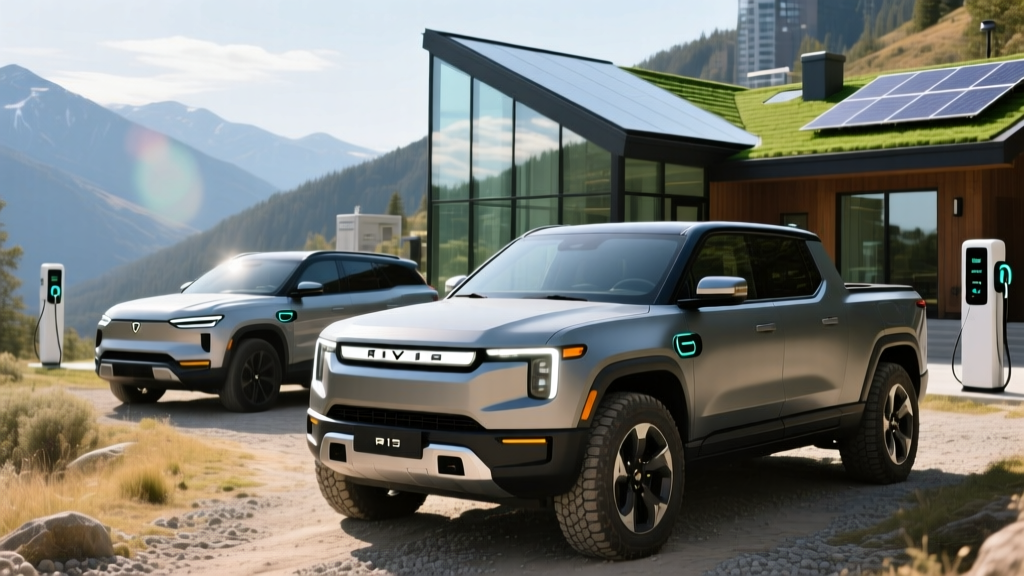
Rivian's second-generation R1T pickup and R1S SUV arrived with a completely re-engineered electrical architecture, new battery chemistries, and faster charging. If you're researching how to buy a Rivian, the decision tree starts with two body styles, three battery sizes, and a pricing ladder that stretches from $69,900 to over $100,000. This guide breaks down every spec, real-world range expectation, charging speed, and tax-credit nuance you need before placing an order.
Unlike legacy automakers, Rivian sells direct — no dealership negotiation, no markups. You configure online, place a $1,000 refundable deposit, and wait for a build slot. But the simplicity of the sales model doesn't simplify the spec sheet. Battery chemistry choices (LFP vs. NMC), dual- vs. quad-motor configurations, and tow-package trade-offs all materially affect your daily ownership experience.
Pick Your Platform: R1T vs. R1S at a Glance
The R1T is a midsize crew-cab pickup with a 4.5-foot bed and a unique Gear Tunnel (lockable, pass-through storage behind the rear seats). The R1S is a three-row SUV seating up to seven. Both share the same skateboard platform, battery options, and powertrain choices for the 2025/2026 model years.
| Spec | R1T (Dual-Motor Standard) | R1S (Dual-Motor Standard) | R1T (Tri-Motor Max) | R1S (Quad-Motor) |
|---|---|---|---|---|
| EPA Range | 270 mi | 261 mi | 420 mi | 410 mi |
| Battery (usable) | 92 kWh (LFP) | 92 kWh (LFP) | 149 kWh (NMC) | 149 kWh (NMC) |
| Horsepower | 533 hp | 533 hp | 850 hp | 1,025 hp |
| 0–60 mph | 4.5 sec | 4.7 sec | 2.9 sec | 2.5 sec |
| Drivetrain | Dual-Motor AWD | Dual-Motor AWD | Tri-Motor AWD | Quad-Motor AWD |
| Max Tow Capacity | 11,000 lbs | 7,700 lbs | 11,000 lbs | 7,700 lbs |
| Base MSRP | $69,900 | $74,900 | $99,900 | $104,900 |
Real-World Range: Beyond the EPA Sticker
EPA vs. Reality: The Max Pack's 420-mile EPA rating is among the highest of any production EV. In real-world highway driving at 70–75 mph in moderate temperatures (55–75°F), expect 340–370 miles before needing a charge. In cold weather (below 32°F), that drops to approximately 280–310 miles due to battery resistance and cabin heating demands. The Standard Pack (LFP, 270 mi EPA) yields roughly 220–240 miles on the highway in fair conditions.
The LFP (lithium iron phosphate) chemistry in the Standard Pack has a key advantage: you can charge it to 100% daily without the long-term degradation concerns that NMC batteries carry. Rivian recommends keeping NMC Max and Large packs between 20–80% for routine use, reserving 100% charges for road trips. LFP's lower energy density is why the Standard Pack holds less energy (92 kWh usable) in roughly the same physical volume as the NMC Large Pack (117 kWh usable).
For context on efficiency, the Dual-Motor R1T Standard achieves roughly 73 MPGe combined (per fueleconomy.gov), translating to about 46 kWh/100 mi. The heavier Max and Quad-Motor variants dip to the mid-60s MPGe — physics demands more energy to move 7,000+ lbs with 1,000 hp.
Charging Speed: DC Fast Charge and Home Level 2
Rivian's Gen 2 architecture uses an 800V electrical system on Max and Large packs, enabling significantly faster DC fast charging than the Gen 1 vehicles. The Standard (LFP) pack operates at 400V.
| Charging Level | Standard (LFP, 92 kWh) | Large (NMC, 117 kWh) | Max (NMC, 149 kWh) |
|---|---|---|---|
| DC Fast Charge (peak) | 200 kW | 300 kW | 300 kW |
| 10–80% DCFC time | ~28 min | ~21 min | ~24 min |
| Level 2 (home, 11.5 kW) | ~9 hrs (0–100%) | ~11 hrs (0–100%) | ~14 hrs (0–100%) |
| Miles added per hour (L2) | ~25 mi/hr | ~25 mi/hr | ~25 mi/hr |
A critical nuance: peak kW is not sustained kW. The Max Pack hits 300 kW only briefly in the 10–30% state-of-charge window, then tapers progressively. The 10–80% average is closer to 180–200 kW. Rivian's navigation system preconditions the battery when you route to a charger — always use this feature to avoid sluggish cold-battery charging.
At home, the Rivian Wall Charger delivers up to 11.5 kW on a 48-amp circuit (60-amp breaker required). That's enough to replenish a Standard Pack overnight. Max Pack owners who drive 100+ miles daily may want to install a second charger or rely on opportunistic DC fast charging during the week. Expect home installation costs of $500–$2,000 depending on panel proximity and whether your electrical panel needs a 200-amp upgrade ($1,500–$3,500 additional).
Rivian vehicles come with NACS (North American Charging Standard) ports natively on Gen 2 models, granting access to Tesla Supercharger stalls (now opened to non-Tesla vehicles via Magic Dock adapters at many locations) as well as Electrify America, EVgo, and other networks.
Pricing, Trims, and the Federal Tax Credit Question
Rivian's direct-sales model means the MSRP you see is the price you pay — no dealer markups. However, options add up quickly. A Dual-Motor R1T with the Large Pack, Forest Green paint, and the Adventure Package (premium interior, air suspension) can climb from $69,900 to $85,000+.
| Configuration | Base MSRP | Typical As-Tested | §30D Credit Eligible? |
|---|---|---|---|
| R1T Dual-Motor Standard | $69,900 | $72,000–$76,000 | Yes (under $80K truck cap) |
| R1T Dual-Motor Large | $77,900 | $82,000–$88,000 | No (exceeds $80K MSRP cap) |
| R1S Dual-Motor Standard | $74,900 | $78,000–$82,000 | Yes (under $80K SUV cap) |
| R1S Dual-Motor Large | $82,900 | $87,000–$93,000 | No (exceeds $80K MSRP cap) |
| R1T Tri-Motor Max | $99,900 | $104,000+ | No (exceeds $80K cap) |
| R1S Quad-Motor | $104,900 | $110,000+ | No (exceeds $80K cap) |
The IRS §30D Clean Vehicle Credit has strict rules that eliminate most Rivian configurations from the full $7,500 benefit:
- MSRP cap: Trucks (R1T) must be ≤$80,000; SUVs/vans (R1S) must be ≤$80,000. Only the Standard Pack base models qualify.
- Buyer income cap: Modified AGI ≤$150,000 (single), ≤$300,000 (joint), ≤$225,000 (head of household).
- Battery sourcing: Critical minerals and battery components must meet escalating domestic/free-trade-agreement percentages. Rivian sources cells from Samsung SDI (South Korea, an FTA partner), but specific pack configurations must be verified at point of sale via the IRS VIN-check tool.
- Point-of-sale transfer: You can elect to transfer the credit to Rivian at purchase, reducing your out-of-pocket cost immediately rather than waiting for tax filing.
Practical implication: If you want the tax credit, you're looking at a base Dual-Motor Standard R1T or R1S — and you must stay under the MSRP ceiling even with options. A $1,200 paint upgrade or $2,500 wheel option can push you over the limit.
Performance, Cargo, and Daily Livability
Even the "base" Dual-Motor Rivians produce 533 hp and hit 60 mph in under 5 seconds — brisk for vehicles weighing 6,800–7,100 lbs. The Quad-Motor R1S (1,025 hp, 2.5-second 0–60) is genuinely supercar-quick, though that performance comes with a 410-mile Max Pack adding roughly 500 lbs over the Standard.
R1T cargo: The 4.5-foot bed holds 29 cu ft with the tailgate up. The Gear Tunnel adds 11 cu ft of secure, weatherproof storage — ideal for charging cables, recovery gear, or a week's groceries. Total payload: ~1,760 lbs.
R1S cargo: 105 cu ft behind the first row (seats folded), 47 cu ft behind the second row, and 21 cu ft behind the third row. Third-row legroom is 30.4 inches — tight for adults on long trips but adequate for children. Second-row legroom is a generous 38.6 inches.
Towing: The R1T's 11,000-lb max tow rating is competitive with midsize gas trucks, but towing at capacity reduces range by roughly 40–50%. Plan for 180–220 miles between charges when towing heavy on the Max Pack. The R1S tows up to 7,700 lbs.
Driver assistance: Rivian's Driver+ system is a Level 2 SAE hands-on system combining adaptive cruise control and lane centering. It is competent on highways but requires active driver supervision — this is not a hands-off or "self-driving" system. Rivian has not yet released a hands-free highway system comparable to GM's Super Cruise or Ford's BlueCruise.
Warranty, Reliability, and Ownership Costs
Rivian provides a 8-year/175,000-mile battery and drive-unit warranty, which is among the most generous in the industry. The bumper-to-bumper warranty covers 5 years/60,000 miles. Battery degradation data on Gen 2 vehicles is still accumulating, but Gen 1 NMC packs have shown approximately 5–8% capacity loss over 60,000 miles in owner-reported data. LFP packs are expected to degrade more slowly over equivalent cycles, though they start with less total capacity.
Insurance costs are a real factor: Rivian R1T and R1S premiums average $2,800–$3,600 annually depending on state, driving record, and trim — roughly 25–40% higher than comparable gas trucks/SUVs, reflecting repair costs and parts availability for a low-volume manufacturer.
Maintenance is minimal compared to ICE trucks: no oil changes, no transmission fluid, no spark plugs. Expect to budget for tire rotation every 7,500 miles, cabin air filter replacement, and brake fluid checks. Regenerative braking significantly extends pad life — many owners report 80,000+ miles on original brake pads.
Who Should Buy a Rivian (and Who Shouldn't)
Choose the R1T if: You need a midsize truck for weekend towing, outdoor gear, or light worksite use, and you want EV running costs with no range compromises on the Max Pack. The Gear Tunnel is a genuinely unique utility feature no competitor offers.
Choose the R1S if: You need three rows for family duty, prefer SUV ride height and cargo flexibility, and don't need to tow over 7,700 lbs. The R1S competes most directly with the Tesla Model X and the upcoming electric Grand Cherokee.
Look elsewhere if: Budget is your primary constraint (the Ford F-150 Lightning starts around $55,000), you need a full-size 8-foot bed, or you want a proven hands-free highway driving system. Rivian's service center network is also still expanding — if you live in a rural area far from a Rivian service hub, factor in potential mobile-service wait times.
How to Actually Place Your Order
- Configure online at rivian.com: Choose R1T or R1S, select battery pack (Standard/Large/Max), motor config (Dual/Tri/Quad), exterior/interior, and packages.
- Place a $1,000 refundable deposit to hold your place in the build queue. Wait times vary by configuration — Standard and Large packs typically build within 2–4 months; Max Packs and Quad-Motor configs may take 4–6 months.
- Verify tax credit eligibility before finalizing: check your AGI against IRS limits, confirm the MSRP stays under the $80K cap, and use the IRS VIN-check tool once your vehicle is assigned.
- Arrange home charging: Get a quote from a licensed electrician for a 60-amp circuit (NEMA 14-50 or hardwired Wall Charger). Budget $500–$2,000 for standard installs; add $1,500–$3,500 if a panel upgrade is needed.
- Take delivery at a Rivian Service Center or via at-home delivery (available in select metro areas). Rivian provides a 7-day/1,000-mile return window on new vehicles.
Pros, Cons, and the Bottom Line
Pros
- Class-leading range on Max Pack (420 mi EPA)
- LFP Standard Pack allows daily 100% charging with minimal degradation
- 800V architecture enables 300 kW peak DCFC (10–80% in ~21–24 min)
- 8-year/175,000-mile battery warranty exceeds most competitors
- Direct sales model — no dealer markups
- Gear Tunnel (R1T) is a genuinely innovative storage solution
- Strong off-road capability with quad-motor torque vectoring
Cons
- Only base Standard Pack configs qualify for §30D tax credit
- High starting price ($69,900+ R1T, $74,900+ R1S)
- Insurance premiums 25–40% above comparable ICE trucks
- No hands-free highway driving system (Level 2 only, hands-on required)
- Third-row R1S is cramped for adults (30.4" legroom)
- Service center network still expanding outside major metros
- Towing at max capacity cuts range by 40–50%
Frequently Asked Questions
What is the real-world range of a Rivian R1T?
The EPA rates the R1T Dual-Motor Standard at 270 miles and the Tri-Motor Max at 420 miles. Real-world highway driving at 70 mph yields approximately 220–240 miles (Standard) and 340–370 miles (Max) in moderate temperatures. Cold weather (below freezing) reduces range by 15–25%.
How fast does a Rivian charge at home and on the road?
On a DC fast charger, the Large and Max packs peak at 300 kW, charging from 10–80% in about 21–24 minutes. The Standard (LFP) pack peaks at 200 kW with a 10–80% time of roughly 28 minutes. At home on a Level 2 (11.5 kW) charger, expect about 25 miles of range added per hour, or a full overnight charge for the Standard Pack.
Does the Rivian R1T or R1S qualify for the $7,500 federal EV tax credit?
Only the base Dual-Motor Standard configurations (R1T at $69,900, R1S at $74,900) fall under the $80,000 MSRP cap required by IRS §30D. You must also meet income limits ($150K single / $300K joint) and the vehicle must pass battery-sourcing requirements. Adding options that push MSRP above $80,000 eliminates eligibility. Always verify via the IRS VIN-check tool before purchase.
Is a Rivian worth buying versus a Ford F-150 Lightning or Tesla Model X?
The R1T offers more range (420 mi Max vs. Lightning's 320 mi Extended Range), superior off-road capability, and the Gear Tunnel — but starts ~$15,000 higher. The R1S is more rugged and adventure-focused than the Model X but lacks the Tesla Supercharger network's seamlessness (though NACS access is closing that gap). If budget is the priority, the Lightning wins. If range and adventure utility matter most, Rivian leads.
What's the biggest drawback of owning a Rivian?
The two most-cited owner pain points are the high purchase price (especially once options push you past $85,000) and the still-growing service center network. If you live more than 90 minutes from a Rivian service hub, repairs that can't be handled by mobile service may require multi-day loaner logistics. Insurance costs are also notably higher than ICE equivalents.
How long will the Rivian battery last?
Rivian warranties the battery for 8 years/175,000 miles against defects and excessive degradation (typically defined as loss below 70% capacity). LFP Standard packs are expected to retain capacity well beyond the warranty period due to LFP's superior cycle life. NMC Large and Max packs should comfortably reach 150,000+ miles with routine 20–80% charging habits.