The Rivian Buying Process: Direct-to-Consumer Explained
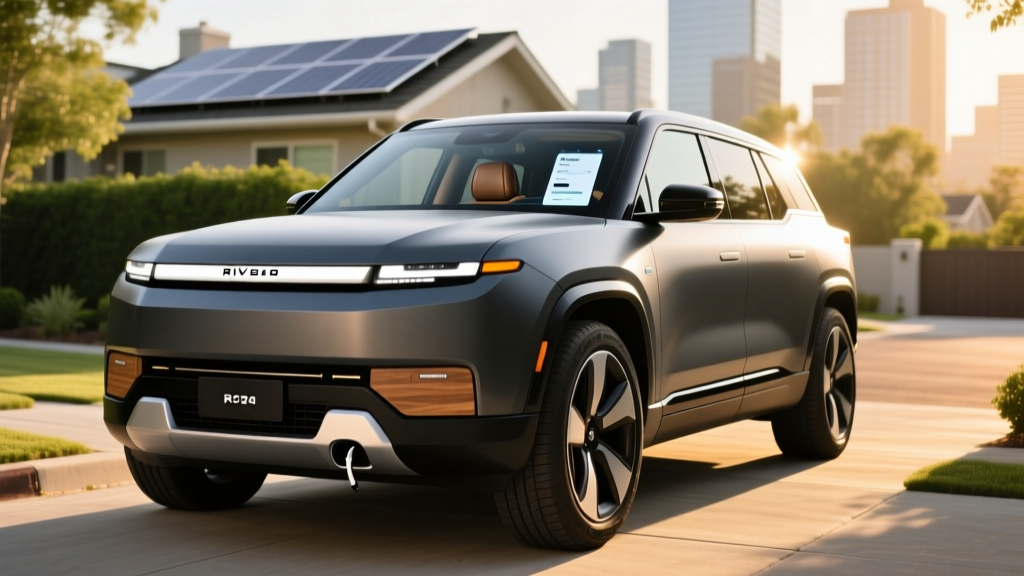
If you've been searching "how do you buy a Rivian" and expecting a traditional dealership experience, the answer is straightforward: you don't visit a dealer. Rivian sells directly to consumers through its website and company-owned Rivian Spaces (showrooms in select metro areas). There are no franchised dealerships, no haggling over invoice prices, and no dealer markups — the price you see on Rivian's configurator is the price you pay.
Here's how the order-to-delivery pipeline actually works in 2026:
- Configure and reserve: Build your R1S (or R1T) on Rivian's website. A $1,000 fully refundable reservation deposit locks your place in the queue.
- Trim and option selection: Choose your battery pack (Standard, Large, or Max), drivetrain (Dual-Motor or Quad-Motor), and appearance packages. Pricing is fixed.
- Production matching: As Rivian builds vehicles at its Normal, Illinois factory, your configuration enters the production queue. Wait times in 2026 typically run 4–10 weeks depending on configuration and demand.
- Delivery: Rivian ships directly to your door or to a regional service center for pickup. You'll complete financing, registration, and insurance paperwork digitally before delivery day.
There's no negotiation. Rivian occasionally offers referral credits or seasonal promotions, but the MSRP is non-negotiable — a model that frustrates some buyers accustomed to dealer bargaining but eliminates the worst pain points of traditional car buying.
Rivian R1S: 2026 Specs at a Glance
| Specification | Dual-Motor (Large Pack) | Quad-Motor (Max Pack) |
|---|---|---|
| EPA Range | 352 miles | 410 miles |
| Battery (usable) | ~109 kWh (NMC) | ~141 kWh (NMC) |
| Horsepower | 533 hp | 850 hp |
| 0-60 mph | 4.5 sec | 2.9 sec |
| Drivetrain | AWD (2 motors) | AWD (4 motors, torque vectoring) |
| Max DC Fast Charge | 200 kW | 200 kW |
| 10-80% DC Time | ~30 min | ~42 min |
| Level 2 Home Charging | 11.5 kW (~25 mi/hr) | 11.5 kW (~25 mi/hr) |
| Towing Capacity | 7,700 lbs | 7,700 lbs |
| Cargo (behind 3rd row) | 20.5 cu ft | 20.5 cu ft |
| Cargo (all rows folded) | 104.7 cu ft | 104.7 cu ft |
| Base MSRP | $84,900 | $104,900 |
The R1S is a three-row electric SUV positioned against the Tesla Model X, BMW iX, and the upcoming electric Grand Cherokee. It's the only electric SUV in its class that combines serious off-road capability (up to 14.9 inches of ground clearance with the air suspension) with genuine three-row seating and a 7,700-pound tow rating.
Real-World Range: What the EPA Number Doesn't Tell You
The Dual-Motor R1S with the Large Pack carries an EPA-estimated 352 miles. The Max Pack Quad-Motor pushes that to 410 miles. These are legitimate numbers, but real-world results depend heavily on how you drive.
- Highway driving (75 mph+): Expect 280–310 miles from the Large Pack. The R1S's boxy aerodynamic profile creates significant drag at sustained highway speeds — roughly 15–20% below EPA.
- Cold weather (below 32°F): Range drops 20–30% due to battery resistance and cabin heating demands. A Large Pack R1S in a Minnesota winter may deliver 240–270 miles.
- City/suburban mixed driving: This is where the R1S shines. Regenerative braking recaptures energy in stop-and-go traffic, and you'll meet or slightly exceed EPA estimates.
- Towing: Hitching a 5,000-lb trailer cuts range roughly in half. Plan for 150–180 miles between charges when towing.
Source: EPA fueleconomy.gov
The R1S uses NMC (nickel manganese cobalt) lithium-ion cells supplied primarily by Samsung SDI. Rivian has not adopted LFP chemistry in the R1S lineup as of 2026, likely because the energy density of NMC is necessary to achieve the R1S's range and towing targets in a vehicle this heavy (curb weight exceeds 6,800 lbs for the Max Pack). NMC offers superior energy density but requires more careful thermal management and carries a higher per-kWh cost than LFP.
The R1S's efficiency sits at approximately 76 MPGe combined (EPA) for the Dual-Motor, translating to about 44 kWh per 100 miles. That's thirstier than a Tesla Model X (102 MPGe combined) — a direct consequence of the R1S's heavier weight, off-road suspension hardware, and less aerodynamic shape. For context, filling the Large Pack from 0–100% at the national average residential electricity rate of $0.17/kWh costs roughly $18.50.
Charging Speed: DC Fast Charging and Home Setup
Charging speed is where Rivian buyers should pay close attention. The R1S peaks at 200 kW on DC fast chargers — respectable, but behind the 250–350 kW peaks offered by Hyundai's E-GMP platform and Porsche's 800-volt Taycan. Here's what that means in practice:
| Charging Level | Power | Speed (Miles/Hour) | Notes |
|---|---|---|---|
| Level 1 (120V outlet) | ~1.4 kW | ~3 mi/hr | Emergency/trickle only — adds ~35 mi overnight |
| Level 2 (240V, 48A) | 11.5 kW | ~25 mi/hr | Full charge in ~10-12 hours (Large Pack) |
| DC Fast Charge | Up to 200 kW | ~500 mi/hr (peak) | 10-80% in ~30 min (Large); tapers sharply above 80% |
The charging curve matters. The R1S hits its 200 kW peak only between roughly 10–30% state of charge. Above 50%, the rate tapers to 100–120 kW, and above 80% it drops to under 50 kW to protect battery longevity. On a road trip, plan your stops around the 10–80% window — pushing to 100% at a DC fast charger wastes time because the final 20% takes nearly as long as the first 60%.
For home charging, Rivian recommends a 48-amp Level 2 wall connector on a 60-amp dedicated circuit. Most R1S owners install a Rivian Wall Charger ($550) or a third-party unit like the ChargePoint Home Flex. A full overnight charge easily replenishes a day's worth of driving — most commuters use less than 20% of the battery daily and charge every few nights. Professional installation typically runs $800–$2,000 depending on whether your electrical panel needs an upgrade.
For public charging, the R1S uses the NACS (North American Charging Standard) connector, the same plug used by Tesla's Supercharger network. Rivian owners gained access to Tesla Superchargers (with a built-in adapter) starting in 2024, vastly expanding the available fast-charging footprint. The Electrify America, EVgo, and ChargePoint networks are also accessible via the R1S's built-in navigation and the Rivian app.
Pricing, Trims, and Federal Tax Credit Eligibility
Rivian's pricing structure is simpler than legacy automakers — no dealer packages, no destination charges hidden in fine print. Here's where the R1S lineup stands for 2026:
| Configuration | MSRP | Key Features |
|---|---|---|
| Dual-Motor, Standard Pack (~95 kWh) | $79,900 | ~270 mi range, 533 hp, Adventure package interior |
| Dual-Motor, Large Pack (~109 kWh) | $84,900 | 352 mi range, 533 hp, premium audio, ventilated seats |
| Dual-Motor, Max Pack (~141 kWh) | $94,900 | 390 mi range (Dual), 533 hp |
| Quad-Motor, Large Pack | $94,900 | 320 mi range, 850 hp, tank turns, torque vectoring |
| Quad-Motor, Max Pack | $104,900 | 410 mi range, 850 hp, full off-road capability |
Federal Tax Credit (§30D) — The Hard Truth: As of 2026, the Rivian R1S does not qualify for the full $7,500 federal EV tax credit under IRS §30D rules. Here's why:
- MSRP cap: The §30D credit applies only to SUVs with an MSRP at or below $80,000. Only the base Dual-Motor Standard Pack R1S at $79,900 clears this threshold.
- Battery sourcing requirements: The credit splits into two $3,750 halves — one for critical minerals sourcing and one for battery component manufacturing. Rivian's Samsung SDI cells (manufactured in South Korea) have historically met only partial sourcing requirements. As of early 2026, the Standard Pack R1S qualifies for $3,750 (one half) depending on the specific production batch's mineral sourcing compliance.
- Buyer income caps: Modified adjusted gross income must not exceed $150,000 (single), $225,000 (head of household), or $300,000 (joint filers).
- Point-of-sale transfer: If eligible, you can transfer the credit to Rivian at purchase for an immediate price reduction rather than waiting to claim it on your tax return.
Always verify current eligibility at IRS.gov before ordering, as battery sourcing compliance can shift with production changes.
Performance, Tech, and Daily Ownership
The R1S drives smaller than its 6,800-pound curb weight suggests. The Dual-Motor's 533 hp and 610 lb-ft of torque deliver a 4.5-second 0-60 mph time — quick for a three-row SUV. The Quad-Motor is absurdly fast at 2.9 seconds, rivaling sports cars, with independent torque vectoring at each wheel enabling features like tank turns (rotating the vehicle 360° on loose surfaces by spinning opposite wheels in opposing directions).
The air suspension offers 6.5 inches of travel, adjustable from 7.9 to 14.9 inches of ground clearance. In practice, this means the R1S can lower itself for easy entry and highway efficiency, then raise to clear rocks on a trail. The approach, departure, and breakover angles genuinely rival a Jeep Wrangler in off-road geometry.
Interior and tech highlights:
- 15.6-inch center touchscreen running Rivian's proprietary OS — clean, responsive, but lacking Apple CarPlay and Android Auto (a persistent complaint)
- Full-width digital instrument cluster behind the steering wheel
- Rivian's Driver+ assistance suite (SAE Level 2) with adaptive cruise, lane centering, and highway assist — competent but not class-leading versus Tesla Autopilot or GM Super Cruise
- Three rows of seating for up to 7 passengers, though the third row is tight for adults (29.5 inches of legroom)
- Front trunk (frunk) with 11.1 cu ft of lockable storage — useful for charging cables or groceries
- Over-the-air software updates that regularly add features and refine driving dynamics
Notable drawbacks: The lack of Apple CarPlay/Android Auto frustrates many buyers. The third-row space is best suited for children. Road noise at highway speeds is more noticeable than in a Model X. And Rivian's service center network, while expanding, remains sparse in rural areas — some owners rely on mobile service vans for warranty repairs.
Rivian's Driver+ is a Level 2 driver-assistance system. It provides adaptive cruise control and lane centering simultaneously on highways, but you must keep your hands on the wheel and eyes on the road at all times. It is not autonomous driving. The system monitors driver attention via a cabin camera and will alert you if you look away for too long. Do not confuse this with Level 4 robotaxi services like Waymo.
Rivian R1S vs. the Competition
The R1S occupies a unique niche, but buyers cross-shop it against several alternatives:
| Attribute | Rivian R1S (Dual-Motor Large) | Tesla Model X (Long Range) | BMW iX xDrive50 | Kia EV9 (GT-Line AWD) |
|---|---|---|---|---|
| EPA Range | 352 mi | 335 mi | 324 mi | 270 mi |
| Starting MSRP | $84,900 | $81,630 | $87,250 | $73,900 |
| 0-60 mph | 4.5 sec | 3.8 sec | 4.4 sec | 5.0 sec |
| Third Row? | Yes (3 rows) | Yes (optional) | No (2 rows) | Yes (3 rows) |
| Towing | 7,700 lbs | 5,000 lbs | 3,500 lbs | 5,000 lbs |
| Off-Road | Excellent | Limited | Limited | Moderate |
| Max DC Charge | 200 kW | 250 kW | 150 kW (200 on 800V) | 236 kW (800V) |
| CarPlay/Android Auto | No | No | Yes | Yes |
The R1S wins on towing capacity, off-road capability, and three-row practicality. The Model X offers better Supercharger integration and faster DC charging. The EV9 undercuts on price significantly but sacrifices range and towing. The iX is a luxury two-row crossover that competes more on refinement than utility.
Pros
- Class-leading 7,700-lb tow rating
- Genuine off-road capability with air suspension
- 410-mile Max Pack range option
- No-dealer, no-haggle buying process
- NACS connector with Supercharger access
- Regular OTA updates add new features
- Spacious frunk + cargo versatility
Cons
- No Apple CarPlay or Android Auto
- Third row tight for adults
- 200 kW peak DC charge lags 800V competitors
- Partial or no §30D tax credit on most trims
- Highway range drops significantly (boxy aero)
- Service center coverage still limited in some regions
- Higher price than Kia EV9 by $10K+
Warranty and Long-Term Ownership
Rivian provides an 8-year/120,000-mile battery and drive unit warranty, which covers the battery pack against defects and excessive degradation (below 70% state of health). The bumper-to-bumper limited warranty runs 5 years/60,000 miles, and roadside assistance is included for 5 years/unlimited miles.
The 120,000-mile battery warranty is competitive — it exceeds Tesla's 8-year/100,000-mile coverage for the Model X. Real-world degradation data from early R1T and R1S owners (2022–2024 models) suggests approximately 5–8% capacity loss over the first 50,000 miles, which is within normal NMC behavior. The R1S's active liquid-cooling thermal management system helps preserve battery health in extreme climates.
Insurance costs tend to run higher than comparable ICE SUVs. Expect annual premiums in the $2,200–$3,500 range depending on your state, driving history, and trim level. Get quotes before ordering — the R1S's repair costs (aluminum body panels, specialized suspension) contribute to elevated premiums.
Who Should Buy the Rivian R1S?
- Choose the R1S if: You need three rows, serious towing capability, and genuine off-road chops in an EV. Outdoor-oriented families who tow boats or campers and want backcountry access will find no better electric option.
- Choose the Tesla Model X if: You prioritize Supercharger network convenience, faster DC charging, and Tesla's Autopilot ecosystem, and you rarely tow or go off-road.
- Choose the Kia EV9 if: Budget is a priority and you need three rows but can accept less range (270 mi) and lower towing (5,000 lbs). The EV9 qualifies for the full $7,500 credit on eligible trims, making it significantly cheaper.
- Skip the R1S if: You don't need a third row and care more about luxury refinement (consider the BMW iX) or you want CarPlay/Android Auto integration.
The R1S is a purpose-built adventure SUV that excels at tasks no other electric vehicle handles as well: towing a camper to a trailhead, carrying seven people to a cabin, and traversing rough terrain without range-anxiety-inducing compromises. If that's your use case, the ordering process is refreshingly simple — configure online, place your deposit, and wait for delivery.
Frequently Asked Questions
What is the real-world range of the Rivian R1S?
The EPA rates the Dual-Motor Large Pack at 352 miles and the Quad-Motor Max Pack at 410 miles. In real-world highway driving at 75 mph, expect 280–310 miles from the Large Pack. In cold weather (below freezing), plan for 240–270 miles. City and suburban driving with regenerative braking typically matches or slightly exceeds EPA estimates.
How fast does the R1S charge at home and on the road?
At home on a 48-amp Level 2 charger (240V), the R1S charges at 11.5 kW, adding about 25 miles of range per hour — a full overnight charge handles any daily commute. On DC fast chargers, it peaks at 200 kW and charges from 10–80% in approximately 30 minutes (Large Pack) or 42 minutes (Max Pack). Charging slows considerably above 80% SoC.
How much does a Rivian R1S cost after tax credits?
The base Dual-Motor Standard Pack starts at $79,900. With the partial $3,750 federal credit (if eligible based on income and battery sourcing), the effective price drops to ~$76,150. Higher trims ($84,900+) exceed the $80,000 MSRP cap and do not qualify for the federal credit. State incentives may apply — check your local DMV or energy office.
Does the Rivian R1S qualify for the federal EV tax credit?
Only the base Standard Pack at $79,900 meets the MSRP cap for SUVs under §30D. Even then, battery sourcing requirements may limit the credit to $3,750 rather than the full $7,500. All other R1S trims exceed the $80,000 MSRP cap and are ineligible. Buyer income caps ($150K single / $300K joint) also apply. Verify current status at IRS.gov.
Is the Rivian R1S worth buying over a Tesla Model X?
It depends on your priorities. The R1S offers superior towing (7,700 vs. 5,000 lbs), genuine off-road capability, and a more adventure-oriented design. The Model X offers faster DC charging (250 kW), a more mature Autopilot system, and broader Supercharger access. If you tow or go off-road, the R1S is the clear winner. If you primarily commute on highways and value charging speed, the Model X edges ahead.
How do I order a Rivian if there's no dealer near me?
Rivian sells directly online at rivian.com. Configure your vehicle, place a $1,000 refundable deposit, and Rivian delivers to your door or a nearby service center. You can also visit a Rivian Space (showroom) in select cities for a test drive before ordering. No dealer visits or price negotiations are involved.