Leasing a Rivian has become one of the most talked-about paths into premium electric-vehicle ownership — especially as the IRS clarified that all new EV leases can qualify for the full $7,500 federal credit via the commercial clean vehicle provision (§45W), regardless of buyer income, MSRP caps, or battery-sourcing rules. That loophole-turned-feature fundamentally changed the math on how much to lease a Rivian R1S SUV or R1T pickup.
In this 2026 lease guide, we break down real monthly payment estimates, the specs that matter for daily driving, and whether leasing beats buying a Rivian outright.
Rivian 2026 Lineup at a Glance: R1S and R1T Specs
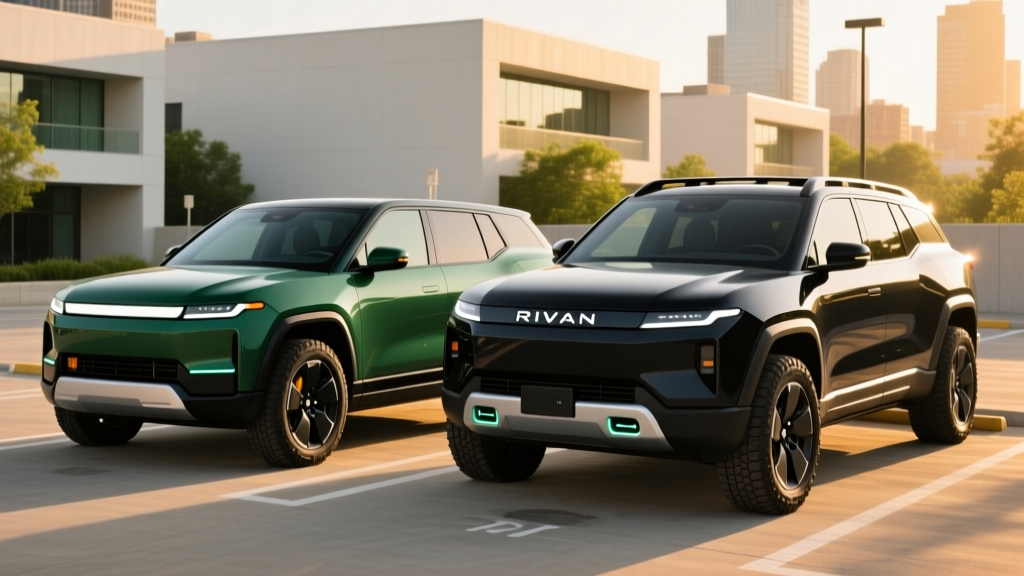
Rivian refreshed both the R1S (three-row SUV) and R1T (crew-cab pickup) for the 2025 model year, and those updates carry into 2026 with minor trim and pricing adjustments. Both share the same Gen 2 skateboard platform, battery options, and dual/tri/quad-motor powertrains.
| Spec | R1S SUV | R1T Pickup |
|---|---|---|
| EPA Range (Standard Pack) | 270 miles | 270 miles |
| EPA Range (Max Pack) | 410 miles | 420 miles |
| Battery Capacity (Standard) | ~92 kWh usable (LFP) | ~92 kWh usable (LFP) |
| Battery Capacity (Max) | ~141 kWh usable (NMC) | ~149 kWh usable (NMC) |
| Horsepower (Dual-Motor) | 533 hp | 533 hp |
| Horsepower (Tri-Motor) | 850 hp | 850 hp |
| 0–60 mph (Dual-Motor) | 4.5 sec | 4.5 sec |
| 0–60 mph (Tri-Motor) | 2.9 sec | 2.9 sec |
| Drivetrain | AWD (dual/tri/quad) | AWD (dual/tri/quad) |
| Efficiency | 69 MPGe (2.0 kWh/mi) | 70 MPGe (2.0 kWh/mi) |
| Max DC Fast Charge | 220 kW (peak) | 220 kW (peak) |
| 10–80% DCFC Time | ~21 min (Max Pack) | ~21 min (Max Pack) |
| Level 2 Home Charge Rate | 11.5 kW (~25 mi/hr) | 11.5 kW (~25 mi/hr) |
| Towing Capacity | 7,700 lbs | 11,000 lbs |
| Cargo (behind 3rd row / bed) | 20.8 cu ft (106 cu ft max) | 54 cu ft bed + 11 cu ft frunk |
| Battery Warranty | 8 yr / 175,000 mi | 8 yr / 175,000 mi |
| Base MSRP (Dual-Motor Standard) | $75,900 | $69,900 |
Sources: fueleconomy.gov, Rivian R1S specs, Rivian R1T specs.
Real-World Range: What the EPA Number Doesn't Tell You
Real-World Expectation: 230–250 mi highway (Standard); 340–370 mi highway (Max Pack). Cold weather (below 32°F) can reduce range 15–25% without preconditioning.
Rivian's EPA estimates are achievable in mixed city driving with moderate regen use. On sustained highway runs at 75 mph, expect to lose roughly 10–15% from the sticker number — the R1S's boxy aerodynamics and 6,000+ lb curb weight work against it at speed. The Max Pack's larger NMC battery provides a meaningful buffer, and Rivian's heat pump (standard on 2025+ models) helps mitigate winter losses compared to earlier generations.
If you're leasing for a commute under 60 miles round-trip with home charging, the Standard Pack's real-world 230+ miles is more than sufficient. Road trippers and those in cold climates should strongly consider the Max Pack.
How Much to Lease a Rivian: Monthly Payment Estimates
The question everyone asks: how much does it actually cost to lease a Rivian per month? Lease pricing depends on trim, battery pack, money factor, residual value, down payment, and whether the $7,500 federal lease credit is passed through.
Under current IRS guidance, when a vehicle is leased, the lessor (the financing entity) claims the $7,500 commercial clean vehicle credit and typically passes it as a capitalized cost reduction — effectively lowering your monthly payment. This works regardless of your personal income or the vehicle's MSRP, which is critical because the R1S and R1T exceed the §30D MSRP caps ($80,000 for SUVs, $55,000 for pickups).
| Model & Trim | MSRP | Est. Monthly (no credit applied) | Est. Monthly (with $7,500 credit) |
|---|---|---|---|
| R1T Dual-Motor Standard | $69,900 | ~$895 | ~$715 |
| R1T Dual-Motor Max | $85,900 | ~$1,120 | ~$940 |
| R1S Dual-Motor Standard | $75,900 | ~$975 | ~$795 |
| R1S Tri-Motor Max | $105,900 | ~$1,395 | ~$1,215 |
Important caveats: These are estimates based on typical money factors (~0.00200) and residuals (~55–60%) for premium EVs in early 2026. Actual offers from Rivian Financial Services or third-party lessors vary by credit score, region, and current incentives. Always confirm whether the lessor passes through the full $7,500 — some absorb a portion. Money factor and residual are negotiable in some lease structures.
Charging Speed: Home and DC Fast Charging
Rivian's Gen 2 platform supports up to 220 kW peak DC fast charging on Max Pack configurations. The Standard Pack (LFP chemistry) peaks lower at roughly 180 kW. Here's what that looks like in practice:
| Charging Level | Power (kW) | Miles Added per Hour | Notes |
|---|---|---|---|
| Level 1 (120V outlet) | ~1.4 kW | ~3–4 mi/hr | Emergency/trickle only |
| Level 2 (240V, 48A home) | 11.5 kW | ~25 mi/hr | Full charge overnight (~10 hrs for Max) |
| DC Fast (Standard Pack) | 180 kW peak | ~140 mi in 20 min | Tapers above 80% SoC |
| DC Fast (Max Pack) | 220 kW peak | ~190 mi in 20 min | 10–80% in ~21 min |
The charge curve matters. Rivian's peak rate holds from roughly 10–40% SoC, then tapers progressively. If you're road-tripping and charging from 20–80%, expect an average rate closer to 150–170 kW on the Max Pack, not the full 220 kW sustained. Preconditioning the battery via the nav system before arriving at a charger is essential to hitting peak rates — skip it and you may see 80–100 kW on a cold battery.
For home charging, Rivian's Wall Connector (or any J1772/NACS-compatible Level 2 unit at 48 amps) delivers roughly 25 miles of range per hour of charging. Most owners charging overnight from 20% to 80% will add ~150 miles in 6 hours — plenty for daily use.
Lease vs. Buy: Which Makes More Sense for a Rivian?
Leasing a Rivian offers specific advantages in the current market:
- Tax credit access: The $7,500 lease credit bypasses the §30D purchase credit's MSRP, income, and battery-sourcing restrictions entirely.
- Depreciation protection: EV resale values have been volatile. A lease transfers residual risk to the lessor.
- Lower upfront cost: Typical drive-off is $3,000–$5,000 vs. $7,500–$10,000+ down on a purchase.
- Upgrade flexibility: Rivian's software-defined platform evolves quickly; a 36-month lease lets you step into newer hardware.
Buying makes more sense if you plan to keep the vehicle 6+ years, drive over 15,000 miles annually (lease overage penalties apply, typically $0.25–$0.30/mile), or want to customize (wraps, aftermarket wheels, etc. are restricted on leases).
Choose to buy if: You drive 15,000+ mi/yr, want unlimited customization, and plan to hold the vehicle past the 8-year battery warranty period.
Federal Tax Credit Eligibility for Rivian Leases
Here's the critical distinction most buyers miss:
- Buying (purchase): The R1T base price ($69,900) qualifies for the §30D new clean vehicle credit if you meet income caps ($150K single / $300K joint), the vehicle meets battery-sourcing requirements, and the pickup MSRP cap ($55,000) isn't exceeded. Since most R1T trims exceed $55K, purchasing often disqualifies the R1T from the purchase credit. The R1S (SUV cap: $80K) may qualify on lower trims.
- Leasing: Under IRS guidance, the lessor claims the credit under §45W (commercial clean vehicle). The $7,500 is typically passed to you as a cap cost reduction. No income cap, no MSRP cap, no battery-sourcing requirement applies to you personally.
Always verify current rules with a tax professional and check the latest IRS guidance on clean vehicle credits. Lease credit passthrough is a lessor decision — get it in writing before signing.
Pros and Cons of Leasing a Rivian
Pros
- $7,500 federal credit via lease loophole — no income or MSRP cap
- 410-mile Max Pack range eliminates range anxiety on road trips
- Class-leading adventure capability: air suspension, 14.9" ground clearance, wading mode
- Over-the-air updates continuously add features
- 8-year/175,000-mile battery warranty covers the full lease term
- R1T gear tunnel and camp kitchen are genuinely unique
Cons
- Monthly payments remain high ($700–$1,400) even with credit
- Efficiency lags rivals — ~2.0 kWh/mi means higher electricity costs
- Third-row space in R1S is tight for adults (28.7" legroom)
- Rivian service center network still limited outside major metros
- No Apple CarPlay or Android Auto (Rivian's native OS only)
- Lease mileage penalties add up fast on road-trip-heavy lifestyles
Who Should Lease a Rivian?
The Rivian R1S and R1T serve distinct use cases:
R1S SUV: Best for active families who need three rows, cargo versatility, and serious off-road capability without sacrificing daily drivability. The Max Pack makes it a legitimate road-trip vehicle. Commuters with home charging will find the Standard Pack sufficient.
R1T Pickup: Ideal for outdoor enthusiasts, light contractors, and anyone who values the innovative gear tunnel and bed system. The 11,000-lb towing capacity is real, but towing cuts range roughly in half — plan charging stops accordingly.
Neither is ideal for budget-focused buyers (monthly costs rival a luxury sedan lease) or those without reliable home charging access. Public DC fast charging works, but relying solely on it adds time and cost.
Frequently Asked Questions
What is the real-world range of a Rivian R1S or R1T?
The EPA rates the Standard Pack at 270 miles and the Max Pack at 410–420 miles. In real-world highway driving at 75 mph, expect roughly 230–250 miles (Standard) and 340–370 miles (Max). Cold weather below freezing can reduce these numbers by 15–25% if you don't precondition the battery.
How fast does a Rivian charge at home and on the road?
At home on a 240V Level 2 charger (48 amps), a Rivian adds about 25 miles of range per hour — a full overnight session covers most daily needs. On DC fast chargers, the Max Pack peaks at 220 kW and charges from 10–80% in roughly 21 minutes, though sustained average rates are closer to 150–170 kW.
How much does a Rivian cost after tax credits when leasing?
With the $7,500 federal lease credit applied as a cap cost reduction, estimated monthly payments range from roughly $715/month for a base R1T to $1,215/month for a fully loaded R1S Tri-Motor Max, on a 36-month lease with $5,000 down and 10,000 miles per year.
Is leasing a Rivian worth it vs. buying or choosing a competitor?
Leasing is the most tax-credit-efficient way to get into a Rivian, since the lease credit bypasses income and MSRP caps. Vs. competitors: the Tesla Model X is cheaper but less adventurous; the BMW iX is more refined on-road but lacks off-road chops or a third row; the Ford F-150 Lightning is a more affordable electric truck but less premium. Choose Rivian for adventure capability and uniqueness; choose rivals for lower cost or on-road refinement.
Does the Rivian R1S or R1T qualify for the federal EV tax credit?
When purchased, most R1T trims exceed the $55,000 pickup MSRP cap and won't qualify. The R1S (SUV cap: $80,000) may qualify on lower trims if you meet income limits and battery-sourcing rules. When leased, the $7,500 credit is claimed by the lessor under §45W and typically passed through — with no income, MSRP, or sourcing restrictions on you. Confirm passthrough with your dealer before signing.
What is the Rivian battery warranty, and does it cover the lease term?
Rivian covers the battery and powertrain for 8 years or 175,000 miles, whichever comes first, with a capacity retention threshold of 70%. This fully covers a standard 36-month lease, meaning you bear no battery-degradation risk during the lease term.