Leasing a Tesla Model 3 has quietly become one of the most cost-effective ways to drive a premium electric sedan — especially when you factor in the federal tax credit, which Tesla applies directly to the lease as a capitalized-cost reduction. But advertised lease prices rarely tell the full story. This guide breaks down what it actually costs to lease a 2026 Tesla Model 3, the specs that matter for daily ownership, and whether the numbers make sense versus buying or choosing a competitor.
2026 Tesla Model 3 Lease Pricing: What You'll Actually Pay
Tesla does not publish traditional lease money factors or residual values the way legacy automakers do. Instead, the company offers lease terms directly through its website, typically for 24 or 36 months, with mileage allowances of 10,000, 12,000, or 15,000 miles per year. Here is a realistic breakdown based on current 2026 pricing:
| Trim | Base MSRP | Est. Monthly Lease (36 mo / 10k mi) | Due at Signing | Federal Credit Applied? |
|---|---|---|---|---|
| Model 3 RWD (Long Range) | $42,380 | $399–$449 | $4,500–$5,500 | Yes — $7,500 cap-cost reduction |
| Model 3 Long Range AWD | $47,380 | $479–$539 | $4,500–$5,500 | Yes — $7,500 cap-cost reduction |
| Model 3 Performance | $54,380 | $589–$659 | $5,000–$6,000 | Yes — $7,500 cap-cost reduction |
Why leasing unlocks the credit for everyone: Under IRS §30D rules, the $7,500 federal EV tax credit is subject to buyer income caps ($150,000 single / $300,000 joint), MSRP caps ($55,000 for sedans), and battery-sourcing requirements. However, when Tesla structures a lease through its captive finance arm, the credit is claimed by the lessor (Tesla) and passed to the lessee as a capitalized-cost reduction — effectively lowering the monthly payment. This means lessees can benefit from the credit even if their personal tax situation would not qualify them for a purchase credit, though the lessor's eligibility still depends on the vehicle meeting sourcing rules. Always verify current-year rules at IRS.gov.
Range, Battery, and Real-World Efficiency
Real-World Expectation: Plan for ~290–320 miles on highway-heavy trips at 70–75 mph. In cold weather (below 30°F), expect a 20–30% reduction, dropping effective range to ~220–260 miles depending on cabin heating use and whether you precondition. City driving with regenerative braking recovers more energy and can approach or slightly exceed the EPA sticker.
The 2026 Model 3 Long Range AWD uses an 82 kWh usable NMC (nickel-manganese-cobalt) battery pack, while the RWD variant is equipped with a 60 kWh LFP (lithium iron phosphate) pack. The chemistry difference matters:
| Attribute | LFP (RWD) | NMC (Long Range / Performance) |
|---|---|---|
| Usable Capacity | 60 kWh | 82 kWh |
| Energy Density | Lower (heavier per kWh) | Higher (lighter per kWh) |
| Cycle Life | ~3,000+ cycles | ~1,500–2,000 cycles |
| Cold-Weather Performance | Greater range loss in freezing temps | Better cold-weather retention |
| Charging to 100% Daily | Recommended (Tesla advises 100% for LFP) | 80% daily recommended; 100% for trips |
| Cost to Replace (out of warranty) | ~$8,000–$10,000 | ~$12,000–$16,000 |
Efficiency: The Long Range AWD achieves an EPA-rated 130 MPGe combined (approximately 26 kWh/100 mi). The RWD comes in at 132 MPGe combined (~25 kWh/100 mi). These are among the most efficient figures in the EV sedan segment, thanks to the Model 3's low drag coefficient (0.219 Cd) and Tesla's heat pump, which reduces cabin-heating energy draw in cold weather.
Charging Speed: DC Fast, Level 2, and Level 1
Charging speed is where Tesla's Supercharger network gives the Model 3 a tangible advantage. Here are the numbers across all three charging levels:
| Charging Level | Power / Rate | Speed (Miles Added) | Notes |
|---|---|---|---|
| Level 1 (120V household) | ~1.4 kW | ~3–4 mi/hr | Emergency/trickle only |
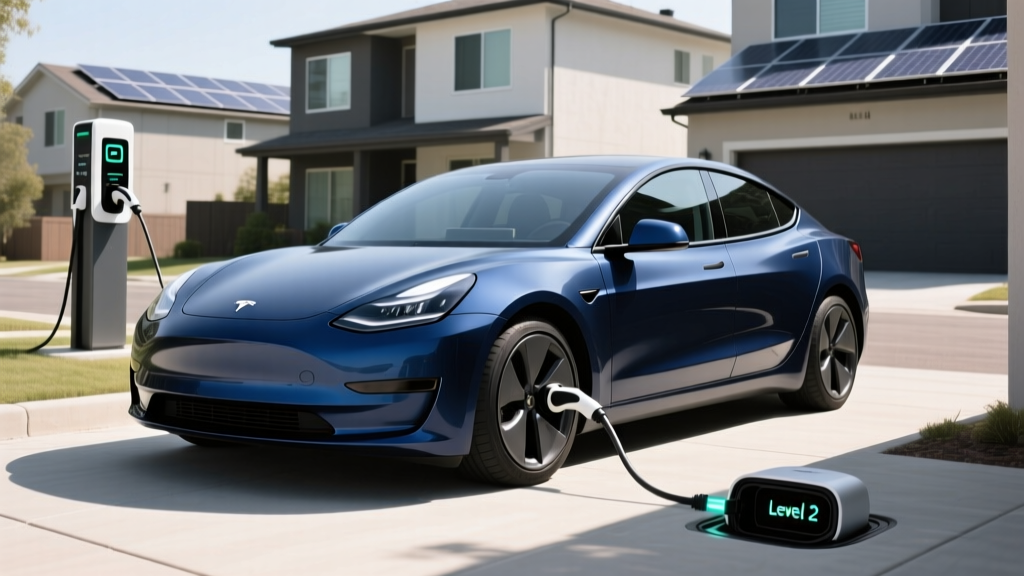
| Level 2 (240V home / public) | 11.5 kW (48A onboard) | ~44 mi/hr | Full charge in ~7–8 hours (LR) |
| DC Fast Charge (Supercharger V4) | Peak 250 kW | ~175 mi in 15 min | 10–80% in ~25 min; tapers sharply above 80% |
Charging-curve reality check: The 250 kW peak rate applies only between roughly 10–30% state of charge. From 30–60%, expect ~150–180 kW sustained. Above 80%, the rate drops to under 50 kW to protect battery health — so charging from 80–100% at a DC fast charger is rarely worth the wait. For road trips, the practical strategy is to charge in the 10–80% window (~25 minutes) and plan stops accordingly.
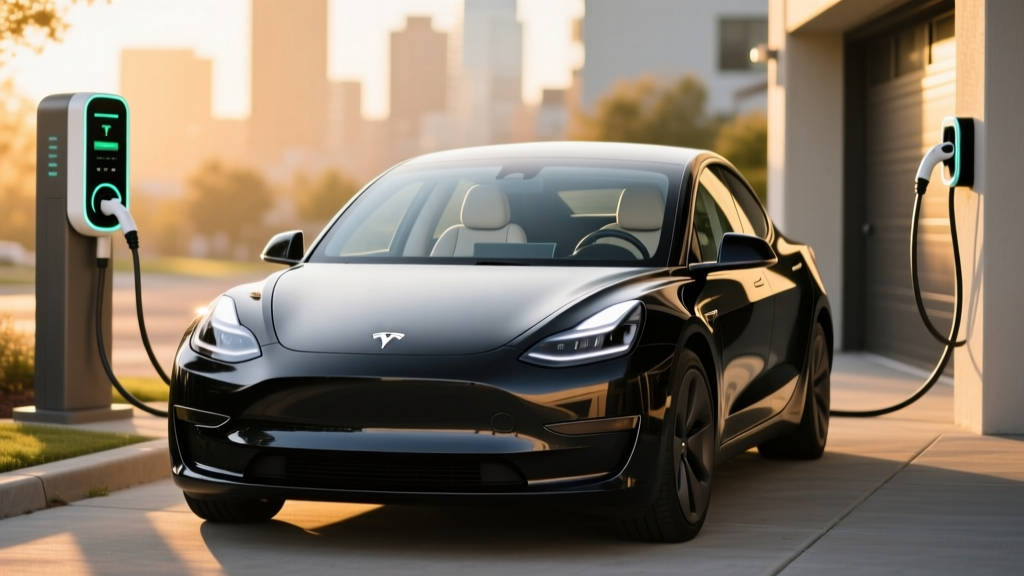
The Model 3 uses the NACS (North American Charging Standard) connector natively, giving it direct access to Tesla's Supercharger network — over 25,000 stalls in North America as of 2026. With a CCS adapter (included with newer deliveries), you can also use Electrify America, EVgo, and other third-party networks, though reliability varies by location.
Performance and Driving Dynamics
| Spec | RWD | Long Range AWD | Performance |
|---|---|---|---|
| Drivetrain | Rear-Wheel Drive (single motor) | Dual-Motor AWD | Dual-Motor AWD |
| Horsepower | 271 hp | 346 hp | 510 hp |
| 0–60 mph | 5.8 sec | 4.2 sec | 2.9 sec |
| Top Speed | 125 mph | 125 mph | 163 mph |
| Towing Capacity | Not rated | Not rated | Not rated |
The Model 3 Performance is genuinely quick — 2.9 seconds to 60 mph puts it in supercar territory. But even the base RWD at 5.8 seconds is quicker than most gas-powered sedans in its price range. The dual-motor AWD variants offer excellent traction in rain and light snow, though ground clearance (5.5 inches) limits any off-pavement ambitions. The 2026 refresh brought improved suspension tuning with frequency-selective dampers, making the ride noticeably more compliant over rough pavement than earlier Model 3 generations.
Interior, Cargo, and Technology
Cargo space: 23.0 cu ft total (rear trunk + front trunk/frunk). The rear trunk offers 21.0 cu ft with the 60/40 split rear seats upright; folding them opens up a flat load floor suitable for long items. The frunk adds ~2.0 cu ft for charging cables or a small bag.
Passenger space: Front legroom is 42.7 inches; rear legroom is 35.2 inches. The rear seat fits two adults comfortably, though the sloping roofline cuts into headroom for anyone over 6'0". The center rear position is tight due to a raised floor hump housing battery components.
Tech highlights:
- 15.4-inch center touchscreen — all vehicle controls, navigation, media, and climate run through a single display. No physical instrument cluster.
- Tesla Autopilot (standard) — SAE Level 2 driver assistance including Traffic-Aware Cruise Control and Autosteer (lane centering). The driver must keep hands on the wheel and eyes on the road at all times.
- Full Self-Driving (Supervised) — $8,000 option or $99/month — adds automatic lane changes, Navigate on Autopilot, traffic-light/stop-sign recognition, and Autopark. Despite the name, this remains SAE Level 2 and requires active driver supervision. It is not autonomous driving.
- Ventilated front seats, ambient lighting, and a rear 8-inch touchscreen for climate and media control (added in the 2024 refresh, carried into 2026).
- Over-the-air updates continuously add features and refine performance.
Notable drawbacks: The absence of turn-signal stalks (signals are now on the steering wheel buttons) remains polarizing and takes adjustment. There are no physical buttons for climate or volume — everything is screen-based. The minimalist interior appeals to some but feels sparse compared to a BMW i4 or Mercedes EQB. No Apple CarPlay or Android Auto — Tesla's native infotainment is the only option.
- Class-leading efficiency (130+ MPGe)
- Access to Tesla Supercharger network
- Strong real-world range (290–320 mi highway)
- Lease structure passes $7,500 credit to most lessees
- Excellent OTA updates and tech integration
- Quick charging (10–80% in ~25 min)
- No physical controls — all screen-dependent
- Turn signals on steering wheel take getting used to
- Rear headroom tight for tall passengers
- No Apple CarPlay / Android Auto
- FSD (Supervised) is expensive and still Level 2
- Insurance costs run 15–30% above segment average
Warranty, Ownership Costs, and Who the Model 3 Suits
Warranty coverage:
- Basic vehicle: 4 years / 50,000 miles
- Battery & drive unit (Long Range / Performance): 8 years / 120,000 miles, with a minimum 70% capacity retention guarantee
- Battery & drive unit (RWD / LFP): 8 years / 100,000 miles, same 70% retention threshold
Who should lease the Model 3? This car is ideal for daily commuters covering 30–80 miles round-trip who have access to home Level 2 charging. It works well for couples or small families (the rear seat fits child seats but is snug for three adults on long trips). Road trippers benefit from the Supercharger network, though those who regularly drive 400+ miles in cold, remote areas should consider the Long Range AWD for its buffer. It is not a towing vehicle, and buyers needing serious cargo capacity should look at the Model Y or a competing electric SUV.
Lease vs. buy consideration: Leasing makes the most sense if you want the lowest monthly payment, plan to stay under 10,000–12,000 miles per year, and don't mind returning the car at term-end without equity. Buying (or financing) makes more sense if you drive 15,000+ miles annually, want to keep the car long-term, or plan to benefit from strong Model 3 residual values. Note that Tesla leases do not include a purchase option at lease-end — if you want to own it eventually, finance from the start.
For a direct comparison, the EPA's fueleconomy.gov tool lets you stack the Model 3 against the Hyundai Ioniq 6 (361 mi range, 140 MPGe), BMW i4 eDrive40 (307 mi range), and Polestar 2 (320 mi range). The Model 3 Long Range edges out the Ioniq 6 on Supercharger access and performance but trails slightly on pure efficiency. The BMW i4 offers a more traditional luxury interior and physical controls, at the cost of ~50 miles of range and no native NACS connector.
Frequently Asked Questions
How much does it cost to lease a Tesla Model 3 in 2026?
Expect $399–$539 per month for a 36-month lease with 10,000 miles per year, depending on the trim (RWD vs. Long Range AWD). Due-at-signing costs typically run $4,500–$5,500, which includes first month's payment, acquisition fee, and registration. The $7,500 federal credit is applied as a capitalized-cost reduction, which is why Tesla's advertised lease rates are competitive.
Does the Tesla Model 3 qualify for the $7,500 federal EV tax credit?
The 2026 Model 3 Long Range AWD and RWD built at Tesla's Fremont factory currently qualify for the full $7,500 credit under IRS §30D, provided the buyer (or in a lease, the lessor) meets income requirements and the battery meets critical-mineral and component-sourcing thresholds. The MSRP cap for sedans is $55,000 — the RWD and Long Range trims fall under this, but the Performance trim at $54,380 also qualifies before options push it over. Always confirm current eligibility at IRS.gov, as sourcing rules are updated periodically.
What is the real-world range of the Tesla Model 3?
The EPA rates the Long Range AWD at 363 miles. In real-world highway driving at 70–75 mph, expect 290–320 miles. In freezing temperatures with cabin heat running, that drops to roughly 220–260 miles. The RWD with its smaller LFP battery delivers approximately 270–290 real-world highway miles and 200–230 in cold weather.
Is it better to lease or buy a Tesla Model 3?
Lease if you want lower monthly payments, don't mind mileage limits, and plan to upgrade in 3 years. Buy (or finance) if you drive over 12,000 miles per year, want to build equity, or value the option to sell or trade later. Tesla leases do not offer a buyout option at term-end, which is a key difference from many legacy automaker leases.
How fast does the Model 3 charge at home?
With a Tesla Wall Connector on a 60-amp circuit (48 amps continuous), the Model 3 charges at 11.5 kW, adding approximately 44 miles of range per hour. A full charge from 10% to 100% takes about 7–8 hours for the Long Range and 5–6 hours for the RWD. Home charging installation typically costs $500–$2,000 depending on panel capacity and wiring distance — get a quote from a licensed electrician before committing.
Is the Tesla Model 3 worth it over the Hyundai Ioniq 6 or BMW i4?
Choose the Model 3 if Supercharger network access, strong software/OTA updates, and proven EV efficiency are your priorities. Choose the Ioniq 6 if you want slightly better MPGe and a more traditional control layout. Choose the BMW i4 if you prioritize luxury interior materials and physical buttons. On pure value after the lease credit, the Model 3 RWD at ~$399/month is hard to beat in the electric sedan segment.