Why Tesla Leasing Is Trending in 2026
If you've searched "how much to lease a Tesla" lately, you're not alone. With monthly payments often undercutting purchase financing—and the ability to capture the federal §30D tax credit as a lease (structured as a capital cost reduction under IRS §7701(h)), leasing has become the backdoor many buyers use to access EV incentives they might not otherwise qualify for. In 2026, Tesla offers leases on the Model 3 and Model Y through its captive finance arm, with terms typically running 24, 36, or 48 months and annual mileage allowances of 10,000, 12,000, or 15,000 miles.
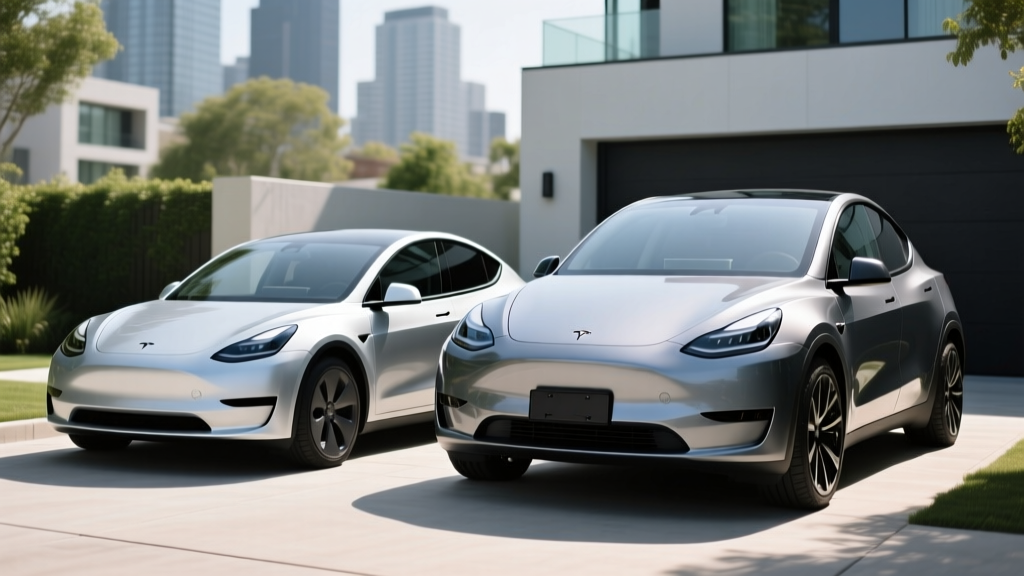
This profile examines current Tesla lease economics using the two highest-volume models—the 2026 Model 3 Long Range AWD and the 2026 Model Y Long Range AWD—while covering specs, range, charging, and who should (and shouldn't) pull the lease trigger.
2026 Tesla Model 3 Long Range AWD: Lease & Spec Snapshot
| Spec | Value |
|---|---|
| Base MSRP (before destination) | $47,740 |
| Destination fee | $1,390 |
| Estimated 36-mo / 10k-mi lease payment | $549–$629/mo (with $4,500 due at signing) |
| EPA-estimated range | 363 miles |
| Battery capacity / chemistry | ~79 kWh usable / NMC (LG M50 2170 cells) |
| Efficiency | 132 MPGe combined (25 kWh/100 mi) |
| Max DC fast-charge rate | 250 kW (V3 Supercharger) |
| 10–80% DC charge time | ~27 minutes (peak ~250 kW, tapering above 55%) |
| Level 2 home charge rate | 11.5 kW (~44 mi/hr on 48A circuit) |
| 0–60 mph | 4.2 seconds |
| Horsepower / drivetrain | ~346 hp / Dual-motor AWD |
| Cargo volume | 23 cu ft trunk + 3.1 cu ft frunk |
| Rear legroom | 35.2 inches |
| Battery & drive unit warranty | 8 years / 120,000 miles |
| Federal §30D tax credit (lease passthrough) | Up to $7,500 as cap-cost reduction |
2026 Tesla Model Y Long Range AWD: Lease & Spec Snapshot
| Spec | Value |
|---|---|
| Base MSRP (before destination) | $48,630 |
| Destination fee | $1,390 |
| Estimated 36-mo / 10k-mi lease payment | $579–$659/mo (with $4,500 due at signing) |
| EPA-estimated range | 337 miles |
| Battery capacity / chemistry | ~78 kWh usable / NMC (2170 cells) |
| Efficiency | 117 MPGe combined (29 kWh/100 mi) |
| Max DC fast-charge rate | 250 kW |
| 10–80% DC charge time | ~28 minutes |
| Level 2 home charge rate | 11.5 kW (~39 mi/hr on 48A circuit) |
| 0–60 mph | 4.8 seconds |
| Horsepower / drivetrain | ~384 hp / Dual-motor AWD |
| Cargo volume (behind 2nd row / folded) | 30.2 / 72.1 cu ft + 4.1 cu ft frunk |
| Rear legroom | 41.6 inches |
| Battery & drive unit warranty | 8 years / 120,000 miles |
| Federal §30D tax credit (lease passthrough) | Up to $7,500 as cap-cost reduction |
Charging Speed: DC Fast, Home Level 2, and the Curve Reality
Charging speed is where Tesla's Supercharger network earns its reputation, but the numbers need context. Both the Model 3 and Model Y Long Range peak at 250 kW on V3 Superchargers—but that peak only holds between roughly 10% and 35% state of charge. Above 55%, the charge curve tapers significantly, dropping to ~100 kW by 70% and ~50 kW by 85%. This is why Tesla quotes 10–80% times (~27–28 min) rather than 0–100%.
At home on a Level 2 Wall Connector (11.5 kW / 48A on a 60A circuit), the Model 3 adds ~44 miles of range per hour of charging; the Model Y adds ~39. An overnight 8-hour session replenishes 300+ miles on either vehicle—enough for nearly any daily use case. If your home has only a 120V outlet (Level 1), expect 3–5 miles per hour, which works only for low-mileage drivers or as emergency trickle charging.
| Charging Level | Power (kW) | Miles Added/Hour | Typical Use Case |
|---|---|---|---|
| Level 1 (120V / 12A) | ~1.4 kW | 3–5 mi/hr | Emergency / overnight trickle |
| Level 2 (240V / 48A Wall Connector) | 11.5 kW | 39–44 mi/hr | Daily home charging |
| DC Fast (Tesla V3 Supercharger) | Peak 250 kW | ~170 mi in 15 min | Road trips, rapid top-ups |
| DC Fast (CCS adapter + 350 kW station) | Up to 250 kW | Similar to V3 | Non-Tesla network access |
Since 2024, Tesla has included a CCS adapter with new vehicles and opened portions of its Supercharger network to non-Tesla EVs. For lessees, this means you can use Electrify America, EVgo, or other CCS networks when traveling—though Tesla's native Supercharger routing in the nav remains the most seamless experience.
Federal Tax Credit on a Tesla Lease: How §30D Works as a Cap-Cost Reduction
One of the most searched questions around Tesla leasing is whether the federal EV tax credit applies. Under IRS rules, when you lease a vehicle, the lessor (Tesla's finance entity) is technically the one "purchasing" the car. The commercial clean vehicle credit (§45W) or the new clean vehicle credit (§30D) can be claimed by the lessor, who then passes the benefit to you as a capitalized cost reduction—effectively lowering your monthly payment by up to $7,500 spread across the lease term.
This is significant because it bypasses two major restrictions that apply to buyers:
- Buyer income caps: Direct purchasers must have AGI below $150,000 (single) / $300,000 (joint). Lease passthrough has no such income limit for the lessee.
- MSRP caps: The $55,000 sedan / $80,000 SUV cap applies to the lessor's acquisition, but Tesla's current Model 3 and Model Y trims fall within these limits, so the credit is available.
Critical caveat: Battery sourcing and critical-mineral requirements still affect whether the full $7,500 or only $3,750 is available. Tesla sources cells from multiple suppliers (including LG and Panasonic), and the exact credit amount can shift based on supply-chain compliance. Always confirm the current credit amount with Tesla at the time of order, and consult a tax professional. Rules are current for the 2026 tax year and subject to legislative change.
Tech, Driver Assistance, and What You're Actually Getting
Both the Model 3 and Model Y ship with Tesla's 15.4-inch center touchscreen running the latest software (2026.x), which controls everything from climate to navigation to media. There is no instrument cluster or head-up display; all driving information is on the center screen. This minimalist approach polarizes buyers—some love the clean cabin, others find it distracting.
Autopilot (included): Tesla's base driver-assist suite includes adaptive cruise control, lane-centering, and automatic emergency braking. This is an SAE Level 2 system—the driver must remain fully engaged with hands on the wheel and eyes on the road at all times.
Standout tech features:
- Over-the-air (OTA) software updates that add features post-purchase
- Sentry Mode dashcam recording when parked
- Dog Mode and Camp Mode climate settings
- Native Supercharger routing with battery preconditioning
- Phone-as-key with Bluetooth proximity unlock
Notable drawbacks:
- No Apple CarPlay or Android Auto—Tesla's native OS only
- No physical buttons for climate, wipers, or glovebox (screen-only)
- Panel gaps and paint quality still inconsistent vs. legacy luxury brands
- Rear visibility in Model 3 is limited; Model Y is better but still relies heavily on cameras
- No spare tire (tire repair kit only)
Who Should Lease a Tesla in 2026?
✓ Lease a Tesla If:
- You want the $7,500 credit benefit without AGI income caps
- You drive under 15,000 miles/year and can stay within lease limits
- You want to upgrade every 3 years to the latest battery/tech
- You have home Level 2 charging and a predictable commute
- You value OTA updates and the Supercharger network
✗ Buy or Look Elsewhere If:
- You drive 20,000+ miles/year (excess-mile penalties: ~$0.20–$0.25/mi)
- You want to modify the car (wraps, wheels, tint—lease restrictions apply)
- You plan to keep the car 7+ years (buying is cheaper long-term)
- You need CarPlay/Android Auto or physical controls
- You tow frequently (Model Y: 3,500 lb max; Model 3: not rated for towing)
Best use cases: The Model 3 Long Range excels as a daily commuter and road-trip sedan for 1–2 passengers. The Model Y Long Range is the stronger pick for families needing rear-seat space and cargo flexibility, and it handles light towing (3,500 lbs) for small trailers or bike racks. Neither is ideal for heavy towing or off-road use—consider the Rivian R1S or Ford F-150 Lightning for those roles.
Tesla Lease vs. Key Competitors: Quick Comparison
| Vehicle | EPA Range | Est. Lease Payment | Max DC Charge | §30D Credit |
|---|---|---|---|---|
| Tesla Model 3 LR AWD | 363 mi | $549–$629/mo | 250 kW | Up to $7,500 |
| Hyundai Ioniq 6 SEL AWD | 316 mi | $449–$529/mo | 235 kW | Up to $7,500 |
| BMW i4 eDrive40 | 307 mi | $599–$689/mo | 205 kW | Up to $7,500 |
| Tesla Model Y LR AWD | 337 mi | $579–$659/mo | 250 kW | Up to $7,500 |
| Ford Mustang Mach-E Premium AWD | 312 mi | $499–$589/mo | 150 kW | Up to $7,500 |
Tesla's lease payments land in the middle-to-upper tier. The Hyundai Ioniq 6 undercuts on price while offering competitive charging speed; the BMW i4 offers a more traditional luxury interior at a premium. Tesla's advantage remains the Supercharger network and software ecosystem—factors that don't appear on a spec sheet but matter daily.
Frequently Asked Questions
How much does it cost to lease a Tesla Model 3 in 2026?
Expect $549–$629 per month on a 36-month lease with 10,000 annual miles and approximately $4,500 due at signing (first month + acquisition fee + cap-cost reduction). The $7,500 federal credit, when passed through by Tesla Finance, can reduce your effective monthly cost by ~$208/mo over 36 months.
Does a Tesla lease qualify for the federal EV tax credit?
Yes—indirectly. The lessor claims the credit and passes it to you as a capitalized cost reduction. This structure also bypasses the buyer income caps that restrict direct purchasers. Confirm the exact credit amount at order time, as battery-sourcing compliance can shift the credit between $3,750 and $7,500.
What happens at the end of a Tesla lease?
Tesla leases typically do NOT include a purchase option at lease-end (unlike most legacy automaker leases). You return the vehicle, pay any excess-wear or excess-mileage charges, and walk away. This is a critical difference: if you think you might want to keep the car long-term, buying is the better path.
Can I exceed the mileage limit on a Tesla lease?
You can, but it costs you. Excess mileage is typically charged at $0.20–$0.25 per mile. If you drive 15,000 miles/year, choose the 15k-mi annual allowance at signing—it's cheaper than paying the penalty later. Drivers doing 20,000+ miles/year should buy, not lease.
Is leasing a Tesla worth it vs. buying?
Leasing wins if you want lower upfront cost, access to the tax credit without income restrictions, and a new car every 3 years. Buying wins if you drive high miles, want to keep the car 5+ years, want a purchase option at term-end, or want to customize. For a 36-month horizon with under 12,000 miles/year, leasing is often $50–$100/mo cheaper when the tax credit is applied.
What is the real-world range of the Tesla Model Y?
The EPA rates the 2026 Model Y Long Range at 337 miles. Real-world highway driving at 70 mph yields approximately 275–295 miles. In cold weather (below 30°F), expect 220–250 miles. Preconditioning the battery before driving and using seat heaters instead of cabin heat can recover 10–15 miles in winter conditions.
Does Tesla offer gap insurance on leases?
Tesla does not include gap insurance by default. However, many auto-insurance carriers offer gap coverage as a rider, and some states require lessors to include it. Check with your insurer before signing—if the car is totaled, gap coverage pays the difference between the insurance settlement and your remaining lease obligation.
Specs sourced from fueleconomy.gov and Tesla's official configurator. Tax-credit rules per IRS §30D guidance. Lease payments are estimates based on publicly reported deal data and may vary by region, credit score, and promotional offers. Always confirm final terms with Tesla directly.