The Tesla Roadster: Everything We Know About Tesla's $200,000 Hypercar
If you've been searching for an answer to how much is a Tesla Roadster, you're not alone — it's one of the most discussed, delayed, and debated vehicles in the EV industry. First unveiled in November 2017 and repeatedly pushed back, the second-generation Tesla Roadster remains an announced but unreleased model as of early 2026. Elon Musk has teased production timelines that have slipped multiple times, and Tesla's official website still lists the vehicle under a "Reserve Now" prompt rather than a conventional order page.
This article compiles every confirmed and estimated specification Tesla has published, separates marketing claims from engineering reality, and explains the pricing structure including the required reservation deposit and the optional SpaceX package. If you're evaluating whether to put down money or wait for competitors, this guide gives you the data to decide.
| Specification | Value (Tesla Claimed) |
|---|---|
| Base MSRP | $200,000 (estimated) |
| Founders Series MSRP | $250,000 |
| Reservation Deposit | $50,000 (fully refundable historically) |
| EPA Range (Claimed) | 620 miles |
| Battery Capacity | ~200 kWh (estimated, unconfirmed) |
| Battery Chemistry | Not disclosed (likely NMC/NCA high-nickel) |
| 0–60 mph | 1.9 seconds (base); sub-1.0 sec (SpaceX package claimed) |
| Top Speed | 250+ mph (claimed) |
| Quarter Mile | 8.8 seconds (claimed) |
| Drivetrain | Tri-motor AWD (1 front, 2 rear) |
| Horsepower | ~1,000+ hp (estimated from tri-motor config) |
| Seating | 2+2 (4 seats, rear seats minimal) |
| Body Style | 2-door convertible (removable glass roof) |
| Federal Tax Credit (§30D) | Not eligible (exceeds MSRP cap) |
Note: All specifications above are based on Tesla's announcements and estimates from industry analysts. Final production specs may differ. Tesla has not confirmed EPA testing results as the vehicle is not yet in customer hands.
Tesla Roadster Pricing: Base, Founders Series, and the SpaceX Package
The headline answer to "how much is a Tesla Roadster" depends on which variant you're considering. Tesla's pricing structure for the Roadster has remained relatively consistent since its 2017 reveal, though inflation and supply chain realities may shift final numbers before production begins.
| Tier | Price | Notes |
|---|---|---|
| Base Model | $200,000 | Standard Roadster with 620-mi claimed range |
| Founders Series | $250,000 | Limited to first 1,000 reservations; requires full payment upfront |
| SpaceX Package (Add-on) | +$50,000 (est.) | Cold-gas thrusters for sub-1.0s 0-60; track-only use likely restricted |
| Reservation Deposit | $50,000 | Required to hold a place in line; historically refundable |
The Founders Series was the original launch edition, limited to 1,000 units and requiring the full $250,000 to be wired to Tesla at the time of reservation. Tesla listed this tier as "sold out" shortly after the 2017 reveal. The base model requires a $50,000 deposit — significantly higher than Tesla's typical $100–$250 order fees for production vehicles like the Model Y or Cybertruck.
Federal Tax Credit: Does the Roadster Qualify for §30D?
No. Under current IRS §30D rules, the Tesla Roadster is categorically ineligible for the federal clean vehicle tax credit for two reasons:
- MSRP Cap: §30D limits eligibility to vehicles with an MSRP of $55,000 or less (sedans) / $80,000 or less (SUVs, vans, trucks). At $200,000+, the Roadster far exceeds either threshold.
- Vehicle Classification: Even if reclassified as a sports car, the $55,000 sedan cap applies — and the Roadster is roughly 3.6x that limit.
Buyers should also consider that at this price point, state-level incentives (which typically range from $1,000 to $7,500) are negligible relative to the purchase price. Consult a tax professional for your specific situation, but plan to pay full sticker without federal offset.
Range and Battery: Can the Roadster Really Go 620 Miles?
Tesla's claimed 620-mile range would make the Roadster the longest-range production EV ever built, surpassing even the Lucid Air Grand Touring's EPA-rated 516 miles. But this number demands scrutiny.
Claimed Range: 620 miles (Tesla estimate, not EPA-verified)
Real-World Expectation: If the Roadster achieves an EPA rating near 620 miles, expect approximately 480–520 miles in mixed highway driving at 70+ mph, and potentially 350–400 miles in cold weather (below 32°F) at highway speeds. High-performance sports cars typically sacrifice efficiency for power, and the Roadster's wide tires, low ground clearance, and tri-motor output will work against range at sustained high speeds.
To achieve 620 miles, Tesla would need an extraordinarily large battery pack. Industry analysts estimate the Roadster will carry approximately 200 kWh of usable capacity — roughly double the Model S Plaid's ~100 kWh pack. That creates significant packaging, weight, and thermal-management challenges.
Battery Chemistry Considerations
Tesla has not disclosed the Roadster's cell chemistry, but given the performance and energy-density requirements, NMC (nickel-manganese-cobalt) or NCA (nickel-cobalt-aluminum) is the only viable option. LFP (lithium iron phosphate) cells — used in the Model 3 RWD and some Model Y variants — are too heavy and low in energy density for a 620-mile sports car. Expect Tesla's latest 4680-format cells or a next-generation derivative, likely with a high-nickel cathode to maximize Wh/kg.
For context, a 200 kWh pack at current NMC energy densities (~260 Wh/kg at the cell level) would weigh approximately 770 kg (1,700 lbs) for cells alone. Total pack weight with cooling, structure, and BMS could push the Roadster's curb weight above 4,800 lbs — heavier than a Model S and far heavier than any traditional sports car.
Charging Speed: How Fast Can a 200 kWh Battery Charge?
Charging a massive battery pack is where the Roadster faces its biggest practical challenge. Even with Tesla's latest V4 Supercharger architecture, physics limits how quickly energy can flow into cells without degrading them.
| Charging Method | Power (kW) | Estimated Time / Rate |
|---|---|---|
| Tesla Supercharger V4 (DC Fast) | ~350 kW (peak, estimated) | 10–80% in ~35–45 minutes (estimated) |
| CCS Adapter / Non-Tesla DC Fast | ~250 kW (peak) | 10–80% in ~50–60 minutes (estimated) |
| Home Level 2 (Tesla Wall Connector, 48A) | 11.5 kW | ~17–20 hours for a full 0–100% charge; ~30 miles of range per hour |
| Home Level 2 (80A circuit, if supported) | 19.2 kW | ~10–12 hours full charge; ~50 miles of range per hour |
| Level 1 (120V standard outlet) | 1.4 kW | ~6 days for full charge; ~4 miles per hour |
A key reality of large EV batteries: even at a peak 350 kW charge rate, the Roadster's 200 kWh pack would require a sustained average of roughly 250+ kW to achieve a 10–80% charge in under 40 minutes. In practice, charge curves taper significantly above 50–60% State of Charge (SoC) to protect cell health. Expect the Roadster's charging experience to feel more like a long-haul stop than the 15-minute top-ups possible with smaller packs like the Hyundai Ioniq 5's 77 kWh unit.
Home charging is where Roadster owners will do the vast majority of their replenishment. At 11.5 kW (a standard 48-amp Tesla Wall Connector on a 60-amp circuit), adding 620 miles of range takes roughly 17–20 hours — meaning a full charge requires nearly a full day. Most owners will charge opportunistically overnight, rarely depleting the pack fully.
Performance: 1.9 Seconds and the SpaceX Thruster Option
The Roadster's performance figures are the core of its value proposition. Tesla claims a 1.9-second 0–60 mph time for the base model, which would already place it among the fastest production cars ever built — alongside the Rimac Nevera and Pininfarina Battista, both of which cost $2 million+.
The tri-motor AWD layout (one motor driving the front axle, two motors on the rear) allows independent torque vectoring at the rear wheels, maximizing traction off the line. Tesla has claimed over 1,000 wheel torque in earlier presentations, though this figure likely refers to wheel torque (after gear reduction) rather than motor output.
The SpaceX Package: Cold-Gas Thrusters
The most controversial Roadster feature is the optional SpaceX package, which Tesla says will use cold-gas thrusters (compressed air, not combustion) mounted around the vehicle to improve acceleration, braking, and cornering. Musk has claimed this could push 0–60 mph below 1.0 second.
Practical considerations abound: compressed-air tanks add weight and consume cargo space; thruster effectiveness at road speeds is unproven in a production vehicle; and regulatory approval for thruster-equipped road cars is uncertain. If the SpaceX package ships at all, expect it to be a limited, track-oriented option that may not be street-legal in all jurisdictions.
Top Speed and Highway Manners
Tesla claims a top speed exceeding 250 mph. Achieving this requires not just power but aerodynamic efficiency, tire rating (few consumer tires are rated above 217 mph), and thermal management for sustained high-speed runs. Whether the Roadster can maintain 250 mph for more than brief bursts remains to be seen — and at those speeds, the 620-mile range claim would drop to under 100 miles.
Interior, Cargo, and Daily Usability
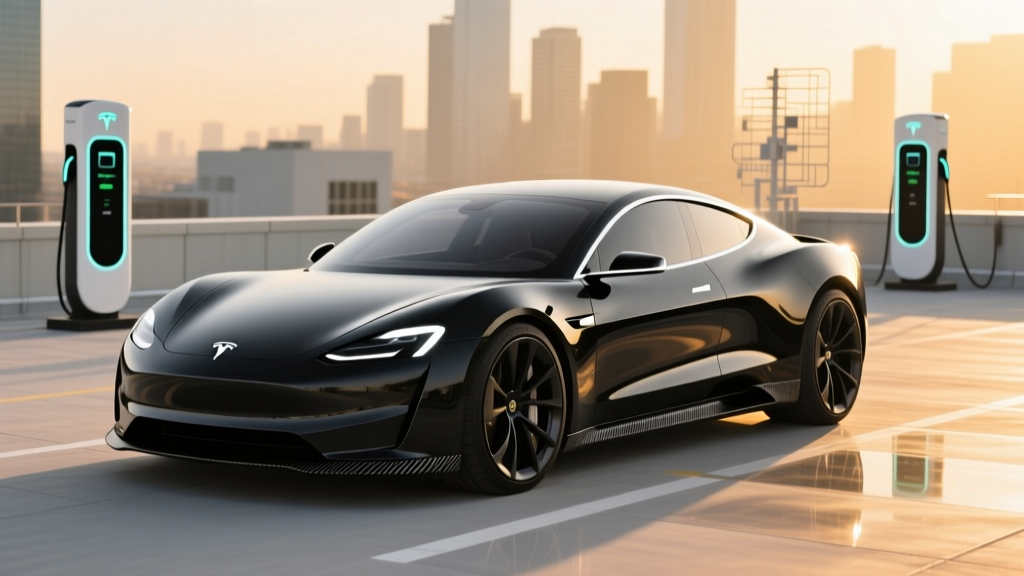
The Roadster is a 2+2 seater, meaning two front seats and two rear seats that are best described as occasional-use. Tesla has shown a minimalist interior consistent with its design language — a central touchscreen (likely 15–17 inches), a yoke-style steering wheel, and minimal physical controls.
Cargo space in a mid-engine-style EV sports car is inherently limited. The Roadster will likely offer a small front trunk (frunk) and a rear shelf area behind the seats. Expect total cargo volume in the range of 5–10 cubic feet — enough for a weekend bag for two, not a grocery haul. For comparison, the Porsche Taycan offers 14.3 cu ft combined (frunk + rear trunk).
The removable glass roof panel stores in the trunk (per Tesla's 2017 reveal), converting the car from coupe to open-air roadster. Ground clearance will be low — likely 4.5–5.5 inches — making speed bumps, steep driveways, and parking-garage ramps potential hazards.
Driver Assistance and Tech
The Roadster will ship with Tesla's latest Autopilot hardware and software. Expect the full Tesla suite: Adaptive Cruise Control, Lane Keeping, Auto Lane Change, and the option to purchase Full Self-Driving (Supervised). However, it is critical to understand that FSD remains an SAE Level 2 driver-assistance system — the driver must remain fully engaged, hands on or near the wheel, and eyes on the road at all times. It is not autonomous driving.
Warranty, Ownership Costs, and Long-Term Considerations
Tesla has not published specific Roadster warranty terms, but based on its current vehicle lineup, expect:
- Basic Vehicle Warranty: 4 years / 50,000 miles
- Battery & Drive Unit Warranty: 8 years / 150,000 miles (with minimum 70% capacity retention)
At $200,000+, insurance premiums will be substantial. For reference, Tesla Model S Plaid insurance averages $4,000–$6,000/year for well-qualified drivers; the Roadster, with its higher value and performance envelope, could easily exceed $8,000–$12,000/year depending on your profile and state.
Tire replacement will also be a significant recurring cost. High-performance summer tires rated for the Roadster's speed and weight will likely cost $400–$600 per corner and may need replacement every 8,000–15,000 miles under enthusiastic driving.
Tesla Roadster vs. Competitors: Is It Worth the Wait?
The Roadster occupies a unique space: it undercuts European hypercars on price while promising to match or exceed their performance. Here's how it compares to the closest alternatives available now or coming soon:
Pros
- Claimed 620-mile range dwarfs every competitor
- Sub-2.0 second 0–60 at 1/10th the price of a Rimac Nevera
- Access to Tesla's Supercharger network (20,000+ stalls in North America)
- Over-the-air updates and Tesla's software ecosystem
- Convertible roof for open-air driving
- Tri-motor AWD with torque vectoring
Cons
- Not yet available — years of delays erode confidence
- Estimated 4,800+ lb curb weight undermines sports-car dynamics
- 200 kWh battery means very long home charge times
- No federal tax credit eligibility
- SpaceX package is unproven and may face regulatory hurdles
- Rear seats are essentially decorative
- Tesla's build-quality track record on low-volume vehicles is mixed
Key Competitors to Consider Now
| Vehicle | Price | 0–60 mph | Range (EPA) | Availability |
|---|---|---|---|---|
| Rimac Nevera | $2,200,000 | 1.85 sec | ~205 mi (WLTP) | Available (limited) |
| Lotus Evija | $2,300,000 | ~3.0 sec | ~217 mi (WLTP) | Deliveries began 2024 |
| Porsche Taycan Turbo GT | $230,000 | 2.1 sec | 269 mi | Available now |
| Tesla Model S Plaid | $89,990 | 1.99 sec | 396 mi | Available now |
| Lucid Air Sapphire | $249,000 | 1.89 sec | 427 mi | Available now |
The Model S Plaid deserves special mention: it delivers nearly identical straight-line acceleration (1.99s 0–60) for less than half the Roadster's projected price, with real EPA-verified range and immediate availability. For buyers prioritizing performance over exclusivity, the Plaid is the rational choice today.
Who Should Buy the Tesla Roadster?
The Tesla Roadster, if and when it reaches production, is not a practical daily driver. It's a statement vehicle — a technological showcase aimed at collectors, Tesla enthusiasts, and performance-car buyers who want EV bragging rights and are comfortable with the risks of an unproven, delayed product.
Reserve the Roadster if:
- You want a sub-$250K hypercar with 600+ mile range and don't mind waiting
- You already own a practical daily driver and want a weekend/show car
- You believe in Tesla's long-term execution and want to be in the production queue early
- The $50,000 deposit is liquid capital you're comfortable having tied up
Look elsewhere if:
- You need a car in the next 12 months
- You want EPA-verified specs before committing $50,000+
- Track-day handling precision matters more than straight-line speed
- You prefer established build quality and dealer service networks
Frequently Asked Questions
Is the Tesla Roadster actually available to buy right now?
No. As of 2026, the Tesla Roadster remains an announced, unreleased vehicle. Tesla accepts $50,000 reservations but has not begun customer deliveries. Production timelines have slipped multiple times since the 2017 reveal, and no firm delivery date has been confirmed.
How much is a Tesla Roadster with all options?
The base Roadster is priced at approximately $200,000. The Founders Series (limited to 1,000 units, now sold out) was $250,000. Adding the optional SpaceX package could push the total to $250,000+ before taxes, registration, and delivery fees.
Will the Tesla Roadster qualify for the $7,500 federal tax credit?
No. Under IRS §30D rules, the Roadster's MSRP far exceeds the $55,000 cap for passenger cars. No version of the Roadster will qualify for the federal clean vehicle credit regardless of buyer income or battery sourcing.
What is the real-world range of the Tesla Roadster?
Tesla claims 620 miles, but this has not been EPA-verified. In real-world highway driving at 70+ mph, expect approximately 480–520 miles under ideal conditions and 350–400 miles in cold weather. The car's wide tires, high power output, and heavy battery will reduce efficiency compared to Tesla's sedan lineup.
How fast does the Tesla Roadster charge at home?
At a standard Level 2 home charger (11.5 kW / 48 amps), the Roadster's estimated 200 kWh battery would take approximately 17–20 hours for a full charge, adding roughly 30 miles of range per hour. An 80-amp circuit (19.2 kW) could cut this to 10–12 hours.
Is the Roadster faster than a Tesla Model S Plaid?
Tesla claims the base Roadster will match or beat the Model S Plaid's 1.99-second 0–60 time (claiming 1.9 seconds). The SpaceX package variant claims sub-1.0 second acceleration, though this is unverified and may face regulatory restrictions for street use.
Should I put down the $50,000 reservation deposit?
That depends on your risk tolerance. Tesla's reservation deposits have historically been refundable, but tying up $50,000 for an undetermined number of years carries opportunity cost. If the Roadster's concept excites you and the capital is liquid, the deposit secures a production queue position. If you need certainty and verified specs, wait for third-party testing data before committing.
Disclaimer: All Tesla Roadster specifications cited in this article are based on Tesla's public announcements and industry estimates as of early 2026. The vehicle has not been EPA-tested, delivered to customers, or independently reviewed. Specifications, pricing, and availability are subject to change. Consult Tesla's official Roadster page for the latest information.