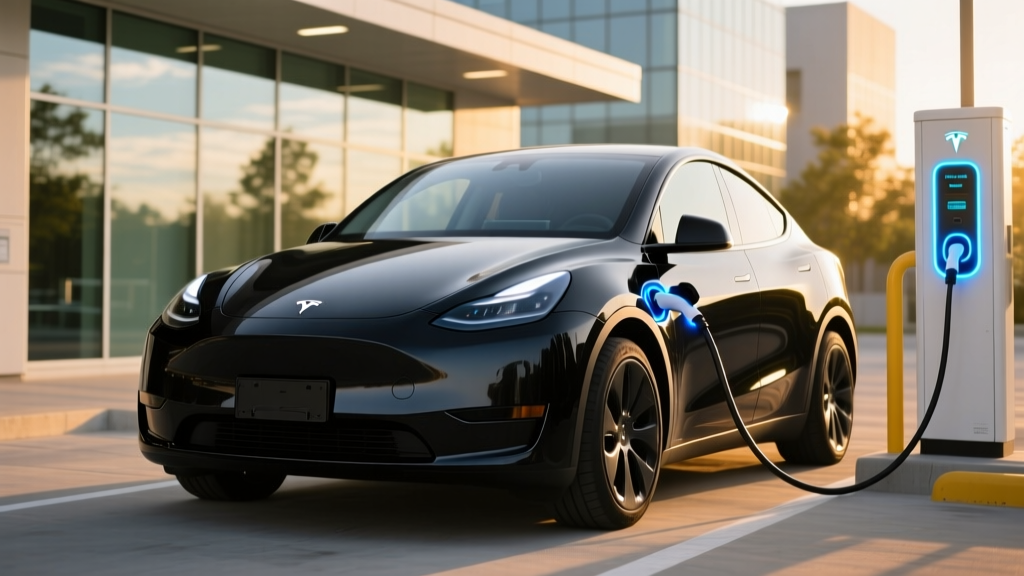
If you've searched "how much to fill up a Tesla" and landed here, you're asking the right question — but the answer depends entirely on where and how you charge. Unlike a gas car with one pump price, a Tesla Model Y can cost anywhere from $5 to $30+ to fully recharge, depending on whether you're plugged into a home Level 2 outlet at midnight or pulling into a Supercharger on a road trip. This 2026 review breaks down the real costs, real-world range, and ownership math behind America's best-selling electric SUV.
The Real Cost: How Much to Fill Up a Tesla Model Y
Let's start with the number everyone wants. A 2026 Tesla Model Y Long Range AWD carries a usable battery capacity of approximately 75 kWh (NMC chemistry). Here's what a full 0–100% charge actually costs across common scenarios:
| Charging Method | Avg Cost per kWh | Full Charge Cost (75 kWh) | Cost per Mile (310-mi range) |
|---|---|---|---|
| Home Level 2 (national avg electricity ~$0.16/kWh) | $0.16 | $12.00 | $0.039 |
| Home with solar / off-peak utility rate | $0.08–$0.10 | $6.00–$7.50 | $0.019–$0.024 |
| Tesla Supercharger V4 (avg ~$0.30/kWh) | $0.30 | $22.50 | $0.073 |
| Third-party DC fast charger (avg ~$0.40/kWh) | $0.40 | $30.00 | $0.097 |
| Comparable gas SUV (25 MPG, $3.40/gal) | — | $42.16 (12.4 gal tank) | $0.136 |
For most Tesla owners who charge at home 80–90% of the time, the effective cost to "fill up" is $10–$14 per full charge, translating to roughly 3–4 cents per mile. That's approximately one-third the per-mile fuel cost of a comparable gasoline SUV like the Toyota RAV4 or Honda CR-V.
2026 Tesla Model Y: Range, Battery & Real-World Efficiency
Real-World Expectation: 260–285 miles on highway trips at 70+ mph; 230–255 miles in sub-freezing winter conditions. City driving with regenerative braking can exceed the EPA estimate, reaching 320+ miles in mild weather.
The EPA sticker is a starting point, not a guarantee. The Model Y Long Range AWD earns an EPA-estimated 117 MPGe combined (123 city / 111 highway) with an efficiency of 29 kWh per 100 miles, according to fueleconomy.gov. That's among the most efficient vehicles in its class.
In real-world testing, highway driving at sustained 75 mph drops range by roughly 12–18% versus the EPA combined figure. Cold weather (below 32°F) compounds this — expect 20–30% range loss in deep winter due to battery conditioning demands and cabin heating, even with Tesla's standard heat pump. Preconditioning the battery while plugged in mitigates some of this loss.
| Specification | Model Y Long Range AWD | Model Y Performance |
|---|---|---|
| EPA Range | 310 miles | 277 miles |
| Battery (usable) | ~75 kWh (NMC) | ~75 kWh (NMC) |
| Efficiency | 29 kWh/100mi (117 MPGe) | 33 kWh/100mi (104 MPGe) |
| 0–60 mph | 4.8 seconds | 3.3 seconds |
| Horsepower | 384 hp | 456 hp |
| Drivetrain | Dual-motor AWD | Dual-motor AWD |
| Top Speed | 125 mph | 155 mph |
Charging Speed: Home Level 2 and DC Fast Charging
Charging speed is where Tesla maintains a clear edge. The Model Y supports the NACS (North American Charging Standard) connector natively — no adapter needed for the Tesla Supercharger network, which now exceeds 20,000 stalls across North America.
| Charge Level | Power (kW) | Charging Speed | 0–100% Time |
|---|---|---|---|
| Level 1 (120V household outlet) | ~1.4 kW | ~3–4 miles/hour | ~55+ hours |
| Level 2 (240V home Wall Connector) | 11.5 kW (48A) | ~37 miles/hour | ~8–9 hours |
| DC Fast Charge (Tesla Supercharger V3/V4) | Up to 250 kW peak | ~175 miles in 15 min | 10–80% in ~25 min |
A critical nuance: the 250 kW peak rate applies only between roughly 10–35% state of charge. Above 50%, the charge curve tapers significantly, and above 80%, it drops sharply to protect battery longevity. This is why Tesla's navigation system will typically route you through multiple shorter charging stops rather than one long one on road trips.
For home charging, Tesla's Wall Connector ($475) on a 60-amp circuit delivers up to 11.5 kW — enough to fully replenish the Model Y overnight. Most owners report arriving home, plugging in, and waking up to a full battery every morning. Installation costs for a Level 2 home setup typically range from $500–$2,000 depending on panel capacity and run length, though a 240V NEMA 14-50 outlet installation is often on the lower end of that range.
Pricing, Trims & Federal Tax Credit Eligibility
The 2026 Tesla Model Y is available in two primary trims. Pricing reflects Tesla's direct-to-consumer model with no dealer markups:
| Trim | Base MSRP | Federal Tax Credit (§30D) | Effective Price (if eligible) |
|---|---|---|---|
| Long Range AWD | $44,990 | Up to $7,500 (point-of-sale) | ~$37,490 |
| Performance AWD | $48,990 | Up to $7,500 (point-of-sale) | ~$41,490 |
Federal tax credit caveats (IRS §30D): Eligibility for the full $7,500 credit depends on multiple factors that change annually. As of 2026, key requirements include:
- MSRP cap: SUVs must be priced at or below $80,000 — both Model Y trims qualify.
- Buyer income limits: Modified AGI must not exceed $150,000 (single), $225,000 (head of household), or $300,000 (joint filers).
- Battery sourcing: A percentage of critical minerals and battery components must be sourced from the U.S. or free-trade-agreement partners. Tesla has shifted significant supply chain to meet these thresholds, but partial credit ($3,750) is possible if only one requirement is met.
- Point-of-sale transfer: The credit can now be applied as an instant rebate at purchase rather than waiting for tax filing — a major cash-flow benefit.
Always verify current eligibility on IRS.gov before purchasing, as battery-sourcing compliance can shift with supply chain changes.
Interior, Cargo Space & Technology
The Model Y's minimalist interior remains polarizing — a single 15.4-inch touchscreen controls virtually everything, including climate vents and mirror adjustments. For 2026, Tesla has refined the cabin with improved sound insulation, ventilated front seats, and a rear-seat entertainment screen.
Cargo capacity: 30.2 cubic feet behind the second row, expanding to 72.1 cubic feet with the 60/40 rear seats folded. The front trunk (frunk) adds 4.1 cubic feet — useful for charging cables or a small bag. Total passenger volume is 106.1 cubic feet, with 41.8 inches of front legroom and 37.7 inches in the rear.
Tech highlights:
- Tesla's infotainment system remains best-in-class for responsiveness, with native navigation, streaming apps, and over-the-air updates that add features post-purchase.
- Autopilot comes standard — adaptive cruise control and lane-centering on highways. This is an SAE Level 2 driver-assistance system, meaning you must keep your hands on the wheel and eyes on the road at all times.
- Full Self-Driving (Supervised) remains a $8,000 option or $99/month subscription. Despite the name, FSD is still Level 2 — it handles city streets, stoplights, and parking, but requires active driver supervision.
- Sentry Mode, Dog Mode, and the Tesla app ecosystem (remote preconditioning, location tracking, service scheduling) remain unmatched in the EV space.
Pros, Cons & Verdict: Is the Model Y Worth It in 2026?
Pros
- Best-in-class Supercharger network — the most reliable DC fast-charging ecosystem in North America
- Segment-leading efficiency at 29 kWh/100mi (117 MPGe)
- Strong real-world range of 260–285 highway miles
- Class-leading cargo space (72.1 cu ft max) with usable frunk
- Over-the-air updates continuously improve the vehicle
- Point-of-sale tax credit reduces effective price to ~$37,500
- Low cost per mile: ~$0.04 at home vs $0.14 for gas equivalent
Cons
- Minimalist interior lacks physical controls — frustrating for some drivers
- Ride quality is firm; road noise improved but still noticeable on rough pavement
- Insurance premiums run 15–25% higher than comparable gas SUVs
- No Apple CarPlay or Android Auto — Tesla's system is the only option
- Panel gaps and paint quality still inconsistent on some deliveries
- FSD (Supervised) remains expensive and is not truly autonomous
Who should buy the Model Y: Daily commuters and families who have access to home charging (garage or driveway with 240V capability) and want the lowest per-mile operating cost in the compact SUV segment. The Supercharger network makes it the strongest choice for owners who road-trip more than a few times a year. If you regularly tow, note the 3,500-pound towing capacity is adequate for small trailers but trails some competitors.
Who should look elsewhere: Apartment dwellers without reliable charging access, buyers who prioritize traditional luxury interior materials, or those who need third-row seating (the optional third row is extremely cramped and best for small children only).
Warranty & Long-Term Battery Outlook
Tesla covers the Model Y with a 4-year/50,000-mile basic vehicle warranty and an 8-year/120,000-mile battery and drive unit warranty. The battery warranty guarantees retention of at least 70% of original capacity — if degradation drops below that threshold within the coverage period, Tesla will repair or replace the pack.
Real-world data from high-mileage Tesla owners suggests NMC packs in the Model Y typically lose 8–12% capacity over the first 100,000 miles, with degradation slowing significantly after the initial break-in period. Battery replacement out of warranty currently runs $12,000–$16,000 at Tesla service centers, though third-party options are emerging at lower price points.
Frequently Asked Questions
How much does it cost to fill up a Tesla at a Supercharger?
A full 0–100% charge at a Tesla Supercharger averages $22–$25 based on typical $0.28–$0.35/kWh rates in 2026. However, most Supercharger sessions are partial — a typical 10–80% stop costs $14–$18 and takes about 25 minutes.
Is it cheaper to charge a Tesla at home or at a Supercharger?
Home charging is dramatically cheaper. At the national average electricity rate of ~$0.16/kWh, a full home charge costs about $12. That same charge at a Supercharger costs $22–$25. Over a year of 12,000 miles, home charging saves roughly $600–$900 versus exclusive Supercharger use.
Does the Tesla Model Y qualify for the $7,500 federal tax credit?
Both Model Y trims fall under the $80,000 MSRP cap for SUVs. However, full credit eligibility depends on your income (AGI limits apply), and battery critical-mineral/component sourcing requirements. As of 2026, Tesla's U.S. battery production has positioned the Model Y to qualify for the full $7,500 for most buyers, but always confirm via the IRS Clean Vehicle credit lookup before purchase.
How long does it take to charge a Tesla Model Y at home?
On a Level 2 Tesla Wall Connector (11.5 kW), a full charge takes approximately 8–9 hours. Most owners plug in when they get home and wake up to a full battery. On a standard 120V outlet (Level 1), a full charge takes over 50 hours — only practical for emergency top-ups or very low daily mileage.
What is the real-world range of the Tesla Model Y?
The EPA rates the Long Range AWD at 310 miles. In real-world highway driving at 70+ mph, expect 260–285 miles. In freezing temperatures, range can drop to 230–255 miles due to battery conditioning and heating demands. City driving with regenerative braking in mild weather can exceed 310 miles.
How does the Model Y compare to the Hyundai Ioniq 5 or Ford Mustang Mach-E?
The Model Y leads in efficiency, Supercharger network access, and cargo space. The Ioniq 5 offers faster peak DC charging (up to 350 kW on 800V architecture) and a more distinctive design. The Mach-E provides a more traditional interior feel and competitive range. For road-trippers, Tesla's charging network remains the decisive advantage. See the IIHS safety ratings for crash-test comparisons.