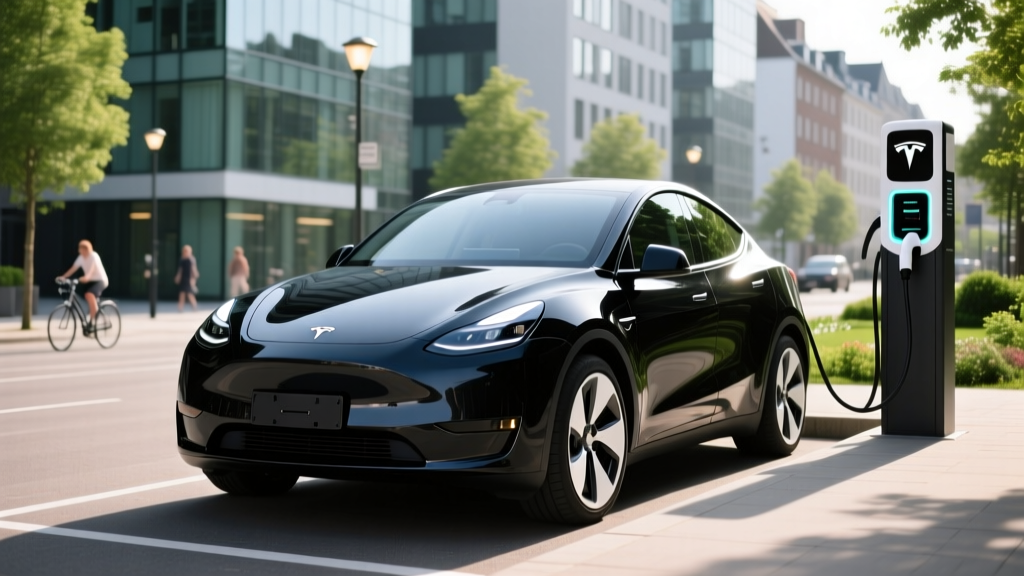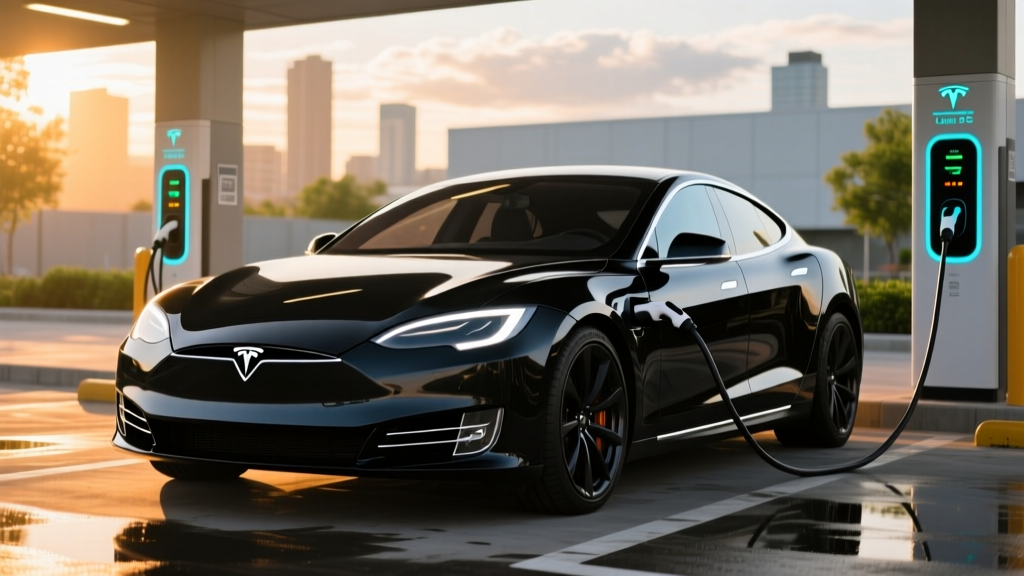
If you're shopping for a Tesla or just brought one home, one question quickly rises to the top: how much electricity to charge a Tesla actually costs, and how much energy does the battery hold? The answer depends on which model you drive, how you charge (home Level 2 vs. DC fast charging), and your local electricity rate. Below, we break down the exact kWh capacities, real-world efficiency figures, and charging costs across the 2026 Tesla lineup so you can budget accurately.
This isn't a vague "it depends" guide. We're pulling EPA data, Tesla's published specs, and real-world ownership figures to give you concrete numbers — from the Model 3 Standard Range to the Model X Plaid.
2026 Tesla Lineup: Battery Capacity and Energy at a Glance
The amount of electricity required to fully charge a Tesla starts with the battery pack's usable capacity, measured in kilowatt-hours (kWh). Remember: kWh is energy (the size of the "tank"), while kW is power (how fast you fill it). Here's how the current Tesla lineup stacks up.
| Model / Trim | Usable Battery (kWh) | Chemistry | EPA Efficiency (kWh/100 mi) | EPA MPGe |
|---|---|---|---|---|
| Model 3 RWD | ~57.5 | LFP | 25 | 132 |
| Model 3 Long Range AWD | ~75 | NMC | 26 | 134 |
| Model 3 Performance | ~75 | NMC | 28 | 121 |
| Model Y Long Range AWD | ~75 | NMC | 28 | 122 |
| Model Y Performance | ~75 | NMC | 30 | 111 |
| Model S Long Range | ~95 | NMC | 30 | 116 |
| Model S Plaid | ~95 | NMC | 32 | 105 |
| Model X Long Range | ~95 | NMC | 32 | 106 |
Tesla does not officially publish usable kWh figures — the numbers above are derived from independent teardown data and EPA test-cycle calculations. Usable capacity is typically 2-5 kWh less than total pack capacity due to the buffer Tesla reserves to protect long-term battery health.
Real-World Electricity Use: What the EPA Numbers Don't Tell You
The EPA combined range figures assume a mix of city and highway driving at moderate temperatures. In real-world highway driving at 75 mph, expect to use 10-15% more energy than the EPA sticker suggests. In freezing weather (below 32°F), range can drop 20-30% due to cabin heating and reduced battery efficiency — even with Tesla's heat pump standard on all 2026 models.
| Model / Trim | EPA Range (mi) | Expected Highway Range (mi) | Expected Cold-Weather Range (mi) |
|---|---|---|---|
| Model 3 RWD | 272 | 230–245 | 190–215 |
| Model 3 Long Range AWD | 363 | 305–325 | 255–290 |
| Model 3 Performance | 315 | 265–285 | 220–250 |
| Model Y Long Range AWD | 320 | 270–290 | 225–255 |
| Model Y Performance | 285 | 240–260 | 200–225 |
| Model S Long Range | 402 | 340–360 | 280–320 |
| Model S Plaid | 359 | 300–320 | 250–285 |
| Model X Long Range | 335 | 280–300 | 235–270 |
Source: fueleconomy.gov — EPA range and efficiency data for current model-year EVs.
How Much Does It Cost to Charge a Tesla at Home?
Home charging is where most Tesla owners do 80-90% of their charging, and it's also the cheapest method. The cost depends on two variables: your battery's usable kWh and your local electricity rate.
The formula: Battery kWh × electricity rate ($/kWh) = full-charge cost.
The U.S. residential average electricity rate in early 2026 is approximately $0.17/kWh, though this varies enormously — from around $0.11/kWh in parts of the South to over $0.30/kWh in California and the Northeast. Some utilities offer off-peak EV rates as low as $0.08/kWh overnight.
| Model | Usable kWh | Cost at $0.11/kWh | Cost at $0.17/kWh (US Avg) | Cost at $0.30/kWh (CA Peak) |
|---|---|---|---|---|
| Model 3 RWD | 57.5 | $6.33 | $9.78 | $17.25 |
| Model 3 Long Range | 75 | $8.25 | $12.75 | $22.50 |
| Model Y Long Range | 75 | $8.25 | $12.75 | $22.50 |
| Model S Long Range | 95 | $10.45 | $16.15 | $28.50 |
| Model X Long Range | 95 | $10.45 | $16.15 | $28.50 |
Accounting for roughly 10% charging loss (heat dissipation during AC-to-DC conversion in the onboard charger), add about $1-2 to these figures for actual wall-draw cost.
Level 2 home charging speed: Tesla's Wall Connector delivers up to 11.5 kW (48 amps on a 60-amp circuit), adding approximately 44 miles of range per hour for a Model 3 Long Range. A full charge from 10% takes roughly 6.5–7 hours for a 75 kWh pack — easily completed overnight. The Mobile Connector on a standard 120V outlet (Level 1) adds only 3-5 miles per hour and is best reserved for emergency top-ups.
Supercharger Costs: DC Fast Charging Electricity Pricing
Tesla Superchargers use DC fast charging, which bypasses the car's onboard charger and delivers electricity directly to the battery. Pricing is typically per-kWh (not per-minute), though some legacy stations still bill by time.
Average Supercharger rates in 2026 range from $0.28 to $0.48/kWh depending on location, time of day, and whether the station is in a high-demand urban area. Tesla's off-peak pricing at select stations can drop to ~$0.22/kWh.
| Model | Energy Added (10–80%) | Cost at $0.30/kWh | Cost at $0.45/kWh |
|---|---|---|---|
| Model 3 RWD (LFP) | ~40 kWh | $12.00 | $18.00 |
| Model 3/Y Long Range | ~52.5 kWh | $15.75 | $23.63 |
| Model S/X Long Range | ~66.5 kWh | $19.95 | $29.93 |
Charging speed specifics:
| Model | Peak DC Rate (kW) | 10–80% Time (min) | Notes |
|---|---|---|---|
| Model 3 RWD (LFP) | 170 | ~25 | LFP chemistry charges more linearly; safe to charge to 100% daily |
| Model 3 Long Range / Performance | 250 | ~18 | Peak rate sustained to ~50% SoC, then tapers |
| Model Y Long Range / Performance | 250 | ~20 | Slightly larger thermal load vs. Model 3 |
| Model S / X (current gen) | 250 | ~25 | Larger packs take longer at same peak rate |
Charge curve reality check: Tesla's advertised peak kW (e.g., 250 kW) is the maximum rate achieved at a low state of charge (typically 10-20% SoC). Above 50% SoC, the rate tapers significantly — often dropping below 100 kW past 70%. This is why 10-80% times are the standard metric; charging from 80-100% can take as long as 10-80% due to the taper. Always precondition your battery by navigating to a Supercharger in the Tesla app or nav — this heats the pack to optimal temperature and can shave 5-8 minutes off your session.
Performance, Range, and Practical Specs Across the Lineup
Understanding how much electricity a Tesla uses also means understanding what you get in return. Here's the full picture for each model.
| Spec | Model 3 RWD | Model 3 LR AWD | Model Y LR AWD | Model S LR | Model X LR |
|---|---|---|---|---|---|
| 0–60 mph | 5.8 sec | 4.2 sec | 4.8 sec | 3.1 sec | 3.8 sec |
| Horsepower | 271 hp | 346 hp | 384 hp | 670 hp | 670 hp |
| Drivetrain | RWD | Dual-Motor AWD | Dual-Motor AWD | Dual-Motor AWD | Dual-Motor AWD |
| Cargo (rear + frunk) | 23 cu ft | 23 cu ft | 72 cu ft | 28 cu ft | 88 cu ft |
| Rear Legroom | 35.3 in | 35.3 in | 37.0 in | 35.4 in | 37.1 in |
| Battery Warranty | 8 yr / 100k mi | 8 yr / 120k mi | 8 yr / 120k mi | 8 yr / 150k mi | 8 yr / 150k mi |
| Base MSRP | $38,990 | $45,990 | $47,990 | $79,990 | $84,990 |
Battery warranty detail: Tesla guarantees that the battery will retain at least 70% of its original capacity over the warranty period. If degradation drops below that threshold, Tesla will repair or replace the pack. In practice, data from fleet telemetry shows most Tesla NMC packs retain 88-92% capacity at 100,000 miles. LFP packs (Model 3 RWD) show even less degradation, often above 93% at the same mileage, though they are heavier and hold less total energy.
2026 Pricing, Trims, and Federal Tax Credit Eligibility
The federal EV tax credit under IRS §30D can reduce your effective cost by up to $7,500, but eligibility is far from universal. The credit is subject to:
- MSRP caps: Sedans (Model 3, Model S) must be under $55,000; SUVs/trucks (Model Y, Model X) must be under $80,000.
- Buyer income caps: Modified AGI must not exceed $150,000 (single), $225,000 (head of household), or $300,000 (joint).
- Battery sourcing requirements: Critical minerals and battery components must meet escalating domestic-content thresholds that tighten each year through 2030.
- Point-of-sale transfer: As of 2024, buyers can transfer the credit to the dealer at purchase for an immediate price reduction rather than waiting to claim it on their tax return.
| Model / Trim | Base MSRP | Under MSRP Cap? | Estimated Credit (if eligible) | Effective Price (est.) |
|---|---|---|---|---|
| Model 3 RWD | $38,990 | Yes ($55k cap) | $3,750–$7,500 | $31,490–$35,240 |
| Model 3 Long Range AWD | $45,990 | Yes ($55k cap) | $3,750–$7,500 | $38,490–$42,240 |
| Model 3 Performance | $52,990 | Yes ($55k cap) | $3,750–$7,500 | $45,490–$49,240 |
| Model Y Long Range AWD | $47,990 | Yes ($80k cap) | $3,750–$7,500 | $40,490–$44,240 |
| Model Y Performance | $52,490 | Yes ($80k cap) | $3,750–$7,500 | $44,990–$48,740 |
| Model S Long Range | $79,990 | No (exceeds $55k sedan cap) | $0 | $79,990 |
| Model X Long Range | $84,990 | No (exceeds $80k SUV cap) | $0 | $84,990 |
Important: The credit amount varies based on battery-sourcing compliance. As of 2026, the $7,500 credit splits into two halves — $3,750 for critical-mineral sourcing and $3,750 for battery-component manufacturing. Some Tesla trims qualify for the full $7,500, while others may only receive $3,750 depending on supply-chain shifts. Always verify current eligibility at fueleconomy.gov before purchasing. Consult a tax professional for your specific situation.
Tech, Driver Assistance, and Daily Ownership Experience
Infotainment: All 2026 Teslas run on a 15.4-inch central touchscreen with Tesla's proprietary OS. There is no Apple CarPlay or Android Auto — a persistent drawback for some buyers. Navigation, streaming (Spotify, Netflix while parked), and over-the-air updates are included. A rear 8-inch screen is standard on Model 3 and Model Y for climate and media control.
Driver assistance: Tesla's Basic Autopilot (lane centering + adaptive cruise) is standard. Full Self-Driving (Supervised) remains an $8,000 option or $99/month subscription.
Tesla Autopilot and FSD (Supervised) are SAE Level 2 driver-assistance systems. The driver must remain fully engaged, hands on or near the wheel, and eyes on the road at all times. Tesla's cabin camera monitors attention. This is not autonomous driving — Level 4 robotaxi services like Waymo operate without a driver. FSD (Supervised) handles more scenarios (city streets, stop signs, some highway interchanges) but can and does make errors requiring immediate human intervention.
Notable drawbacks:
- No Apple CarPlay/Android Auto integration
- Minimalist interior lacks physical controls for wipers, glove box, and vent direction (all screen-operated)
- Panel gap quality remains inconsistent across Fremont-built units vs. Shanghai/Austin
- Insurance premiums run 15-30% higher than comparable ICE vehicles in most states
- No heads-up display available on any trim
- Access to Tesla Supercharger network — the most reliable DC fast-charging network in North America
- Class-leading efficiency (kWh/mile) across all models
- LFP battery option (Model 3 RWD) allows daily 100% charging with minimal degradation
- Over-the-air updates continuously add features
- Best-in-class regenerative braking and one-pedal driving
- Strong resale value relative to most EV competitors
- No Apple CarPlay/Android Auto
- FSD (Supervised) is expensive and still requires full driver attention
- Higher insurance costs vs. gas-powered equivalents
- Model S/X no longer qualify for federal tax credit due to MSRP caps
- Ride quality on Model 3/Y is firm — noticeable on rough pavement
- No physical buttons — everything runs through the touchscreen
Cost Per Mile: Tesla vs. Gas Car Comparison
To put "how much electricity to charge a Tesla" in practical context, here's a per-mile cost comparison against a comparable gas vehicle. We'll use the Model 3 Long Range (26 kWh/100 mi) versus a Toyota Camry (32 MPG combined) as a benchmark.
| Scenario | Tesla Model 3 LR | Toyota Camry (32 MPG) |
|---|---|---|
| Home charging ($0.17/kWh) vs. gas ($3.40/gal) | $0.044/mi | $0.106/mi |
| Supercharger ($0.38/kWh) vs. gas | $0.099/mi | $0.106/mi |
| Annual cost (12,000 mi, home charging) | $528 | $1,275 |
| 5-year fuel cost (60,000 mi, home) | $2,640 | $6,375 |
Home-charged Tesla ownership saves roughly $3,735 in energy costs over 5 years compared to a gas equivalent. However, if you rely exclusively on Superchargers, the savings nearly disappear — making home charging access a critical factor in the Tesla value proposition.
Who Should Buy a Tesla (and Who Shouldn't)
Choose Tesla if:
- You have reliable home charging (garage or driveway with 240V access)
- You take regular road trips and want the most reliable fast-charging network
- You value efficiency — Tesla's kWh/mile figures lead the industry
- You want over-the-air updates that improve the car post-purchase
- You're a tech-forward buyer who prefers a screen-centric interface
Look elsewhere if:
- You cannot install a home charger and lack convenient workplace charging
- You need Apple CarPlay/Android Auto for navigation or music
- You prefer physical buttons and traditional interior layouts
- You want a luxury sedan experience (consider the Hyundai Ioniq 6, BMW i4, or Lucid Air)
- You need a sub-$35,000 EV (consider the Chevy Equinox EV or Nissan Leaf)
Frequently Asked Questions
How much electricity does it take to fully charge a Tesla Model 3?
A Model 3 RWD with its ~57.5 kWh LFP battery requires about 57.5 kWh of usable energy for a full charge. Factoring in ~10% charging losses (AC-to-DC conversion and heat), you'll draw approximately 63 kWh from the wall. At the U.S. average rate of $0.17/kWh, that's roughly $10.75 for a full home charge.
Is it cheaper to charge a Tesla at home or at a Supercharger?
Home charging is almost always cheaper. The U.S. average residential rate is ~$0.17/kWh, while Supercharger rates typically run $0.28–$0.48/kWh — roughly 2-3x more expensive. If your utility offers off-peak EV rates ($0.08–$0.12/kWh), home charging can cost less than half of Supercharging.
Does charging to 100% damage the Tesla battery?
For NMC batteries (Model 3 Long Range, Model Y, Model S, Model X), Tesla recommends setting the daily charge limit to 80% to minimize long-term degradation. Charging to 100% occasionally for road trips is fine. For LFP batteries (Model 3 RWD), Tesla actually recommends charging to 100% at least once per week to allow the battery management system to recalibrate — LFP chemistry handles full charges better.
How long does a Tesla battery last before needing replacement?
Tesla's battery warranty guarantees 70% capacity retention for 8 years and 100,000–150,000 miles depending on the model. Real-world fleet data shows most Tesla packs retain 85-92% capacity at 150,000 miles. Full battery replacements are rare and typically cost between $12,000 and $20,000 out of warranty, depending on the model and pack size.
Does the Tesla Model Y qualify for the $7,500 federal tax credit in 2026?
The Model Y Long Range ($47,990 MSRP) falls under the $80,000 SUV cap and can qualify for up to $7,500 under IRS §30D, provided the buyer meets income limits ($300,000 joint / $150,000 single) and the vehicle's battery meets critical-mineral and component-sourcing requirements. The exact credit amount ($3,750 or $7,500) depends on current sourcing compliance — verify at fueleconomy.gov before purchasing.
How much does a Tesla home charger cost to install?
The Tesla Wall Connector unit costs $475. Professional installation by a licensed electrician typically runs $500–$2,000 for a straightforward 240V/60-amp circuit run from your panel. If your electrical panel needs an upgrade (common in older homes with 100-amp service), add $1,500–$3,500. Total installed cost ranges from $1,000 to $5,500 depending on your home's electrical infrastructure.