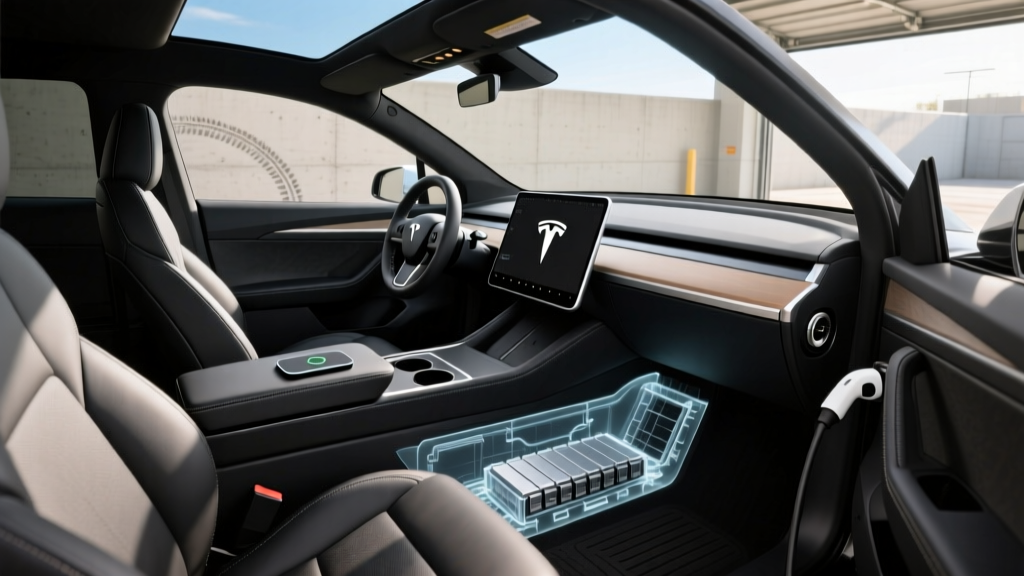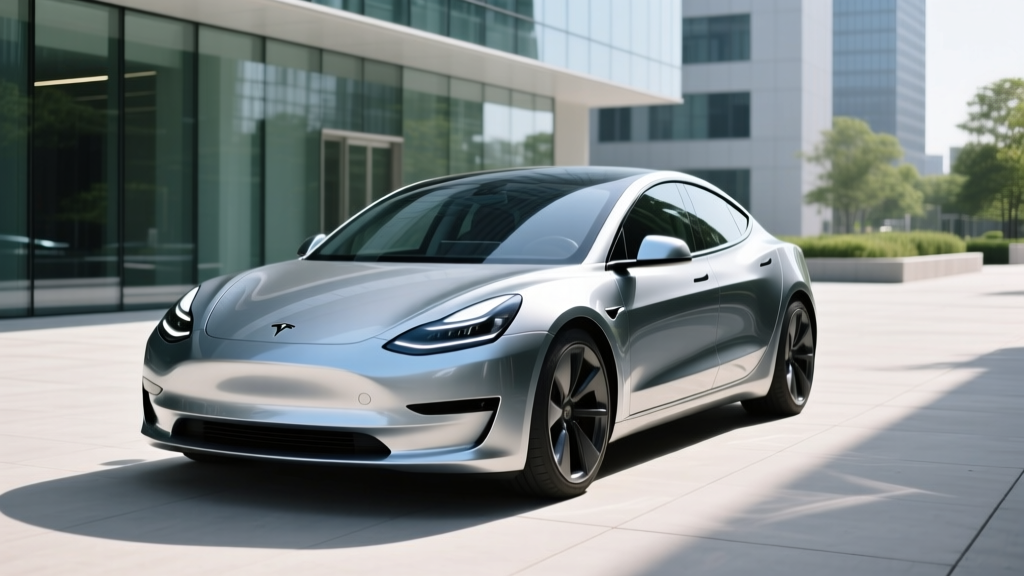
If you've ever wondered how much does a Tesla weigh, the answer depends heavily on the model, trim, and battery pack. Tesla's lineup spans from a relatively svelte 3,862-pound sedan to a nearly 7,000-pound electric pickup — and that mass directly shapes everything from EPA range and tire wear to braking distances and efficiency. Below, we map every current-production Tesla's curb weight against its battery size, range, charging speed, and real-world ownership costs so you can see exactly what you're signing up for.
2026 Tesla Curb Weight Comparison Table
Mass matters in an EV. Heavier vehicles consume more energy per mile (lower MPGe), wear through tires faster, and require longer braking distances. But they also tend to house larger battery packs, which can offset the weight penalty with raw capacity. Here's how the 2026 lineup stacks up:
| Model / Trim | Curb Weight (lbs) | Battery (kWh usable) | Chemistry | EPA Range (mi) | MPGe (combined) |
|---|---|---|---|---|---|
| Model 3 RWD | 3,862 | 57.5 | LFP | 272 | 132 |
| Model 3 Long Range AWD | 4,034 | 78.1 | NMC | 341 | 134 |
| Model 3 Performance | 4,065 | 78.1 | NMC | 315 | 124 |
| Model Y RWD | 4,189 | 57.5 | LFP | 274 | 129 |
| Model Y Long Range AWD | 4,363 | 78.1 | NMC | 320 | 125 |
| Model Y Performance | 4,398 | 78.1 | NMC | 298 | 117 |
| Model S Dual Motor | 4,766 | 95.0 | NMC | 402 | 124 |
| Model S Plaid | 4,766 | 95.0 | NMC | 396 | 120 |
| Model X Dual Motor | 5,185 | 95.0 | NMC | 335 | 109 |
| Model X Plaid | 5,185 | 95.0 | NMC | 326 | 105 |
| Cybertruck AWD | 6,603 | 123.0 | NMC (4680) | 340 | 72 |
| Cybertruck Cyberbeast | 6,670 | 123.0 | NMC (4680) | 320 | 69 |
Sources: fueleconomy.gov (EPA), Tesla spec sheets. Curb weight includes standard equipment and a full battery charge.
Why Tesla Weight Varies So Much Between Models
Three factors drive the spread from 3,862 lbs (Model 3 RWD) to 6,670 lbs (Cybertruck Cyberbeast):
- Battery mass. Tesla's LFP packs weigh roughly 770 lbs, while the 95 kWh NMC pack in the Model S/X approaches 1,200 lbs. The Cybertruck's 123 kWh 4680-cell structural pack is even heavier, contributing roughly 1,500 lbs of the truck's total mass.
- Body structure and materials. The Model 3 and Model Y use aluminum-intensive unibody construction to keep weight down. The Model S and X add air suspension components, larger glass roofs, and more sound deadening. The Cybertruck's cold-rolled stainless-steel exoskeleton is exceptionally dense — that skin alone accounts for hundreds of pounds over a conventional aluminum or steel body.
- Drivetrain complexity. Dual-motor AWD adds a second motor, inverter, and associated cooling hardware — typically 80-120 lbs over RWD. The tri-motor Plaid and Cyberbeast configurations add yet another motor and upgraded half-shafts.
EPA range is tested on a mixed city/highway dynamometer cycle. In real-world driving, expect the following deviations:
• Highway-only (70-80 mph): Subtract 10-15% from EPA. A Model 3 LR rated at 341 mi EPA will deliver ~290-305 mi at sustained interstate speeds.
• Cold weather (below 32°F): Subtract 20-30%. The same Model 3 LR may return 240-270 mi in freezing conditions due to cabin heating demand and reduced battery efficiency.
• City/regenerative driving: Often matches or slightly exceeds EPA thanks to regen recapturing energy in stop-and-go traffic.
All Tesla models include a heat pump (since 2021 refresh), which mitigates cold-weather losses compared to resistive-heater EVs, but the physics penalty remains significant.
Charging Speed: DC Fast Charge and Home Level 2
Weight influences charging indirectly — heavier vehicles with larger packs can accept more total energy, but peak charge rate (kW) depends on the pack architecture and thermal management. Here's what each model can handle:
| Model | Peak DC Fast Charge (kW) | 10-80% DC Time | Level 2 Home Rate (kW) | Level 2 Miles/Hr |
|---|---|---|---|---|
| Model 3 RWD (LFP) | 170 | ~25 min | 11.5 | ~44 mi/hr |
| Model 3 LR / Perf (NMC) | 250 | ~18 min | 11.5 | ~44 mi/hr |
| Model Y RWD (LFP) | 170 | ~25 min | 11.5 | ~44 mi/hr |
| Model Y LR / Perf (NMC) | 250 | ~20 min | 11.5 | ~44 mi/hr |
| Model S / X | 250 | ~24 min | 11.5 | ~36 mi/hr |
| Cybertruck | 250 (350 capable*) | ~22 min | 11.5 | ~28 mi/hr |
*Cybertruck's 4680 cells are engineered for 350 kW peaks at V4 Superchargers, but sustained real-world peaks have measured closer to 250-270 kW as of early 2026. Charge curve tapers sharply above 80% SoC — plan to unplug at 80% for the fastest average rate.
Charging-curve reality check: Peak kW is not sustained kW. A Model 3 Long Range may hit 250 kW at 10% SoC but will taper to ~120 kW by 60% and ~40 kW by 90%. The 10-80% times above reflect the integrated average, not the headline peak. For road-trip planning, budget roughly 20-25 minutes per stop on a 250 kW Supercharger — this matches real-world Tesla Supercharger network experience.
Performance: 0-60, Horsepower, and the Weight Trade-Off
Electric motors deliver instant torque, which helps heavy Teslas accelerate briskly despite their mass. But weight shows up in cornering limits, braking distances, and tire consumption:
| Model | 0-60 mph (sec) | Horsepower | Drivetrain |
|---|---|---|---|
| Model 3 RWD | 5.8 | 283 | RWD (single motor) |
| Model 3 Long Range AWD | 4.2 | 346 | AWD (dual motor) |
| Model 3 Performance | 2.9 | 510 | AWD (dual motor) |
| Model Y RWD | 6.3 | 283 | RWD (single motor) |
| Model Y Long Range AWD | 4.8 | 384 | AWD (dual motor) |
| Model Y Performance | 3.5 | 456 | AWD (dual motor) |
| Model S Dual Motor | 3.1 | 670 | AWD (dual motor) |
| Model S Plaid | 1.99 | 1,020 | AWD (tri motor) |
| Model X Dual Motor | 3.8 | 670 | AWD (dual motor) |
| Model X Plaid | 2.5 | 1,020 | AWD (tri motor) |
| Cybertruck AWD | 3.9 | 600 | AWD (dual motor) |
| Cybertruck Cyberbeast | 2.6 | 845 | AWD (tri motor) |
The 4,766-lb Model S Plaid hits 60 in 1.99 seconds — a testament to electric torque overcoming mass. But that same weight means tire replacements every 15,000-20,000 miles (performance tires wear faster under heavy, high-torque vehicles), and brake pad life that, while extended by regenerative braking, still demands attention on 5,000-lb-plus models in mountain driving.
Pricing, Trims, and Federal Tax Credit Eligibility
Tesla's pricing has shifted multiple times, but as of the 2026 model year, here's where the lineup stands before and after the IRS §30D federal tax credit:
| Model / Trim | Base MSRP | §30D Credit | Effective Price* |
|---|---|---|---|
| Model 3 RWD | $38,990 | $3,750 | $35,240 |
| Model 3 Long Range AWD | $42,990 | $7,500 | $35,490 |
| Model 3 Performance | $52,990 | $7,500 | $45,490 |
| Model Y RWD | $44,990 | $3,750 | $41,240 |
| Model Y Long Range AWD | $48,990 | $7,500 | $41,490 |
| Model Y Performance | $52,490 | $7,500 | $44,990 |
| Model S Dual Motor | $79,990 | $0** | $79,990 |
| Model S Plaid | $94,990 | $0** | $94,990 |
| Model X Dual Motor | $84,990 | $0** | $84,990 |
| Model X Plaid | $99,990 | $0** | $99,990 |
| Cybertruck AWD | $79,990 | $0** | $79,990 |
| Cybertruck Cyberbeast | $99,990 | $0** | $99,990 |
*Effective price assumes point-of-sale transfer at a participating dealer and buyer income within IRS limits (AGI ≤ $150K single / $300K joint). **Model S, Model X, and Cybertruck exceed the §30D MSRP cap ($55,000 for sedans, $80,000 for SUVs/trucks) and are ineligible for the new-vehicle credit. Verify current eligibility at IRS.gov — battery sourcing and critical-mineral requirements also apply.
- Buyer AGI: ≤ $150,000 (single) or ≤ $300,000 (married filing jointly)
- MSRP cap: $55,000 for sedans (Model 3); $80,000 for SUVs/trucks (Model Y, Cybertruck)
- Battery components: ≥ 60% manufactured or assembled in North America (phasing up annually)
- Critical minerals: ≥ 50% sourced from U.S. or FTA-partner countries
- Vehicle must be assembled in North America (all U.S.-built Teslas qualify)
- Credit can be transferred to the dealer at point of sale for an instant price reduction
Cargo, Passenger Space, and Daily Practicality
Weight correlates with size, and larger Teslas offer substantially more room. Here are the numbers that matter for families and road-trippers:
| Model | Cargo (rear seats up, cu ft) | Cargo (rear seats folded, cu ft) | Frunk (cu ft) | Rear Legroom (in) |
|---|---|---|---|---|
| Model 3 | 23 | — | 3.1 | 35.2 |
| Model Y | 30 | 72 | 4.1 | 40.5 |
| Model S | 28 | — | 5.3 | 35.4 |
| Model X | 15 (behind 3rd row) | 88 (all rows folded) | 5.3 | 38.4 (2nd row) |
| Cybertruck | 34 (bed, 6×4 ft) | — | 7.1 (front trunk) | 41.6 |
The Model Y's 72 cu ft with seats folded and hatchback design make it the most practical family hauler under $50K. The Model X offers three-row seating (up to 7 passengers) but sacrifices cargo space behind the third row. The Cybertruck's 6-foot bed handles gear that no SUV can, but its 6,603-lb curb weight limits efficiency to 72 MPGe — the lowest in the lineup.
Battery Warranty, Longevity, and Chemistry Trade-Offs
Tesla's battery warranty varies by model and chemistry:
- Model 3 / Model Y (LFP, RWD): 8 years / 100,000 miles, 70% minimum capacity retention
- Model 3 / Model Y (NMC, LR/Performance): 8 years / 120,000 miles, 70% minimum retention
- Model S / Model X: 8 years / 150,000 miles, 70% minimum retention
- Cybertruck: 8 years / 120,000 miles, 70% minimum retention
LFP vs. NMC — what it means for you:
| Factor | LFP (Lithium Iron Phosphate) | NMC (Nickel Manganese Cobalt) |
|---|---|---|
| Energy density | Lower (heavier per kWh) | Higher (lighter per kWh) |
| Cycle life | 3,000+ cycles | 1,000-2,000 cycles |
| Charging to 100% | Recommended daily | Limit to 80-90% daily |
| Cold-weather performance | Weaker (slower charging below freezing) | Better (more tolerant of cold) |
| Cost | Lower | Higher |
| Models using it | Model 3 RWD, Model Y RWD | All LR, Performance, S, X, Cybertruck |
If you live in a cold climate (consistently below freezing in winter), NMC is the stronger choice — LFP packs charge noticeably slower when cold and lose more range. If you're in a temperate zone and want maximum cycle life for high-mileage driving, LFP's longevity advantage is real.
Tech, Driver Assists, and Notable Drawbacks
Standout tech across the lineup:
- 15.4-inch (Model 3/Y) or 17-inch (Model S/X/Cybertruck) center touchscreen with integrated navigation, streaming, and gaming
- Over-the-air updates that add features post-purchase
- Tesla Autopilot (SAE Level 2) — adaptive cruise + lane centering, standard on all models
- Full Self-Driving (Supervised) — optional $8,000 upgrade, still Level 2 with driver monitoring required
- Supercharger network access (17,000+ stalls in North America, expanding with NACS adoption by other OEMs)
- Sentry Mode dashcam/security, Dog Mode cabin climate, and phone-as-key
Tesla Autopilot and FSD (Supervised) are SAE Level 2 driver-assist systems — not self-driving. The driver must keep hands on the wheel (or demonstrate attentiveness via cabin camera) and remain responsible for all vehicle control at all times. FSD does not eliminate the need for active driving. Only Level 4 robotaxi services (Waymo, Zoox) operate without a human driver, and those are geofenced to specific metro areas.
Notable drawbacks:
- No traditional instrument cluster — all information is on the center screen, which some drivers find distracting
- Build quality inconsistency (panel gaps, paint defects) remains a common owner complaint, though improving
- Model 3 Highland refresh removed ultrasonic sensors, relying on Tesla Vision (camera-only) for parking — less precise than ultrasonic in tight spaces
- No Apple CarPlay or Android Auto — Tesla's proprietary infotainment only
- Cybertruck's stainless-steel body is prone to fingerprint smudges and requires specific cleaning products
- Best-in-class Supercharger network reliability
- Industry-leading efficiency (MPGe) in Model 3/Y
- OTA updates continuously improve the vehicle
- Strong resale value relative to other EVs
- LFP option offers exceptional cycle life for high-mileage drivers
- Model S/X/Cybertruck ineligible for §30D credit (MSRP cap)
- No CarPlay/Android Auto
- Vision-only parking less precise than ultrasonic
- Cybertruck efficiency (72 MPGe) is poor for daily commuting
- Insurance premiums 20-40% above segment average
Who Should Buy Which Tesla?
- Choose Model 3 RWD if: You commute under 40 miles/day, want the lowest entry price (~$35K after credit), and live in a temperate climate. LFP daily-charging-to-100% is a non-issue for your use case.
- Choose Model 3 Long Range AWD if: You take regular road trips (341 mi EPA is the sweet spot), live in a cold climate (NMC handles freezing better), and want AWD traction.
- Choose Model Y Long Range AWD if: You need SUV cargo space (72 cu ft folded), have kids or dogs, and want the most practical family EV under $42K after credit.
- Choose Model S if: You want a luxury sedan with 400+ mi range and don't need the tax credit. The 4,766-lb curb weight is the trade-off for that massive 95 kWh pack.
- Choose Model X if: You need three rows and falcon-wing doors for tight parking. Accept the 109 MPGe penalty for the utility.
- Choose Cybertruck if: You need a truck bed, tow up to 11,000 lbs, and can accept 72 MPGe / ~340 mi range as the cost of 6,603 lbs of stainless steel.
Frequently Asked Questions
What is the heaviest Tesla currently in production?
The Cybertruck Cyberbeast at 6,670 lbs, followed by the Cybertruck AWD at 6,603 lbs. The stainless-steel exoskeleton and 123 kWh 4680-cell battery pack are the primary mass contributors.
Does Tesla weight affect tire wear?
Yes, significantly. Heavier EVs wear tires 20-30% faster than comparable ICE vehicles due to mass plus instant torque. The 4,766-lb Model S and 5,185-lb Model X are especially hard on tires — budget $1,200-$1,800 for a set of four every 20,000-25,000 miles.
How much does a Tesla battery weigh?
The LFP pack (57.5 kWh) weighs approximately 770 lbs. The NMC 78.1 kWh pack is around 1,000 lbs. The 95 kWh pack in Model S/X approaches 1,200 lbs, and the Cybertruck's 123 kWh structural 4680 pack is roughly 1,500 lbs.
Does a heavier Tesla have more range?
Not necessarily. The Model S (4,766 lbs) has 402 mi EPA thanks to its 95 kWh pack, but the lighter Model 3 LR (4,034 lbs) achieves 341 mi from 78.1 kWh with better efficiency. The Cybertruck (6,603 lbs) has a 123 kWh pack but only 340 mi — its aerodynamic drag and rolling resistance consume energy far faster than a sedan.
How much does a Tesla weigh compared to a gas car?
A Model 3 RWD (3,862 lbs) is roughly comparable to a Toyota Camry (~3,550 lbs). A Model Y LR (4,363 lbs) outweighs a Honda CR-V (~3,455 lbs) by about 900 lbs — that's the battery mass penalty. The Cybertruck (6,603 lbs) is heavier than a Ford F-150 crew cab (~4,700 lbs) by nearly a ton.
Does it qualify for the federal EV tax credit?
Model 3 RWD qualifies for $3,750 (partial critical-mineral sourcing). Model 3 LR/Performance and Model Y LR/Performance qualify for the full $7,500 (assuming buyer income and MSRP caps are met). Model S, Model X, and Cybertruck are ineligible due to exceeding the §30D MSRP cap. Always verify at IRS.gov before purchasing.