The Real Cost to Charge an EV: Home, Public, and Per-Mile Math
The sticker on the window tells you the purchase price. It doesn't tell you what you'll spend on electricity over five years, whether you'll qualify for a $7,500 federal tax credit, or how much your insurance premium will climb. Answering "how much does it cost to charge an EV" requires unpacking the entire ownership equation — energy rates, driving habits, incentive eligibility, and the depreciation curve that has reshaped the EV market since 2024.
This guide runs the numbers for a representative 2026 midsize electric crossover — the kind of vehicle a two-car household might use as a daily commuter and road-trip rig. We'll use the 2026 Hyundai Ioniq 5 SEL AWD as our working example: 84 kWh usable battery (NMC chemistry), EPA-estimated 290 miles of range, a peak DC fast-charge rate of 240 kW (10–80% in roughly 18 minutes under ideal thermal conditions), and a starting MSRP around $48,500. Your vehicle will differ, but the framework applies universally.
Charging Costs Per Mile: Home vs. Public DC Fast Charging
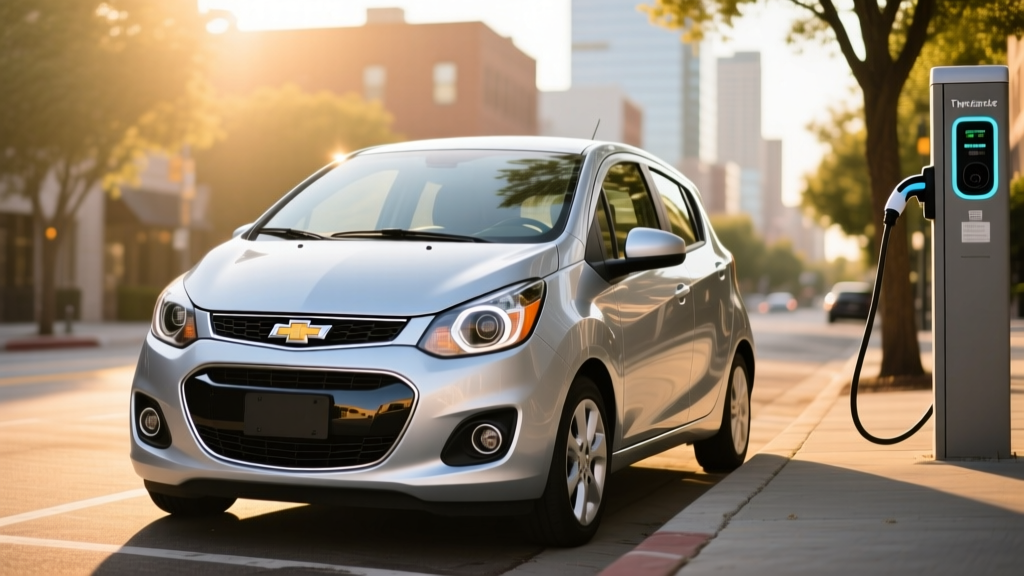
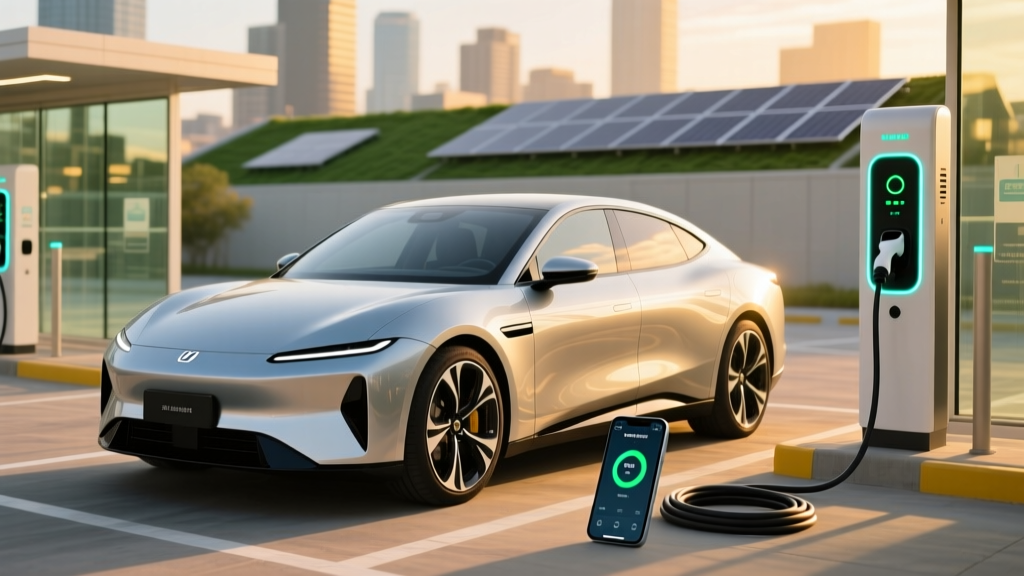
The single biggest variable in EV operating cost is where you charge. The difference between Level 2 home charging and public DC fast charging can be 3x or more per kWh, which compounds dramatically over a year of driving.
kW vs. kWh — the essential distinction: A kilowatt (kW) measures power — how fast energy flows into your battery. A kilowatt-hour (kWh) measures energy — the total amount stored or consumed. You pay for kWh the same way you pay for gallons of gas. Your charger's kW rating determines how quickly those kWh accumulate.
Scenario Assumptions
- Annual mileage: 12,000 miles
- Vehicle efficiency: 3.0 miles per kWh (≈ 112 MPGe combined, realistic for a midsize AWD crossover)
- Annual energy consumption: 4,000 kWh
| Charging Method | Avg. $/kWh | Cost per Mile | Annual Cost (12k mi) |
|---|---|---|---|
| Home Level 2 (national avg. residential electricity, $0.16/kWh) | $0.16 | $0.053 | $640 |
| Home with time-of-use off-peak rate ($0.09/kWh) | $0.09 | $0.030 | $360 |
| Public Level 2 (avg. network rate, $0.30/kWh) | $0.30 | $0.100 | $1,200 |
| DC Fast Charging (avg. $0.48/kWh, typical Electrify America / EVgo pricing) | $0.48 | $0.160 | $1,920 |
| Gasoline baseline (25 MPG combined, $3.40/gal) | — | $0.136 | $1,632 |
The takeaway is stark. If you charge exclusively at home on a standard residential rate, your annual fuel cost is roughly $640 — less than half what a 25 MPG gas car costs. If you rely entirely on DC fast charging because you lack home charging access, your annual cost climbs to $1,920 — actually more than gasoline. Most owners fall somewhere in between, doing 80–90% of charging at home and using DC fast chargers for road trips.
Source: National average residential electricity rates via U.S. Energy Information Administration (EIA). Public charging rates vary by network, region, and membership tier.
The 5-Year Total Cost of Ownership Breakdown
Charging is just one line item. A true cost comparison requires looking at purchase price, incentives, insurance, maintenance, and depreciation across a realistic ownership horizon. Below is a 5-year / 60,000-mile TCO model for our 2026 Ioniq 5 SEL AWD example versus a comparably equipped 2026 gas-powered midsize AWD crossover (think Toyota RAV4 AWD or Honda CR-V AWD at roughly $37,000 MSRP).
| Category | 2026 Ioniq 5 SEL AWD (EV) | Gas Crossover AWD | Notes |
|---|---|---|---|
| Purchase Price (MSRP) | $48,500 | $37,000 | Before incentives |
| Federal Tax Credit (§30D) | −$7,500 (if eligible) | $0 | See eligibility rules below |
| State / Utility Incentives | −$1,000 to −$4,000 (varies) | $0 | Region-dependent |
| Effective Purchase Price | ~$37,000–$40,000 | $37,000 | After credits applied |
| Fuel / Energy (5 years) | $3,200 (home L2) to $9,600 (DCFC) | $8,160 | 12k mi/yr, rates above |
| Insurance (5 years) | $12,500 | $9,500 | EV premiums typically 20–30% higher |
| Maintenance (5 years) | $1,800 | $4,200 | No oil changes, less brake wear on EV |
| Depreciation (5 years) | ~$22,000–$26,000 | ~$15,000–$18,000 | EVs have seen steeper depreciation post-2023 |
| Total (mid-range estimate) | ~$73,000–$80,000 | ~$73,920 | Highly dependent on charging mix & credit eligibility |
The numbers reveal an uncomfortable truth: EV ownership costs are highly sensitive to charging behavior, tax credit eligibility, and depreciation. An owner with home Level 2 charging who qualifies for the full federal credit and a state rebate will break even or come out ahead. An apartment dweller relying on DC fast charging who doesn't qualify for the credit will spend significantly more over five years.
Federal EV Tax Credit: §30D Eligibility Rules for 2026
The federal Clean Vehicle Credit under IRS §30D can reduce your tax liability by up to $7,500 for a qualifying new EV. But "up to" is the operative phrase. The credit has layered requirements that disqualify many vehicles and many buyers. As of the 2026 tax year, these are the rules you need to verify before counting on the credit in your purchase math.
- Vehicle MSRP Cap: Vans, SUVs, and pickup trucks must have an MSRP at or below $80,000. Sedans and other passenger cars must be at or below $55,000. (The Ioniq 5, classified as an SUV, clears the $80K cap.)
- Buyer Income Cap (Modified AGI): $300,000 for married filing jointly; $225,000 for head of household; $150,000 for all other filers. Exceed the cap in either the current or prior tax year and you lose eligibility.
- Battery Component Manufacturing: A percentage of battery components (increasing annually) must be manufactured or assembled in North America. For 2026, the threshold is 100% of battery components. Vehicles that don't meet this lose half the credit ($3,750).
- Critical Minerals Sourcing: A percentage of critical minerals must be sourced from the U.S. or a free-trade-agreement partner. For 2026, the threshold is 80%. Failure here loses the other $3,750.
- Foreign Entity of Concern (FEOC) Exclusion: Vehicles with battery components from a FEOC (post-2024) or critical minerals from a FEOC (post-2025) are entirely disqualified — $0 credit. This has removed several models from eligibility.
- Point-of-Sale Transfer: Since January 2024, you can transfer the credit to the dealer at purchase, applying it as an immediate down-payment reduction rather than waiting to claim it on your tax return. You must still meet all income and sourcing requirements, and you'll need to file IRS Form 8936 to reconcile at tax time.
- Final Assembly: Vehicle must undergo final assembly in North America. Verify via the DOE VIN lookup tool on fueleconomy.gov.
The practical effect: as of early 2026, the list of vehicles qualifying for the full $7,500 is shorter than marketing materials suggest. Battery sourcing rules have tightened annually, and the FEOC restrictions have disqualified models from manufacturers using certain Chinese-sourced minerals or components. Always check the current IRS qualified vehicles list before signing a purchase agreement.
Maintenance Savings: Where EVs Genuinely Cost Less
This is where the EV ownership equation tilts decisively in your favor, and it's not a marginal difference. Battery electric vehicles eliminate the entire internal-combustion maintenance schedule: no oil changes, no spark plugs, no timing belts, no exhaust system repairs, no transmission fluid swaps (most EVs use a single-speed reduction gear with minimal service requirements).
| Service Item | Gas Vehicle | EV (BEV) | EV Savings |
|---|---|---|---|
| Oil Changes (6–8 over 5 yrs) | $400–$700 | $0 | $400–$700 |
| Brake Pads & Rotors | $800–$1,500 | $200–$500 | $600–$1,000 |
| Transmission Service | $200–$600 | $0 | $200–$600 |
| Engine Air Filter / Cabin Filter | $150–$300 | $80–$150 (cabin only) | $70–$150 |
| Coolant Flush | $150–$250 | $150–$250 (EV thermal system) | $0 |
| Tire Rotation & Replacement | $2,000–$3,000 | $2,400–$3,600 | −$400 to −$600 |
| Total (5-year estimate) | $3,700–$6,350 | $2,830–$4,500 | ~$900–$1,850 |
The brake wear advantage: Regenerative braking handles the majority of deceleration in an EV, sending kinetic energy back into the battery instead of converting it to heat at the friction brakes. Many EV owners report original brake pads lasting 80,000–100,000+ miles. This is a real, measurable saving, especially in stop-and-go city driving where regen is most active.
The tire caveat: EVs are heavier (the Ioniq 5 AWD weighs roughly 4,600 lbs vs. ~3,600 lbs for a gas RAV4) and deliver instant torque. Both factors accelerate tire wear. Budget for tire replacement at 30,000–40,000 miles rather than the 50,000+ miles typical for lighter gas vehicles. EV-specific touring tires (e.g., Michelin Pilot Sport EV, Hankook iON evo) are engineered for lower rolling resistance and higher load ratings, but they cost $200–$350 per tire.
Insurance Costs: The Line Item That Catches Buyers Off Guard
EV insurance premiums run 20–30% higher than equivalent gas vehicles on average, and this deserves honest accounting. The reasons are structural, not arbitrary:
- Higher repair costs: EV battery packs are expensive to replace if damaged ($15,000–$25,000+ for a midsize pack). Even minor collision damage near the battery enclosure can trigger a total-write-off protocol at some insurers due to safety inspection requirements.
- Specialized labor: High-voltage system repairs require certified technicians. Fewer shops have this capability, driving up labor rates.
- Vehicle value: Higher MSRP means higher comprehensive and collision payouts.
- Parts availability: EV-specific body panels, sensors, and structural components can have longer lead times and higher unit costs.
For our Ioniq 5 example, expect annual premiums in the range of $2,200–$2,800 depending on your driving record, location, coverage levels, and deductible. The gas crossover comparison sits at $1,600–$2,200. That's a $500–$800 annual gap, or $2,500–$4,000 over five years. Shop quotes from multiple insurers — some companies (GEICO, Progressive, State Farm) have narrowed the EV premium gap, while others still price EVs at a significant markup. Bundling with homeowners insurance and maintaining a clean record can bring EV premiums closer to parity.
Depreciation and Resale Value: The Evolving Picture
Depreciation is typically the largest single ownership cost for any vehicle, and EVs have experienced a volatile depreciation landscape since the wave of price cuts and new model introductions that began in 2023. Here's what the data shows heading into 2026:
- 5-year depreciation for EVs: Industry averages from sources like iSeeCars and Kelley Blue Book place midsize EV crossover depreciation at roughly 45–55% of original MSRP over five years. That translates to $22,000–$27,000 lost on our $48,500 Ioniq 5 example.
- 5-year depreciation for gas crossovers: Typically 40–48%, or $15,000–$18,000 on a $37,000 vehicle.
- What changed: Tesla's aggressive price cuts in 2023–2024 cascaded through the entire used EV market, resetting consumer expectations and pulling down resale values across all brands. The influx of new, more affordable EV models (sub-$40K entries from Hyundai, Chevrolet, and others) further compressed used EV pricing.
- Stabilizing factors: As the market matures and battery longevity data accumulates (many 2018–2021 EVs are showing less than 10% degradation at 80,000+ miles), buyer confidence in used EVs is improving. Certified pre-owned programs with battery health guarantees are helping.
The depreciation gap is real but narrowing. If you plan to own your EV for 8–10 years rather than 5, depreciation as a percentage of total cost decreases substantially. Leasing can also shift depreciation risk to the lessor, and some 2026 lease deals on EVs are priced aggressively — with the added benefit that the leasing company (not you) claims the §30D credit and passes a portion through as a capitalized-cost reduction.
Frequently Asked Questions
How much does it really cost to own an EV over 5 years?
For a midsize AWD electric crossover like the 2026 Ioniq 5, total 5-year cost ranges from approximately $73,000 to $80,000 depending on your charging mix, tax credit eligibility, and local insurance rates. A comparable gas crossover runs roughly $74,000 over the same period. The EV wins when you charge primarily at home, qualify for the full $7,500 federal credit plus state incentives, and benefit from lower maintenance. It loses when you rely on public fast charging, don't qualify for credits, or sell early into a soft resale market.
Do I qualify for the $7,500 federal EV tax credit?
Eligibility depends on five factors: (1) your modified adjusted gross income must be below $150K single / $300K joint, (2) the vehicle MSRP must be under the applicable cap ($55K cars, $80K SUVs/trucks), (3) battery components must meet North American manufacturing thresholds, (4) critical minerals must be sourced from the U.S. or FTA partners, and (5) no battery components or minerals can come from a Foreign Entity of Concern. Check the IRS qualified vehicle list and verify your specific VIN before purchase. Since 2024, you can transfer the credit to the dealer as a point-of-sale discount.
How much do I save on fuel and maintenance with an EV?
On fuel: if you charge at home at the national average of $0.16/kWh and drive 12,000 miles per year in a vehicle averaging 3.0 mi/kWh, you'll spend about $640/year — saving roughly $990/year versus a 25 MPG gas car at $3.40/gallon. Over five years, that's about $4,960 in fuel savings. On maintenance: expect to save $900–$1,850 over five years thanks to eliminated oil changes, reduced brake wear from regenerative braking, and fewer fluid services. Combined fuel and maintenance savings: roughly $5,900–$6,800 over five years for a home-charging owner.
Are EVs more expensive to insure?
Yes, typically 20–30% more than equivalent gas vehicles. The higher premiums reflect more expensive battery-pack repairs, specialized technician requirements, and higher vehicle values. For a midsize EV crossover, expect annual premiums of $2,200–$2,800 versus $1,600–$2,200 for a gas equivalent. The gap varies significantly by insurer, state, and driver profile. Always get quotes before purchasing — some insurers have narrowed the differential considerably.
How well do EVs hold their value compared to gas cars?
As of 2026, midsize EV crossovers depreciate approximately 45–55% over five years, versus 40–48% for gas equivalents. The gap widened after 2023's price-cut cascade but is stabilizing as battery longevity data matures and the market absorbs more affordable EV competition. Long-term owners (8+ years) and lease customers are less affected by short-term resale fluctuations. Battery state-of-health reports and CPO programs are helping support used EV values.
Does the charging speed affect my electricity cost?
Not directly — you pay per kWh regardless of charge rate. However, DC fast charging networks charge higher per-kWh rates ($0.40–$0.60) than home electricity ($0.09–$0.20) to cover infrastructure costs. Also understand the charge curve: your EV won't pull peak kW (e.g., 240 kW) for the entire session. Charging speed tapers significantly above 80% state of charge to protect battery health. A 10–80% session at a 240 kW-capable charger may take 18 minutes, but 80–100% can add another 25–30 minutes. Plan road-trip stops to charge to 80% and move on.
What about the cost of home charger installation?
A Level 2 home charger (240V, 32–48 amps) installation typically costs $800–$2,500 including equipment, electrician labor, and permits, assuming your electrical panel has sufficient capacity. Homes needing a panel upgrade (from 100A to 200A service) can see costs of $3,000–$5,000+. Many utilities offer $300–$1,500 rebates for charger installation — check with your provider. A properly installed Level 2 charger adds roughly 25–35 miles of range per hour of charging, easily covering daily driving needs overnight.
Bottom Line: Who Actually Saves Money with an EV?
- You can install a Level 2 charger at home (garage, driveway, or workplace)
- You qualify for the full or partial federal §30D tax credit (verify income, MSRP, and battery sourcing)
- Your state or utility offers additional rebates
- You plan to keep the vehicle 5+ years to ride out depreciation
- You rely exclusively on public DC fast charging (apartment living without workplace charging)
- Your income exceeds §30D caps or your chosen vehicle fails sourcing requirements
- You live in a state with high electricity rates and no off-peak programs
- You trade in every 3 years (depreciation dominates the cost equation)
The honest answer to "how much does it cost to charge an EV" is that charging itself is the cheapest part of EV ownership when done at home. The harder questions are whether you can access affordable home charging, whether you qualify for the incentives that close the purchase-price gap, and whether you'll hold the vehicle long enough for fuel and maintenance savings to offset higher insurance and depreciation. Run your own numbers using the framework above — with your local electricity rate, your insurance quote, and your specific vehicle's credit eligibility — before signing anything.