The Real Question Behind Tesla's Production Costs
When shoppers ask "how much does it cost to make a Tesla," they're usually trying to answer a more practical question: am I paying for engineering, or am I paying for margin? Tesla's manufacturing cost per vehicle has been one of the most scrutinized numbers in the auto industry, and for good reason. The answer reveals whether you're getting genuine value or subsidizing a tech-company valuation.
Tesla's cost of goods sold (COGS) per vehicle dropped to approximately $35,000–$37,000 by late 2025, according to quarterly earnings filings, meaning the company spends roughly that much in materials, labor, and factory overhead to build each car. With the 2026 Model 3 Long Range AWD starting at $47,240 and the Model Y Long Range AWD at $48,130, Tesla retains a gross margin in the 17–19% range — significantly higher than legacy automakers' EV margins, which frequently sit in the low single digits or negative territory.
But production cost isn't the same as buyer value. Let's examine what you actually get for your money across Tesla's two highest-volume models, with exact specs, real-world range data, and how the economics stack up against the competition.
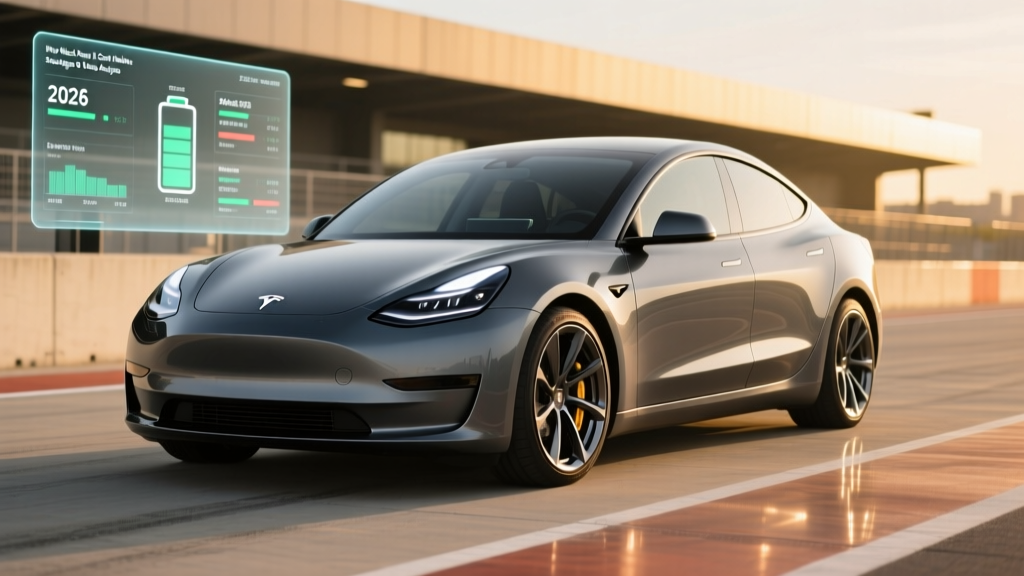
2026 Tesla Model 3: Full Spec Breakdown
| Spec | RWD (Base) | Long Range AWD | Performance |
|---|---|---|---|
| EPA Range | 272 mi | 341 mi | 315 mi |
| Battery (usable) | ~60 kWh (LFP) | ~82 kWh (NMC) | ~82 kWh (NMC) |
| Drivetrain | RWD, single motor | AWD, dual motor | AWD, dual motor |
| Horsepower | 271 hp | 346 hp | 510 hp |
| 0–60 mph | 5.8 sec | 4.2 sec | 2.9 sec |
| Max DC Fast Charge | 170 kW | 250 kW | 250 kW |
| 10–80% DCFC Time | ~25 min | ~22 min | ~22 min |
| Level 2 Home Charge | 11.5 kW (~37 mi/hr) | 11.5 kW (~44 mi/hr) | 11.5 kW (~44 mi/hr) |
| MPGe (combined) | 132 MPGe | 134 MPGe | 119 MPGe |
| Efficiency | 25 kWh/100 mi | 25 kWh/100 mi | 28 kWh/100 mi |
| Cargo Volume | 23 cu ft (rear trunk) + ~3.1 cu ft (frunk) | ||
| Rear Legroom | 35.3 in | ||
| Base MSRP | $38,990 | $47,240 | $53,240 |
Source: EPA / fueleconomy.gov and Tesla specifications.
The Model 3 Long Range AWD carries an EPA rating of 341 miles. In real-world highway driving at 70–75 mph, expect approximately 280–300 miles before needing to charge. In cold weather (below 32°F), that figure drops to 230–260 miles due to battery resistance and cabin heating load. The base RWD model with its LFP battery tolerates daily 100% charging better than NMC, but its smaller pack means real-world highway range sits closer to 220–240 miles in moderate temperatures.
2026 Tesla Model Y: The Family-SUV Sibling
The Model Y shares its platform with the Model 3 but trades sedan efficiency for crossover practicality. It remains Tesla's best-selling vehicle globally and one of the best-selling vehicles of any powertrain in the U.S.
| Spec | Long Range AWD | Performance |
|---|---|---|
| EPA Range | 320 mi | 285 mi |
| Battery (usable) | ~82 kWh (NMC) | ~82 kWh (NMC) |
| Horsepower | 384 hp | 510 hp |
| 0–60 mph | 4.8 sec | 3.5 sec |
| Max DC Fast Charge | 250 kW | 250 kW |
| 10–80% DCFC Time | ~23 min | ~23 min |
| MPGe (combined) | 122 MPGe | 111 MPGe |
| Cargo Volume | 30.2 cu ft (rear seats up) / 72.1 cu ft (folded) + ~4.1 cu ft frunk | |
| Rear Legroom | 38.4 in | |
| Base MSRP | $48,130 | $53,130 |
EPA 320 miles on the Long Range AWD translates to roughly 260–280 miles on a highway road trip at 70 mph, and 210–240 miles in freezing conditions. The taller, heavier crossover body sacrifices about 20–30 miles of real-world range compared to an equivalently equipped Model 3.
Charging Speed: Where Tesla's Production Cost Pays Off
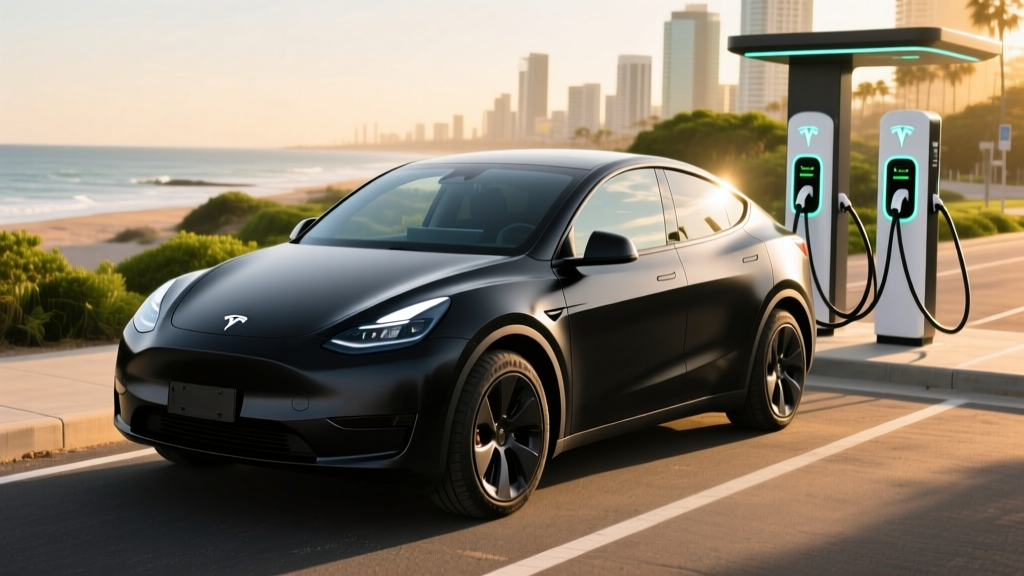
Tesla's charging ecosystem is where the company's manufacturing investment becomes tangible for owners. The Supercharger network — now open to NACS-equipped vehicles from other brands — remains the most reliable DC fast-charging network in North America.
| Charging Level | Power | Miles Added per Hour | Notes |
|---|---|---|---|
| Level 1 (120V outlet) | ~1.4 kW | ~4–5 mi/hr | Emergency/trickle only |
| Level 2 (240V home) | 11.5 kW | ~37–44 mi/hr | Full overnight charge; requires 60A circuit |
| DC Fast (V3 Supercharger) | Peak 250 kW | ~180 mi in 15 min | Sustained rate tapers above 50% SoC |
| DC Fast (V4 Supercharger) | Peak 250+ kW | Similar to V3 for current cars | Future vehicles may accept higher rates |
Charging curve reality: The "250 kW peak" figure is exactly that — a peak. In practice, a Model 3 Long Range at a V3 Supercharger will sustain roughly 200–250 kW from 10–40% state of charge, then taper progressively. The advertised 10–80% time of ~22 minutes assumes battery preconditioning (which Tesla handles automatically when you navigate to a Supercharger). Without preconditioning — for instance, at a non-Tesla DC fast charger — that time can stretch to 30+ minutes in cool weather.
Tesla's Production Cost vs. What You Pay: The Margin Question
To directly answer how much it costs to make a Tesla: based on Tesla's 2025 annual report and analyst teardowns (notably from Munro & Associates), the estimated bill of materials plus direct manufacturing cost for a Model 3 RWD is approximately $28,000–$30,000, while a Model Y Long Range AWD costs roughly $35,000–$37,000 to produce.
Key cost drivers include:
- Battery pack: $7,000–$12,000 depending on chemistry and capacity. Tesla's LFP packs (sourced from CATL) are cheaper than NMC packs, which is why the base Model 3 RWD can undercut competitors on price.
- Gigacasting: Tesla's use of single-piece rear and front underbody castings eliminates hundreds of stamped parts and robots, saving an estimated $1,500–$2,000 per vehicle in body-in-white costs.
- Vertical integration: Tesla designs its own seats, develops its own FSD silicon, and operates its own charging network — capturing margin that suppliers would take at legacy OEMs.
- No dealer network: Direct sales eliminate the 8–12% dealer margin typical in the franchise system, saving roughly $3,000–$5,000 per vehicle.
So when you pay $47,240 for a Model 3 Long Range, roughly $10,000–$12,000 of that is Tesla's gross margin — covering R&D amortization, Supercharger network expansion, corporate overhead, and profit. That margin is the envy of the EV industry, where companies like Ford's Model e division have reported losses of $30,000–$40,000 per EV sold in recent quarters.
Federal Tax Credit: What You'll Actually Pay
The IRS §30D clean vehicle credit remains the single biggest variable in Tesla's effective purchase price. Here's where things stand for 2026:
| Model / Trim | MSRP | Est. §30D Credit | Effective Price |
|---|---|---|---|
| Model 3 RWD | $38,990 | Up to $7,500* | ~$31,490 |
| Model 3 Long Range AWD | $47,240 | Up to $7,500* | ~$39,740 |
| Model Y Long Range AWD | $48,130 | Up to $7,500* | ~$40,630 |
| Model Y Performance | $53,130 | Up to $7,500* | ~$45,630 |
*Eligibility is not automatic. The §30D credit requires:
- Buyer income caps: AGI ≤ $150,000 (single) / $300,000 (joint) / $225,000 (head of household)
- MSRP caps: ≤ $55,000 for sedans (Model 3) / ≤ $80,000 for SUVs (Model Y) — all current trims qualify
- Battery sourcing: A percentage of critical minerals and battery components must be sourced from the U.S. or free-trade-agreement partners. Tesla's Fremont and Austin-built vehicles have generally met these thresholds, but sourcing requirements tighten annually. Always verify current eligibility on fueleconomy.gov before purchasing.
- Point-of-sale transfer: As of 2024+, you can transfer the credit to the dealer at purchase, effectively reducing your out-of-pocket cost immediately rather than waiting for tax filing.
Consult a tax professional before relying on the credit. Income phase-outs, alternative minimum tax interactions, and sourcing-rule changes can affect your actual benefit.
Tech, Driver Assistance, and What You Should Know
Tesla's technology stack is both its strongest selling point and the source of its most common buyer confusion.
Infotainment: A 15.4-inch center touchscreen handles all vehicle functions — there is no instrument cluster, no head-up display, and no physical buttons for climate or mirrors. Everything routes through the screen or the Tesla app. The system is fast, responsive, and receives regular over-the-air updates, but the lack of Apple CarPlay/Android Auto remains a dealbreaker for some buyers.
Autopilot and FSD (Supervised):
Tesla Autopilot (standard) and Full Self-Driving (Supervised) — even in 2026 — are SAE Level 2 driver-assistance systems. They can steer, accelerate, and brake within lanes and on highways, but the driver must remain attentive and ready to take over at all times. Tesla's camera-only "vision" approach has improved significantly, but these are not autonomous driving systems. Only Level 4 services like Waymo operate without a human driver.
FSD (Supervised) does NOT handle all driving scenarios. Known limitations include: construction zones with shifted lanes, unmapped roads, heavy rain/snow/fog degrading camera vision, complex unprotected left turns, and emergency vehicle interactions. The $8,000 FSD purchase (or $99/month subscription) is optional and should be evaluated based on your actual commute, not marketing promises.
Notable features: Sentry Mode (360° parking surveillance), Dog Mode (climate-controlled cabin for pets), over-the-air performance upgrades, Tesla Profiles (driver-specific settings), and access to the Supercharger network (20,000+ stalls in North America).
Warranty, Longevity, and Ownership Costs
| Component | Model 3 RWD (LFP) | Model 3 LR / Model Y (NMC) |
|---|---|---|
| Basic Vehicle | 4 yr / 50,000 mi | 4 yr / 50,000 mi |
| Battery & Drive Unit | 8 yr / 100,000 mi | 8 yr / 120,000 mi |
| Capacity Retention Threshold | ≥70% of original capacity during warranty period | |
Battery degradation data from Tesla's fleet reports shows NMC packs retaining approximately 88–92% capacity after 100,000 miles, well within the warranty threshold. LFP packs in the RWD model show similar or slightly better longevity, with the added advantage of tolerating regular 100% charging without accelerated degradation — something Tesla recommends against for NMC packs (daily charge limit of 80–90%).
Out-of-warranty battery replacement: A Model 3/Y battery pack replacement currently runs $12,000–$16,000 at Tesla service centers, though third-party repair shops are beginning to offer cell-level module replacements for $5,000–$8,000.
Tesla vs. Key Competitors: Is It Worth It?
Choose Tesla If...
- You want access to the Supercharger network — still the most reliable and extensive DC fast-charging system in North America
- Efficiency matters: 25 kWh/100 mi is among the best in the segment
- You value OTA updates that add features post-purchase
- You want the lowest per-mile electricity cost in the segment
- You're comfortable with a screen-only interior interface
Look at Competitors If...
- You want Apple CarPlay/Android Auto (Hyundai Ioniq 6, BMW i4)
- You prefer physical buttons and a traditional instrument cluster
- You need a longer warranty (Hyundai: 10-yr/100,000-mi battery)
- Build quality consistency is a priority — Tesla panel gaps remain a common complaint
- You want a dealer service network for warranty work in rural areas
The closest competitors by price and segment:
- Hyundai Ioniq 6 SE Long Range: ~$42,000, EPA 361 mi, 350 kW max charging, but less cargo space
- BMW i4 eDrive40: ~$52,000, EPA 301 mi, premium interior, but costs more and charges slower
- Polestar 2 Long Range Dual Motor: ~$49,000, EPA 276 mi, Google-based infotainment, CarPlay support
Frequently Asked Questions
What is the real-world range of the Tesla Model 3?
The EPA rates the 2026 Model 3 Long Range AWD at 341 miles. In real-world highway driving at 70 mph, plan for 280–300 miles. In cold weather below freezing, expect 230–260 miles. The base RWD with its smaller LFP pack delivers roughly 220–240 real-world highway miles in moderate conditions.
How fast does a Tesla charge at home and on the road?
At home on a 240V Level 2 charger (11.5 kW), a Model 3 Long Range adds about 44 miles of range per hour — enough for a full overnight charge. On a V3 Supercharger, DC fast charging peaks at 250 kW and delivers a 10–80% charge in approximately 22 minutes with battery preconditioning active. Without preconditioning, add 5–10 minutes.
How much does a Tesla cost after the federal tax credit?
With the full $7,500 §30D credit applied, the 2026 Model 3 RWD drops to roughly $31,490, the Model 3 Long Range to ~$39,740, and the Model Y Long Range to ~$40,630. However, eligibility depends on your income, the vehicle's battery sourcing compliance, and MSRP caps. Verify current eligibility on fueleconomy.gov and consult a tax professional.
Is the Tesla Model 3 or Model Y worth buying over competitors?
Tesla's combination of efficiency (25 kWh/100 mi), Supercharger access, OTA updates, and strong resale value makes it the default choice for many EV buyers. However, if you prioritize interior build quality, CarPlay, or a longer battery warranty, the Hyundai Ioniq 6 or BMW i4 are compelling alternatives. Test-drive both before deciding.
What are the biggest pros and cons of owning a Tesla?
Pros: Best-in-class efficiency, Supercharger network, over-the-air updates, strong performance per dollar, spacious frunk/trunk, low running costs (~$0.04–0.06/mi on home electricity).
Cons: No CarPlay/Android Auto, screen-dependent controls, inconsistent panel gaps, service center wait times in some markets, FSD is an expensive add-on that remains Level 2, insurance premiums run 15–30% higher than segment average.
Does the Tesla Model 3 or Model Y qualify for the federal EV tax credit?
As of early 2026, both the Model 3 and Model Y qualify for up to $7,500 under IRS §30D, provided you meet the income caps ($150K single / $300K joint) and the vehicle's battery sourcing meets critical-mineral and component thresholds. Tesla's U.S.-built vehicles have generally met these requirements, but rules tighten annually. Always check the latest eligibility list on fueleconomy.gov before committing to a purchase.
Bottom Line: What Tesla's Production Costs Mean for You
The answer to "how much does it cost to make a Tesla" — roughly $28K–$37K depending on model and trim — reveals a company with genuine manufacturing advantages, not just marketing. Gigacasting, vertical integration, and LFP battery sourcing give Tesla a cost structure that most competitors won't match until the late 2020s.
For buyers, this translates to competitive pricing with strong margins that fund continued R&D and Supercharger expansion. The Model 3 Long Range at ~$39,740 after tax credits remains one of the best value propositions in the EV market, provided you're comfortable with the Tesla-specific trade-offs: screen-only controls, no CarPlay, and service access that varies by region.
If you can charge at home and your daily driving stays under 60 miles round-trip, the total cost of ownership for a Tesla undercuts nearly every gas and EV competitor. If you need dealer-proximity service, traditional controls, or the longest warranty available, the alternatives deserve serious consideration.