The Short Answer: What Does Charging an EV Actually Cost?
For most US drivers charging at home on a Level 2 charger, it costs between $0.10 and $0.18 per kWh depending on your state and utility plan. A typical 2026 EV with a 75 kWh battery (like the Tesla Model Y Long Range or Hyundai Ioniq 5) will cost roughly $7.50 to $13.50 for a full charge, delivering 270–320 EPA miles of range. That translates to about $0.03 to $0.05 per mile. By comparison, a gas car getting 28 MPG at $3.30/gallon costs about $0.12 per mile. Public DC fast charging is significantly more expensive — typically $0.30 to $0.55 per kWh — pushing costs to $0.09–$0.15 per mile, closer to (or sometimes above) gas.
Home Charging Costs: Where Most EV Owners Save
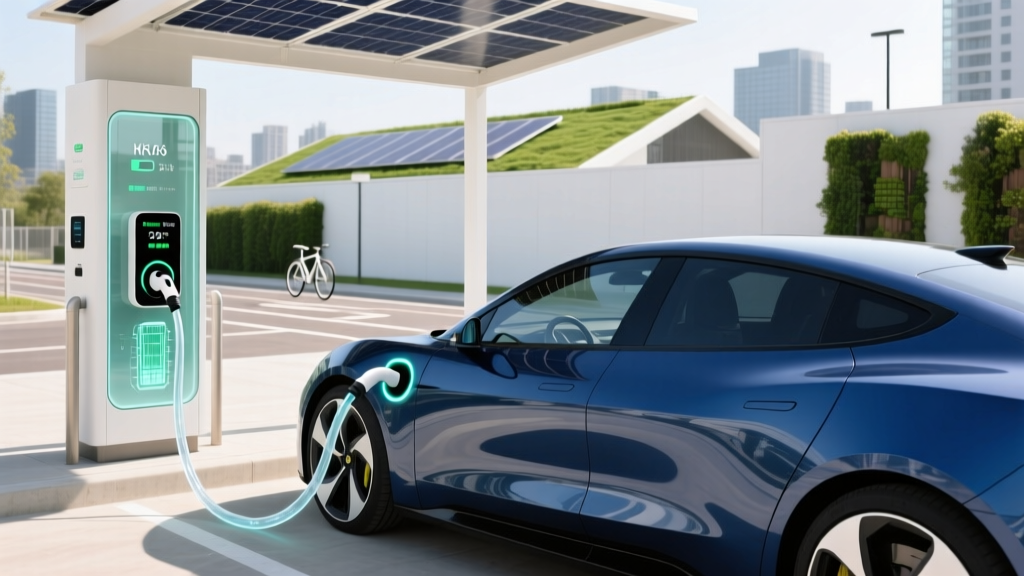
Over 80% of EV charging happens at home, and this is where the economics overwhelmingly favor electric. Your exact cost depends on your local electricity rate, which varies dramatically across the US.
According to the U.S. Energy Information Administration (EIA), the national average residential electricity price in late 2025 was approximately $0.165 per kWh. But state-level variation is massive:
- Washington state: ~$0.11/kWh (hydroelectric-heavy grid)
- California: ~$0.27/kWh (among the highest in the continental US)
- Texas: ~$0.14/kWh
- New York: ~$0.22/kWh
- Louisiana: ~$0.11/kWh
Many utilities now offer time-of-use (TOU) plans specifically designed for EV owners. These plans drop rates to $0.06–$0.10/kWh during overnight off-peak hours (typically 10 PM to 6 AM). If you can schedule your charging for these windows — which is easy with any modern EV or Level 2 charger's app — your effective per-mile cost can drop below $0.02.
Real-World Home Charging Math
Let's use a 2026 Tesla Model Y Long Range as a concrete example:
- Battery capacity: ~75 kWh usable
- EPA range: 320 miles
- Efficiency: ~24 kWh/100 miles (per fueleconomy.gov)
- National average cost ($0.165/kWh): $3.96 per 100 miles, or $0.04/mile
- TOU off-peak ($0.08/kWh): $1.92 per 100 miles, or $0.019/mile
- California ($0.27/kWh): $6.48 per 100 miles, or $0.065/mile
Even in expensive California, home charging still undercuts a 28 MPG gas car at $3.30/gallon ($0.12/mile) by nearly half.
Public DC Fast Charging: The Cost Reality on Road Trips
Public DC fast charging is where EV costs rise sharply — and where many first-time buyers get sticker shock. Networks like Electrify America, EVgo, and Tesla Superchargers typically charge $0.30 to $0.55 per kWh in 2026, with some urban or premium locations hitting $0.60+.
Using our same Model Y example at $0.45/kWh (a common mid-range rate):
- Full 75 kWh charge: $33.75
- Per 100 miles: $10.80
- Per mile: $0.108
That's approaching gas-car territory. However, most EV owners only rely on DC fast charging for road trips — perhaps 10–15% of their total miles. If 85% of your charging is at home ($0.04/mile) and 15% is public ($0.11/mile), your blended cost is about $0.05/mile.
Charging Network Price Snapshot (2026)
| Network | Typical Rate | Notes |
|---|---|---|
| Tesla Supercharger | $0.25–$0.40/kWh | Lower rates in some regions; off-peak discounts available |
| Electrify America | $0.35–$0.52/kWh | Idle fees if you stay plugged in past 80–90% |
| EVgo | $0.30–$0.48/kWh | Subscription plans reduce per-kWh cost |
| ChargePoint (DC) | $0.30–$0.55/kWh | Set by individual station owners; varies widely |
Pro tip: Several automakers — including Hyundai, Kia, Ford, and Rivian — bundle complimentary public charging (typically 1,000–3,000 kWh) with new EV purchases. That can cover your first year or two of road-trip charging entirely.
EV Charging vs. Gas: A Direct Cost Comparison
Let's put the numbers head-to-head with a realistic annual driving scenario. We'll compare the 2026 Tesla Model Y Long Range against a comparably sized 2026 Toyota RAV4 (gas, AWD, ~28 MPG combined).
| Metric | 2026 Tesla Model Y LR (EV) | 2026 Toyota RAV4 AWD (Gas) |
|---|---|---|
| Annual miles | 12,000 | 12,000 |
| Energy efficiency | 24 kWh/100 mi (120 MPGe) | 28 MPG combined |
| Annual energy needed | 2,880 kWh | 429 gallons |
| Home charging ($0.165/kWh) | $475/year | — |
| Gas fueling ($3.30/gal) | — | $1,416/year |
| Blended (85% home / 15% DCFC) | $615/year | — |
| Annual energy savings (EV) | $801–$941/year | |
| 5-year energy savings (EV) | $4,005–$4,705 | |
That $800–$940 annual savings compounds meaningfully over a typical ownership period. Over 10 years and 120,000 miles, you're looking at $8,000–$9,400 in fuel savings — enough to offset a significant portion of the EV's typically higher purchase price.
Total Cost of Ownership: Beyond the Charger
Charging cost is only one variable. A proper EV purchase decision requires looking at the full financial picture.
| Cost Category | EV (Model Y LR) | Gas (RAV4 AWD) | 5-Year Difference |
|---|---|---|---|
| Base MSRP | ~$44,990 | ~$33,500 | EV +$11,490 |
| Federal tax credit (§30D) | Up to -$7,500* | $0 | EV -$7,500 |
| Effective purchase price | ~$37,490* | ~$33,500 | EV +$3,990 |
| Energy (5 years) | ~$3,075 | ~$7,080 | EV -$4,005 |
| Maintenance (5 years) | ~$1,500 | ~$3,200 | EV -$1,700 |
| Insurance (5 years) | ~$9,500 | ~$7,800 | EV +$1,700 |
| Estimated 5-year total | ~$51,570 | ~$51,580 | ~Break-even |
*Federal §30D tax credit eligibility depends on buyer income caps ($150K single / $300K joint), vehicle MSRP caps ($55K SUVs / $25K sedans), battery critical-mineral and component sourcing rules, and point-of-sale transfer availability. Always verify current rules at IRS.gov and consult a tax professional.
The key takeaway: EVs tend to break even or save money over 5 years when you factor in lower energy and maintenance costs, even with higher insurance premiums. The savings widen significantly if you qualify for the full tax credit and charge primarily at home on a TOU plan.
Maintenance Savings Are Real
EVs eliminate oil changes, spark plugs, timing belts, and most exhaust system repairs. Regenerative braking dramatically extends brake pad life — many EV owners report original brake pads at 80,000+ miles. The main recurring costs are tire rotation/replacement (EVs are heavier and wear tires faster), cabin air filters, and wiper fluid. Expect to spend roughly $200–$400/year on maintenance versus $500–$800 for a comparable gas vehicle.
Common Charging Cost Myths — Corrected
| Myth | Fact |
|---|---|
| "Charging an EV is more expensive than gas" | At home, EVs cost $0.03–$0.05/mile vs. gas at $0.10–$0.14/mile. Public DCFC narrows the gap but most charging is at home. |
| "You need to charge to 100% every night" | Most EVs with NMC batteries perform best at 80% daily charge. LFP batteries (Tesla Model 3 RWD, some Model Y trims) can be charged to 100% regularly. Either way, daily driving rarely requires a full battery. |
| "EV batteries need frequent replacement" | Federal law mandates EV battery warranties of at least 8 years/100,000 miles. Real-world data shows most batteries lose 10–15% capacity over 200,000 miles. Replacement costs $8,000–$20,000 but is rarely needed within normal ownership. |
| "Cold weather makes EVs impractical" | Cold weather does reduce range — typically 15–30% at freezing temperatures. But preconditioning (warming the battery while plugged in) mitigates this. A 320-mile EV still delivers 220+ miles in winter, covering most daily needs. |
| "I can't charge at home so an EV won't work" | This is a legitimate concern. Apartment dwellers and street-parkers face real barriers. However, workplace charging, public Level 2 chargers, and DC fast-charging networks are expanding. Evaluate your specific access before deciding. |
What First-Time EV Buyers Need to Know About Charging
Home Charger Installation
A Level 2 home charger (240V, 32–48 amps) is the single biggest quality-of-life upgrade for EV ownership. Expect the following costs:
- Charger hardware: $300–$700 (ChargePoint Home Flex, Tesla Wall Connector, Emporia Vue)
- Electrician installation: $500–$2,000 if your panel has capacity and the run is short
- Panel upgrade (if needed): $1,500–$3,500 for older homes with 100-amp service
- Permit: $50–$200 depending on municipality
Total: $800–$2,500 for most homes; up to $5,000+ if a panel upgrade is required. The Residential Clean Energy Credit covers 30% of charger hardware and installation costs (up to $1,000) through 2032.
kW vs. kWh — The Distinction That Matters
This is the single most common confusion for new EV owners:
- kW (kilowatts) = power, or the rate at which energy flows. Think of it like water pressure. A 250 kW DC fast charger delivers energy faster than a 50 kW charger.
- kWh (kilowatt-hours) = energy, or the total amount stored or consumed. Think of it like gallons in a tank. A 75 kWh battery holds 75 kWh of usable energy.
Your electricity bill charges you per kWh. Your charger's speed is rated in kW. Never confuse the two when comparing costs or charging speeds.
Decision Framework: Is an EV Right for Your Budget?
Choose an EV if:
- You have access to home or workplace Level 2 charging (this is the #1 factor for satisfaction and cost savings)
- Your daily commute is under 80 miles round-trip (covers 95%+ of daily driving on a single charge)
- You qualify for the federal §30D tax credit or state incentives, narrowing the upfront price gap
- You plan to own the vehicle 5+ years (savings compound over time)
- Your utility offers TOU rates or you can charge off-peak
Consider a Hybrid (HEV/PHEV) Instead if:
- You live in an apartment or park on the street with no charging access
- You regularly drive 300+ miles in areas with sparse charging infrastructure (rural routes, certain interstate corridors)
- Your budget is under $30,000 and you can't absorb the EV price premium
- You experience extreme cold (below 0°F) for extended periods and have no garage
- You tow heavy loads frequently (towing dramatically cuts EV range — often by 40–50%)
Choose Gas if:
- You drive fewer than 5,000 miles per year (energy savings won't offset the price premium)
- You have zero charging access and no realistic path to getting it
Frequently Asked Questions
How much does it cost to charge an EV at home per month?
For an average driver covering 1,000 miles per month in an efficient EV (25 kWh/100 mi) at the national average rate of $0.165/kWh, expect roughly $41/month. With off-peak TOU rates ($0.08/kWh), that drops to about $20/month. Compare that to $118/month in gas for a 28 MPG car at $3.30/gallon.
Is it cheaper to charge an EV or fill up a gas car?
In almost all home-charging scenarios, EVs are significantly cheaper per mile. The gap narrows with exclusive public DC fast charging, and in high-electricity-rate states like California, the advantage shrinks but rarely disappears entirely. A gas car at 28 MPG and $3.30/gallon costs ~$0.12/mile; home EV charging typically costs $0.03–$0.05/mile.
Do free EV chargers still exist?
Yes, but they're becoming rarer. Some workplaces, shopping centers, hotels, and apartment complexes still offer complimentary Level 2 charging. A few automakers include free charging credits with new EV purchases (e.g., 1,000–3,000 kWh on partner networks). Apps like PlugShare let you filter for free stations, but don't rely on them as your primary charging strategy.
Does charging speed affect how much I pay?
At home, no — your utility charges per kWh consumed regardless of whether your charger delivers 7 kW or 11.5 kW. At public DC fast chargers, some networks charge by the minute rather than the kWh, which penalizes vehicles with slower charge rates. Always check the pricing model before plugging in.
What happens to my electricity bill when I get an EV?
Expect a noticeable increase — typically $30–$70/month for an average driver. However, this replaces $100–$150/month in gas spending. The net effect is usually a monthly savings of $40–$100. Contact your utility about EV-specific TOU plans before you buy; they can significantly reduce your charging costs.
Are there hidden costs to EV ownership I should know about?
Three costs catch first-time buyers off guard: (1) Insurance — EVs typically cost 15–25% more to insure due to higher repair costs and vehicle prices. Get quotes before buying. (2) Tires — EVs are heavier and produce instant torque, wearing tires 20–30% faster than comparable gas cars. Budget for replacement every 25,000–40,000 miles. (3) Home charger installation — if your electrical panel needs an upgrade, the cost can reach $3,000–$5,000.