The Short Answer: How Many Miles Can an Electric Car Go?
As of the 2026 model year, most mainstream electric vehicles deliver an EPA-estimated range between 230 and 370 miles on a full charge. Compact commuter EVs like the Nissan Leaf start around 212 miles, while long-range sedans such as the Lucid Air Grand Touring push past 500 miles. However, real-world range typically falls 10–25% below the EPA sticker depending on highway speed, outdoor temperature, terrain, and battery preconditioning. For the average American driver covering 37 miles per day, nearly every current EV provides more than enough range for daily use — the real question is whether your road-trip and winter-driving needs justify a larger (and pricier) battery pack.
EPA Range vs. Real-World Miles: What the Sticker Doesn't Tell You
The EPA range figure on a window sticker is derived from standardized laboratory tests that simulate a mix of city and highway driving at moderate temperatures. It is a useful baseline for comparing vehicles, but it is not a guarantee. Here is what actually moves the needle once you leave the lab:
- Highway driving at 75+ mph: Aerodynamic drag increases exponentially with speed. Expect to lose 15–25% of EPA range on sustained interstate driving compared to the sticker. A vehicle rated at 310 miles EPA may deliver 240–260 miles at 75 mph in summer conditions.
- Cold weather (below 32°F): Lithium-ion batteries lose efficiency in the cold, and cabin heating draws significant energy. In our experience testing EVs in sub-freezing conditions, range loss of 20–35% is common. Vehicles equipped with a heat pump (standard on most 2026 Tesla, Hyundai/Kia, and Ford EVs) mitigate this loss to roughly 15–25%.
- Elevation and terrain: Mountain passes with sustained climbs can cut range by 20% or more on the ascent — though regenerative braking recovers some energy on the descent.
- Battery preconditioning: If you navigate to a DC fast charger using the vehicle's built-in routing, many EVs will warm the battery to optimal temperature before you arrive, improving charge speed. This also means a small amount of energy is consumed for thermal management before you plug in.
Rule of thumb: Take the EPA range, subtract 20% for highway driving, and another 10–15% if temperatures regularly drop below freezing. A 300-mile EPA vehicle realistically gives you about 210–240 miles of usable highway range in winter.
2026 EV Range Comparison: What Popular Models Actually Deliver
Below is a snapshot of popular 2026 model-year EVs with their EPA range, battery capacity, and real-world expectations. All figures reflect manufacturer data and EPA fueleconomy.gov listings.
| Vehicle | Battery (kWh usable) | Chemistry | EPA Range (mi) | Real-World Highway Est. | Cold-Weather Est. | Base MSRP |
|---|---|---|---|---|---|---|
| Tesla Model Y Long Range AWD | 78 kWh | NMC | 320 | ~260 mi | ~220 mi | $44,990 |
| Hyundai Ioniq 5 SEL AWD | 84 kWh | NMC | 290 | ~235 mi | ~200 mi | |
| Chevrolet Equinox EV 3RS | 85 kWh | NMC | 315 | ~255 mi | ~215 mi | $43,400 |
| Ford Mustang Mach-E Extended Range | 91 kWh | NMC | 320 | ~260 mi | ~220 mi | $45,995 |
| Tesla Model 3 RWD (Standard) | 57.5 kWh | LFP | 272 | ~220 mi | ~185 mi | $38,990 |
| BMW iX xDrive50 | 105.2 kWh | NMC | 324 | ~265 mi | ~225 mi | $87,250 |
| Lucid Air Grand Touring | 112 kWh | NMC | 516 | ~420 mi | ~360 mi | $125,600 |
Chemistry note: LFP (lithium iron phosphate) batteries, found in the base Tesla Model 3 RWD, are heavier and offer lower energy density than NMC, resulting in slightly less range per kWh. However, LFP chemistry tolerates regular 100% charging better and tends to degrade more slowly over time — a meaningful trade-off for daily commuters.
EV vs. Gas vs. Hybrid: Range, Cost, and Practicality Compared
Range alone does not tell the full ownership story. Here is how EVs stack up against gasoline and hybrid alternatives when you factor in fueling costs, maintenance, and daily practicality.
| Factor | Battery EV (300 mi range) | Gas Car (30 MPG) | Hybrid (50 MPG) | PHEV (30 mi electric + gas) |
|---|---|---|---|---|
| "Fuel" cost per mile | $0.04–$0.06 (home charging) | $0.11–$0.14 | $0.07–$0.08 | $0.04 electric / $0.11 gas |
| Annual fuel cost (12,000 mi) | $480–$720 | $1,320–$1,680 | $840–$960 | $500–$900 |
| Maintenance per year | $300–$500 | $800–$1,200 | $700–$1,000 | $700–$1,000 |
| Refuel/recharge time | 6–10 hrs (L2 home) / 20–30 min (DC fast) | 5 minutes | 5 minutes | 5 min gas / 2–5 hrs L2 |
| Range in extreme cold | 210–240 mi (from 300 EPA) | ~28 MPG (minimal loss) | ~47 MPG (minimal loss) | ~22 mi electric + gas |
The math favors EVs for home-charging owners who drive under 200 miles per day. The average U.S. driver travels roughly 37 miles daily according to FHWA data, meaning a 300-mile EV needs charging roughly once a week on a home Level 2 charger. Where EVs lose ground is long-distance road trips in cold weather, where a 20–30 minute DC fast-charge stop every 200–240 miles adds time compared to a 5-minute gas stop.
The Real Cost of EV Ownership: A 5-Year Breakdown
Upfront EV prices remain higher than comparable gas vehicles, but the gap has narrowed significantly. Here is a realistic 5-year / 60,000-mile ownership cost comparison using a mid-range EV priced around $43,000 versus a $30,000 gasoline compact SUV.
| Cost Category | EV ($43,000 MSRP) | Gas Vehicle ($30,000 MSRP) |
|---|---|---|
| Purchase price (after §30D credit) | $35,500* | $30,000 |
| Home Level 2 charger install | $800–$1,500 | $0 |
| Fuel/electricity (5 years) | $2,400–$3,600 | $6,600–$8,400 |
| Maintenance (5 years) | $1,500–$2,500 | $4,000–$6,000 |
| Insurance (5 years) | $7,500–$9,500 | $5,500–$7,500 |
| Depreciation (est. 5-yr) | $16,000–$20,000 | $12,000–$15,000 |
| Estimated 5-Year Total | $63,700–$72,600 | $58,100–$66,900 |
*The federal §30D tax credit provides up to $7,500 for qualifying new EVs, but eligibility depends on MSRP caps ($55,000 for cars, $80,000 for SUVs/trucks), buyer income limits ($150K single / $300K joint), battery sourcing requirements, and the vehicle must be on the IRS qualifying list. As of 2026, the credit can be transferred at the point of sale as a down-payment reduction. Always verify current eligibility with a tax professional.
Key takeaway: EVs save $3,000–$5,000 on fuel and maintenance over five years, but higher insurance premiums (typically 15–25% more than comparable gas cars) and faster depreciation partially offset those savings. The total cost gap narrows to roughly $2,000–$6,000 over five years — and shrinks further if you qualify for the full tax credit and have cheap home electricity.
Common EV Range Myths — and the Facts
| Myth | Fact |
|---|---|
| "EVs can't handle road trips." | A 300-mile EV with 150+ kW DC fast charging can add 150–200 miles in 20 minutes. Coast-to-coast trips are routine on the Tesla Supercharger and Electrify America networks — they just require 2–3 stops on a 500-mile drive. |
| "The battery will die and cost $20,000 to replace." | Federal law mandates EV battery warranties of at least 8 years / 100,000 miles. Modern NMC and LFP packs typically lose only 8–12% capacity over 150,000 miles. Full replacement is rare and usually covered under warranty during the coverage period. |
| "You need a 400-mile range EV to be practical." | The average American drives 37 miles per day. A 250-mile EV charged at home overnight covers 95%+ of driving needs. The 400+ mile range is a convenience for road trippers, not a daily requirement. |
| "Charging takes too long." | Home Level 2 charging (7–11 kW) adds 25–40 miles per hour of charging — more than enough to fully replenish overnight. DC fast charging at 150–250 kW delivers 10–80% in 18–30 minutes for most 2026 EVs. |
| "EVs are worse for the environment because of battery mining." | Studies from Argonne National Laboratory show EVs produce fewer lifetime emissions than gas cars in every U.S. grid region, even accounting for battery manufacturing. The break-even point typically occurs within 1–2 years of driving. |
First-Time EV Buyer Checklist: What You Must Know Before You Buy
If you have never owned an EV, these are the non-obvious realities that will shape your experience:
1. Home Charging Is the Make-or-Break Factor
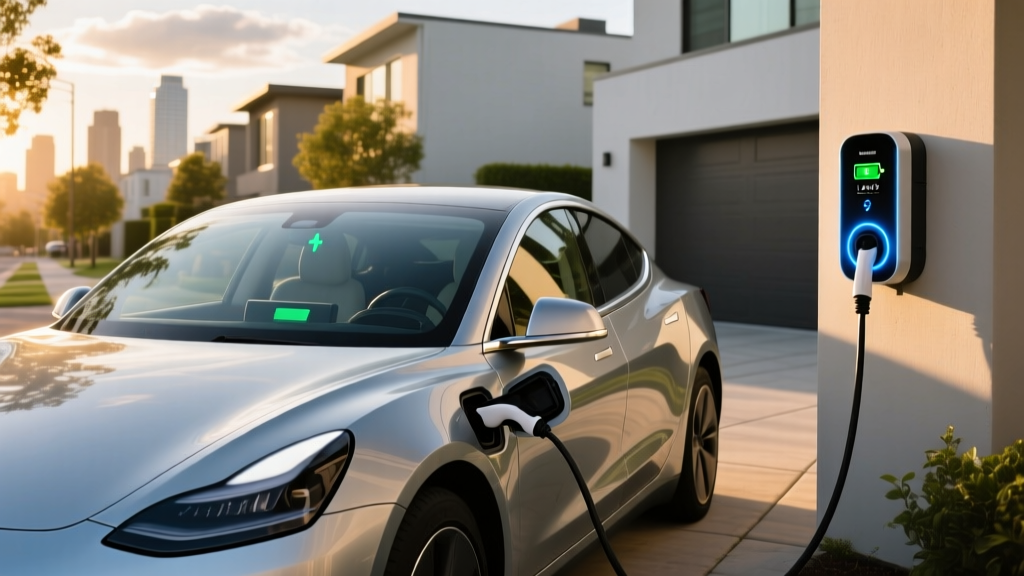
Over 80% of EV charging happens at home. Without access to a Level 2 charger (240V, 32–48 amps, 7.7–11.5 kW), you will rely on public charging — which is more expensive ($0.30–$0.55/kWh at DC fast stations vs. $0.10–$0.18/kWh at home) and less convenient. A professional Level 2 installation typically costs $800–$1,500 if your electrical panel has capacity. If you need a panel upgrade (from 100A to 200A service), add $1,500–$3,000. Always get a quote from a licensed electrician before purchasing an EV.
2. Understand kW vs. kWh
This is the single most common point of confusion. kW (kilowatts) measures power — how fast energy flows. kWh (kilowatt-hours) measures energy — the size of the battery tank. A 77 kWh battery charged at 11 kW (Level 2) takes about 7 hours from empty to full. At a 150 kW DC fast charger, that same battery goes from 10–80% in roughly 22 minutes.
3. DC Fast Charging Slows Above 80%
EV batteries accept charge fastest at low state of charge and taper significantly above 80%. A vehicle that peaks at 250 kW may sustain that rate only from 10–40% SoC, then taper to 100 kW, then 50 kW, then 25 kW. This is why manufacturers quote "10–80% charge time" rather than 0–100%. Charging the final 20% on a DC fast charger can take as long as the first 70%. For daily driving, charge to 80% (or 100% for LFP batteries) and save the last 20% for when you actually need it on road trips.
4. NACS vs. CCS: Connector Compatibility in 2026
As of 2026, the North American Charging Standard (NACS), developed by Tesla, has become the dominant connector. Ford, GM, Rivian, Hyundai/Kia, BMW, and most other manufacturers have adopted NACS on new vehicles. CCS1 is being phased out but remains on some older models and at Electrify America stations (with adapters available). If you buy a 2026 model with a NACS port, you gain native access to Tesla Superchargers — the largest and most reliable DC fast-charging network in North America.
5. Battery Warranties Protect You
Every 2026 EV sold in the U.S. carries a minimum battery warranty of 8 years / 100,000 miles (10 years / 150,000 miles in California and states that follow CARB rules). The warranty typically guarantees the battery will retain at least 70% of its original capacity. If degradation exceeds this threshold, the manufacturer must repair or replace the battery at no cost.
Decision Framework: Which EV Range Is Right for You?
Choose a 200–250 mile EV (e.g., Tesla Model 3 RWD, Nissan Leaf) if:
- You drive under 60 miles round-trip daily and have reliable home charging
- Your budget is under $40,000 and you want the lowest entry price
- You rarely take road trips over 200 miles, or you are willing to rent a gas car for long drives
- You live in a mild climate where cold-weather range loss is minimal
Choose a 280–340 mile EV (e.g., Tesla Model Y LR, Ioniq 5, Equinox EV) if:
- You want one vehicle that handles both daily commuting and road trips without anxiety
- You drive 40–100 miles per day or take monthly highway trips of 200–400 miles
- You live in a region with cold winters and want a buffer for 20–30% range loss
- You value DC fast charging speeds of 150+ kW for efficient road-trip stops
Choose a 400+ mile EV (e.g., Lucid Air, Tesla Model S LR) if:
- You regularly drive 300+ miles in a single day and want to minimize charge stops
- Budget is above $80,000 and you prioritize efficiency and technology
- You tow a trailer or carry heavy loads that reduce range significantly
Consider a PHEV instead (e.g., Toyota RAV4 Prime, Jeep Wrangler 4xe) if:
- You lack home charging access or live in an apartment without charging infrastructure
- You frequently drive in rural areas with limited DC fast-charging stations
- You want electric-only commuting (25–42 miles) with a gas backup for long trips
Frequently Asked Questions
How many miles can an electric car go on a single charge?
The 2026 EV fleet ranges from about 150 miles (compact city EVs) to over 500 miles (Lucid Air Grand Touring). The mainstream sweet spot is 270–330 miles EPA, which covers daily driving for nearly all users and road trips with one or two DC fast-charge stops.
Do electric cars lose range in the cold?
Yes. Expect 15–35% range reduction below freezing, depending on the vehicle and whether it has a heat pump. A 300-mile EV may deliver 200–240 miles in 20°F weather. Preconditioning the battery while plugged in mitigates some of this loss.
How long do EV batteries last?
Modern EV batteries are engineered to last 15–20 years or 150,000–200,000 miles before degrading to 70–80% of original capacity. Federal warranty requirements guarantee at least 8 years / 100,000 miles of coverage. Data from vehicles with 200,000+ miles shows most packs retain 85–90% of capacity at that point.
Is it cheaper to charge an EV at home or use gas?
Home charging is dramatically cheaper. At the U.S. average electricity rate of $0.16/kWh and an efficiency of 3.5 miles/kWh, an EV costs about $0.046 per mile to fuel. A gas car at 28 MPG and $3.50/gallon costs $0.125 per mile — nearly three times as much. Over 12,000 miles per year, that is a savings of roughly $950.
What happens if I run out of charge on the road?
The same thing that happens if you run out of gas: you need a tow. However, modern EVs provide extensive low-battery warnings, route you to chargers automatically, and enter a power-reduced "turtle mode" to stretch the last few miles. Running out of charge is almost always a planning failure, not a sudden event.
Do I qualify for the $7,500 federal EV tax credit?
Possibly. The §30D credit requires the vehicle to be on the IRS qualifying list, the MSRP must be under $55,000 (cars) or $80,000 (SUVs/trucks), your adjusted gross income must be under $150,000 (single) or $300,000 (joint), and the battery must meet critical-mineral and component sourcing thresholds. Rules change periodically — verify with a tax professional before purchasing.