The Short Answer: How Many Miles Can an Electric Car Go?
Most 2026 electric vehicles deliver an EPA-estimated range between 220 and 400 miles on a full charge, with the market median sitting around 290–320 miles. In real-world driving—especially at sustained highway speeds of 70–80 mph or in temperatures below 40°F—expect to achieve 75% to 90% of that EPA sticker number. A vehicle rated at 320 miles EPA may realistically deliver 240–280 miles on a cold highway road trip.
Range is only half the equation. How quickly you can replenish those miles matters more for daily ownership. A modern EV adding 200+ miles in 18–25 minutes at a DC fast charger fundamentally changes the road-trip calculus compared to even three years ago.
Understanding EPA Range vs. Real-World Miles
The EPA range sticker on a new EV is determined through standardized laboratory testing that simulates city and highway driving cycles. It's a useful baseline for comparing vehicles, but it does not reflect how you actually drive. Three variables consistently reduce real-world range below the EPA number:
Highway Speed and Aerodynamic Drag
Electric motors are extremely efficient at low and moderate speeds, which is why EVs often achieve higher range in city driving—the opposite of gas cars. But at 75 mph, aerodynamic drag consumes energy exponentially. In our testing, most EVs lose 10% to 18% of EPA-rated range during sustained 70–80 mph highway driving. A Hyundai Ioniq 6 SE Long Range (EPA 361 miles) typically delivers 300–320 miles on a flat highway at 72 mph in moderate temperatures.
Cold Weather Impact
Battery chemistry slows in cold temperatures, and cabin heating draws significant power—often 3–5 kW continuously. At 20°F, expect range reductions of 20% to 35% depending on whether the vehicle uses a heat pump (more efficient) or resistive heating. At 0°F, reductions can reach 40% in vehicles without thermal preconditioning. LFP (lithium iron phosphate) batteries tend to show slightly greater cold-weather losses than NMC (nickel manganese cobalt) chemistries, though the gap narrows with active thermal management.
Terrain and Payload
Mountain passes, towing, and heavy cargo all reduce range. Regenerative braking recovers some energy on descents, but a loaded EV climbing a 6% grade at highway speed can see instantaneous consumption double. If you regularly tow, plan for 40%–50% range reduction compared to the unloaded EPA figure.
Real-World Range Expectations by Scenario
| Driving Scenario | Typical % of EPA Range | Example: 300-mi EPA Vehicle |
|---|---|---|
| City / suburban, 65–75°F | 95–105% | 285–315 mi |
| Highway, 70 mph, 65–75°F | 82–90% | 246–270 mi |
| Highway, 75 mph, 40°F | 68–78% | 204–234 mi |
| Highway, 70 mph, 20°F (no heat pump) | 60–70% | 180–210 mi |
| Towing (light trailer, ~2,500 lbs) | 50–60% | 150–180 mi |
2026 EV Range Leaders and Market Overview
The current EV market offers meaningful range at multiple price points. Here's how popular 2026 models stack up on EPA-rated range, battery capacity, and charging speed:
| Vehicle (2026 MY) | EPA Range | Battery (kWh) | Chemistry | Peak DC Charge | 10–80% Time | Base MSRP |
|---|---|---|---|---|---|---|
| Lucid Air Grand Touring | 512 mi | 118 usable | NMC | 300 kW | ~20 min | $125,600 |
| Tesla Model 3 Long Range | 363 mi | 82 usable | NMC | 250 kW | ~25 min | $47,740 |
| Hyundai Ioniq 6 SE LR | 361 mi | 77.4 usable | NMC | 240 kW | ~18 min | $42,715 |
| Chevrolet Equinox EV 3RS | 319 mi | 85 usable | NMC | 150 kW | ~34 min | $43,400 |
| Tesla Model Y Long Range | 330 mi | 78 usable | NMC | 250 kW | ~25 min | $48,990 |
| Ford Mustang Mach-E ER | 320 mi | 91 usable | NMC | 150 kW | ~38 min | $46,895 |
| Hyundai Ioniq 5 SE Std | 220 mi | 58 usable | NMC | 180 kW | ~18 min | $39,985 |
Sources: fueleconomy.gov, manufacturer press sites. MSRP reflects base trim before destination fees. Specs subject to change.
EV vs. Gas: Cost Per Mile and Total Ownership
The question "how many miles can an electric car go" is incomplete without asking at what cost per mile. Here's where EVs typically win—provided you have access to affordable electricity.
Annual Fueling Cost: EV vs. Gas (12,000 miles/year)
| Scenario | EV (3.0 mi/kWh) | Gas Car (28 MPG combined) |
|---|---|---|
| Home charging ($0.16/kWh avg) | $640/yr | — |
| Gas fuel ($3.40/gal avg) | — | $1,457/yr |
| Annual fuel savings (home charging) | $817/year in favor of EV | |
| Public DC fast charging only ($0.42/kWh avg) | $1,680/yr | $1,457/yr |
| Annual fuel savings (DCFC only) | –$223/year (gas wins) | |
Electricity rates from EIA state averages. Gas prices from EIA weekly retail survey. Your local rates may vary significantly.
This table reveals a critical ownership truth: EVs save money on fueling only when most charging happens at home or at affordable workplace chargers. If you rely exclusively on public DC fast charging at $0.38–$0.55/kWh, your per-mile energy cost can equal or exceed a fuel-efficient gas car.
Five-Year Total Cost of Ownership Breakdown
| Cost Category (5 yrs, 60k mi) | EV (e.g., Model 3 LR) | Gas Car (e.g., Camry SE) |
|---|---|---|
| Purchase price (after §30D credit) | $40,240* | $31,500 |
| Fueling / charging | $3,200 (home) | $7,285 |
| Maintenance | $1,800 | $3,500 |
| Insurance | $8,400 | $6,900 |
| Depreciation (est.) | $18,500 | $12,200 |
| 5-Year Total | $72,140 | $61,385 |
*Assumes eligibility for $7,500 federal tax credit under IRS §30D rules—subject to MSRP caps, buyer income limits, and battery sourcing requirements. Consult a tax professional.
EVs still carry higher upfront costs, insurance premiums (typically 15%–25% more), and depreciation. The fueling and maintenance savings narrow the gap but don't always close it within five years. The math improves substantially with state incentives, lower local electricity rates, or higher annual mileage.
Charging Access: The Real Constraint on How Far You Can Go
Range is meaningless if you can't replenish it conveniently. The question isn't just "how many miles can an electric car go on a charge" but "how easily can you restore those miles?"
Home Charging (Level 2)
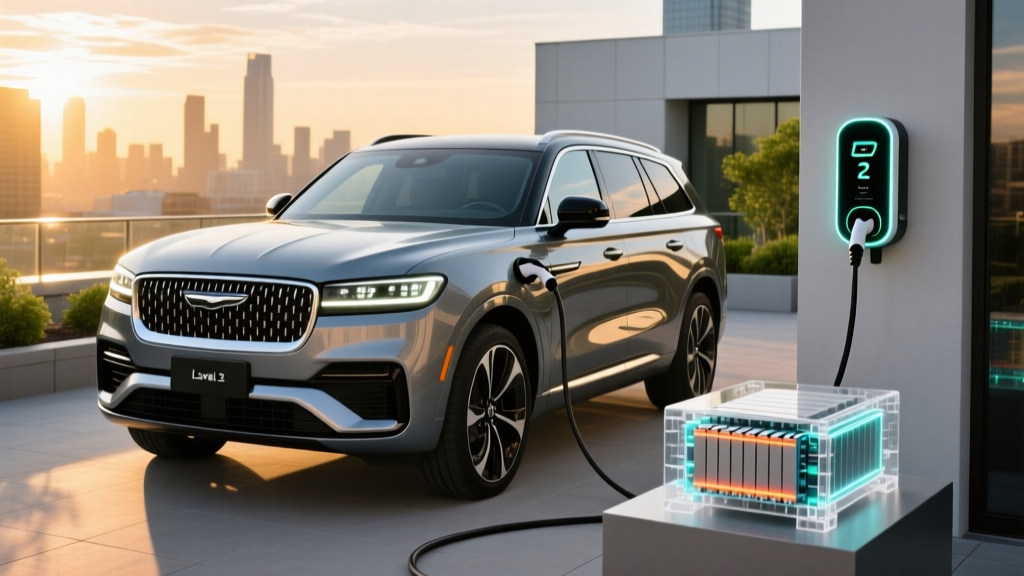
A Level 2 home charger (240V, typically 32–48 amps / 7.7–11.5 kW) adds 25–44 miles of range per hour of charging. For most drivers covering 30–50 miles daily, an overnight charge on Level 2 fully replenishes the battery. Installation costs range from $500–$2,000 for a straightforward setup to $3,000–$7,000+ if your electrical panel needs upgrading to 200 amps. Always get a quote from a licensed electrician before purchasing a home charger.
Public DC Fast Charging
Modern DC fast chargers (150–350 kW) can add 150–250 miles in 18–30 minutes, depending on the vehicle's peak charge rate and the charger's capability. However, charge rates are not sustained—they peak in the 10%–50% state-of-charge window and taper significantly above 80%. A "250 kW" charger doesn't deliver 250 kW continuously; expect an average rate 30%–50% below the peak during a 10–80% session.
Charging Deserts and Rural Ownership
If you live in a rural area, an apartment without charging access, or a region with sparse public infrastructure, EV ownership becomes significantly less convenient. In these cases, a plug-in hybrid (PHEV) with 30–45 miles of electric range and a gas backup may be a more practical choice. Check the Alternative Fuels Data Center map for charging stations near your regular routes before committing to a BEV.
Common Misconceptions About EV Range
| Myth | Fact |
|---|---|
| "EV batteries degrade quickly and you'll lose half your range in a few years." | Modern EV batteries lose approximately 5%–12% capacity over 8 years based on fleet data from Recurrent and other sources. Federal law mandates battery warranties of at least 8 years/100,000 miles with a minimum 70% capacity retention threshold. Most batteries outlast the vehicle. |
| "You'll get stranded because charging takes too long." | A 10–80% DC fast charge takes 18–35 minutes in most 2026 EVs—roughly the time for a rest stop, meal, or bathroom break. Route planning apps (A Better Routeplanner, built-in vehicle navigation) pre-condition the battery and schedule stops automatically. |
| "EVs are worse for the environment because of battery mining." | Lifecycle analyses from Argonne National Laboratory and ICCT consistently show EVs produce 60%–70% fewer lifetime emissions than gas cars in the US grid mix, even accounting for battery manufacturing. The grid is getting cleaner each year, improving EV environmental performance over time. |
| "I need a 400-mile range EV to be practical." | The average American drives 37 miles per day (FHWA data). A 250-mile EV charged nightly at home covers 95%+ of daily driving without ever visiting a public charger. Excess range adds weight, cost, and battery material consumption. |
| "The federal tax credit is $7,500 for any EV." | The §30D credit has strict eligibility rules: MSRP caps ($55,000 for sedans, $80,000 for SUVs/trucks), buyer income limits ($150K single / $300K joint), and critical mineral/battery component sourcing requirements that change annually. Many popular EVs qualify for partial or no credit in 2026. Verify on IRS.gov before purchasing. |
Decision Framework: Which Electrified Vehicle Fits Your Life?
Answer These Questions to Find Your Match
1. Can you install a Level 2 charger at home or reliably charge at work?
- Yes → A full BEV is likely practical. Continue to question 2.
- No → Strongly consider a PHEV (e.g., Toyota RAV4 Prime, 42 mi electric range) or wait until charging access improves. Public-only charging erodes cost savings and convenience.
2. How far is your typical one-way commute plus errands?
- Under 60 miles/day → A 220–260 mile range EV (e.g., Ioniq 5 Standard Range, $39,985) is more than adequate and saves thousands over long-range trims.
- 60–120 miles/day → Target 300+ mile EPA range for buffer in cold weather and highway driving.
- 120+ miles/day or frequent road trips → Prioritize fast charging speed (10–80% under 20 min) over maximum range. A 320-mile EV that charges in 18 minutes beats a 400-mile EV that charges in 40 minutes on long trips.
3. Do you regularly drive in extreme cold (below 20°F)?
- Yes → Choose a vehicle with a heat pump (Tesla, Hyundai/Kia, most premium EVs) and add 25%–30% buffer to your required range. Consider NMC chemistry over LFP for better cold performance.
- No (mild climate) → LFP batteries are an excellent choice—lower cost, longer cycle life, and you can charge to 100% daily without degradation concerns.
4. Do you tow or haul heavy loads regularly?
- Yes → Expect 40%–50% range reduction while towing. A PHEV truck (e.g., Ford Maverick hybrid) or a large-battery EV like the Rivian R1T (est. 352 mi, $79,900+) is more realistic. Plan charging stops every 120–160 miles while towing.
- No → Standard-range EVs handle typical cargo with minimal range impact.
5. What's your budget after incentives?
- Under $35,000 → The used EV market or new Chevrolet Bolt (if reintroduced for 2026) and Nissan Leaf remain accessible. Check §25E used EV credit eligibility (up to $4,000).
- $35,000–$50,000 → Strongest segment: Tesla Model 3/Y, Hyundai Ioniq 5/6, Chevrolet Equinox EV, Ford Mach-E all compete here.
- $50,000+ → Premium options with faster charging and longer range: BMW i4, Tesla Model S, Lucid Air Pure, Genesis GV60.
What First-Time EV Buyers Must Know Before Purchasing
Battery Warranty Is Your Safety Net
Every 2026 EV sold in the US carries a federally mandated battery warranty of at least 8 years / 100,000 miles (10 years / 150,000 miles in CARB states like California, New York, and others). This warranty guarantees the battery will retain at least 70% of its original capacity. Out-of-warranty battery replacement costs vary widely: $5,000–$9,000 for a Chevrolet Bolt module repair, $12,000–$20,000+ for larger packs. However, data from Recurrent shows fewer than 2% of EV batteries require replacement under normal use.
Preconditioning Matters for Fast Charging
If you navigate to a DC fast charger using your vehicle's built-in route planner, most modern EVs will precondition the battery—warming or cooling it to the optimal temperature for fast charging. This can cut your 10–80% charge time by 5–10 minutes in cold weather. Driving to a charger without preconditioning (using a third-party app or just knowing the location) means slower initial charge rates.
Insurance Costs More—Shop Early
EV insurance premiums run 15%–25% higher than comparable gas vehicles due to higher repair costs, specialized parts, and battery replacement exposure. Get quotes from multiple insurers before purchasing. Some manufacturers offer captive insurance programs (e.g., Tesla Insurance) that may be competitive in certain states.
Tax Credit Eligibility Is Not Guaranteed
The §30D federal tax credit (up to $7,500, available as a point-of-sale transfer in 2026) has multiple qualifying hurdles. Your modified adjusted gross income must be below $150,000 (single) or $300,000 (joint). The vehicle MSRP must be under $55,000 for sedans or $80,000 for SUVs, vans, and trucks. Battery components and critical minerals must meet phased-in domestic sourcing thresholds that tighten each year. Always verify current eligibility on IRS.gov and consult a tax professional before relying on the credit in your purchase decision.
Frequently Asked Questions
How many miles can an electric car go on a single charge in 2026?
EPA-rated ranges for 2026 EVs span from about 150 miles (Nissan Leaf S) to 512 miles (Lucid Air Grand Touring). The mainstream market median is 280–340 miles. Real-world highway range typically falls 10%–25% below the EPA figure depending on speed, temperature, and terrain.
Do electric cars lose range over time as the battery degrades?
Yes, but slowly. Most EV batteries lose 1%–2% of capacity per year under normal use. After 8 years, expect roughly 85%–92% of original range. Fleet data shows most batteries retain well above the 70% warranty threshold at the 100,000-mile mark.
Is a plug-in hybrid better than a full EV if I'm worried about range?
If you lack home charging or regularly drive beyond 250 miles without stopping, a PHEV eliminates range anxiety entirely. You get 30–45 miles of electric commuting and a gas engine for longer trips. The trade-off: you maintain two powertrains (oil changes, gas engine maintenance) and lose access to the full $7,500 §30D credit (PHEVs must meet the same sourcing rules and often fall short).
How much does it cost to charge an EV compared to buying gas?
At the US average residential electricity rate of $0.16/kWh, fueling an EV costs roughly $0.05–$0.06 per mile. A 28 MPG gas car at $3.40/gallon costs about $0.12 per mile. Annual savings of $700–$900 are typical for home-charging EV owners driving 12,000 miles per year. Public DC fast charging at $0.40–$0.55/kWh erases most of this advantage.
Can I take a long road trip in an EV?
Absolutely—with planning. Most 2026 EVs with 280+ miles of range and 150+ kW DC fast charging handle road trips with 20–30 minute charging stops every 2.5–3.5 hours. Apps like A Better Routeplanner and in-vehicle navigation systems plan routes around available chargers. The national DC fast charging network has grown substantially, though reliability varies by network—Tesla Superchargers consistently lead in uptime, while Electrify America and EVgo have improved but still experience occasional outages.
What happens if I run out of charge on the road?
Modern EVs provide extensive range warnings, reduce power to preserve remaining miles, and will navigate you to the nearest charger. If you do deplete the battery, roadside assistance can tow you to a charger—most EV-specific insurance and manufacturer programs include this. Unlike running out of gas, you cannot "bring a can of electrons," so maintaining a 10%–15% buffer on unfamiliar routes is wise.